The U.S. dollar weakened in late trading on Tuesday.
The dollar index, which measures the greenback against six major peers, lost 0.06 percent to 103.485 at 15:00 (2000 GMT).
In late New York trading, the euro advanced to 1.1008 dollars from 1.1003 dollars in the previous session, and the British pound added to 1.3215 dollars from 1.3186 U.S. dollars in the previous session.
The U.S. dollar bought 159.33 Japanese yen, lower than 159.48 Japanese yen of the previous session. The U.S. dollar fell to 0.8396 Swiss francs from 0.8399 Swiss francs, and it was down to 1.4290 Canadian dollars from 1.4293 Canadian dollars. The U.S. dollar increased to 10.1105 Swedish Kronor from 10.0949 Swedish Kronor.
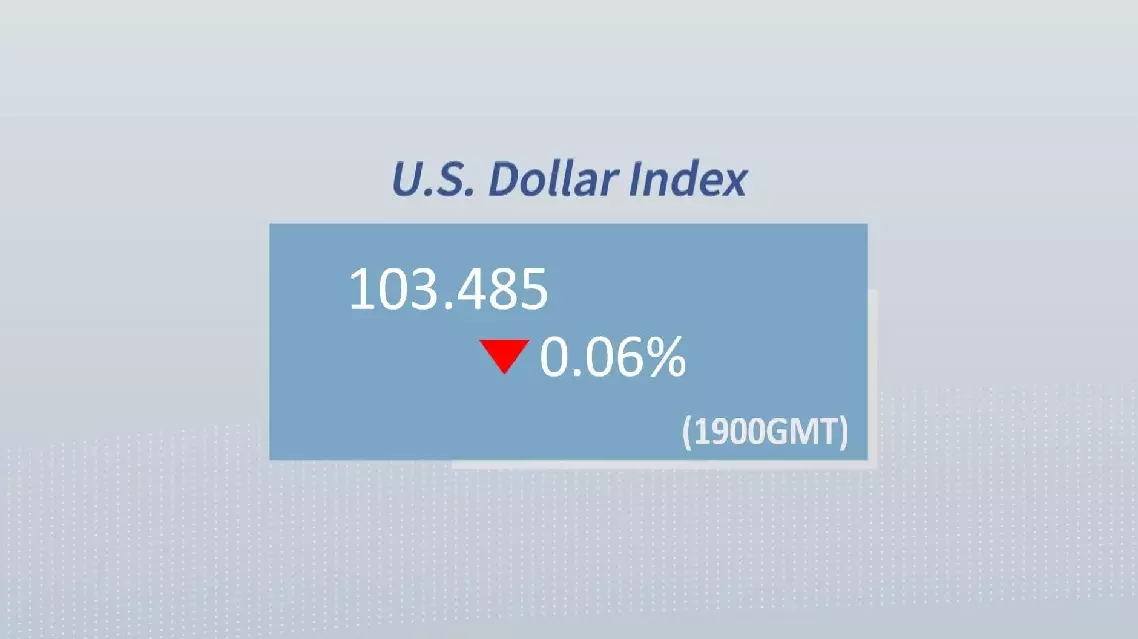
U.S. dollar ticks down
China's Ministry of Commerce warned on Tuesday that the U.S. abuse of export controls disrupts global semiconductor supply and industrial chains, vowing to take countermeasures if Washington persists in its erroneous course.
The warning came after the U.S. Commerce Department announced on Monday that it would restrict China's remote access to advanced semiconductors.
A spokesperson for China's Ministry of Commerce said in a statement that the U.S. has overstretched the concept of national security, abused export control measures, and arbitrarily interfered in the normal trade and cooperation between Chinese enterprises and their foreign partners.
The spokesperson said that the U.S. move violates the important consensus reached by the two heads of state, tramples on market rules and the international economic and trade order, and disrupts global semiconductor supply and industrial chains, adding that China expresses strong dissatisfaction and firm opposition.
China hopes the United States will work with China to return to the right track of resolving differences through consultation and cooperation, the spokesperson said, adding that China will take countermeasures to firmly safeguard its national sovereignty, security and development interests if Washington persists in its erroneous decision.
China vows countermeasures against U.S. restrictions on remote access to advanced semiconductors