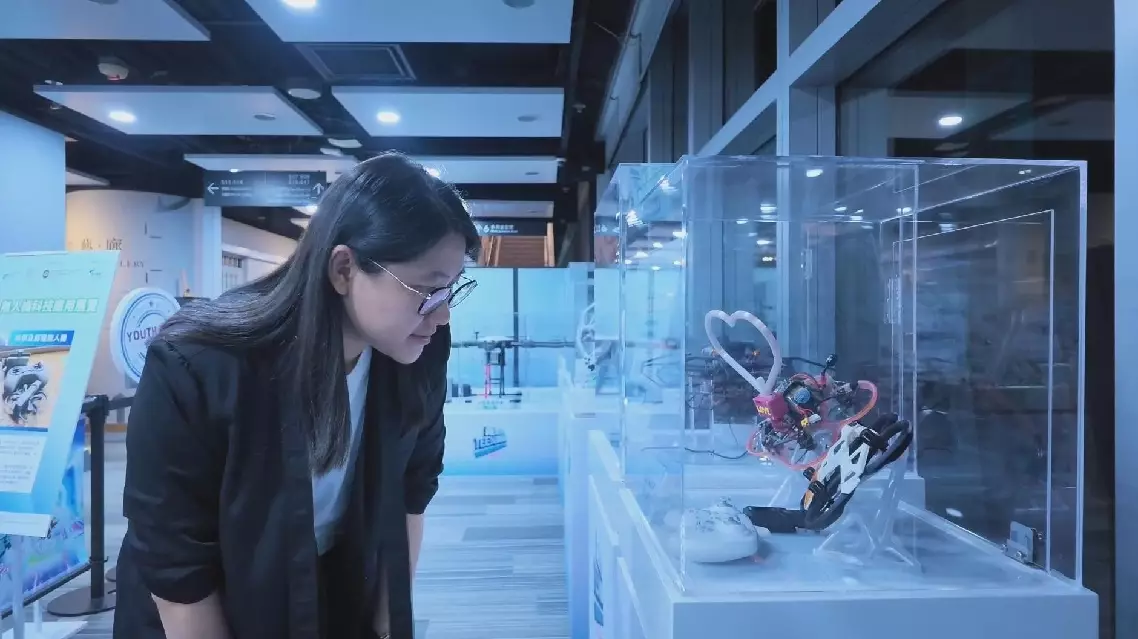
A young Hong Konger who studied on the Chinese mainland says the city's young people can serve as two-way messengers in driving the special administrative region's integration with the mainland, after her own student years there gave her a wider view of the country and a stronger sense of belonging to it.
Jenny Wong, from the Hong Kong Special Administrative Region (SAR), went to study at Huaqiao University in Quanzhou, southeast China's Fujian Province, in 2015.
During her time on the mainland, she took part in rural revitalization programs and volunteer work, from village visits to community welfare activities. The experiences gave her a deeper understanding of the mainland, and one program in particular stayed with her.
"What impressed me most was a rural revitalization program for students from the Hong Kong SAR, Macao SAR and Taiwan region called 'Hundred Villages, Thousand Volunteers'. Our team went into rural areas to see rural life and landscapes with our own eyes. I truly witnessed rural progress and grassroots dedication," said Wong.
Since graduating and returning to Hong Kong, Wong has continued to promote Chinese culture and take part in community services. Her time on the mainland, she says, changed the way she sees her country and her city.
"Looking back on my time studying on the Chinese mainland, the biggest change it has brought to me is that I have now broadened my horizon when dealing with issues. I used to see things only from my own standpoint or that of a Hong Konger. After studying on the mainland, I learned to adopt a more macro lens to understand the country and the relationship between the mainland and Hong Kong. I have also strengthened my sense of national identity. I understand clearly that as young people from Hong Kong, we can take on a communicative role serving as a bridge between both sides," said Wong.
Wong believes the unique strengths Hong Kong derives from "One Country, Two Systems" give it special value in trade, culture and youth exchanges, and allow it to connect the mainland with the wider world.
"Hong Kong's greatest strength lies in its dual attributes under 'One country, Two systems.' Rooted in the motherland, it connects to the mainland's vast market and opportunities while staying globally connected with international institutions and talent. Hong Kong can serve as a two-way hub. On the one hand, stories and culture from the Chinese mainland spread worldwide via Hong Kong. On the other hand, global information, ideas and opportunities flow into the mainland. Whether for trade, culture or young people exchanges, this is Hong Kong's unique value," she said.
Looking ahead, Wong hopes the ties being built among the region's young people will keep growing, deepening understanding and trust along the way.
"I hope to see more practical projects for young people across the Asia-Pacific in public welfare, cultural creation and innovation and entrepreneurship, so young people from all regions can connect more and discuss social issues together. Young people are like seeds. I took part in such social practices in my school years, so I firmly believe sustained exchanges among young people are vital for regional integration," said Wong.
Hong Kong student highlights youth's role in driving integration with mainland