SRINAGAR, India (AP) — Government forces killed a militant commander in Indian-controlled Kashmir on Wednesday, police said, days after rebels fighting Indian rule wounded three soldiers in an ambush on a paramilitary patrol in the disputed region.
Police and soldiers cordoned off Zangalpora village in southern Kashmir’s Kulgam district after receiving a tip that a rebel commander was hiding there, officials said. He had escaped a gunfight with troops two days earlier in a neighboring village, where his associate was killed.
Click to Gallery
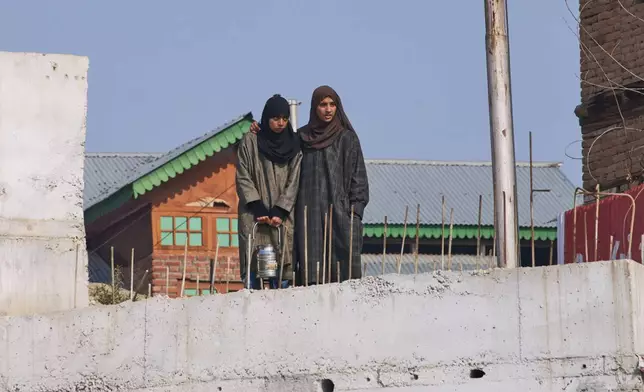
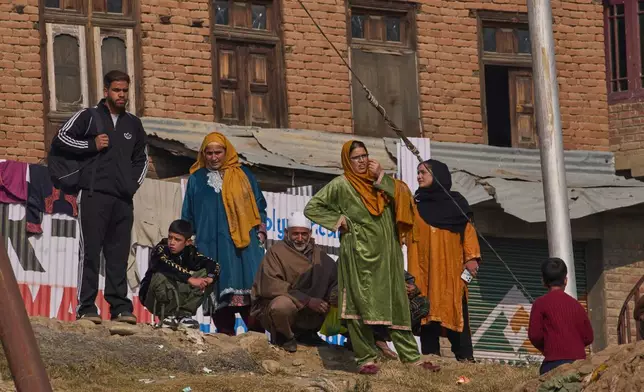
Kashmiri girls watch from a bridge on a road leading to the site of a gunbattle in Zanglapora, about 65 kilometers (40 miles) south of Srinagar, in Indian-controlled Kashmir, Wednesday, Nov. 18, 2026. (AP Photo/Dar Yasin)
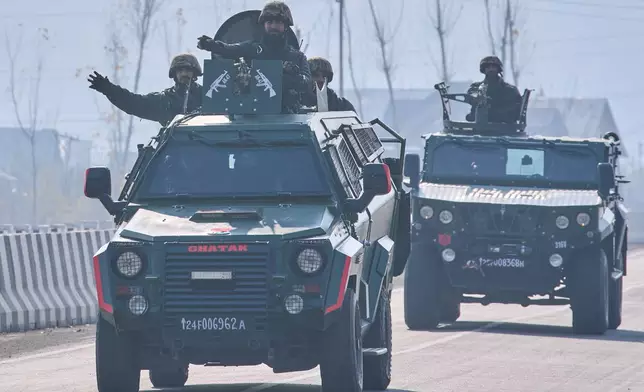
Indian soldiers in armored vehicles leave the site of a gunbattle in Zanglapora, about 65 kilometers (40 miles) south of Srinagar, in Indian-controlled Kashmir, Wednesday, Nov. 18, 2026. (AP Photo/Dar Yasin)
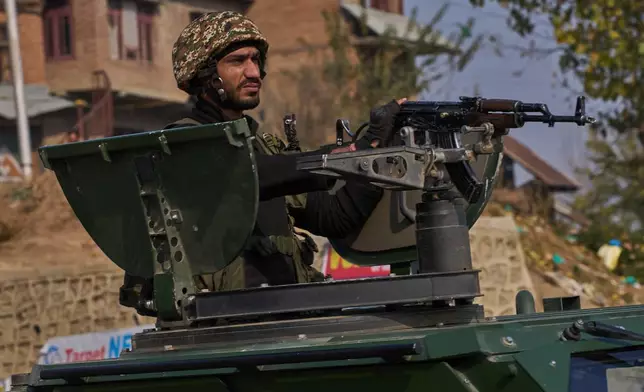
An Indian soldiers stands guard on an armoured vehicle, near the site of a gunbattle that happened last week in Zanglapora, about 65 kilometers (40 miles) south of Srinagar, in Indian-controlled Kashmir, Wednesday, Nov. 18, 2026. (AP Photo/Dar Yasin)
Kashmiri villagers watch a road leading to the site of a gunbattle in Zanglapora, about 65 kilometers (40 miles) south of Srinagar, in Indian-controlled Kashmir, Wednesday, Nov. 18, 2026. (AP Photo/Dar Yasin)
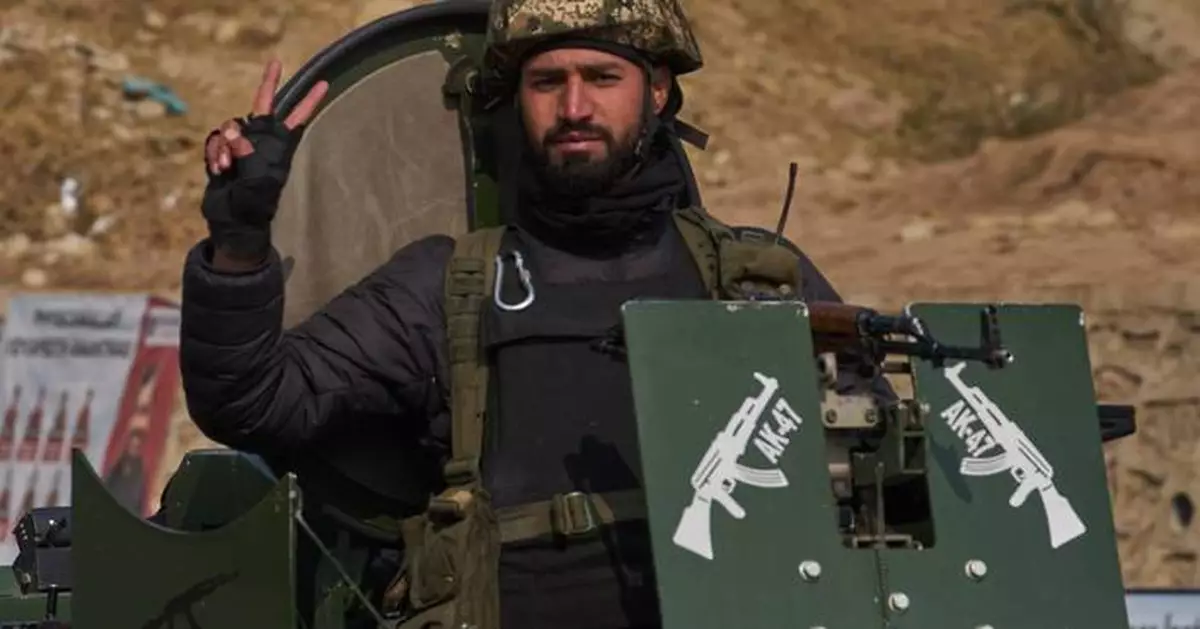
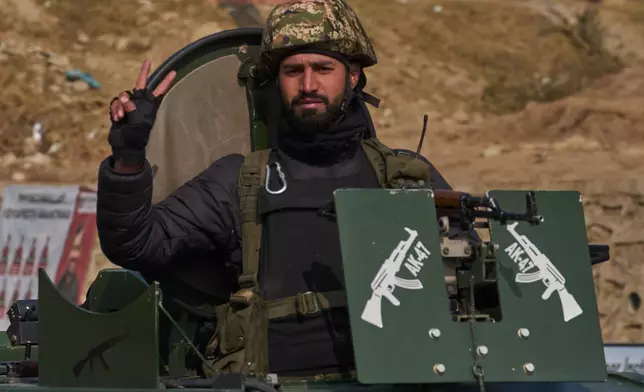
An Indian soldier flashes victory sign as he stands guard on an armoured vehicle, near the site of a gunbattle that happened last week in Zanglapora, about 65 kilometers (40 miles) south of Srinagar, in Indian-controlled Kashmir, Wednesday, Nov. 18, 2026. (AP Photo/Dar Yasin)
Police named the militant as Mohammed Lateef Bhat. They said he took shelter inside a mosque and was killed in the ensuing fighting.
Anayat Ali Choudhary, Kulgam’s police chief, told reporters that the army and police made multiple attempts to persuade Bhat to surrender through a video call, but he refused.
Bhat joined the militant ranks last year and had coordinated several attacks on Indian troops, including last week’s ambush on a Central Reserve Police Force patrol in Kulgam that wounded three paramilitary soldiers, Choudhary said.
Amit Shah, India’s home minister, said in a social media post that Bhat was the “last known active local terrorist” of the Lashkar-e-Taiba rebel group in the region’s Kashmir Valley, the heartland of the rebellion against Indian rule.
The Associated Press could not independently verify the details of the operation.
Last week's militant attack came days after Indian Prime Minister Narendra Modi praised the Central Reserve Police Force for recording zero casualties for 12 consecutive months for the first time in 47 years, calling the achievement in a Nov. 3 social media post, “A ZERO that speaks volumes.”
Following the attack, joint teams of police and soldiers launched an extensive search operation in Kulgam, laying siege to several villages in the district that continued Wednesday. Hundreds of suspects were questioned and at least 20 were detained during search operations, officials said.
Residents expressed concern over the ongoing military crackdown, saying the measures had created fear, uncertainty and hardship.
Mehbooba Mufti, Kashmir’s former top elected official and a former ally of Modi’s party, said the areas under siege had virtually “turned into a cantonment following the attack” and described reports from Kulgam as “extremely distressing.”
“Punishing an entire population for the actions of unidentified militants and possible security lapses is deeply unjust and unacceptable,” Mufti said in a social media post Monday. “Collective punishment only breeds alienation and resentment.”
Nuclear-armed rivals India and Pakistan each administer part of Kashmir, but both claim the territory in its entirety. Militants in the Indian-controlled portion of Kashmir have been fighting New Delhi’s rule since 1989. Many Muslim Kashmiris support the rebels’ goal of uniting the territory, either under Pakistani rule or as an independent country.
India insists the Kashmir militancy is Pakistan-sponsored terrorism. Pakistan denies the charge and many Kashmiris consider it a legitimate freedom struggle. Tens of thousands of civilians, rebels and government forces have been killed in the conflict.

Kashmiri girls watch from a bridge on a road leading to the site of a gunbattle in Zanglapora, about 65 kilometers (40 miles) south of Srinagar, in Indian-controlled Kashmir, Wednesday, Nov. 18, 2026. (AP Photo/Dar Yasin)
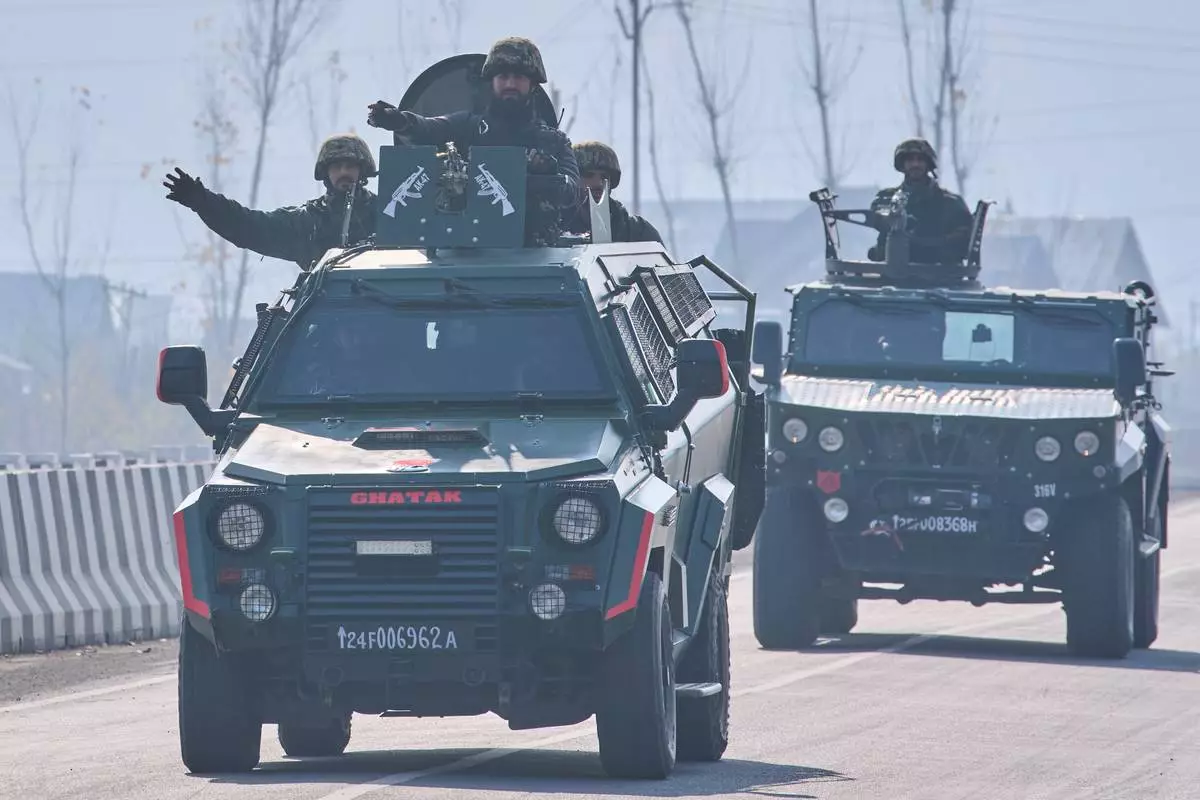
Indian soldiers in armored vehicles leave the site of a gunbattle in Zanglapora, about 65 kilometers (40 miles) south of Srinagar, in Indian-controlled Kashmir, Wednesday, Nov. 18, 2026. (AP Photo/Dar Yasin)
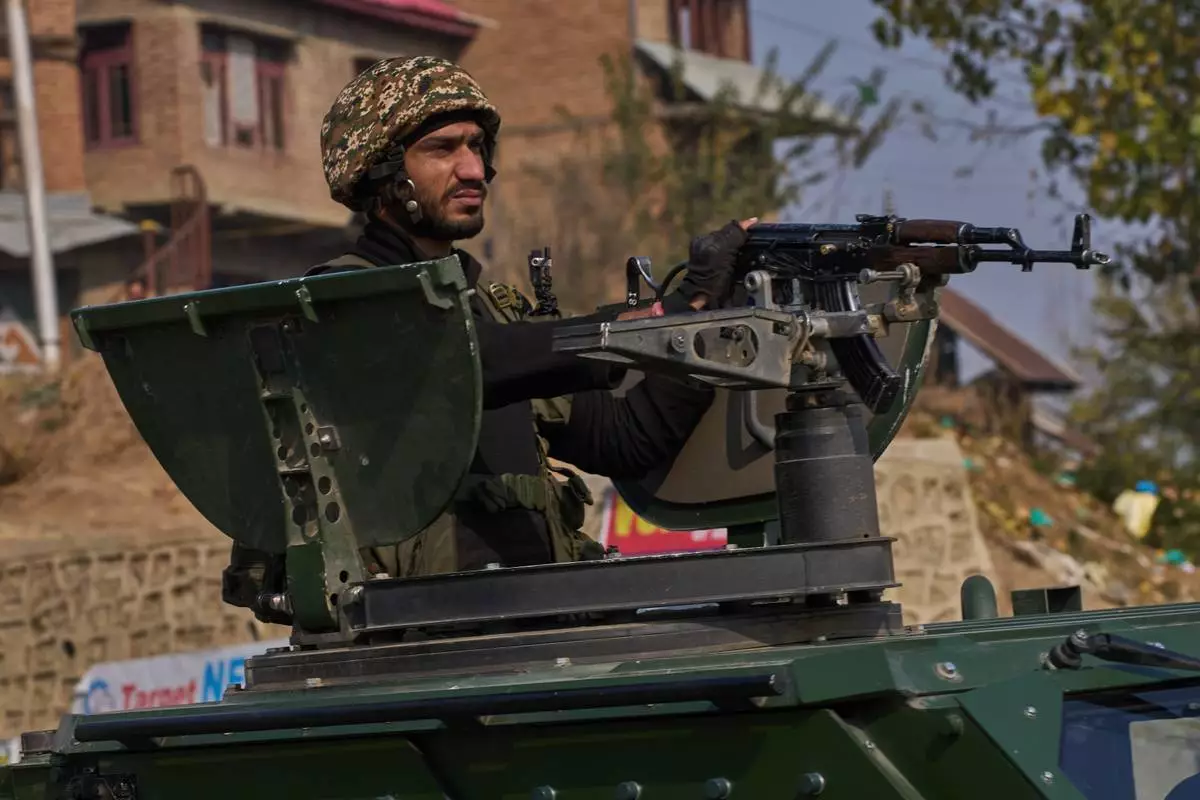
An Indian soldiers stands guard on an armoured vehicle, near the site of a gunbattle that happened last week in Zanglapora, about 65 kilometers (40 miles) south of Srinagar, in Indian-controlled Kashmir, Wednesday, Nov. 18, 2026. (AP Photo/Dar Yasin)

Kashmiri villagers watch a road leading to the site of a gunbattle in Zanglapora, about 65 kilometers (40 miles) south of Srinagar, in Indian-controlled Kashmir, Wednesday, Nov. 18, 2026. (AP Photo/Dar Yasin)
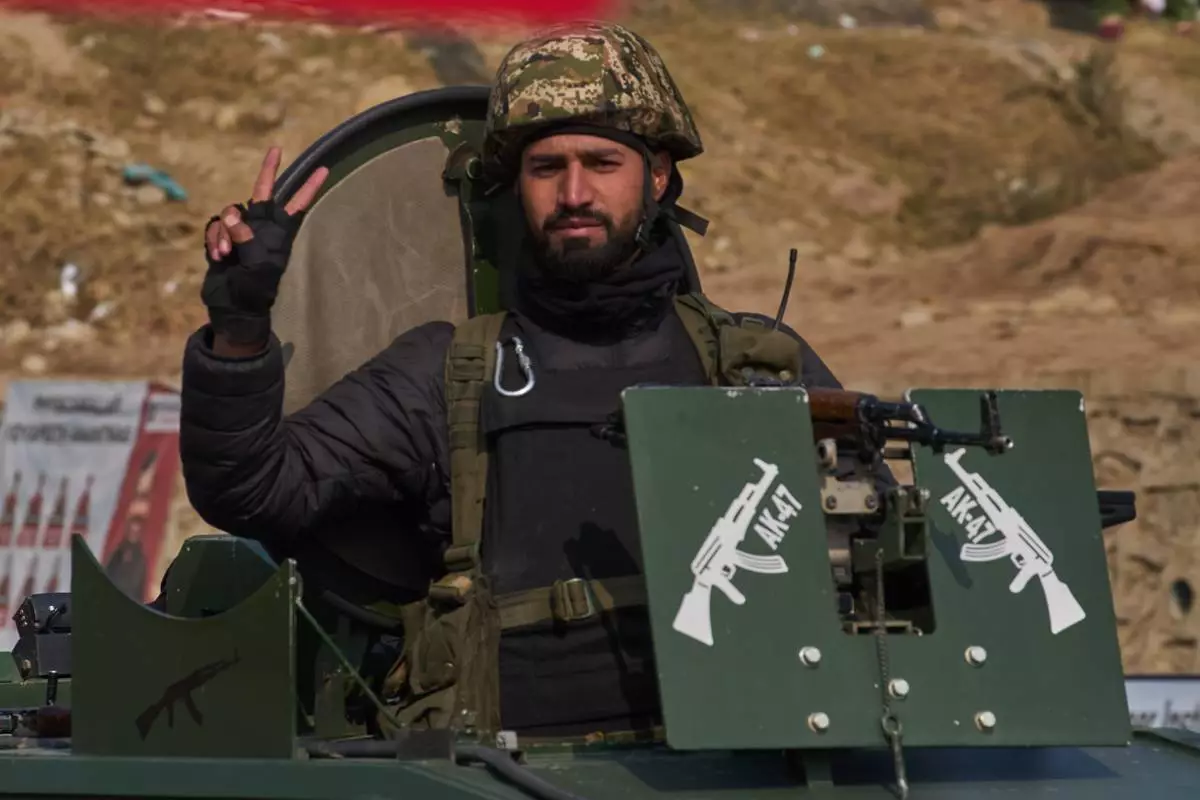
An Indian soldier flashes victory sign as he stands guard on an armoured vehicle, near the site of a gunbattle that happened last week in Zanglapora, about 65 kilometers (40 miles) south of Srinagar, in Indian-controlled Kashmir, Wednesday, Nov. 18, 2026. (AP Photo/Dar Yasin)
AGOURA HILLS, Calif. (AP) — Touring the world's largest wildlife crossing, Beth Pratt stepped carefully through freshly planted native vegetation and held up her hand for silence.
“Hear that? We're listening to birdsong right now, on top of one of the busiest freeways in the U.S.!” a beaming Pratt, one of the project’s leaders, said excitedly. “That makes my heart glad.”
The warbling was the latest sign that the bridge, spanning U.S. 101 and a feeder road about 35 miles (56 kilometers) northwest of downtown Los Angeles, is already in use by animals ahead of the official Dec. 2 opening ceremony.
Just two weeks earlier, motion-sensor cameras captured a lone coyote believed to be the first mammal to make the trek safely across. Days after that momentous crossing, three juvenile coyotes were seen on camera playing in the brush beneath the 10-foot (3-meter) sound-dampening walls that line the span.
“They don't care about ribbon cuttings,” laughed Pratt, president of the nonprofit Wildlife Crossing Fund.
About 300,000 cars a day travel that stretch of the 101 in Agoura Hills, a small city surrounded by a patchwork of protected wildland that the new crossing will connect. Fencing along the freeway funnels animals to the crossing.
The bridge, with a landscape that's indistinguishable from surrounding hillsides, stretches 1,250 feet (380 meters) in two sections over the roadways to give animals hemmed in by urban sprawl a safe path to the nearby Santa Monica Mountains and beyond.
It is named the Wallis Annenberg Wildlife Crossing for the late philanthropist whose foundation donated $25 million toward the $114 million total budget. The cost ballooned from an initial $92 million, and the money came from donations from 6,000 members of the public, as well as grants from nonprofits and state funds set aside for conservation purposes. Leonardo DiCaprio was one of the earliest donors after a funding drive was launched a decade ago.
Pratt said for her the real official opening will be when a mountain lion, a species listed as threatened in California, finds its way to the overpass.
The star of the campaign to build the bridge was the cougar — known as P-22 — an LA celebrity in its own right who traveled across freeways and made a home in a huge Los Angeles park. P-22, who was euthanized in 2022 after likely being hit by a car, became a symbol of the shrinking genetic diversity of wild animals that must remain all but trapped by sprawling development or risk becoming roadkill. Thousands attended a memorial service for him.
Scientists tracking mountain lions fitted with GPS collars found over decades that roadways were largely confining animals in mountains that run along the Malibu coast and across the middle of Los Angeles to Griffith Park, where P-22 settled.
During the tour last week, Pratt wore a shirt emblazoned with an image of the beloved cougar. She hopes to eventually erect a statue of P-22 on the side of the new bridge.
Caged by concrete, killed by cars and sickened by rat poison, the isolated pumas risk inbreeding themselves into extinction, scientists and state wildlife officials say. A report just last week from the University of California, Davis, found that at least 780 mountain lions — or 18% of the state’s population — are killed by vehicles each year.
“The story of P-22 was just so compelling,” said Mari Galloway, California program director for the nonprofit Wildlands Network. “We saw the peril in what happened to that particular cat. It was demonstrative of what these mountain lions are facing in this part of the landscape.”
Galloway's group, which was not involved in the Annenberg crossing, hopes the new bridge will spur the construction of many others across California and the nation. The Wildlands Network is working with state transportation officials in the early stages of planning a wildlife bridge for a stretch of highway in the Mojave Desert east of Los Angeles where bighorn sheep roam.
Wildlife crossings — bridges and tunnels — are common in western Europe and Canada. A famous one in Banff National Park in Alberta spans the Trans-Canada Highway and is frequently used by bears, moose and elk.
A large overpass in Colorado over Interstate 25, along with other mitigation efforts including underpasses and fencing, has contributed to a 91% decrease in wildlife collisions, that state's parks and wildlife department announced in September.
Atop the Annenberg crossing, Anthony Deascentis, a field inspector for the California Department of Transportation, waved Pratt over to some scrub brush. He pointed out an orb-weaver spider, as big as a silver dollar, building an elaborate circular web.
“There's also a good amount of bees enjoying the native plants,” said Deascentis. In addition, he's spotted an oak titmouse, sparrows and hummingbirds — further evidence that wildlife are taking to the new terrain even as crews using heavy machinery continued to fill in the landscape on the bridge's south side.
Jeff Sikich, a biologist for the National Park Service who collars and tracks cougars and other wild animals, said the next step will be to implant “biologgers” that will allow scientists to also monitor physiological data like heart rate, body temperature and activity levels. With that information, they'll be able to tell if the animals are stressed while using the wildlife bridge, or “if they're relaxed up there.”
Sikich said in recent weeks scientists have detected multiple mammals in the hills nearby the new span, including bobcats, deer, gray foxes and a female mountain lion with two kittens.
He said they're “sniffing around,” hopefully getting ready to make the crossing.
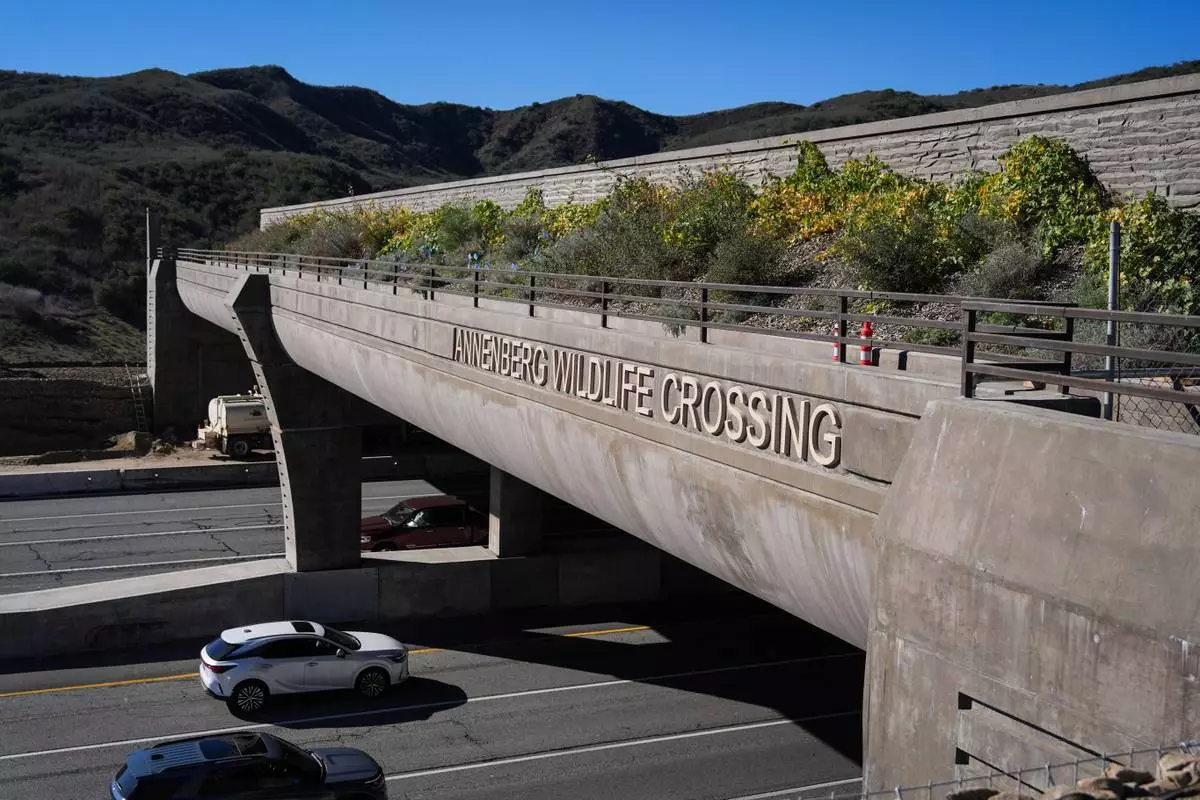
Traffic moves along U.S. Highway 101 beneath the Wallis Annenberg Wildlife Crossing in Agoura Hills, Calif., Wednesday, Nov. 11, 2026. (AP Photo/Jae C. Hong)
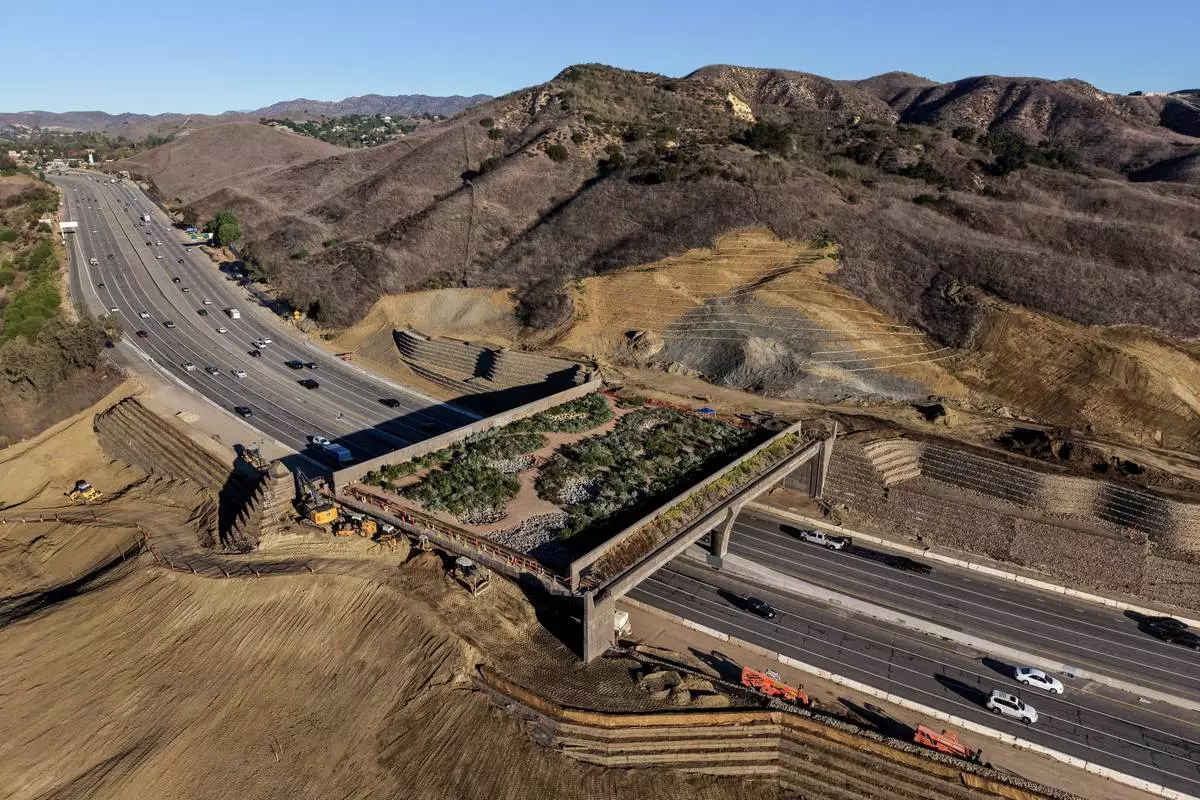
An aerial view shows the Wallis Annenberg Wildlife Crossing over U.S. Highway 101 in Agoura Hills, Calif., Wednesday, Nov. 11, 2026. (AP Photo/Jae C. Hong)
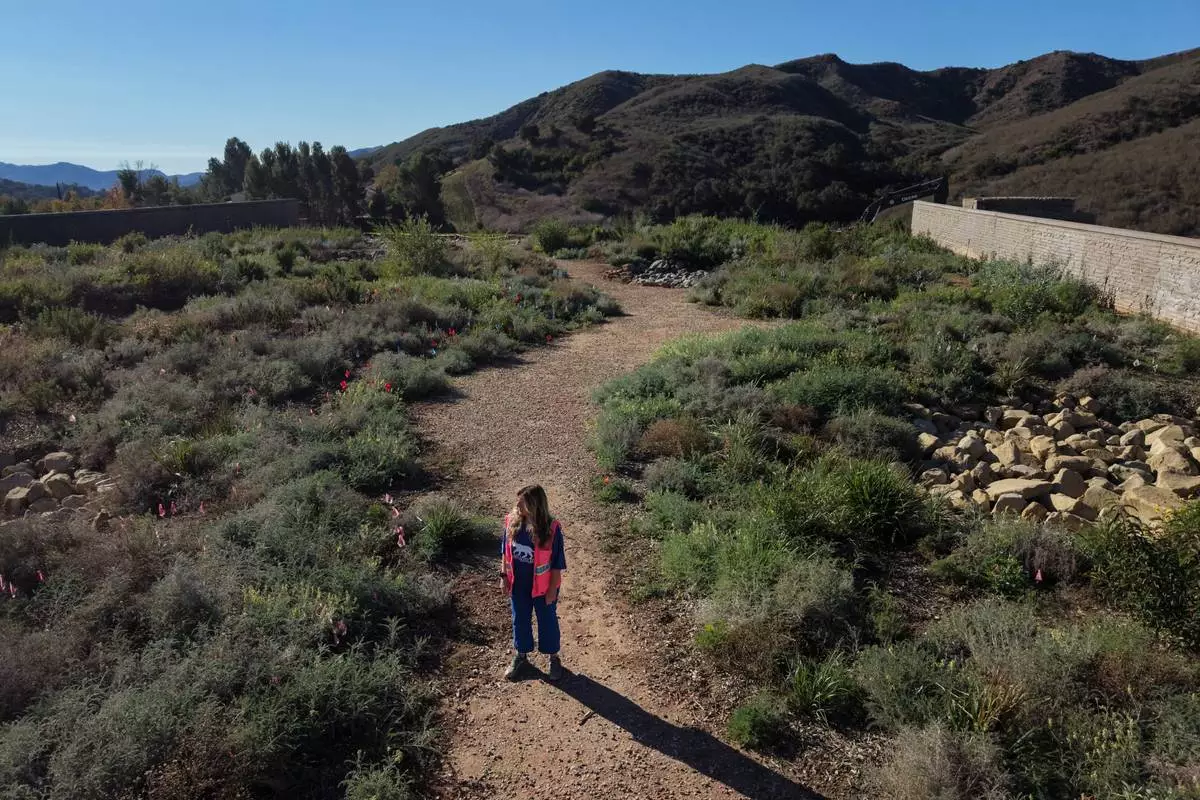
Beth Pratt, founder of the Wildlife Crossing Fund, poses for a photo on the Wallis Annenberg Wildlife Crossing in Agoura Hills, Calif., Wednesday, Nov. 11, 2026. (AP Photo/Jae C. Hong)
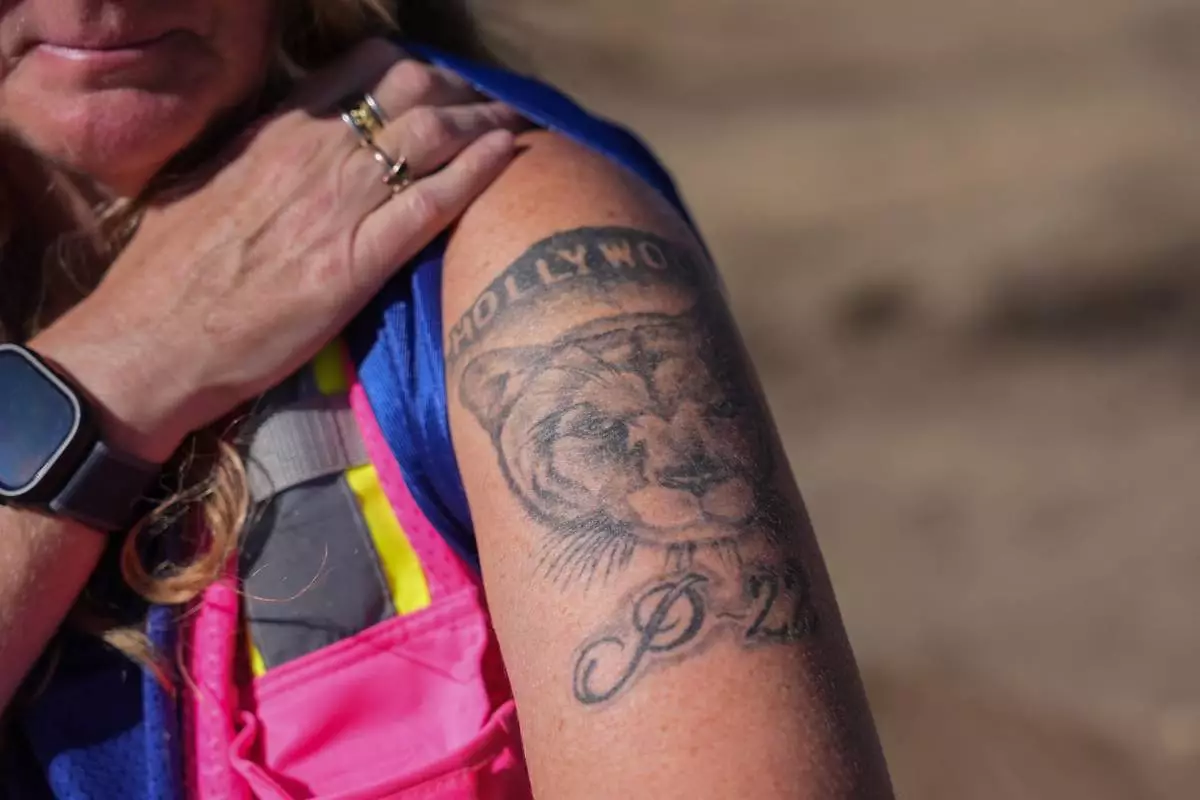
Beth Pratt, founder of the Wildlife Crossing Fund, shows a tattoo of P-22, the famed mountain lion that lived in Los Angeles' Griffith Park, on the Wallis Annenberg Wildlife Crossing in Agoura Hills, Calif., Wednesday, Nov. 11, 2026. (AP Photo/Jae C. Hong)
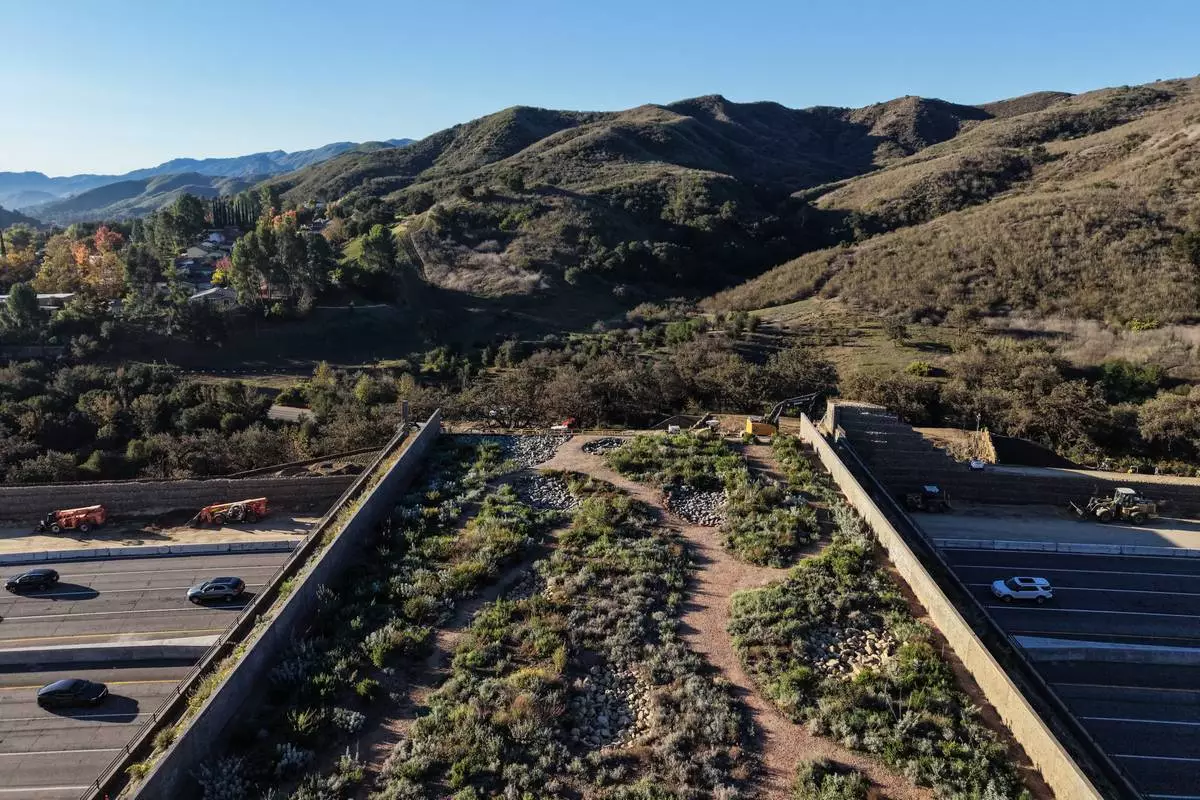
An aerial view shows vegetation growing on the Wallis Annenberg Wildlife Crossing over U.S. Highway 101 in Agoura Hills, Calif., Wednesday, Nov. 11, 2026. (AP Photo/Jae C. Hong)