CINCINNATI--(BUSINESS WIRE)--Nov 18, 2026--
GLP-1 users influence the eating and drinking habits of more than one in five adults in the Americas, according to a special edition of dunnhumby’s Consumer Trends Tracker released today. The report, “ How GLP-1s Are Reshaping the Grocery Basket,” found that the share of consumers changing what they eat and drink because they or someone in their household uses a GLP-1 was highest in Brazil (33%) and the U.S. (31.7%) and lowest in Chile (10%). The study surveyed 8,500 consumers across the Americas in August 2026.
This press release features multimedia. View the full release here: https://www.businesswire.com/news/home/20261118034803/en/
Nearly half (45.6%) of consumers who have ever used a GLP-1 are no longer taking one, so current-user figures alone understate the category’s total reach. Discontinuation rates were highest in Chile (66.7%) and Mexico (51%) and lowest in Canada (39%) and the U.S. (40.2%). Among adults considering a GLP-1, cost is the most common reason for not yet using one (26.6%), ahead of prescription access (19.6%) and side effects (18.3%). In Brazil, conversion from consideration to usage, rises from 13% in the lowest income band to 59% in the highest.
Growing impact on grocery retail
"GLP-1s are not taking demand out of the grocery cart, it's creating an opportunity" said Jamie Samaha, chief executive officer of dunnhumby. "Spending is moving from bakery, alcohol and prepared meals to fresh produce and health care, with only 8% of users who've cut back say nothing would win them back. 92% would return to the category for the right products. The winners will be retailers and brands that can spot these households in their customer data and give them lower-sugar, higher-protein choices."
Key findings
Brazil is the market to watch in Latin America. Brazilian users report the same shifts as users in the other markets surveyed, but at around twice the depth. Among Brazilian GLP-1 users, alcoholic beverages fell 72.9 points, nearly double the Americas figure, followed by ready-to-eat meals down (-62.1 points) and bakery down 53.2 points. Fresh produce (+52.5) and health care (+43.9) gained accordingly. Awareness of GLP-1s in Brazil is near-universal, at 92% and consideration is 27.1% (highest of any market). Today’s Brazilian users are also concentrated in higher-income households. As awareness and access grow across the rest of Latin America, Brazil is the best available example of the disruption retailers and brands could face.
Methodology
This special edition of the dunnhumby Consumer Trends Tracker was fielded in August 2026 with 8,500 adults across the Americas: U.S. (2,000), Canada (1,500), Mexico (1,500), Brazil (1,500), Colombia (1,000) and Chile (1,000). The total Americas figures combine all six markets. Category scores are control-adjusted net scores among category buyers who have used a GLP-1: the share spending more, minus the share spending less, minus the average of three control categories (common household products, pet care and hard goods).
About dunnhumby
The science of serving every customer. Together. At scale.
As the essential intelligence layer connecting the world’s leading retailers and brands, dunnhumby helps businesses grow through faster, better decision making. Sitting at the intersection of loyalty, media and category management, dunnhumby helps clients navigate complex and competing priorities. Combining AI-enabled science, software and trusted advice with more than 35 years of dedicated retail experience, dunnhumby is recognized as a leader in connecting customer insight and action to build loyalty, drive performance and deliver results that last.
With offices across Europe, Asia, Africa and the Americas, dunnhumby works with iconic retailers and brands including Tesco, Walmart Data Ventures, Coca-Cola, Meijer, Procter & Gamble and L’Oréal, to make smarter decisions today and tomorrow.
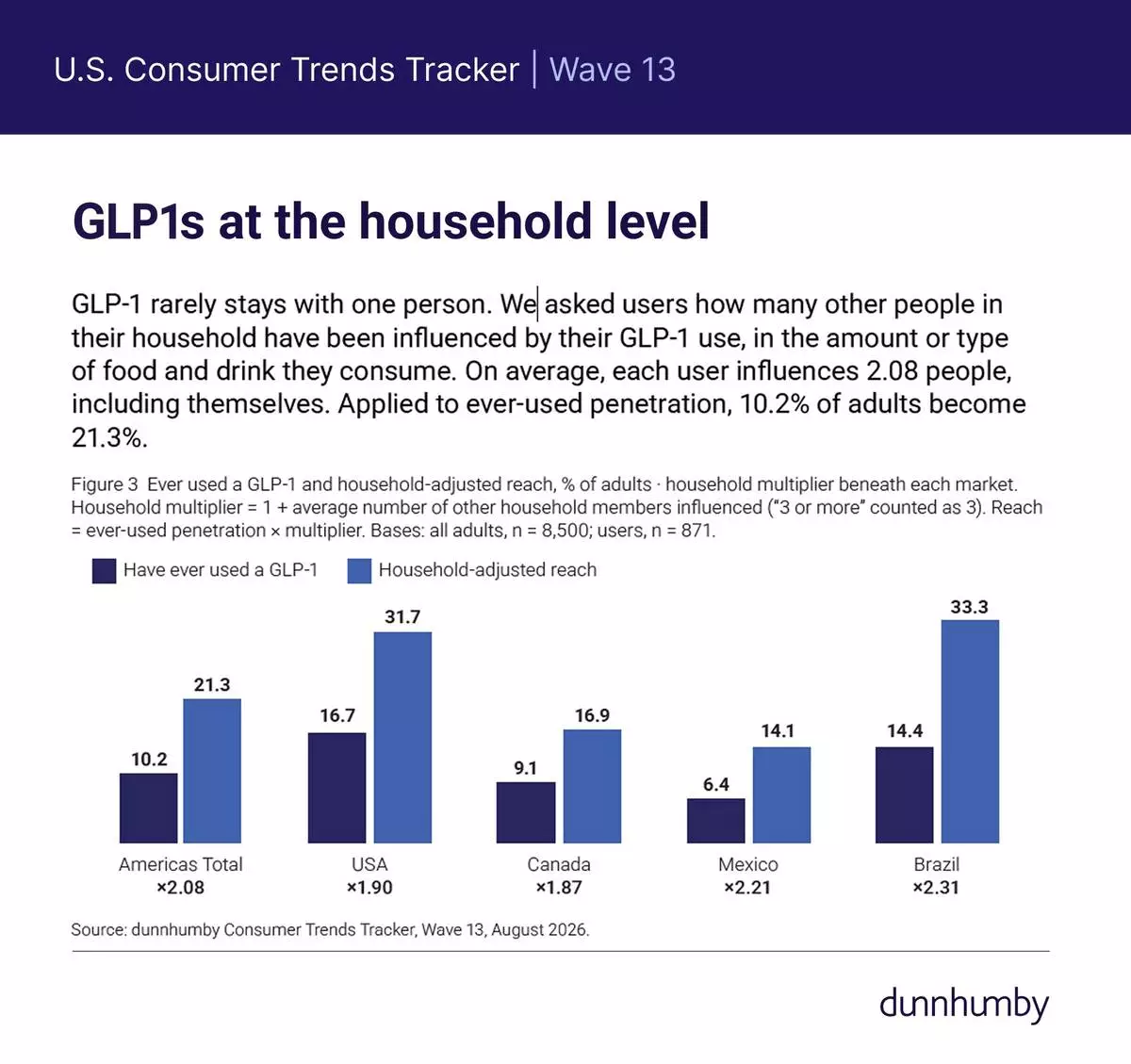
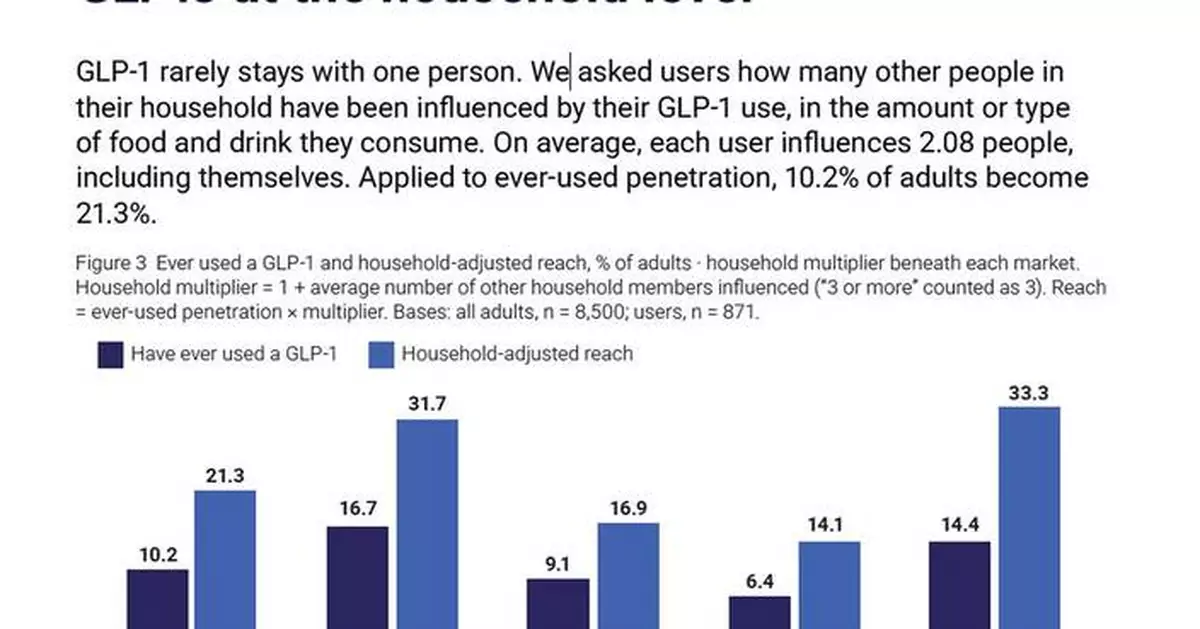
GLP-1 rarely stays with one person. We asked users how many other people in their household have been influenced by their GLP-1 use, in the amount or type of food and drink they consume. On average, each user influences 2.08 people, including themselves. Applied to ever-used penetration, 10.2% of adults become 21.3%.
Iran’s targeting of its Gulf neighbors picked up Wednesday with attacks on Bahrain and on a Kuwaiti base used by U.S. forces, in an apparent retaliation for American fire a day earlier.
Iran-backed Houthis also fired two cruise missiles at Riyadh, following a major attack by the Saudi-backed coalition on the rebel group’s missile and drone capabilities.
Meanwhile, a state-run oil giant in the United Arab Emirates said one of its vessels was attacked while transiting the Strait of Hormuz.
Here is the latest news from the Middle East on Wednesday. Read our full coverage here.
The Saudi-led coalition fighting the Iranian-backed Houthis said Wednesday it launched a major air attack across the rebel-held territories in Yemen, which the Houthis said killed at least 17 people.
Maj. Gen. Turki al-Malki, the coalition spokesman, said the strikes launched Tuesday targeted Houthi tunnels to mountain warehouses that store ballistic missiles, and workshops to assemble and store drones. He said “60 legitimate military targets” were destroyed in the capital, Sanaa, and the provinces of Amran, Saada and Hodeida.
A spokesman for the Houthi-run health ministry, Anees al-Asbahi, said one strike hit a sponge factory in Hodeida, killing at least 15 people and wounding 15 others. Another strike on Saada killed at least two people and wounded four. In Sanaa, at least nine people were wounded in a strike on a shoe factory, al-Asbahi said.
Al-Malki said Saudi air defenses intercepted and destroyed two cruise missiles fired by the Houthis on Wednesday toward the capital, Riyadh. Saudi Arabia also sounded alerts in three cities in the kingdom's south, near the border with Yemen, but officials later said the potential danger had passed, without providing more details. The alerts have become a usual occurrence in recent months.
Wednesday's fighting came after Saudi-backed forces pulled out from areas around the Bab el-Mandeb Strait in a setback to the anti-Houthi camp. The withdrawal consolidated the Iran-backed rebels’ grip on the waterway that serves as a key route for global oil and commercial goods shipments.
The Iranian army claimed early Wednesday it targeted Ali Al Salem Air Base with drones, triggering air defense alerts in the oil-rich Gulf country for the first time in weeks.
The army claimed it attacked air defense systems, as well as drone and missile launch platforms, Iran’s state broadcaster reported.
U.S. Central Command, which oversees U.S. forces in the Middle East, did not immediately comment.
Kuwait’s army said Wednesday its air defenses intercepted drone attacks but did not immediately report damage. And Bahrain’s army reported its defense systems repelled a number of Iranian attacks.
The Abu Dhabi National Oil Company said one crew member was unaccounted for and 11 others were injured in the attack Tuesday. It did not identify the vessel or say who was behind the attack in a statement Wednesday.
Maritime incidents in and around the Strait of Hormuz have increased in recent weeks. Iran claimed attacks on vessels it said transited “unauthorized” routes, and said others hit navy mines.
A Panama-flagged gas tanker was also attacked earlier this week while transiting the strait, the Indian embassy in Oman said. One Indian crew member was unaccounted for and two more were injured.
Hundreds of people protested after 13 workers died in a weekend bus crash, demanding that the bus company's leaders resign, Iranian state media reported. Videos shared on social media showed people chanting anti-theocracy slogans, including “death to the dictator," in the town of Abdanan, a hot spot for anti-government protests in January.
The protest was among the first in Iran since thousands of people were killed earlier this year in a major government crackdown on dissent.
On Tuesday, Iranian authorities arrested protesters, including seven Kurdish people, among them a 15-year-old boy, according to the Hengaw Organization for Human Rights. The group said two detainees, including the boy, were later released, while the whereabouts of the others remained unknown.
Strikes early Wednesday killed a Palestinian in Gaza City and another in Deir al-Balah, in central Gaza, according to Shifa Hospital and Al-Aqsa Martyrs Hospital, where the bodies were taken.
Israel’s military said it targeted a Hamas militant in Gaza City but did not immediately comment on the other strike. At least 1,650 Palestinians have been killed in Gaza since Israel and Hamas reached a ceasefire deal last year, according to the Health Ministry, which is part of the Hamas-run government. Its figures are generally considered reliable by the international community.
This report will be updated throughout the day as new developments emerge.
Ezzidin and Magdy reported from Cairo, Egypt.
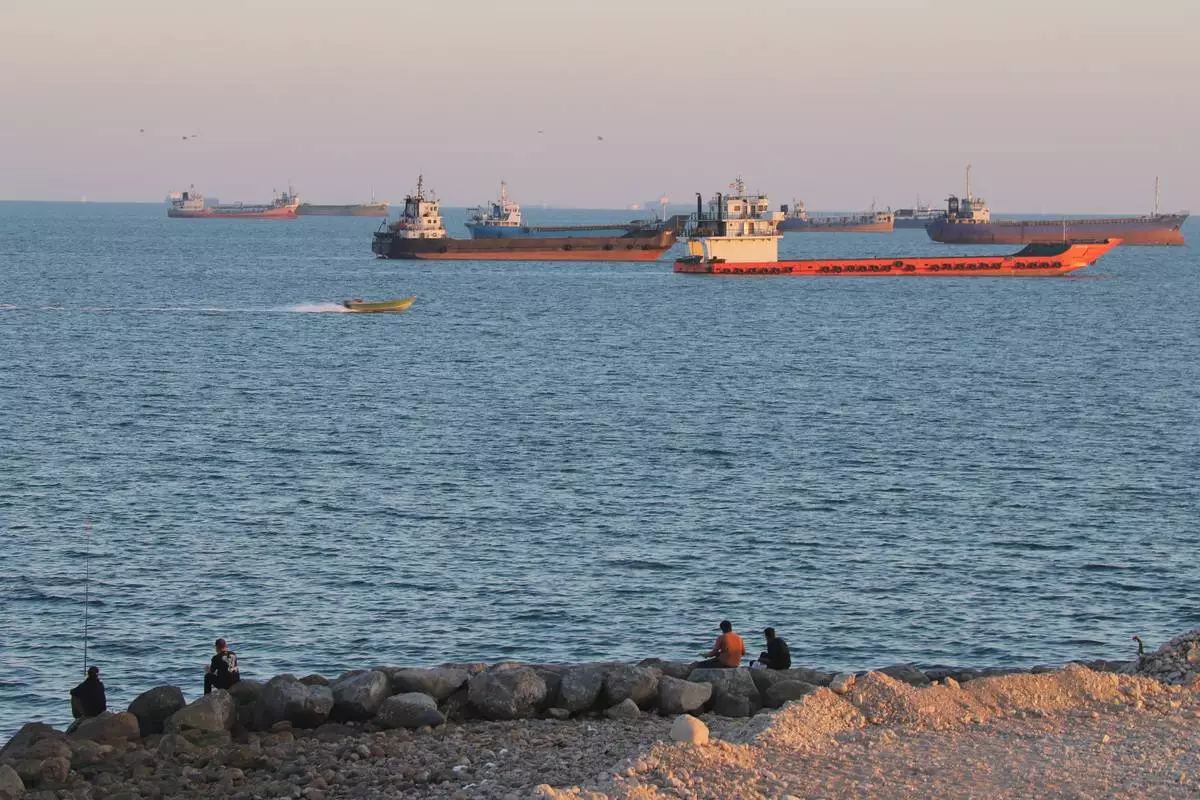
People sit on rocks along the shore as cargo ships lie at anchor in the Strait of Hormuz off Bandar Abbas, Iran, early Friday, Nov. 13, 2026. (Amirhosein Khorgooi/ISNA via AP)