FREMONT, Calif.--(BUSINESS WIRE)--Nov 18, 2026--
ASUS today announced the availability of the ProArt GR1X mini PC. Built on the NVIDIA RTX Spark™ superchip, ProArt GR1X is a Windows PC designed as an always-on home for local AI agents. It is able to run large models on-device, keep prompts and project files private, and work with the agent and creative tools people already use. ProArt GR1X can be specified with 128GB and 64GB of unified memory.
This press release features multimedia. View the full release here: https://www.businesswire.com/news/home/20261118973257/en/
Built for agentic AI, powered by RTX Spark
AI agents work best when they can run continuously, see local files and apps, and use large models without per-token fees. ProArt GR1X is built for that job — its NVIDIA RTX Spark platform pairs a 6,144-core Blackwell RTX GPU with a 20-core Grace CPU over NVLink-C2C, sharing one pool of up to 128GB unified memory.
NVIDIA RTX Spark unites NVIDIA AI, RTX graphics, and unified memory in one slim, powerful Windows PC. Designed to run larger AI models locally — without cloud dependency — and move between creative work, development, and immersive gaming without missing a beat. Connect apps, tools, and workflows into one seamless experience. Private by default, RTX Spark brings NVIDIA’s full-stack AI platform, ready for the AI workloads of today and whatever comes next. All this, delivered on the familiar, trusted Windows platform.
Running AI locally means user data stays on the desk. ProArt GR1X supports 120B-parameter LLMs with up to 1 million tokens of context, so an agent can work through large projects, expansive codebases and complete projects with precision and accuracy. Personal data stays on the machine because there’s no upload to the cloud, and there are no per-token or per-generation fees because users can rely on local AI for more tasks, letting teams iterate more frequently.
Users decide where each task runs: fully local, in the cloud, or a hybrid based on performance, cost and privacy. ProArt GR1X runs NVIDIA CUDA natively on Windows 11, with RTX acceleration for 3D, video and AI apps and DLSS, as well as Reflex and ray tracing.
Built to run AI agents 24/7
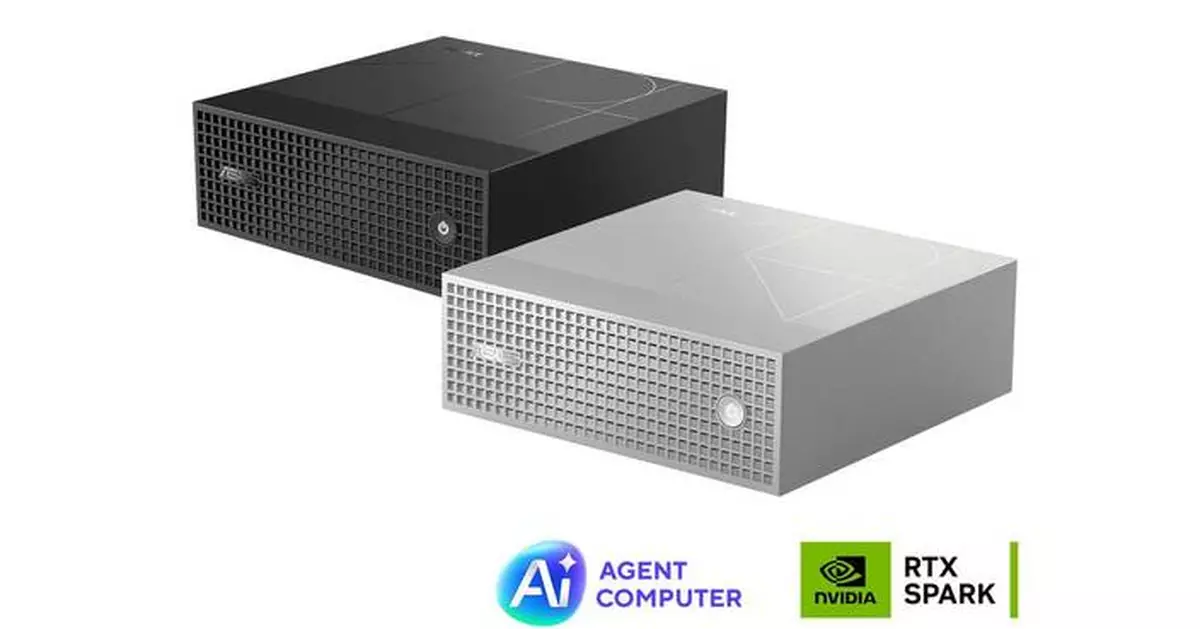
ProArt GR1X measures 150 x 150 x 51mm and weighs 1.48kg, making it small enough to sit neatly beside a monitor. It is available in an anodized black finish or a sandblasted silver coat that resists fingerprint smudges.
A dual-fan system with 218 fan blades, 57 ultra-wide fins and four heat pipes handles the 140-watt TDP, with up seven-level fan control. That cooling is what lets ProArt GR1X stay on 24/7 as an agent host.
ProArt GR1X offers a host of connectivity options to suit diverse workloads, boasting 10GbE LAN, WiFi 7 and Bluetooth® 5.4, four USB 3.2 Gen 2x2 Type-C® ports and HDMI® 2.1. It can drive up to four 4K displays, with HDMI output up to 8K, and offers dual M.2 NVMe® SSD slots with PCIe 5.0/4.0 support. Native Windows 11 means agent and creative workflows run without dual-boot or a separate Linux environment.
An ecosystem of agents and creative apps
ProArt GR1X is the latest addition to the ProArt RTX Spark family, sitting alongside the ProArt P16 and P14 laptops, and brings the same local agentic AI platform to a desktop form factor. It works with a growing set of agent and creative tools, including validated ComfyUI workflows, Adobe Creative Cloud, and ASUS apps such as Zenni Claw and MuseTree.
ASUS is in a strategic partnership with Nous Research to bring Hermes Agent, an open-source autonomous agent that operates across desktop apps, the terminal and local files, to ProArt RTX Spark PCs, including ProArt GR1X. Hermes connects to ASUS MuseTree through an official Hermes x MuseTree Skill, and it can drive ComfyUI, the open-source visual workflow platform from Comfy, for which ASUS provides validated workflows and resource packs for AI image and video generation. Adobe Creative Cloud, including Premiere, comes with a complimentary 3-month subscription for creators who want AI agents alongside their editing tools.
In addition, ProArt GR1X features ASUS Zenni Claw, a local AI agent tool for daily tasks and ASUS device control, as well as MuseTree, for local image and video generation with FLUX and Wan models; and StoryCube, which uses AI scene recognition to organize media and manage assets.
From personal AI PCs to enterprise AI infrastructure
ASUS is extending agentic AI across a comprehensive portfolio of local systems. These include ProArt PCs powered by NVIDIA RTX Spark, including the ProArt GR1X mini PC and ProArt P16 laptop; systems equipped with GeForce RTX 50 Series GPUs; the ASUS Ascent GX10 powered by NVIDIA DGX Spark for AI model fine-tuning, prototyping and inference; and the ASUS ExpertCenter Pro ET900, powered by NVIDIA DGX Station, for demanding AI development and large-scale model training.
This entire ASUS portfolio brings together agentic AI, generative AI, recognition and classification technologies, partner integrations, and deployment expertise. From a single creator laptop to data center and enterprise infrastructure, customers can access local AI hardware, software, and workflow solutions through one unified ASUS ecosystem.
AVAILABILITY & PRICING
ASUS ProArt GR1X is now available in United States from the following channels:
Please contact your local ASUS representative for further information. Specifications and availability vary by region and are subject to change.
NOTES TO EDITORS
ProArt GR1X website:https://www.asus.com/displays-desktops/mini-pcs/proart-mini-pc-series/proart-gr1x-mini-pc/
ASUS Business website:https://www.asus.com/business/
ASUS LinkedIn:https://www.linkedin.com/company/asus/posts/
ASUS Business LinkedIn:https://www.linkedin.com/showcase/asus-business/
ASUS Pressroom:http://press.asus.com
ASUS Global Facebook:https://www.facebook.com/asus
ASUS Global X (Twitter):https://www.x.com/asus
About ASUS
ASUS (2357.TW) is an innovative technology leader delivering the world’s most comprehensive AI solutions across Infrastructure, Physical AI, AI PC/Devices, and Engineering the AI Advantage. Guided by its “Ubiquitous AI. Incredible Possibilities” strategy, ASUS is bringing enterprise-to-edge AI to life. The ASUS portfolio also includes the ROG and ProArt sub-brands, which serve gamers and creators worldwide.
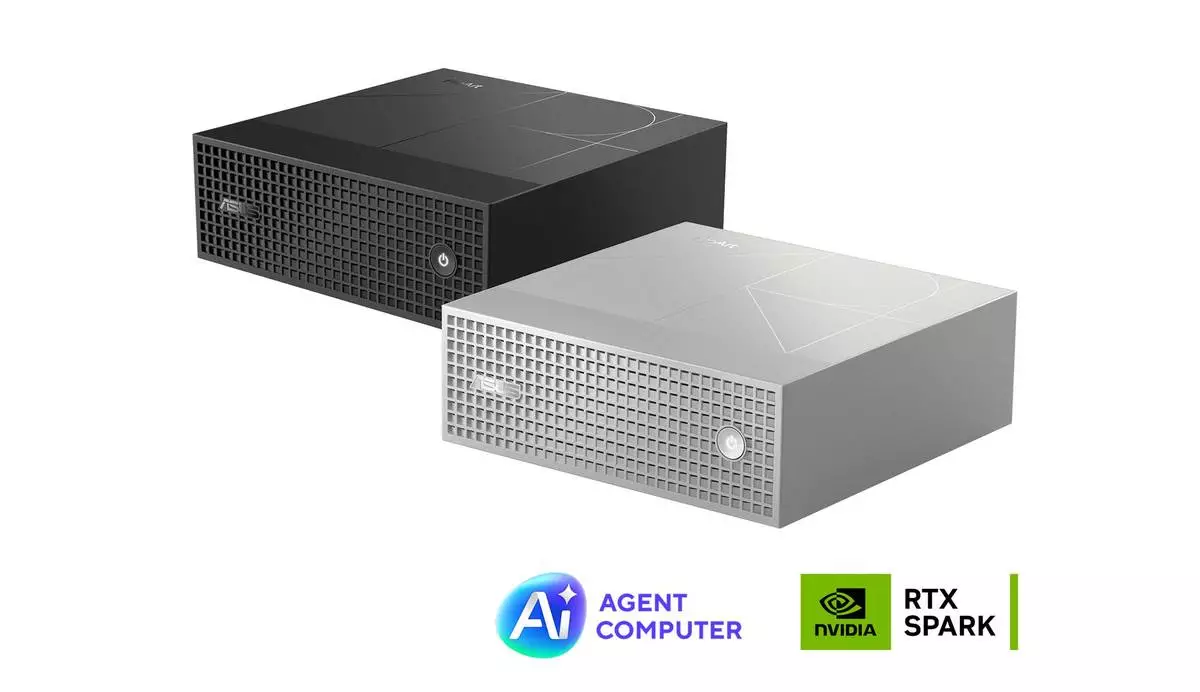
ASUS showcases the ProArt GR1X Mini PC, an AI agent computer powered by the NVIDIA RTX™ Spark N1X Superchip, at SC26 (Booth #2234, McCormick Place, Chicago). The GR1X pairs an NVIDIA Blackwell RTX GPU with an up to 20-core NVIDIA Grace™ CPU, delivering up to 1 petaflop of FP4 AI performance and up to 128 GB of unified memory. That lets it run personal AI agents, generative AI and creative workloads locally on Windows. It fits in a 150 × 150 × 51 mm chassis and comes in Black and Silver.