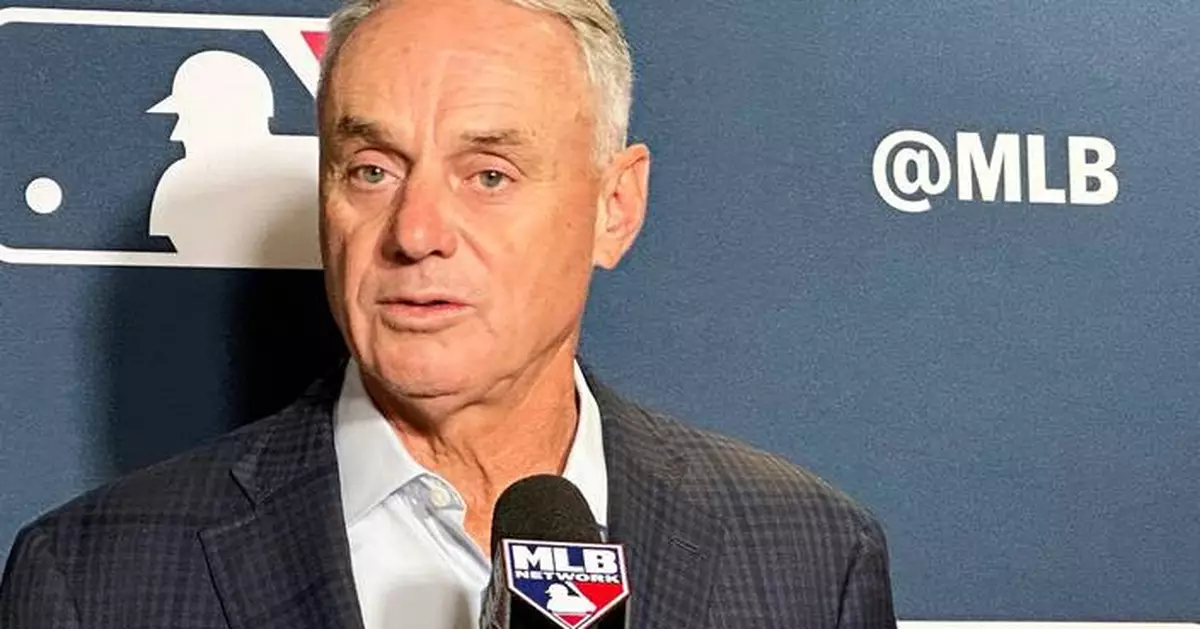
NEW YORK (AP) — Major League Baseball Commissioner Rob Manfred said owners will not move off their demand for a salary cap, leaving the sport on track for a lockout starting Dec. 2 that could threaten the 2027 season.
“I can’t imagine the owners ratifying a deal that does not include a cap and floor,” he said Wednesday at a news conference during an owners meeting.
Players say they will never accept a salary cap. The last time management proposed a cap in 1994, it led to a 7 1/2-month strike that caused cancellation of the World Series for the first time in 90 years.
“There’s plenty of room for compromise, but there’s one thing that I will not compromise and that’s the issue that we’re hearing from the vast majority of our fans: They want a salary cap and floor and on that we will not compromise,” Manfred said. "We are not prepared to tell 70% of our fans that they’re wrong on this issue. Competitive balance is a serious problem, and it needs to be addressed and it’s one that we can’t avoid just because the negotiation may be difficult.”
Just a little more than a month after Milwaukee became the first small-market team to win the World Series since 2015, baseball's five-year collective bargaining agreement expires at 11:59 p.m. EST on Dec. 1. A lockout, the sport's 10th work stoppage since 1972, would halt all trades and signings.
“A decision on a lockout is one that we’re going to make at the last possible moment," Manfred said. "We’re going to devote ourselves to the bargaining process. I’m not that big on Thanksgiving as a holiday. We’ll make ourselves available whenever and wherever to bargain in an effort to make an agreement."
MLB proposed the sport adopt a hard cap of $258.2 million for 2028 and a floor of $180.2 million, using luxury tax payrolls with average annual values. A team would be allowed to remain as low as 90% of the floor in 2028, which would be $162.18 million, but would have to spend the entire amount of the floor over a three-year period.
Individual contracts also would be capped at 15% of payroll under the plan (16% for re-signing free agents). MLB says it proposed a 50-50 split of revenue, while the union says it calculates the players' current share as over 55%.
"There can be no clearer example of the league’s lack of seriousness than their insistence that they will not negotiate over the economics outside of a radical change to the system that would dramatically reduce overall player compensation for all categories of players and strip fundamental rights from players like the ability to have truly guaranteed contracts,” union head Bruce Meyer said in a statement. "There should be no illusions about the owners’ true motivation in pushing for this system. They want to make more money in profits and franchise values by artificially suppressing player salaries.”
Players have called the salary cap a "non-starter.”
“We made the proposal way back in May. Another word for 'non-starter' over months is a refusal to bargain," Manfred said. “I think it’s time that the MLBPA needs to realize that this proposal is serious. I’m not suggesting they need to accept it whole cloth. I think they need to look at the proposal and try to find some ways to move to the middle as opposed to making no proposal at all.”
Players proposed a “competitive integrity tax” that would penalize teams dropping below a payroll floor. They also asked for a rise in the luxury tax threshold, almost doubling the minimum salary and increased salary arbitration rights.
“The MLBPA wants more and its proposals undermine, further undermine the competitive quality of our game,” Manfred said.
“What has the MLBPA done? They’ve engaged in a lot of rhetoric,” he added. “They’ve characterized our proposals as not real or not serious. They’ve criticized and mischaracterized aspects of the cap and floor system in an effort to promote player opposition. What the MLBPA has not done is made any meaningful effort to move towards us. In fact, they have not made a significant economic proposal since their opening proposal. Indeed, there’s a paucity of responses even on topics that do not directly impact our economics.”
In a 40-minute presentation before Manfred's news conference, MLB executive vice president Morgan Sword outlined the economics behind MLB's proposals. He said according to the Financial Information Questionnaires submitted by teams, revenue this year was $12.9 billion.
MLB said FIQ revenue rose 246% from 2003 and player payroll increased 147%. The union disputes the validity of management's conclusions from those calculations.
While the World Series champion Brewers play in baseball's smallest market and the World Series matchup was the first since 1991 between teams in the bottom half of payrolls, MLB contends high-spending teams have better chances of success in the long term. It highlighted that since 1998 only one team that didn't have a top-20 payroll won the title and eight of the top-10 teams by payroll reached this year's playoffs.
“It is truly aberrational in baseball for small markets to be successful," Sword said. “It’s not impossible, but it is much, much more difficult in our sport than it is in any of the other sports.”
MLB said that since the start of the current labor contract in March 2022, the Los Angeles Dodgers, New York Mets, New York Yankees and Philadelphia combined to commit $5.95 billion to free agents and the bottom 22 teams in free-agent spending allocated $5.41 billion.
Based on 2026 payrolls and the 2028 cap level, the Dodgers would have to cut payroll by $174 million, the Mets by $108 million, the Yankees by $83 million and the Phillies by $64 million.
Sword said it had not yet been determined how teams with players with no-trade provisions would be able to get under the cap, saying it was to be bargained.
MLB's proposal includes splitting local media revenue equally among the 30 teams for the first time. MLB said that due to the decline of cable networks, local media revenue is $1.8 billion this year, down $575 million from a high of about $2.4 billion annually from 2021-24.
Management said that while players with six or more years of service earned 69% of compensation this year, counting regular payrolls and the pre-arbitration bonus pool, those players combined for just 29% of an averaged Baseball Reference and Fangraphs WAR.
“Major league players will earn more money in this system and it’s just a matter of just distributing the players differently across the teams,” Sword said. “The key to having valuable national media rights we believe is having lots of teams that have a national audience and appeal beyond just the contours of their city.”
The union says MLB isn't accounting for what players currently are getting from luxury proceeds and from amateur signing bonuses.
See AP’s full MLB coverage here
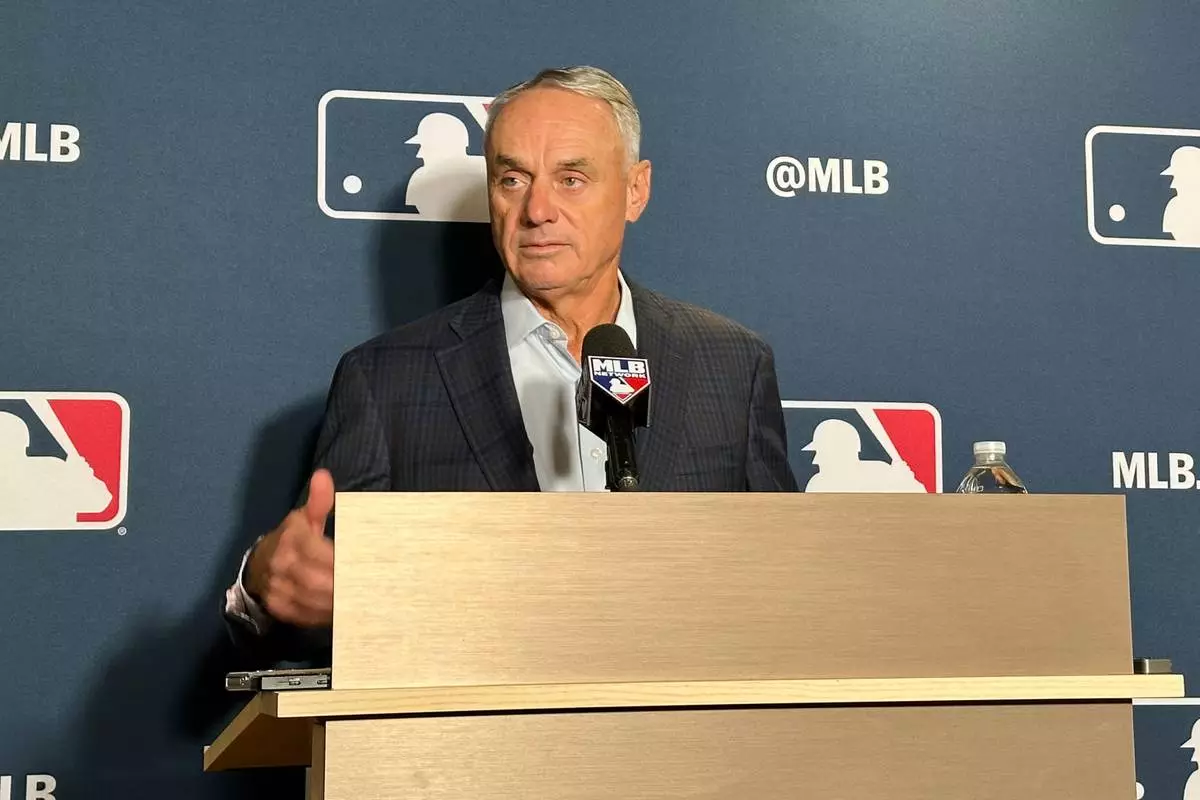
Major League Baseball Commissioner Rob Manfred speaks during a news conference in New York, Wednesday, Nov. 18, 2026. (AP Photo/Ron Blum) Photo taken with a mobile phone.
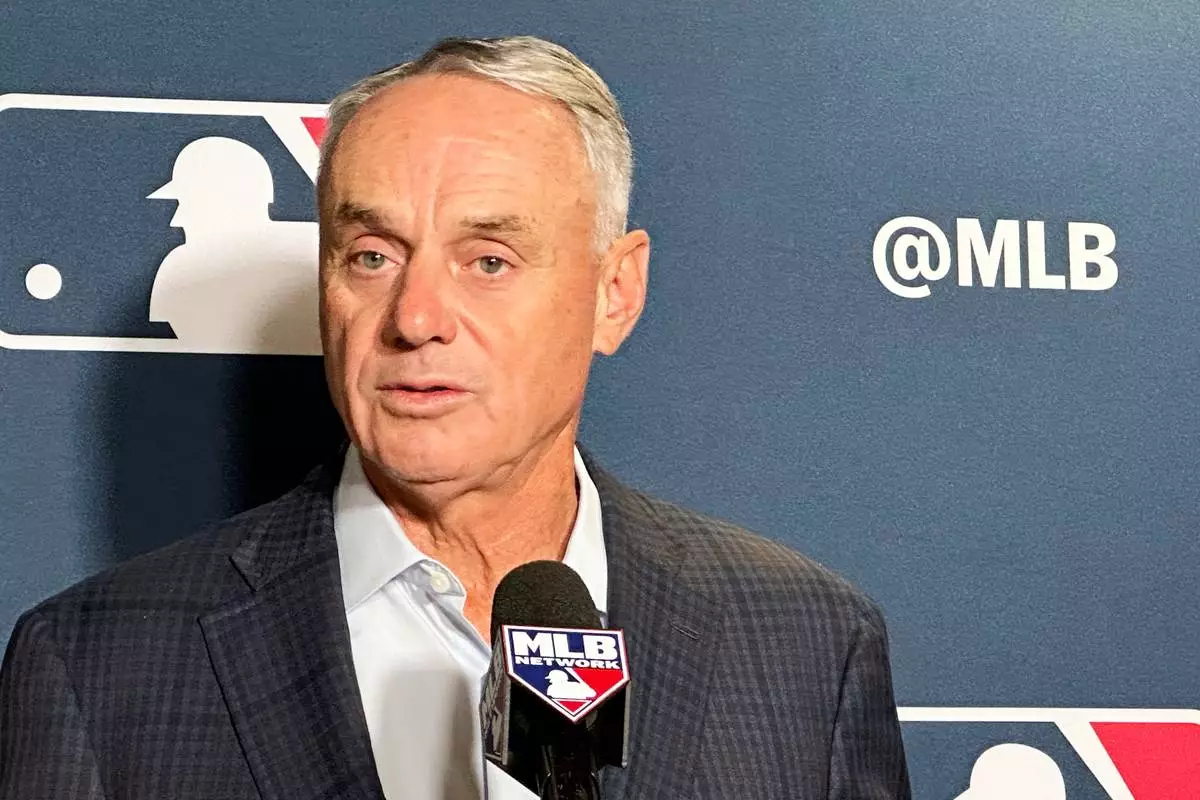
Major League Baseball Commissioner Rob Manfred speaks during a news conference in New York, Wednesday, Nov. 18, 2026. (AP Photo/Ron Blum) Photo taken with a mobile phone.
CARACAS, Venezuela (AP) — The United States and Venezuela have signed a deal to reestablish military ties that will range from conducting joint training to intelligence sharing, U.S. Defense Secretary Pete Hegseth said Wednesday in Caracas while visiting the South American nation's interim leaders.
Hegseth touted how U.S. forces in January captured then-Venezuelan President Nicolás Maduro, telling an audience of diplomats and military officials from both countries that now Venezuela “has gone from our most aggressive regional threat to a compliant security partner.”
He also praised the “close cooperation” with acting President Delcy Rodríguez that allowed officials “to stabilize Venezuela and rid it of narco-terrorists once and for all,” in a reference to drug traffickers.
Hegseth’s visit, the latest in a series of stops in Venezuela by members of President Donald Trump’s Cabinet, underscores efforts by the U.S. administration to deepen its influence in the South American country. Trump said in August that Hegseth helped broker a sweeping deal for the U.S. to take control of some Venezuelan oil reserves.
The Pentagon chief praised the energy deal by referencing another major military action by the Trump administration this year — the Iran war. The conflict has disrupted global energy supplies through a critical waterway in the Persian Gulf, raising gasoline prices and contributing to the Republican Party's severe losses in this month's midterm elections.
The Venezuela oil deal “makes the Strait of Hormuz a nonfactor for the Western Hemisphere,” Hegseth said at the U.S. Embassy in Caracas.
In the meeting with Hegseth, Rodríguez asserted that the deal enables “the energy development of our nations” and “benefits both the people of the United States and the people of Venezuela.”
Among those in attendance for Hegseth’s speech was Alejandro Betancourt, the owner of North American Blue Energy Partners, the second-largest oil operator in Venezuela. The U.S. government and Betancourt’s company entered into the ambitious agreement to tap Venezuela’s vast oil reserves.
Both the Interior and Energy secretaries also visited Venezuela earlier this year and focused their efforts on tapping its oil reserves and critical minerals. The head of U.S. military operations in Latin America, Gen. Francis Donovan of U.S. Southern Command, also has met interim authorities in Venezuela at least twice this year.
Hegseth later stopped in Bogota, Colombia, where he was greeted at a military base by the country's defense and foreign ministers.
Hegseth offered few specifics on what the military agreement would entail, beyond saying that the two countries' militaries would be “training together, partnering together, sharing intelligence, more defense equipment and capabilities together.”
Speaking separately, Rodríguez said she hoped the countries' military cooperation “can be brought to its highest possible level” to allow them to “address common threats.”
Hegseth pointed to Venezuela partnering with the U.S. “to recover its territory from narco-terrorist networks.” The Pentagon did not immediately offer further details on the new partnership.
The development comes as the U.S. military has been expanding its attention on the region since Trump's return to the White House last year, with the Republican president promising to focus more on the Western Hemisphere and battle Latin American drug cartels.
To try to stem the flow of narcotics into the U.S. and the scourge of fatal overdoses, American forces have been attacking what the Trump administration says are boats smuggling drugs in the Caribbean Sea and the eastern Pacific Ocean. At least 240 people have been killed since the administration began targeting those it calls “narco-terrorists” in September 2025, although U.S. officials have released little evidence publicly to support claims the vessels were carrying drugs or that they have made an impact on the availability of drugs in the country.
Hegseth also used his speech to boast about the military operation that seized Maduro, calling it “the single most sophisticated military operation in the history of Latin America” that “lasted just 48 minutes.”
“America’s best and bravest warfighters solved a 27-year problem for this hemisphere in a matter of hours,” he added.
But Venezuela’s ruling party, which has held onto power since 1999, still continues to lead the nation, just now with Rodríguez in charge.
Hegseth also turned a Maduro catchphrase from last year back on him, saying that as the ousted leader “predicted,” the operation ended with “no war, yes, peace.”
Hegseth’s visit also comes at a time of uncertainty for Venezuelans regarding who will lead the nation in the coming months and years.
Rodríguez, a Maduro ally, took over in Venezuela after Maduro’s capture and despite the fact that her court-allowed term expired in July, she has continued to function as Venezuela’s head of state.
Hegseth praised her leadership and thanked her for “working closely and pragmatically and diligently with the United States to stabilize Venezuela.”
Meanwhile, opposition leader María Corina Machado recently returned to Venezuela from exile following seven failed attempts that opposition activists claimed were thwarted by the government.
U.S. Secretary of State Marco Rubio has said the “safe” return of the politician was the result of “reconciliation talks” supported by the U.S., which he considered “the best opportunity” Venezuela has had in three decades to achieve free and fair elections and a lasting democracy.
The lack of a date for the next presidential election has left many Venezuelans conflicted on their sentiment toward Trump. While relieved that Maduro is no longer president, many believe that the White House’s decision to prioritize reviving Venezuela’s oil industry over pro-democracy steps was the wrong approach for meaningful changes in their country.
Toropin reported from Washington. Associated Press writer Ben Finley in Washington contributed to this report.
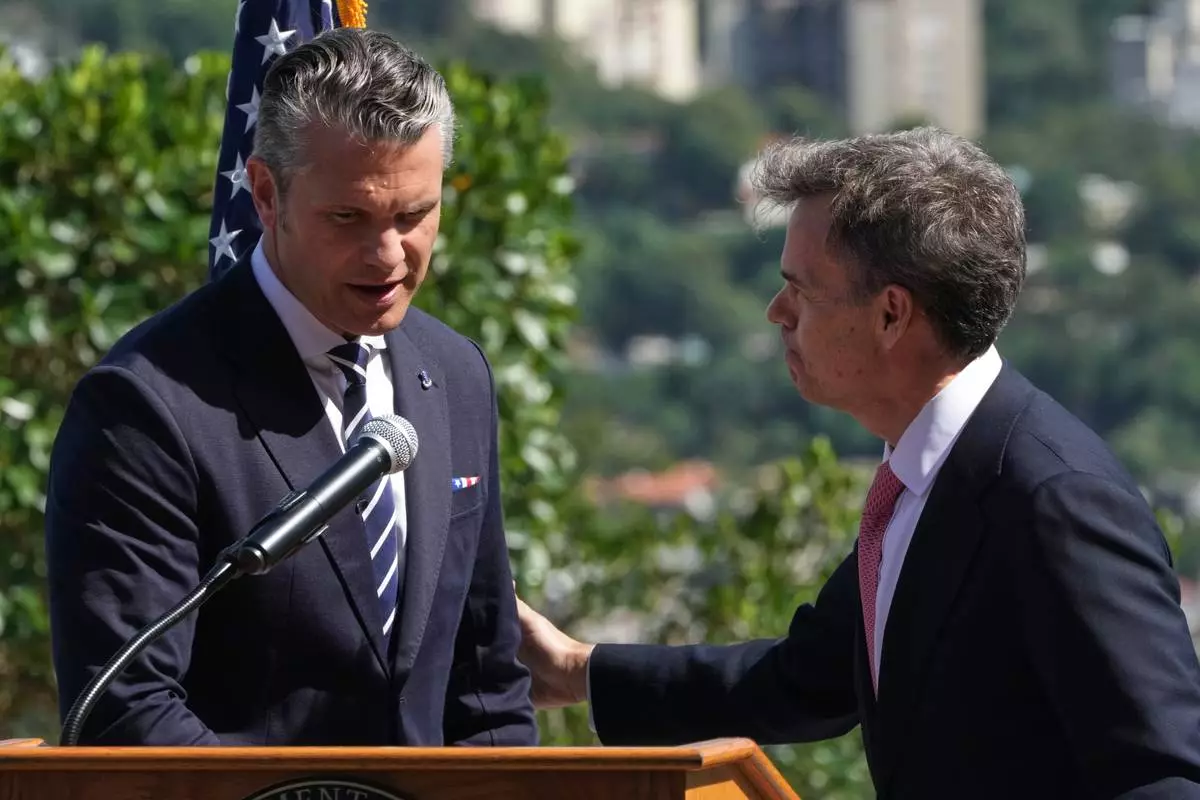
U.S. Defense Secretary Pete Hegseth, left, stands with John M. Barrett, U.S. charge d'affaires, during his visit to the United States embassy in Caracas, Venezuela, Wednesday, Nov. 18, 2026. (AP Photo/Ariana Cubillos)
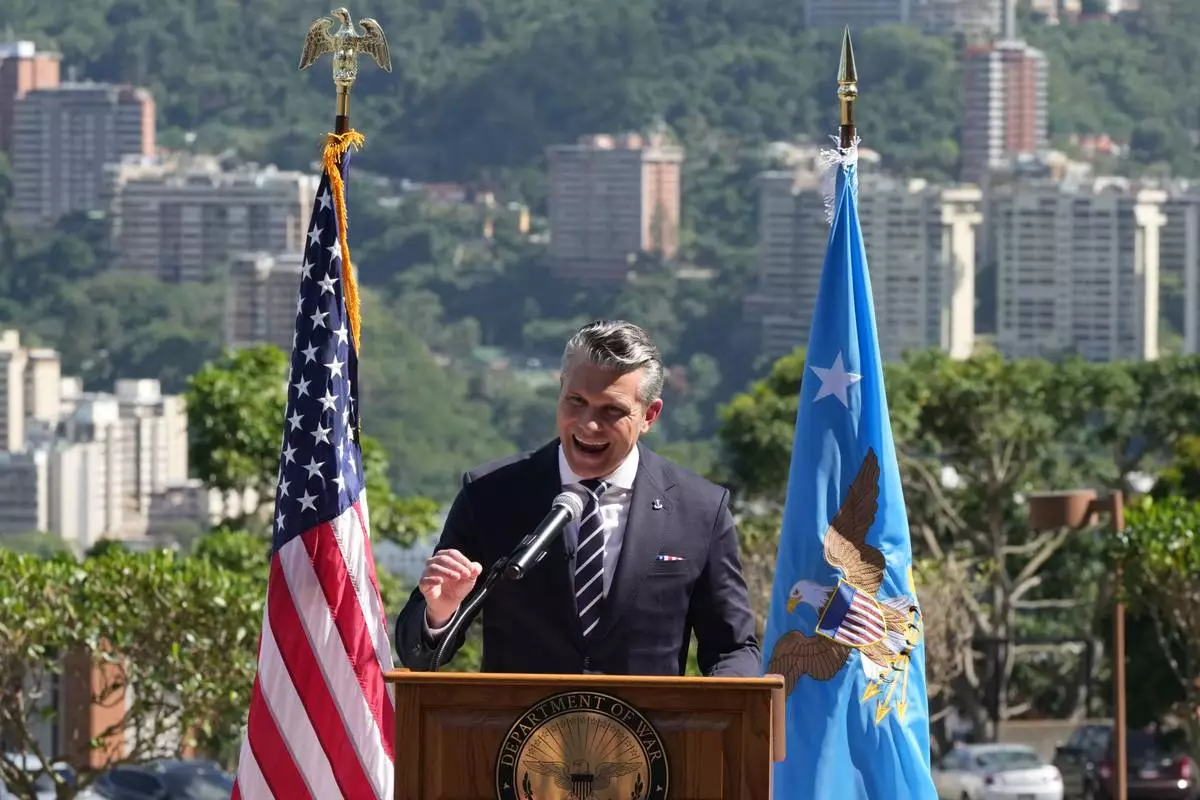
U.S. Defense Secretary Pete Hegseth speaks at the United States embassy in Caracas, Venezuela, Wednesday, Nov. 18, 2026. (AP Photo/Ariana Cubillos)
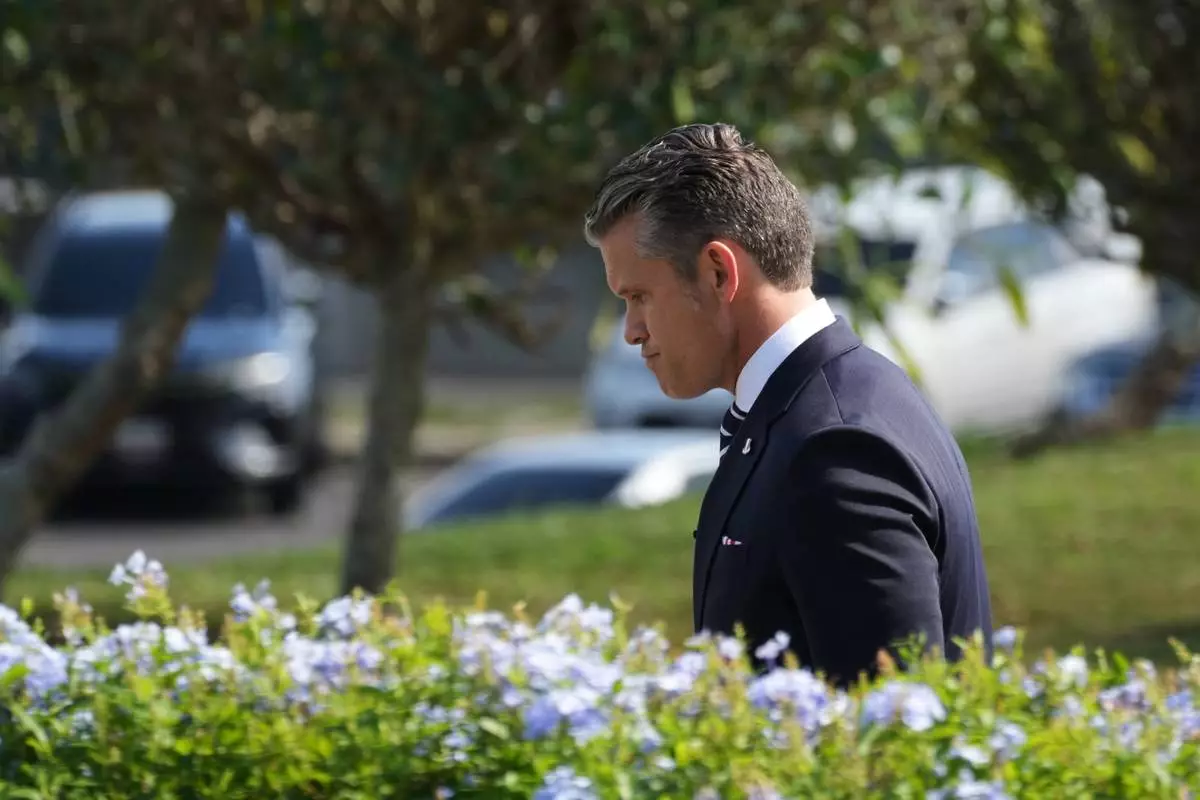
U.S. Defense Secretary Pete Hegseth arrives at the United States embassy in Caracas, Venezuela, Wednesday, Nov. 18, 2026. (AP Photo/Ariana Cubillos)
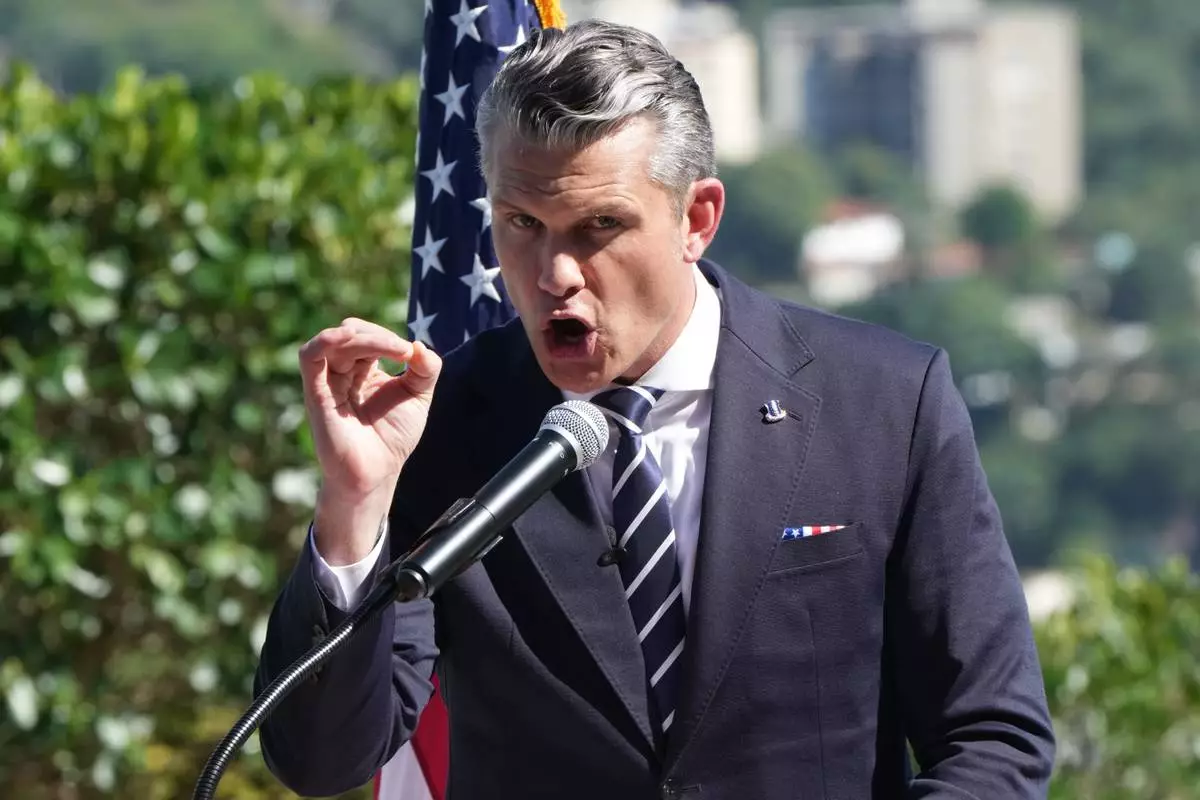
U.S. Defense Secretary Pete Hegseth speaks at the United States Embassy in Caracas, Venezuela, Wednesday, Nov. 18, 2026. (AP Photo/Ariana Cubillos)
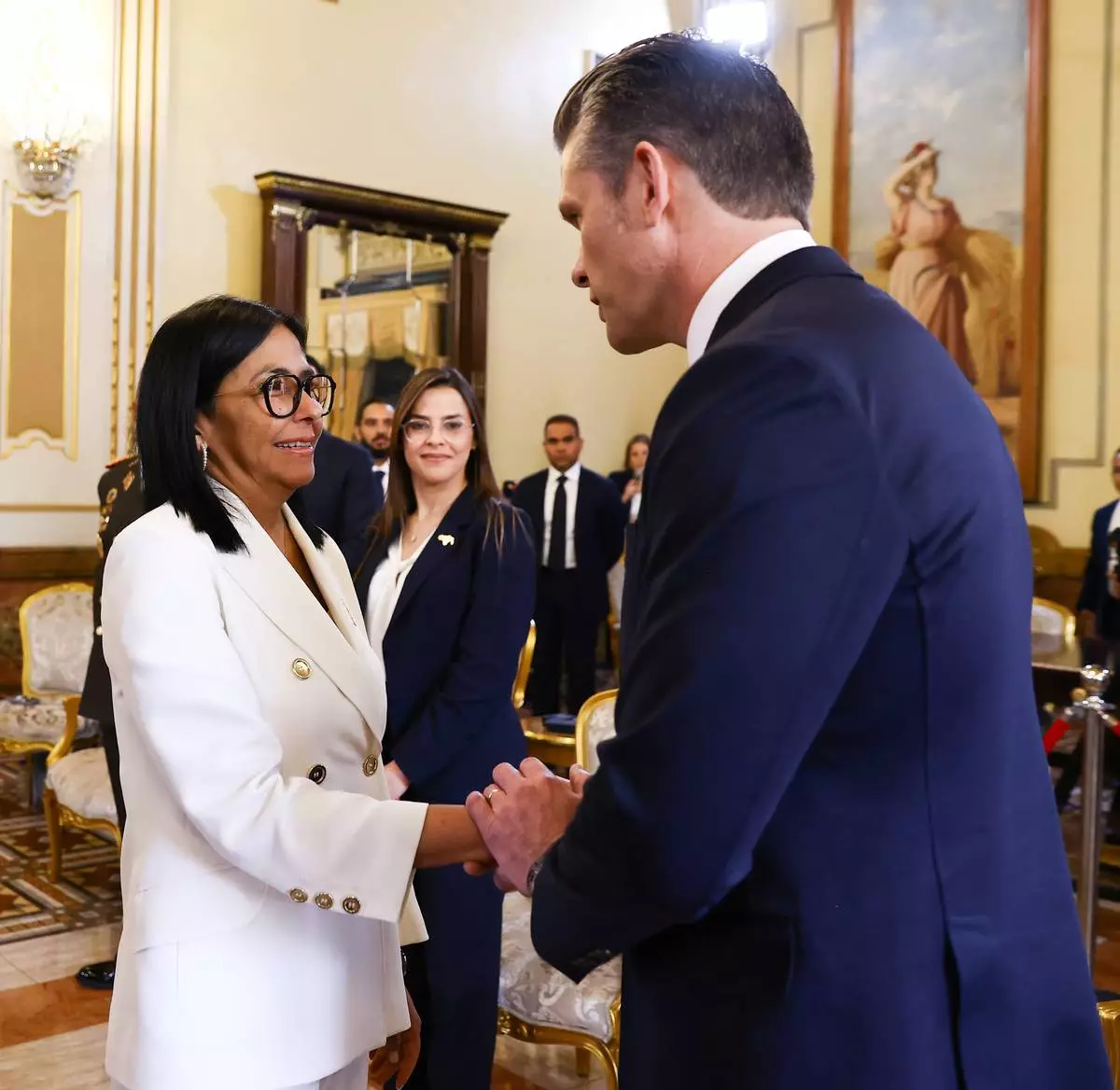
In this photo released by Miraflores presidential press office, U.S. Defense Secretary Pete Hegseth, right, meets with Venezuela's acting President Delcy Rodriguez at Miraflores presidential palace in Caracas, Venezuela, Wednesday, Nov. 18, 2026. (Miraflores presidential press office, via AP)
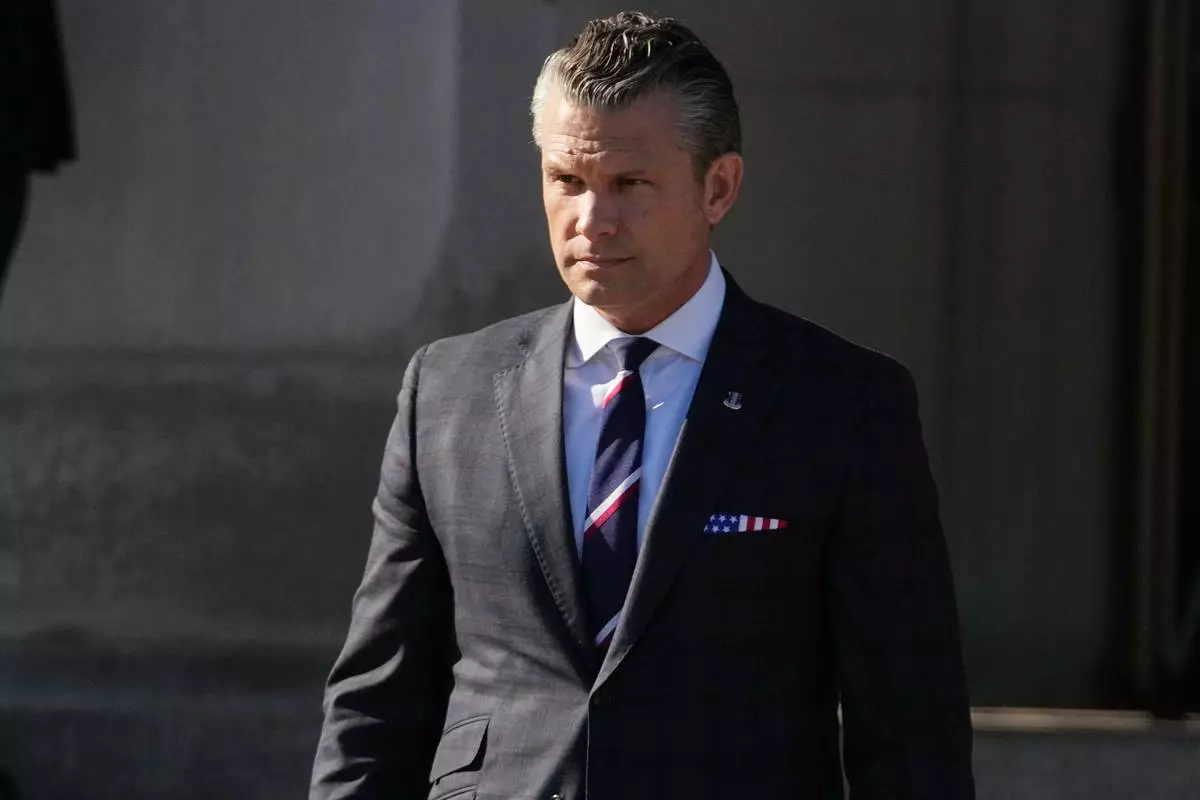
Defense Secretary Pete Hegseth walks out to welcome His Excellency Władysław Kosiniak-Kamysz, Deputy Prime Minister and Minister of Defense, Republic of Poland, to the Pentagon in Washington, Tuesday, Nov. 10, 2026. (AP Photo/Nathan Howard)
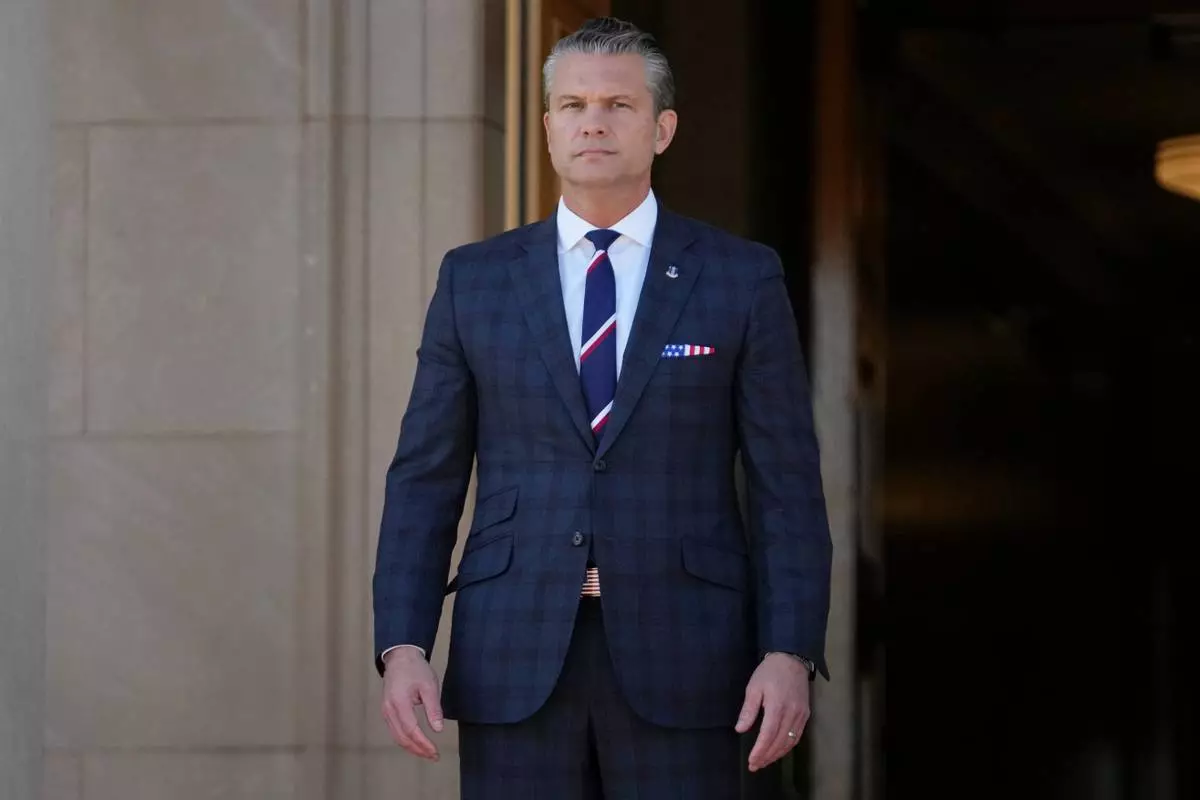
Defense Secretary Pete Hegseth walks out to welcome His Excellency Władysław Kosiniak-Kamysz, Deputy Prime Minister and Minister of Defense, Republic of Poland, to the Pentagon in Washington, Tuesday, Nov. 10, 2026. (AP Photo/Nathan Howard)
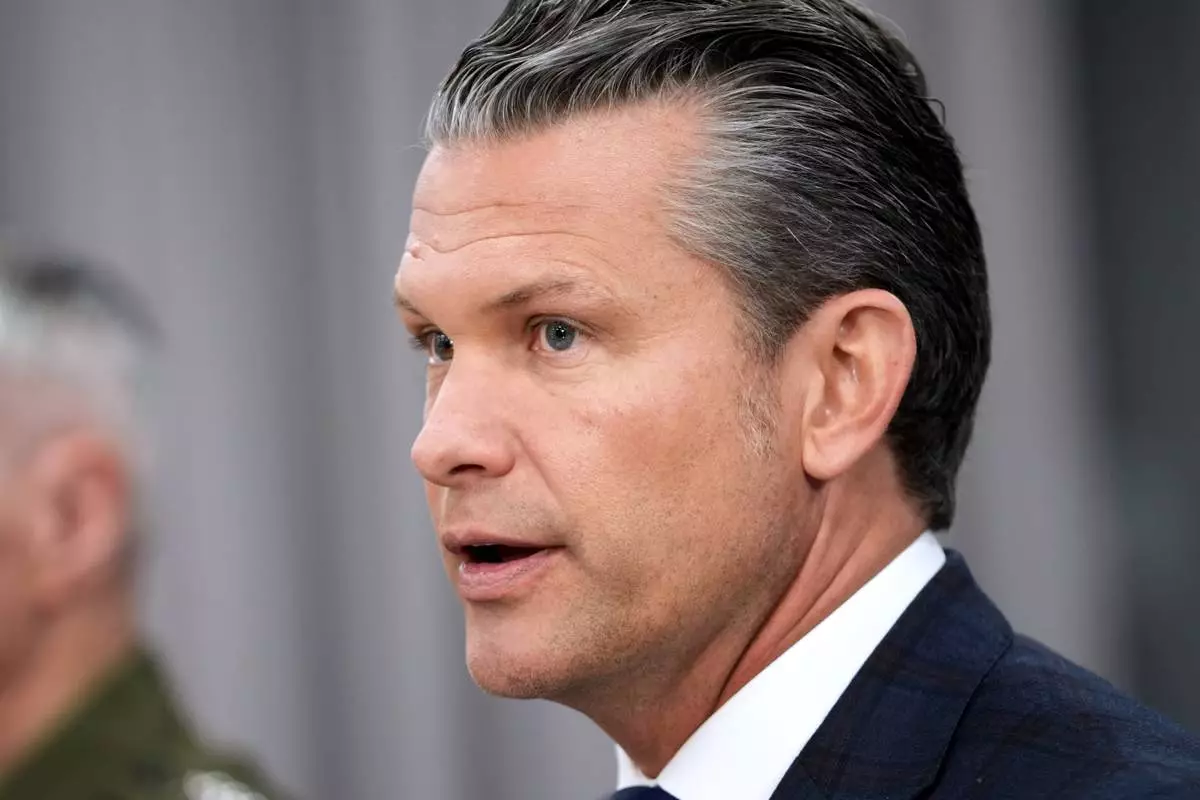
Defense Secretary Pete Hegseth meets with His Excellency Władysław Kosiniak-Kamysz, Deputy Prime Minister and Minister of Defense, Republic of Poland, in the Pentagon, Tuesday, Nov. 10, 2026, in Washington. (AP Photo/Nathan Howard)
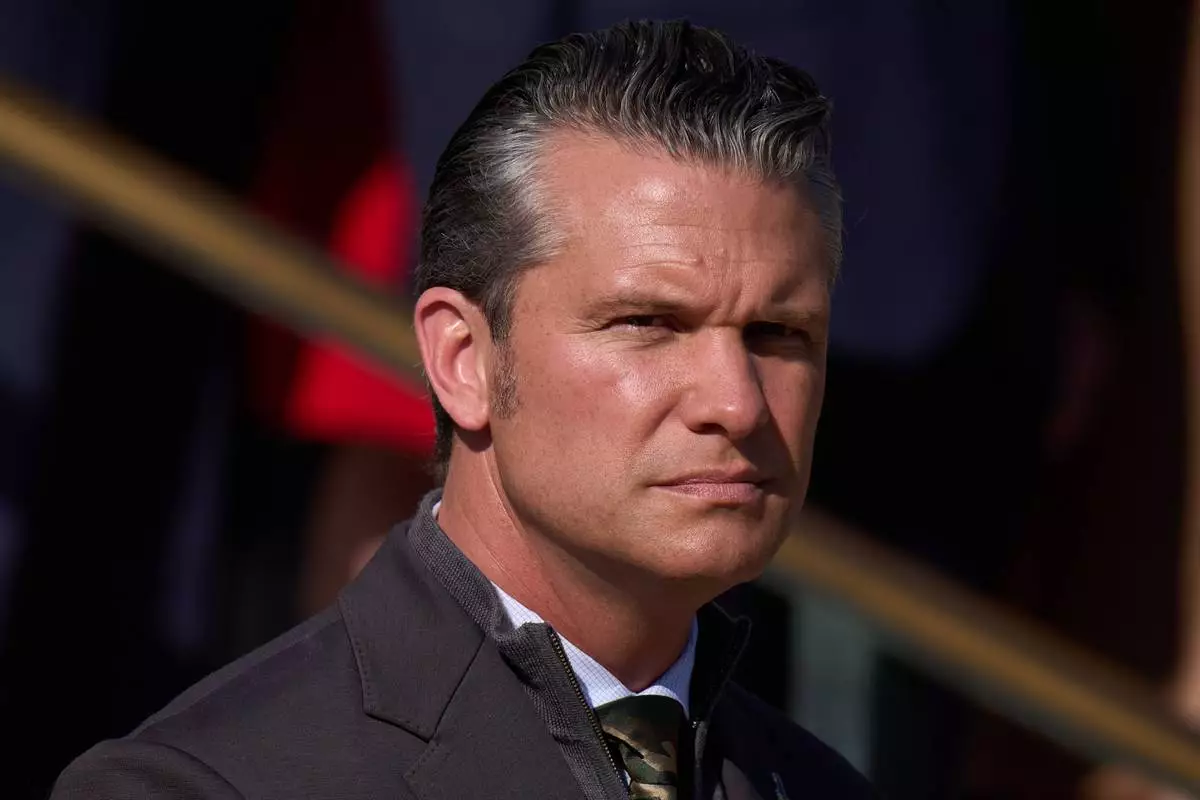
Defense Secretary Pete Hegseth attends an event to mark Veterans Day at Arlington National Cemetery in Arlington, Va., Wednesday, Nov. 11, 2026. (AP Photo/Mark Schiefelbein)