U.S. Catholic bishops are calling for guardrails on artificial intelligence as the Catholic Church seeks to protect humanity while technology advances.
They are following Pope Leo's lead, who has said that AI is humanity’s biggest challenge today. His first encyclical, “Magnifica Humanitas” (Magnificent Humanity), called for robust AI regulation.
Bishop Oscar Cantú of San Jose, California, emphasized the unique role the U.S. church is well-positioned to play when he addressed his colleagues at the U.S. Conference of Catholic Bishops' annual fall gathering Wednesday. From his Silicon Valley diocese, Cantú chairs the conference’s new AI task force focused on preserving human dignity.
“The Church possesses something that Silicon Valley cannot engineer: over 2,000 years of wisdom on the human person, on truth, and on the common good,” Cantú said.
The bishops have been meeting with tech company executives and political leaders to discuss AI, much of which is developed in the U.S. Cantú told the gathering in Baltimore that the task force will help lobby lawmakers for “clear guardrails on the development and use of AI.” The group “will continue monitoring labor impacts and advocating for workers.”
Bishops are particularly concerned about young people’s use of AI. The task force hopes to become a clearinghouse on best practices and AI literacy.
“The Church’s contribution is to insist that every human being possesses inherent dignity that no algorithm can measure and no market can price,” Cantú said.
The bishops also approved updates to their investing guidelines, which are used by other Catholic institutions and investors. The guidelines say the conference “will not invest in companies that design, develop or manufacture AI technologies that fail to safeguard the dignity of the human person.”
As part of its AI investment updates, the USCCB said it will encourage companies to protect children from online exploitation and offer “support for workers displaced by automation.”
As company executives sound the alarm about AI’s destructive potential and debate the need to develop morally good models, they are increasingly seeking input from religious leaders.
Archbishop Paul Coakley of Oklahoma City, the president of the USCCB, said during a news conference Tuesday that artificial intelligence is “a faint reflection of human intelligence, which is created by God. We’re created in God’s image and likeness; it’s ours to guide and correct.”
Charles Camosy, a bioethics professor at the Catholic University of America, is one of three academic consultants for the bishops’ AI task force.
“I mostly bring a set of concerns related to healthcare and especially keeping human beings in the center of healthcare relationships, even as we use so-called artificial intelligence to improve outcomes,” Camosy said in an email.
More than one in seven patients in the U.S. are treated each day at Catholic hospitals, according to the Catholic Health Association.
“If they’re asking what do bishops know about technology, they’re right in saying we don’t know much,” Cantú said in a recent video produced by the conference. “But we’re learning quickly.”
Associated Press religion coverage receives support through the AP’s collaboration with The Conversation US, with funding from Lilly Endowment Inc. The AP is solely responsible for this content.
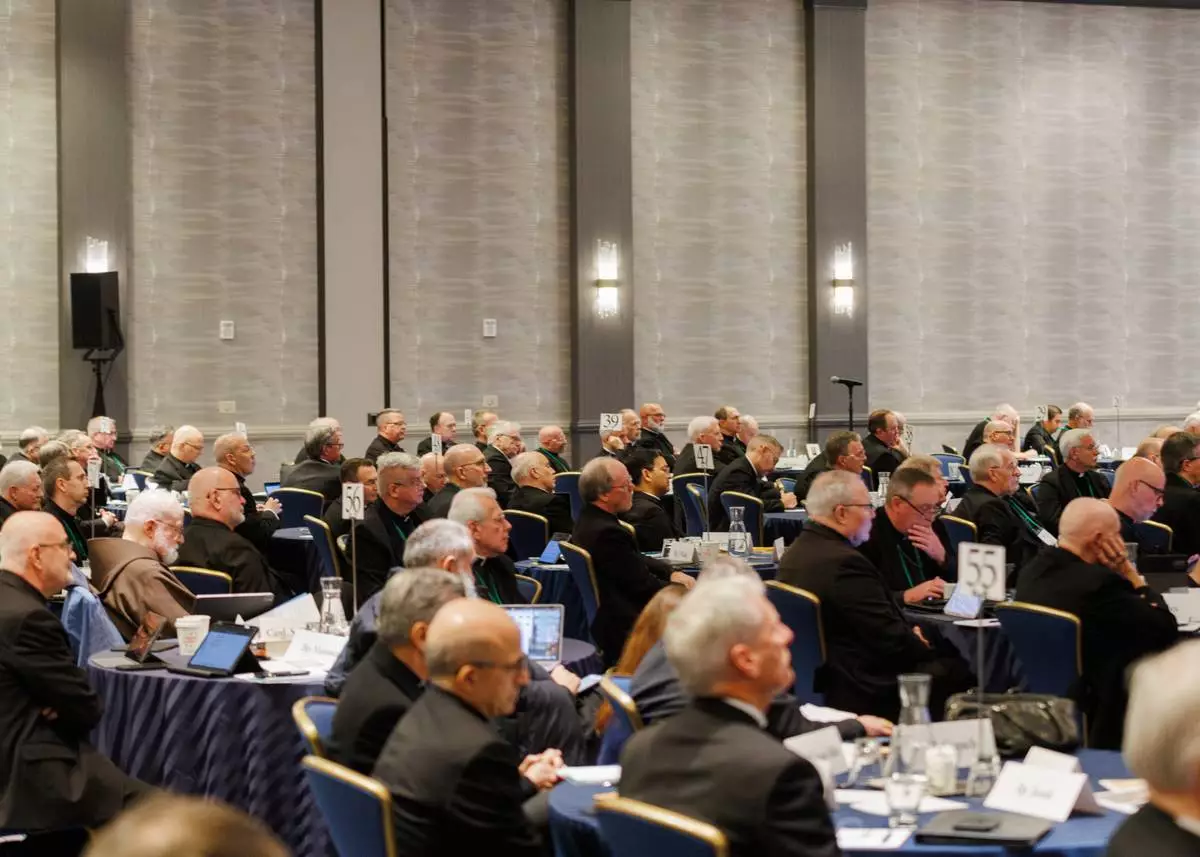
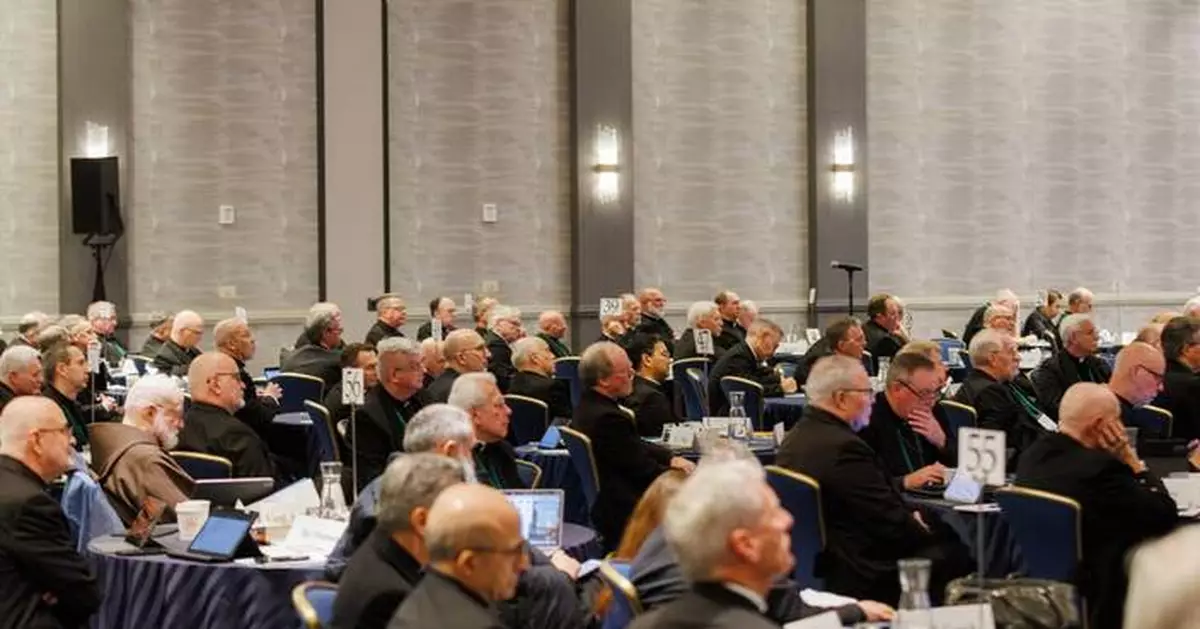
Attendees listen during the U.S. Conference of Catholic Bishops at the Baltimore Marriott Waterfront, Tuesday, Nov. 17, 2026, in Baltimore. (AP Photo/KT Kanazawich)
WASHINGTON (AP) — A federal judge on Wednesday temporarily extended an order blocking the Trump administration from breaking ground on a towering memorial arch in the nation's capital.
The temporary restraining order was due to expire on Thursday, but U.S. District Judge Tanya Chutkan extended it by 14 days. That would keep President Donald Trump's construction project on hold until Dec. 3 or until Chutkan rules on a pending request for a more permanent preliminary injunction.
The decision followed a Nov. 5 order Chutkan issued shortly after a hearing of the National Capital Planning Commission ended with the Trump-heavy commission giving the arch its final approval in an 8-4 vote, despite dozens of witnesses who opposed the construction.
The administration said the work could begin as soon as the approval and the Interior Department issued a final decision authorizing construction and the proper notification was published by the National Park Service.
In issuing the latest delay, Chutkan granted a request by plaintiffs in lawsuits challenging the arch construction. The case has grown more complicated as separate groups have filed lawsuits asking that the project not be allowed to go forward.
Nicolas Sansone, an attorney with the Public Citizen Litigation Group that is representing the plaintiffs in the original lawsuit, said they were “gratified to see that the judge recognized that the circumstances that required emergency relief two weeks ago haven't changed. We're hopeful the additional two-week pause will give the court the opportunity to assess our arguments in favor of a longer-term preliminary injunction that will block construction of the arch while the lawsuit proceeds.”
The White House didn’t immediately respond to a request for comment.
The District of Columbia and Virginia filed suit Oct. 31. Chutkan consolidated that suit with the original, filed by a group of Vietnam veterans and an architectural historian. Members of the Kennedy family filed a separate lawsuit Nov. 10, citing the impact the 250-foot (76-meter) structure would have on family members buried at Arlington National Cemetery. The Arlington County Board filed a lawsuit Oct. 8 in federal court in the Eastern District of Virginia challenging the speed with which the project was being undertaken and the harm it would cause to the county, which is immediately adjacent to the proposed site.
Chutkan said the 14-day extension of the order is warranted because nothing has significantly changed in the litigation in the two weeks since she issued it. She decided to maintain the status quo pending her ruling on the injunction request.
The arch is one of several projects around Washington that Trump has undertaken as he remakes the city, from renovating one of its storied public golf courses to threatening to demolish the John F. Kennedy Center for the Performing Arts. Those projects could soon face greater scrutiny after the Democrats take control of Congress.
Many of those plans are being challenged in the courts. The federal government Thursday filed a notice of appeal to a 14-day temporary restraining order issued Nov. 14 in the golf course case.
The original plaintiffs in the District of Columbia case — three veterans and a retired architectural historian — had asked Chutkan to prohibit the administration and the National Park Service “from taking any steps to construct, or to direct or facilitate construction of, any structure in Memorial Circle, absent congressional authorization, during the pendency of this litigation.”
Critics, including the plaintiffs, argue the administration must seek congressional approval for the arch and say that, once built, it will disrupt the sightlines connecting historic landmarks in the nation’s capital. The administration has argued that Congress decades ago cleared the way for a monument at Memorial Circle.
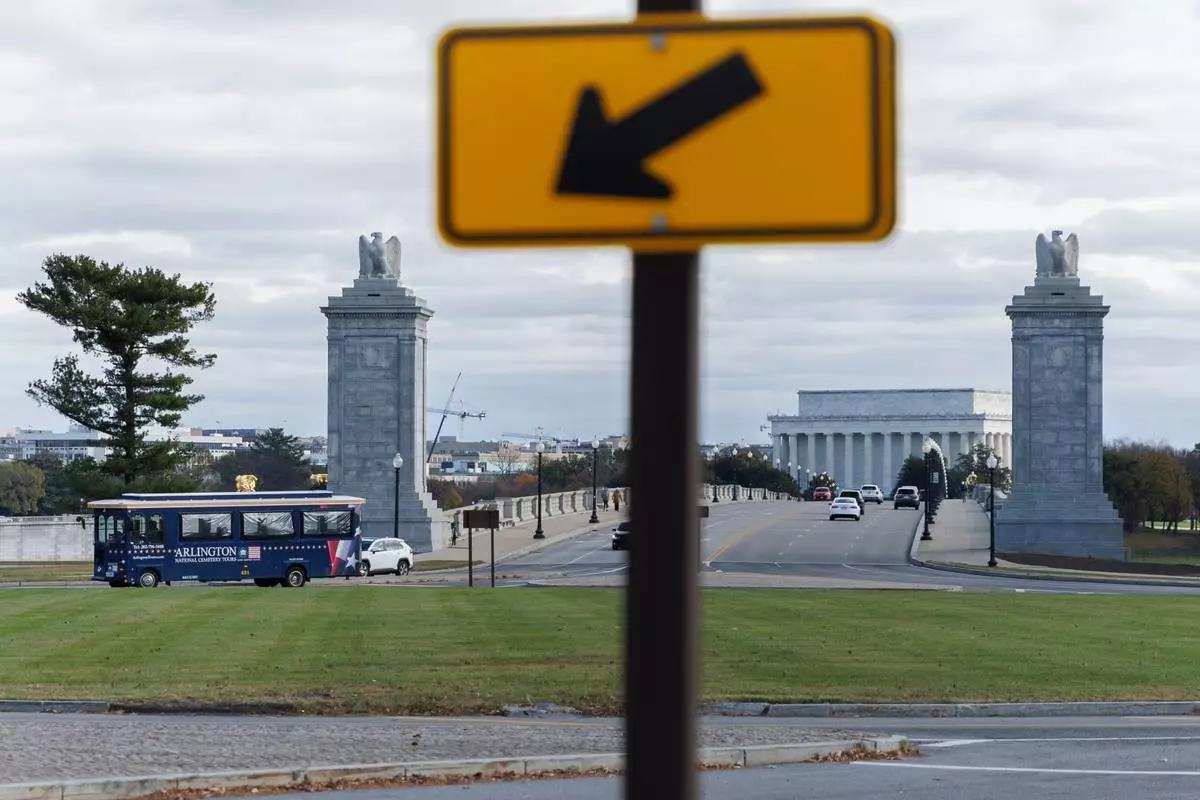
Cars travel near the site of President Donald Trump's proposed Triumphal Arch at Memorial Circle on Columbia Island, Friday, Nov. 13, 2026, in Washington. (AP Photo/Tom Brenner)