Anyone following Anthropic's plans to sell shares to the public starting Thursday is likely to come across terms that describe steps and components of an initial public offering. Here's a quick guide.
A company's first offering of stock to the public. It is the first time a company's value will be determined by a public market.
A formal offer to sell shares in the company. It also includes a business plan with details about the company's finances and operations. It is also known as an S-1, after the Securities and Exchange Commission form.
Companies list on a public exchange where the stock is traded. For example, Anthropic is listing on the Nasdaq and will trade under the symbol “ANT.” Apple trades as “AAPL” on the Nasdaq, and Macy’s trades as “M” on the New York Stock Exchange.
An underwriter is a bank or other financial institution that acts as the intermediary between the company and investors. They purchase the stock being issued by the company in the IPO and sell it to the public. There are often several underwriters involved to share the risk. The lead underwriters for the Anthropic IPO are Goldman Sachs and Morgan Stanley.
The name for the presentations given by company executives and underwriters to potential investors, typically institutional investors, before the company issues its shares.
This is a provision that allows underwriters of an IPO to sell more shares than initially planned. It is meant to meet unexpectedly high demand or to help stabilize the stock price.
This is an estimated range for the price of the shares the company is offering provided before the stock is publicly traded. Investors place bids within that range before the listing price is determined. Anthropic set a price range of $70 to $78 per share before announcing Wednesday the price would be $83 per share in the offering.
This describes the broader process undertaken by the company and underwriters to determine the listing price for the stock. It attempts to balance demand for the stock with the potential supply of shares. The process typically takes longer when an IPO has high interest from potential investors.
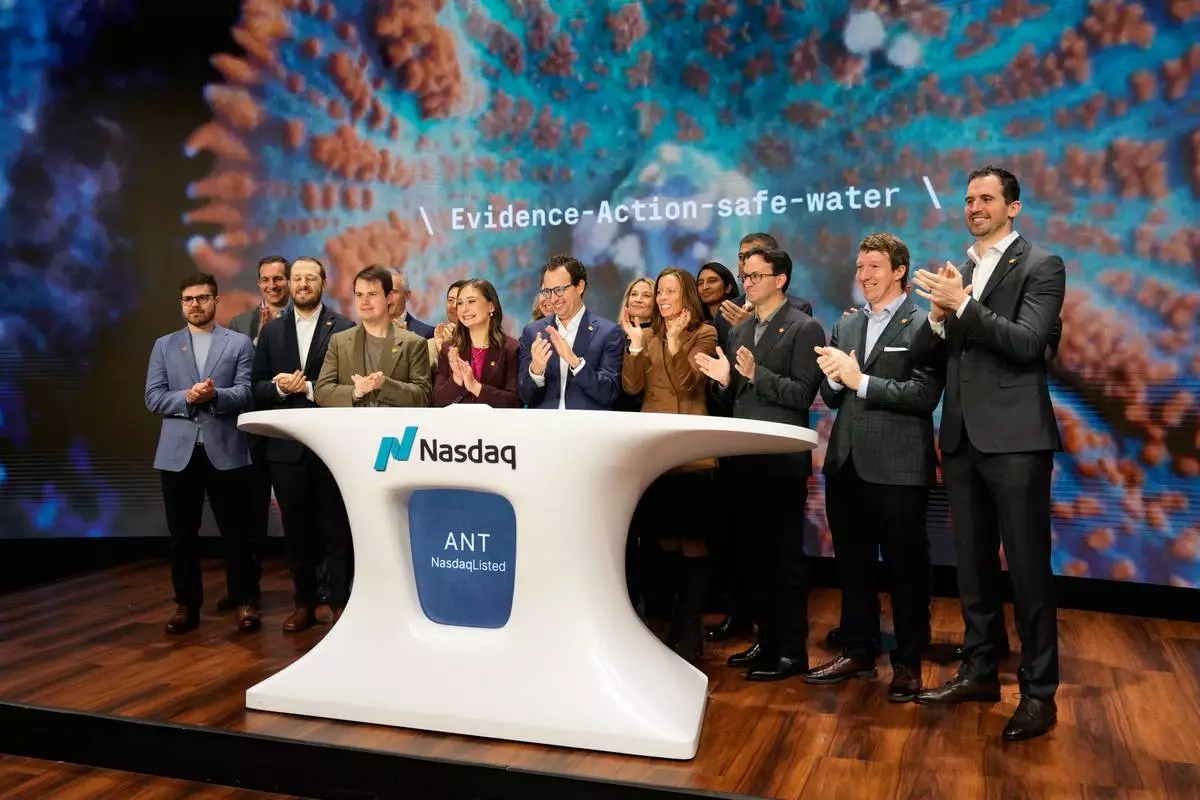
Dario Amodei, co-founder and CEO of Anthropic, center, celebrates with Daniela Amodei, co-founder and president, center left, Tom Brown, co-founder and chief compute officer, right, Jack Clark, co-founder and head of public benefit, second right, Jared Kaplan, co-founder and chief science officer, third right, Chris Olah, co-founder and interpretability research lead, third left, Sam McCandlish, co-founder and chief architect, second left, and other colleagues during the opening bell ceremony at Nasdaq MarketSite as part of the Anthropic IPO in New York, Thursday, Nov. 19, 2026. (AP Photo/Seth Wenig)
NEW YORK (AP) — Buzz around Anthropic’s blockbuster debut on Wall Street is juicing up beaten-down stocks tied to artificial intelligence Thursday and helping the U.S. market recover some of its recent slide.
The S&P 500 rose 0.4% and is on track to break a five-day losing streak, its longest since June. The renewed excitement for AI-related stocks has the Nasdaq composite up 1.1%, as of 10:15 a.m. Eastern time, but other kinds of stocks are doing worse. The Dow Jones Industrial Average dropped 125 points, or 0.3%.
Stocks tied to the AI industry have been careening recently on worries their prices shot too high in the frenzy around the technology and were bound to deflate.
Anthropic’s initial public offering of stock was supposed to offer a defining moment, one that shows how much faith remains on a more skeptical Wall Street about the AI revolution.
For now, the answer appears to be enough to keep afloat what's become the U.S. stock market's most influential industry. Anthropic, the company behind the Claude AI chatbot, sold its stock at a price of $83 each in its IPO. That's more than the $70 to $78 that it earlier thought it would get. Its stock is set to begin trading on the Nasdaq later in the day.
That strong demand helped lift prices across the industry, which have recently been giving back much of their earlier, yearslong surges.
Micron Technology, whose sales of memory for computers have soared because of the AI boom, rose 4.6%.
CoreWeave, a company that buys AI chips and rents out access to them to customers over the cloud, gained 4.2%.
Even Nvidia rose. It climbed 2.4% toward its first gain in six days. The chip company has been the face of the AI boom, and its stock has struggled with worries that have been dogging the entire industry.
At first it was the longstanding criticism that AI stocks had gone into a bubble after shooting so high, along with doubts that AI could produce enough profit and productivity to make the heavy investments in AI data centers worth it. Then it was worries that high interest rates would mean less borrowed money to fund the industry’s growth. Then came this month’s sweeping victories for Democrats in the U.S. midterm elections, which raised concerns about more regulation for AI.
Most recently, it was the sudden resignation of Jensen Huang as Nvidia’s CEO. He had been one of AI’s biggest evangelists and helped build interest in the industry while also using some of Nvidia’s massive profits to further fund its growth.
Outside of the strong demand for Anthropic’s stock, the AI industry received other encouraging signals.
Palo Alto Networks climbed 5.7% after the AI cybersecurity company topped analysts’ expectations for profit and revenue in the latest quarter. It also agreed to buy Applied Compute, a platform for post-training and inference of open-weight AI models, to help customers adopt AI securely in an all-stock deal valued at $4.5 billion.
Everpure, a company that helps businesses manage and store their data, said its revenue jumped 51% last quarter from a year earlier in part because of AI-related offerings. That was more than analysts expected, as was its profit for the quarter. Everpure’s stock rose 11.8%.
Outside of tech stocks, though, the moves were not as strong. More stocks fell within the S&P 500 than rose.
Walmart sank 1.1% even though it reported profit and revenue for the latest quarter that edged past analysts’ expectations.
Williams-Sonoma dropped 8.6% after the retailer reported revenue that was just below Wall Street’s forecast.
Stocks generally felt pressure from higher yields in the bond market, as oil prices regained some of their losses from earlier in the week.
The price for a barrel of Brent crude oil rose 1.3% to $93.14. That helped the yield on the 10-year Treasury tick up to 5.09% from 5.07% late Wednesday.
Yields rose even though a couple reports on the U.S. economy came in below economists’ expectations. One said slightly more U.S. workers applied for unemployment benefits last week, though the number remains relatively low compared with history. Another said manufacturing growth in the mid-Atlantic region is slowing by more than economists expected.
In stock markets abroad, Japan’s Nikkei 225 rose 0.7%. Helping to lead the way was SoftBank Group, which climbed 4.6%. It was an early investor in OpenAI, the maker of ChatGPT and competitor to Anthropic.
South Korea’s Kospi climbed 1.4% thanks to strength for its stocks tied to the AI boom, but indexes were weaker elsewhere in Asia and in Europe.
__
AP Business Writer Chan Ho-him contributed.
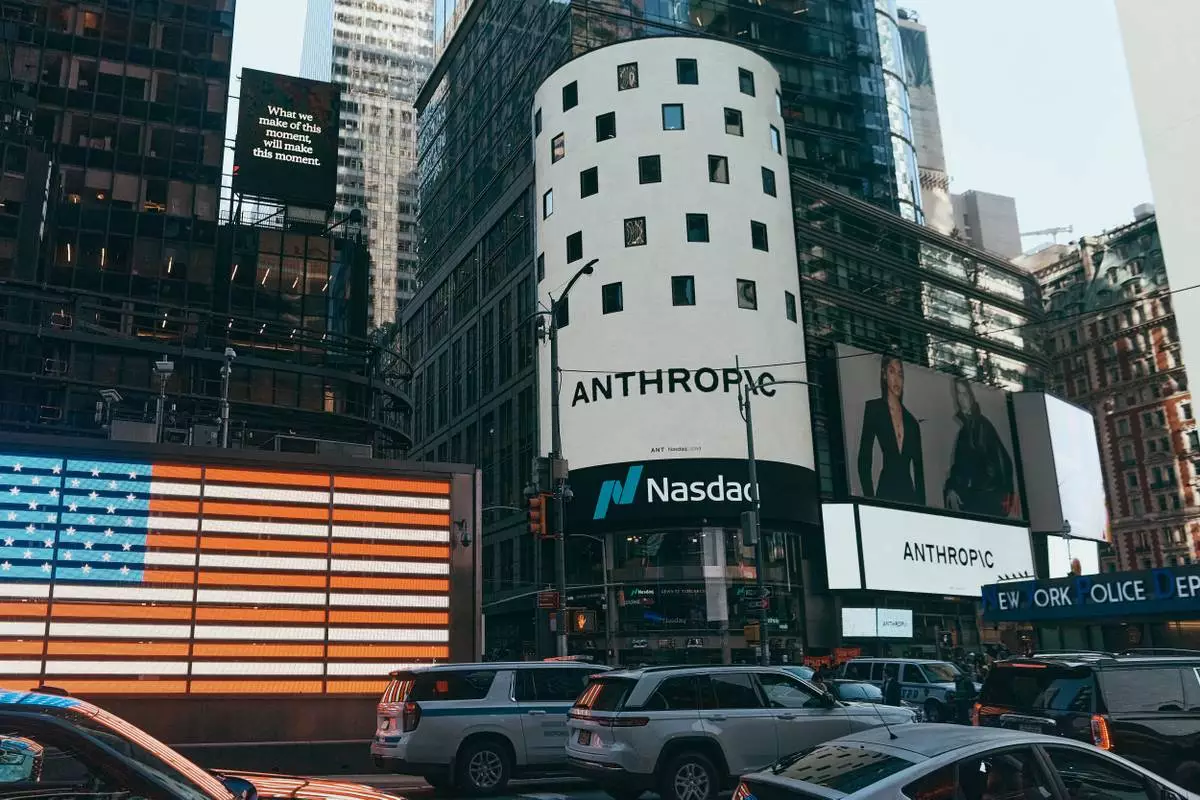
The Anthropic logo is displayed on the Nasdaq MarketSite tower as part of the Anthropic IPO in New York, Thursday, Nov.19, 2026. (AP Photo/Andres Kudacki)
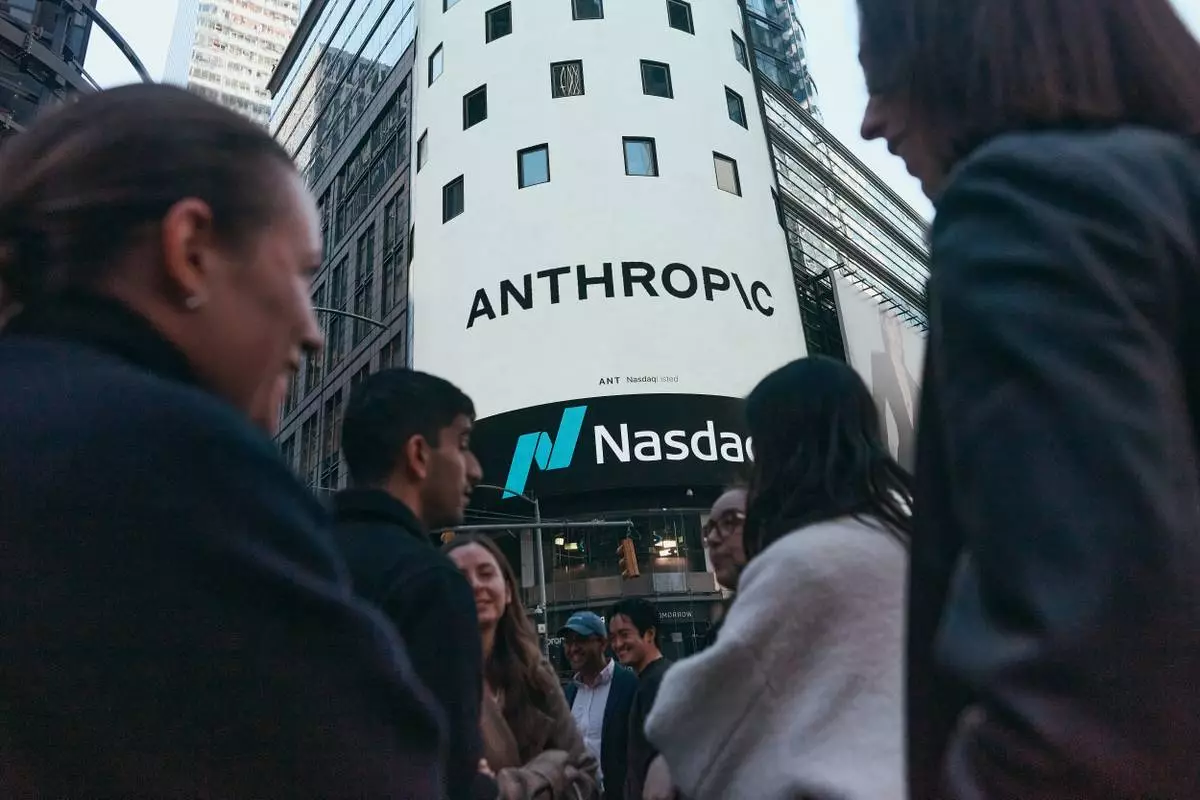
The Anthropic logo is displayed on the Nasdaq MarketSite tower as part of the Anthropic IPO in New York, Thursday, Nov.19, 2026. (AP Photo/Andres Kudacki)
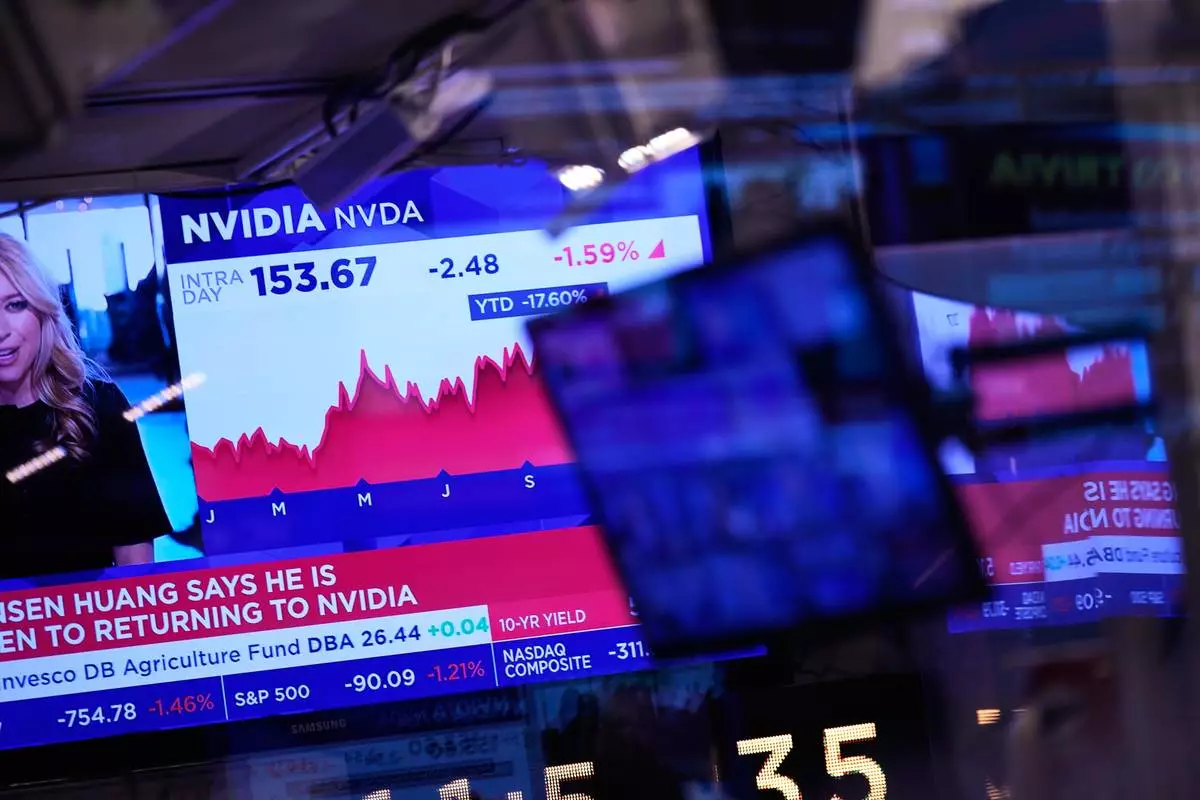
Screens display financial information and news on the floor of the New York Stock Exchange in New York, Tuesday, Nov. 17, 2026. (AP Photo/Seth Wenig)