China's National Cultural Heritage Administration announced new progress on four major archaeological projects at a meeting in Beijing on Wednesday under its "Archaeology China" program, adding fresh insights into the Yangtze River basin's rich and complex past.
The findings came from four excavations examining the origins and evolution of human civilization in the Yangtze River basin -- the Taohuahe site, the Fanshan site of the Liangzhu culture, the Lingtoushang site of the Qiaomailing cluster and the Laohudun cemetery.
The Taohuahe site in Suining, southwest China's Sichuan Province, has yielded a distinctive, standardized large-flake chopper industry and pebble-paved activity surfaces, demonstrating early humans' complex camp organization and spatial planning abilities.
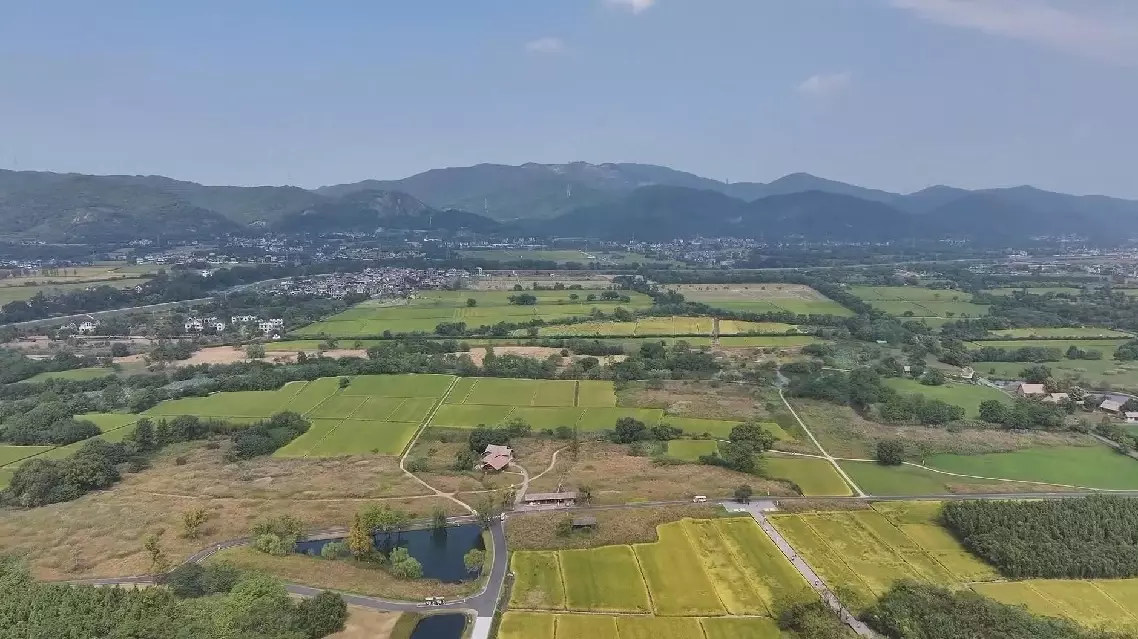
The Fanshan site in Hangzhou, east China's Zhejiang Province, has revealed a layout combining a burial area, ceremonial activity spaces and surrounding enclosure structures, providing new archaeological evidence for exploring the ritual expression and institutional development of royal power in Liangzhu, an important Neolithic culture that flourished about 5,000 years ago in the Yangtze River Delta.
"These ceremonial activity spaces are structurally linked to the primary axis of the water management system. In a sense, this suggests that the large-scale water control projects of the Liangzhu culture, its ritual practices, and its social power were all integrated," said Wang Ningyuan, the lead archaeologist for archaeological project of the ancient city of Liangzhu and its water conservancy system.
The Lingtoushang site in Jiujiang, east China's Jiangxi Province, contains Neolithic and Shang Dynasty (around 1600-1046 BC) settlements, revealing close ties between China's Central Plains and the middle reaches of the Yangtze River in cultural exchanges and the control of resource development.
Excavations at the Laohudun cemetery site in Yunmeng County, central China's Hubei Province, have unearthed inscribed bamboo and wooden slips as well as a large number of precious lacquered wooden artifacts, offering the latest source material for studying the historical development of the unified Qin and Han dynasties (221 BC-AD 220) and models of grassroots social governance.
Latest archaeological discoveries shedding new light on Yangtze River civilization