Skip to Content Facebook Feature Image

Update Settlement Infrastructure for New Games, Build Multi-Rail Trust Layer, and Close the Accessibility Gap in AI Economy: Ant International's Peng Yang at SFF 2026

Business

Update Settlement Infrastructure for New Games, Build Multi-Rail Trust Layer, and Close the Accessibility Gap in AI Economy: Ant International's Peng Yang at SFF 2026
Business

Business

Update Settlement Infrastructure for New Games, Build Multi-Rail Trust Layer, and Close the Accessibility Gap in AI Economy: Ant International's Peng Yang at SFF 2026

2026-11-19 19:15 Last Updated At:19:35

  • Speaking at the 2026 Singapore FinTech Festival, Ant International's CEO Peng Yang argued that our settlement infrastructure needs to evolve beyond today's four-party payments model to effectively assign roles and responsibilities.
  • Ant International processed the equivalent of 1.1 trillion USD on its WhaleRTP blockchain settlement network in the last 12 months in collaboration with 23 leading global banks; expected to double in 2027.
  • He also said that agentic economy needs to rest on a stronger multi-rail, multi-modal and multi-asset trust layer, and that good AI solutions design can power a new, more inclusive globalization project by putting the little guys on a level playing field.

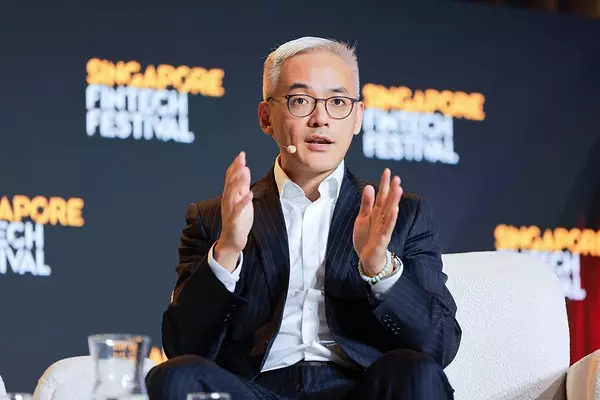
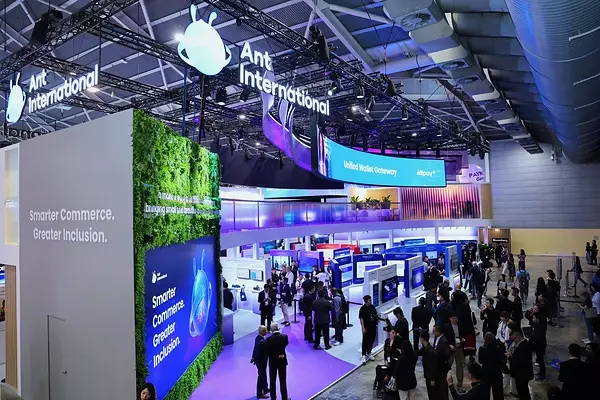
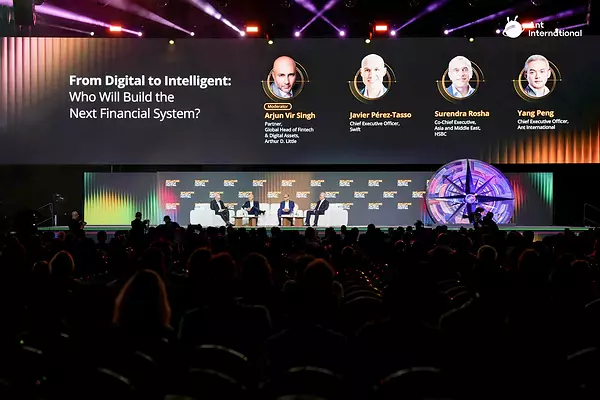
SINGAPORE, Nov. 19, 2026 /PRNewswire/ -- At the Singapore FinTech Festival, Ant International CEO Peng Yang (YP) joined Javier Pérez-Tasso of Swift and Surendra Rosha of HSBC on the panel "From Digital to Intelligent: Who Will Build the Next Financial System?", moderated by Arjun Vir Singh of Arthur D. Little.

YP highlighted three critical angles to tackle the future financial system:

How should settlement infrastructure evolve in the AI + blockchain era to establish new game rules?

How to build cross-rail, cross-modal trust for the agentic economy?

How to mainstream inclusion into AI design to close the accessibility gap for SMEs? 

The Missing Debate: Rewiring settlement infrastructure

The four-party payment model — issuer, acquirer, network, regulator — has served as a mature bedrock for traditional economy. However, would we still need the acquirer or the network as we know it when CBDCs and blockchain-based transactions go mainstream?

Yang argued the industry should brace for new post-4-party models of accountability and new game rules for a world increasingly dominated by account-to-account transactions as merchants begin to run entire transactions on a rail built on tokenization.

"The settlement layer, the invisible rail—still matters most. Only at this layer can new rules of the game be defined, so everyone plays on the expanded field with clear responsibilities and new boundaries."

While pushing the intelligence and application frontiers of AI and blockchain, Ant International felt strongly that its settlement infrastructure needed to evolve, so trust and responsibility can be effectively assigned inside new forms of regulated businesses.

The shift is already visible. On WhaleRTP, Ant International's blockchain platform connecting 23 leading global and regional banks, the company settled the equivalent of USD 1.1 trillion in last 12 months. The processing volume is likely to double in 2027.

But the ledger itself is not the challenge.

"Blockchain is not rocket science," he said. The hard parts are compliance, the business mechanism, and proving the authenticity of the assets on the rail. To achieve that, banks, fintechs and partners such as Swift need to work together.

The trust layer: no one builds it alone in the multi-rail, multi-modal age

Such foundational technology and institutional changes require a new trust layer. Yang cited a top priority for agentic commerce: KYA – or Know Your Agent. Financial institutions used to run separate, siloed KYC structures. In the KYA era, monitoring and verification happen around the clock across rails and networks. Ant International's own KYA interoperability framework with Visa and Mastercard is a timely move in that direction.

The encouraging part, Yang said, is how fast collaboration can move. Ant International proposed the bank-to-wallet direct remit idea to Swift; eight months later it was live, moving funds from a Standard Chartered account to a DANA wallet in seven seconds — a pace that is rare across a field of many private-sector partners.

"We don't want to do everything ourselves," Yang said. "Seven years ago nothing existed, so we had to — that's how Whale was built. Today Swift is building, JP Morgan is building, Citi is building, some countries run fast payment systems, and networks are forming across Southeast Asia."

In the future, Yang believes there will be an open, connected network where AI picks the best route for each merchant — fastest or cheapest. Builders of the intelligence layer like Ant International would need rails to be open and reliable so each player can use them on behalf of its own clients.

The accessibility gap: if only big tech captures the AI bonus, "that future is boring"

"If technology fast-forwards and only the big enterprises and big tech companies capture the AI premium, that future is boring," Yang said. Technology has to be democratized so that SMEs and the little guys share in the benefit, not only the largest firms.

Globalization 1.0, while creating unprecedented wealth and prosperity by bringing productivity gains to large enterprises, has left many small businesses, individuals and communities behind, leading to today's fragmentation. To move the world forward, our re-globalization project has to ensure broader inclusion of the smallest participants.

From Ant International's perspective, artificial intelligence – when proactively engineered – will make the task possible. "In our products and solutions design, AI can narrow the distance between large and small: with agent help, a small enterprise or an individual can compete with the giants."

From AI breakthroughs to Grassroots Empowerment

In an afternoon session, "Driving Financial Inclusion and Shared Prosperity in an Age of Uncertainty", Yang recalled a trek through northern Iraq on the Abraham's Path project, where he and his colleagues saw what connectivity and access to technology, information and choice meant for a remote mountain village. He closed with two ambitions.

"First, payment should be like the internet and email — nobody asks whether an email is domestic or international; the internet killed the concept of a border. Payments still draw a distinct line between local and cross-border. With agentic, with tokenization, with public-private initiatives for interoperability, we should remove those differences — so even the most remote people can enjoy borderless payment, remittance and purchase, online and offline." YP told fellow panelists, William Ury, Professor at Harvard Law School, Alexandre Chade, Founder & Chairman of Dotz, and Luay Obaidi, and Chief Product Officer, Qi Card.

"Second, if a small player has a big dream, they should be able to access the financial support they need to thrive — with new wallets and financial institutions empowered by technology, that should become the new normal of our economy."

Singapore Fintech Festival 2026 has seen Ant International rolling out partnerships in the spirit of cross-sector and cross-rail collaboration:

About Ant International

Ant International helps businesses to thrive through a full stack of AI-native payment, account, foreign exchange, treasury and growth solutions, underpinned by our trusted foundation models, security architecture, blockchain RTP platform and a world-leading mobile payment ecosystem. We drive relentless innovation to bring inclusive growth for merchants and communities of all sizes, today and tomorrow. To learn more, visit https://www.ant-intl.com/.

** This press release is distributed by PR Newswire through automated distribution system, for which the client assumes full responsibility. **
Update Settlement Infrastructure for New Games, Build Multi-Rail Trust Layer, and Close the Accessibility Gap in AI Economy: Ant International's Peng Yang at SFF 2026
Update Settlement Infrastructure for New Games, Build Multi-Rail Trust Layer, and Close the Accessibility Gap in AI Economy: Ant International's Peng Yang at SFF 2026
Update Settlement Infrastructure for New Games, Build Multi-Rail Trust Layer, and Close the Accessibility Gap in AI Economy: Ant International's Peng Yang at SFF 2026

Update Settlement Infrastructure for New Games, Build Multi-Rail Trust Layer, and Close the Accessibility Gap in AI Economy: Ant International's Peng Yang at SFF 2026
Update Settlement Infrastructure for New Games, Build Multi-Rail Trust Layer, and Close the Accessibility Gap in AI Economy: Ant International's Peng Yang at SFF 2026
Update Settlement Infrastructure for New Games, Build Multi-Rail Trust Layer, and Close the Accessibility Gap in AI Economy: Ant International's Peng Yang at SFF 2026
Powered by AI computing and global financial infrastructure, the platform helps businesses build their own AI Workforce

SINGAPORE, Nov. 19, 2026 /PRNewswire/ -- Lianlian DigiTech today announced the launch of LianLian XWorker at Singapore FinTech Festival 2026 (SFF), positioning it as the world's first AI Workforce platform to integrate AI capabilities with global financial infrastructure.

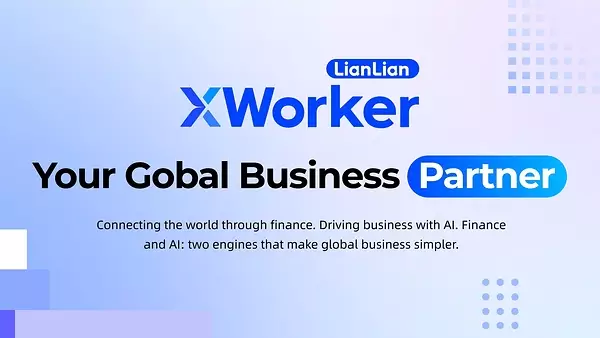
Guided by the vision of "Your Global Business Partner," LianLian XWorker is designed to help businesses translate their goals into productive outcomes by coordinating specialised AI agents, business tools and financial services within a unified platform. As a key component of Lianlian DigiTech's "AI Native + Globalization" strategy, LianLian XWorker combines two core capabilities: AI computing infrastructure and global financial infrastructure, enabling AI to move beyond standalone assistance towards coordinated work and authorised commercial execution.

"AI is evolving from standalone tools into collaborative teams of AI digital workers. What businesses need is not an ever-growing collection of disconnected AI tools, but an AI Workforce that can understand business objectives, bring specialised capabilities together and get work done continuously," said Jerry Zhou, Chief Architect of Lianlian DigiTech. "Through LianLian XWorker, we aim to connect AI productivity with global financial services, helping businesses operate more efficiently across markets."

From Standalone Tools to an AI Workforce: Coordinating Work Around Business Goals

Unlike standalone AI tools that focus on individual tasks, LianLian XWorker starts with a business objective. Users can describe their goals in natural language, and the platform interprets the request, breaks down complex work, identifies task dependencies and coordinates specialised AI agents to execute the workflow.

For example, a cross-border merchant can use LianLian XWorker to coordinate agents for market research, competitor analysis and product selection, followed by product image and video creation, listing generation, search engine optimisation (SEO), multilingual localisation and advertising operations.

As the business expands, these workflows can extend to procurement, order fulfilment, customer service, multi-store management, reconciliation and financial operations, connecting front-end growth activities with back-end business processes.

To support these workflows, LianLian XWorker integrates AI agents, reusable skills, tools connected through the Model Context Protocol (MCP), third-party software-as-a-service (SaaS) applications and enterprise systems. Users can also bring their Personal Super Assistant into team projects, allowing human employees and specialised agents to work together towards shared objectives.

The platform provides a 24/7 cloud execution environment, enabling authorised tasks to continue even when users are offline, while requesting human confirmation when required. Business context and proven methods confirmed by users can be retained as organisational memory and reusable skills, helping AI teams improve their execution over time.

Built as an open platform, LianLian XWorker allows businesses to integrate third-party agents, enterprise resource planning (ERP) systems and professional services according to their requirements. For organisations developing their own AI applications, Lianlian also offers Agent Infra solutions, including ready-to-use workspaces, APIs and SDKs, to simplify agent development, deployment and integration with existing systems.

AI Computing and Global Finance: Enabling AI Workforce to Execute Commercial Tasks

For an AI Workforce to move beyond digital tasks and participate in commercial activities, it needs more than intelligent task execution. It also requires reliable computing resources and financial capabilities that operate within defined authorisation and risk controls.

On the AI computing side, LianLian RouterBrain provides access to more than 300 mainstream AI models through unified model integration and intelligent routing. The infrastructure matches models to tasks based on performance requirements, expected outcomes and cost considerations, while providing token usage management and cost controls to support multi-step AI workflows.

On the financial side, Lianlian brings its established global financial services and agentic payment capabilities into LianLian XWorker. LianLian Agent Wallet manages agent identity, payment intent, transaction permissions and budgets, allowing users to define permitted transaction scenarios, per-transaction limits and cumulative spending caps. LianLian XPay provides the agentic payment infrastructure that connects payment requests with identity verification, authorisation controls and transaction execution, enabling authorised AI agents to initiate payments within predefined limits.

LianLian XCard supports more than 120 business payment scenarios, including AI tool subscriptions, advertising, e-commerce operations, digital content services and business travel, with payments in more than 140 currencies. Eligible benefits include a welcome allocation of 20 million AI model-usage tokens upon card activation, token rebates on qualifying spending and Buy Now, Pay Later (BNPL) services.

In an agentic payment scenario, businesses can link LianLian XCard to Agent Wallet and define purchase intentions, permissions and budgets through LianLian XWorker. When an authorised agent initiates a payment through LianLian XPay, the transaction can use a one-time payment token and dynamic security credentials without exposing the actual card number to the agent.

Together, these capabilities connect AI-driven workflows with financial execution, enabling businesses to delegate commercial tasks while retaining control over spending and authorisation.

Global Financial Network and Ecosystem Partnerships Support Real-World Agentic Commerce

Lianlian DigiTech has continued to build its global payment network, compliance framework and localised service capabilities, providing financial services that span global accounts, collections, payouts, acquiring, foreign exchange, virtual cards and payment aggregation. The company holds 68 payment licences and related regulatory authorisations. Its services reach more than 200 countries and regions, support transactions in more than 140 currencies and have served over 13.3 million customers to date. These capabilities provide a financial foundation for cross-border businesses and for AI agents to participate in commercial activities within defined authorisation limits.

In an earlier transaction with Visa, a Lianlian AI agent identified a purchasing requirement, evaluated suppliers, placed an order and completed payment within predefined spending limits and approval requirements. In a more recent transaction, LianLian XWorker, registered in the Visa Agentic Directory, obtained an agent-specific tokenised payment credential through Visa Intelligent Commerce Connect and completed a live office supply purchase. Lianlian is also collaborating with UnionPay International on agentic payment applications for global procurement, further exploring how AI agents can participate in cross-border commercial transactions.

These initiatives illustrate how AI-driven task execution, delegated authorisation and established payment networks can work together to support real-world commerce.

Towards the Agent Economy

As AI evolves from standalone tools to coordinated AI Workforce, businesses are beginning to explore new operating models in which humans and AI agents collaborate across increasingly complex workflows.

Lianlian aims to support this transition by connecting AI-native businesses with global commerce through its combined AI computing and financial infrastructure.

With LianLian XWorker as a key platform and continued collaboration with ecosystem partners, the company seeks to advance its long-term vision of building the infrastructure for the Agent Economy, enabling AI-driven productivity to translate into real commercial activity within clearly defined authorisation boundaries.

Learn more about LianLian XWorker and request access: https://ai.lianlianpay.com/xworker 

** This press release is distributed by PR Newswire through automated distribution system, for which the client assumes full responsibility. **

Lianlian DigiTech Launches LianLian XWorker, an AI-Powered Business Partner for Global Commerce

Lianlian DigiTech Launches LianLian XWorker, an AI-Powered Business Partner for Global Commerce

Recommended Articles