AMMAN, Jordan (AP) — The children of the Gaza Strip face unmatched dangers after three years of war, a prominent non-governmental organization warned Thursday, as they suffer from repeated displacement, loss of family members, lack of healthcare and education, and abysmal living conditions.
Save the Children said almost one third of the tens of thousands of attacks and violations against children recorded worldwide last year took place in the Palestinian territories. The danger was especially high in Gaza, the tiny enclave with a population of 2 million where at least 20,000 children have been killed, according to local health authorities.
Click to Gallery
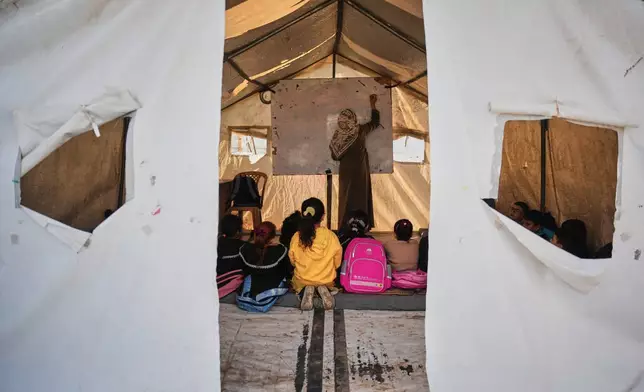
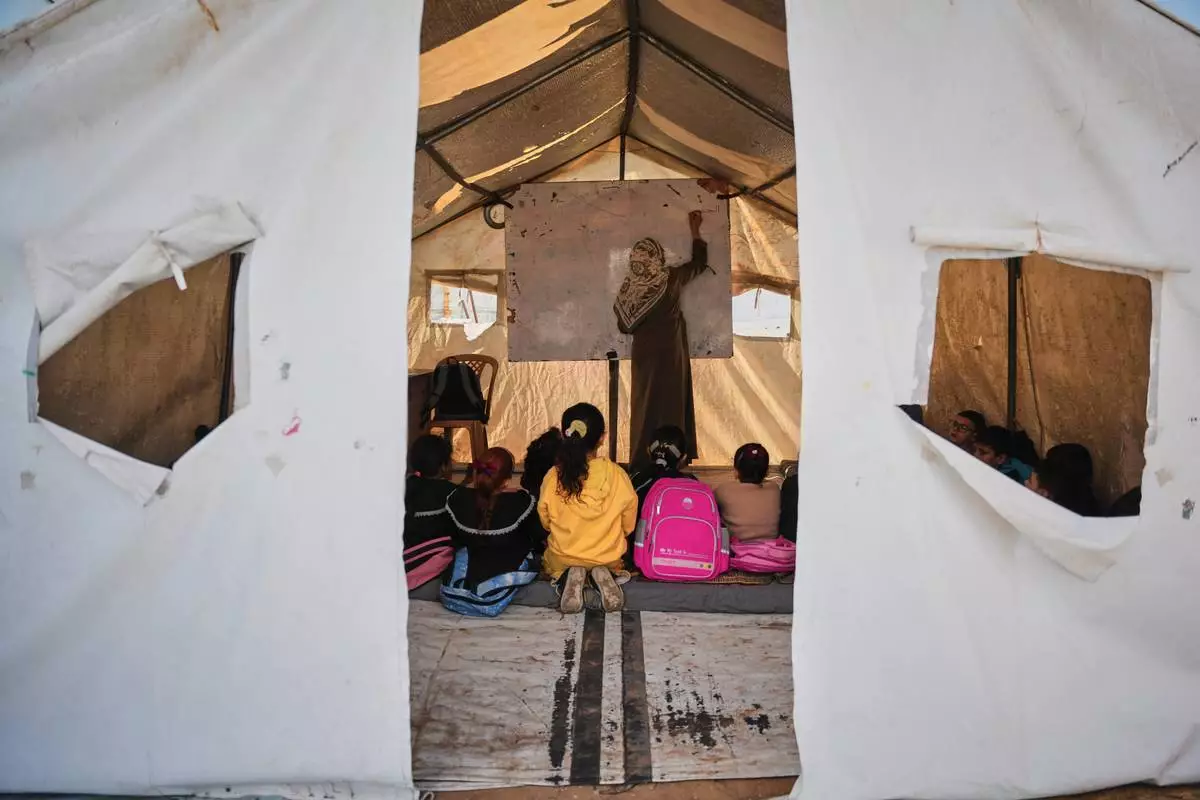
Palestinian students attend class at a makeshift school in a cluster of tents in Deir al-Balah, central Gaza Strip, Thursday, Nov. 19, 2026. (AP Photo/Abdel Kareem Hana)
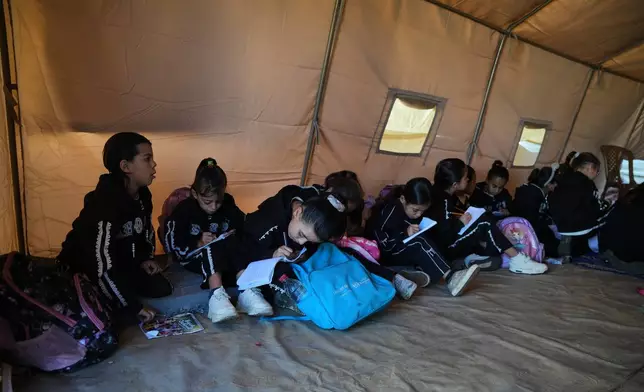
Palestinian students attend class at a makeshift school in a cluster of tents in Deir al-Balah, central Gaza Strip, Thursday, Nov. 19, 2026. (AP Photo/Abdel Kareem Hana)
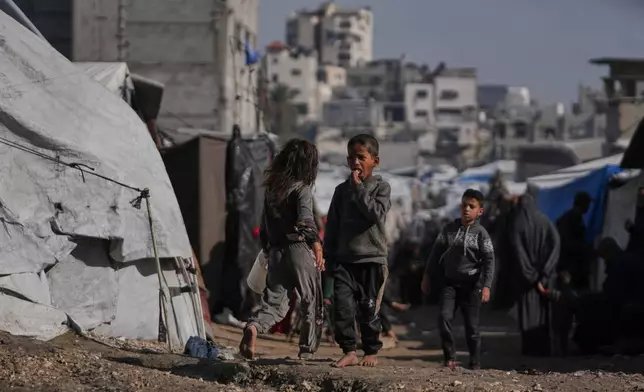
Palestinian children walk along a street lined with tents sheltering displaced people in Gaza City, Thursday, Nov. 19, 2026. (AP Photo/Jehad Alshrafi)
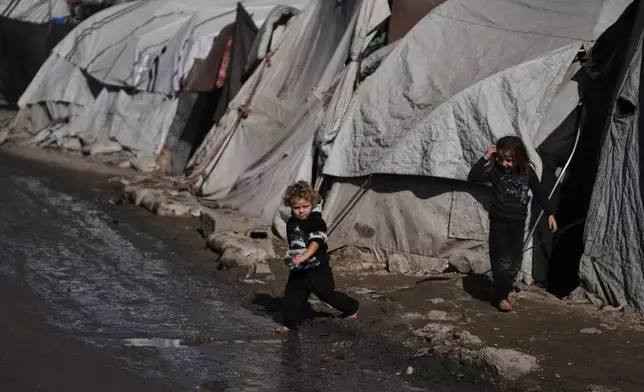
Palestinian children walk in a tent camp sheltering displaced people in Gaza City, Thursday, Nov. 19, 2026. (AP Photo/Jehad Alshrafi)
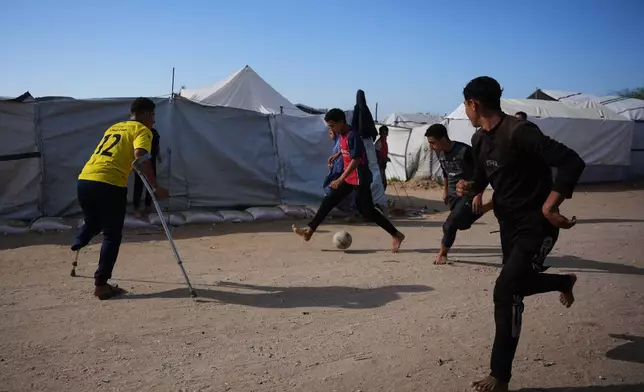
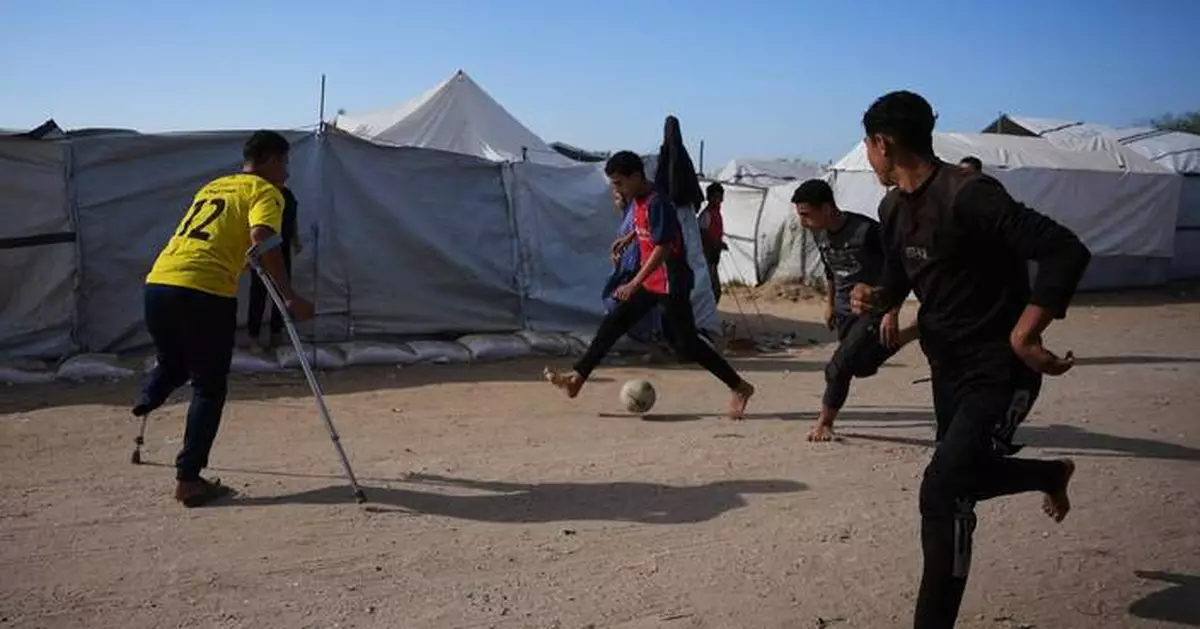
Sharif al-Namla, 14, who lost a leg in an Israeli airstrike, plays soccer with friends at a displacement camp in Khan Younis, southern Gaza Strip, Thursday, Nov. 19, 2026. (AP Photo/Abdel Kareem Hana)
The psychological and physical impact on Palestinian children in Gaza will “live for many years to come,” Save the Children Regional Director Ahmad Alhendawi told The Associated Press.
In its annual global report, Save the Children said that one in four children, some 589 million, lived in conflict zones in 2025, the highest number documented since the end of the Cold War in 1990. The vast majority are in the Middle East and Africa.
The number is expected to increase this year with the ongoing war in Iran and the wider Mideast, and renewed war in Lebanon and Yemen in 2026.
Save the Children reported nearly 12,500 cases of violations against children in the Palestinian territories, mostly attacks on hospitals and schools and deprivation of aid. It said the situation was especially critical in Gaza, where Israel continues strikes despite an October 2025 ceasefire agreement with Hamas.
Although the latest report focused on 2025 figures, Alhendawi said conditions have shown little improvement this year.
“Lots of children who have survived themselves are injured themselves and are without surviving parents,” said Alhendawi. “This report is showing very clearly that what happened and what continues to happen in Gaza are violations at a scale that we haven’t seen and needs to be prioritized by the international community.”
Israel launched its war in Gaza in response to Hamas' Oct. 7, 2023, attacks. It says its ongoing strikes, including one on a hospital in the southern town of Khan Younis last week, target militants and are responses to Hamas violations of the ceasefire agreement.
While Israel has killed most of Hamas’ senior leadership, the conflict has devastated the territory and taken a heavy toll on Gaza’s civilians. The vast majority of people live in crowded tent camps or in the ruins of their former homes, with little access to food, water, or electricity.
“The children of Gaza are deprived of the bare minimum in life,” said displaced Palestinian Riad Abou Shamel, 65, surrounded by children playing in an open lot in Khan Younis filled with rubble and remains of pancaked buildings hit in airstrikes.
“They go to the market and can barely bring back half a cucumber or half an apple.”
Israel's military did not immediately respond to a request for comment on the report.
The report shed light on the surge of cases of abductions, sexual violence, and recruitment of children by armed forces in Africa, in conflict areas in the Democratic Republic of Congo, Nigeria, Sudan, and Somalia, and attacks on hospitals in Ukraine.
The data and figures in Save the Children's report of violations against children and children living in conflict zones come from the United Nations and the Peace Research Institute Oslo.
———
Chehayeb contributed from Beirut. Associated Press Senior Producer Wafaa Shurafa contributed to this report from Deir al-Balah, Gaza Strip.
Palestinian students attend class at a makeshift school in a cluster of tents in Deir al-Balah, central Gaza Strip, Thursday, Nov. 19, 2026. (AP Photo/Abdel Kareem Hana)
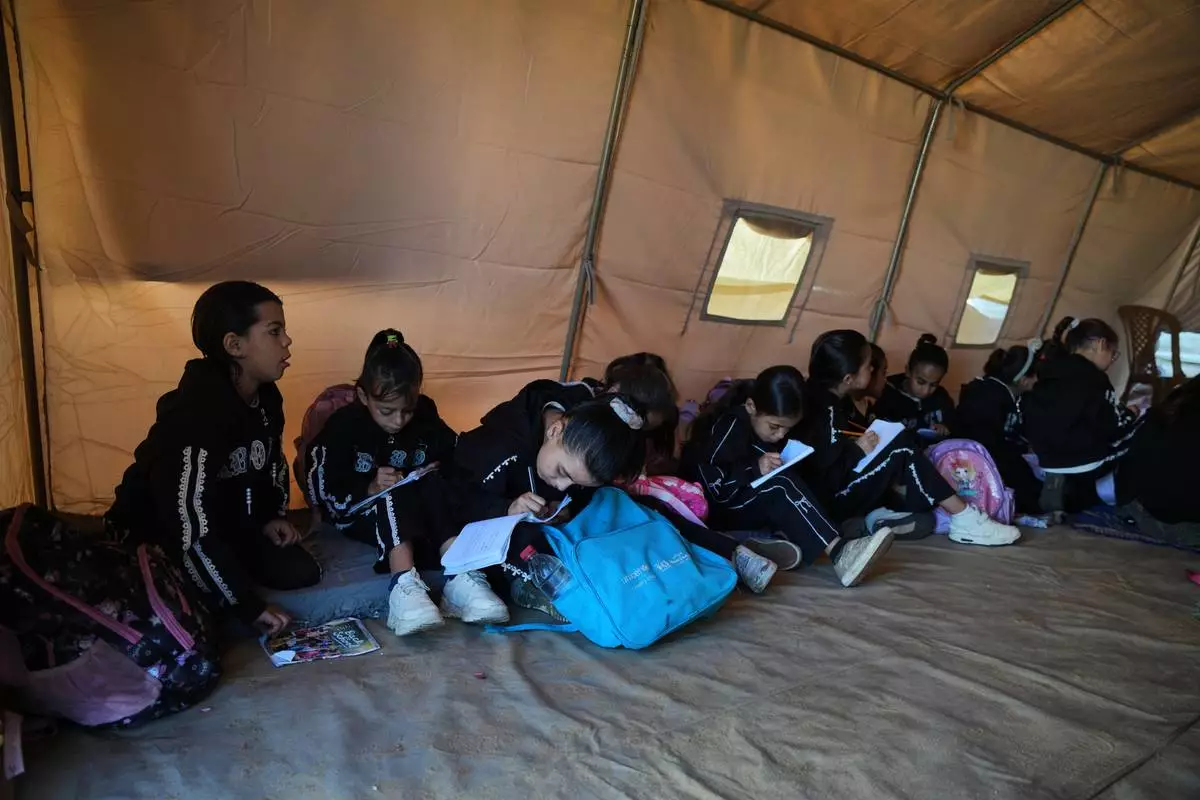
Palestinian students attend class at a makeshift school in a cluster of tents in Deir al-Balah, central Gaza Strip, Thursday, Nov. 19, 2026. (AP Photo/Abdel Kareem Hana)
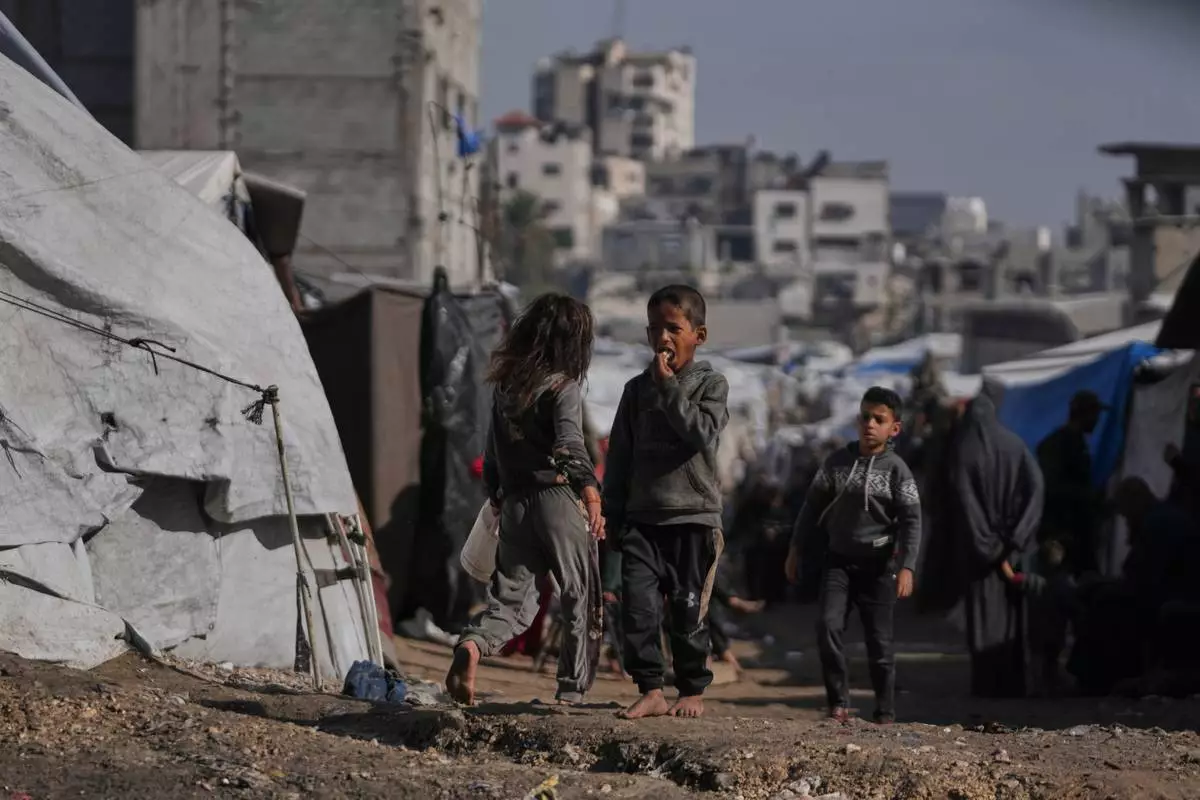
Palestinian children walk along a street lined with tents sheltering displaced people in Gaza City, Thursday, Nov. 19, 2026. (AP Photo/Jehad Alshrafi)
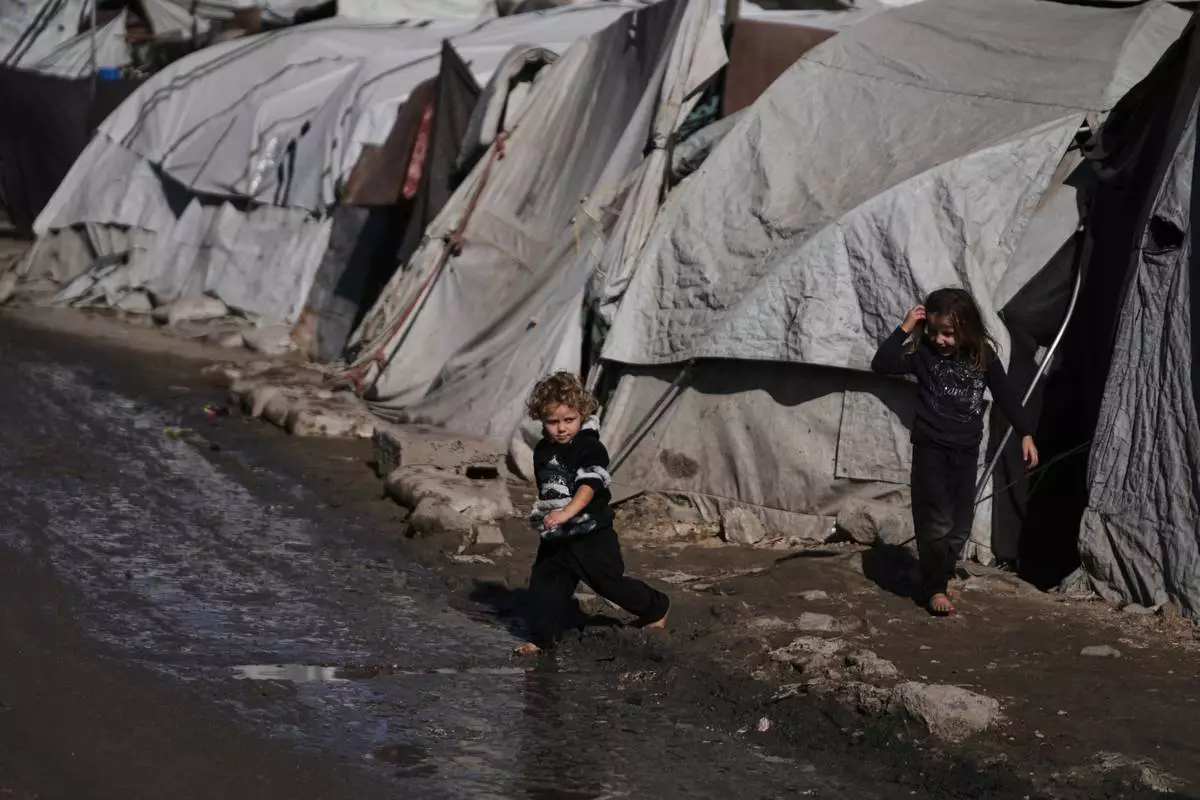
Palestinian children walk in a tent camp sheltering displaced people in Gaza City, Thursday, Nov. 19, 2026. (AP Photo/Jehad Alshrafi)
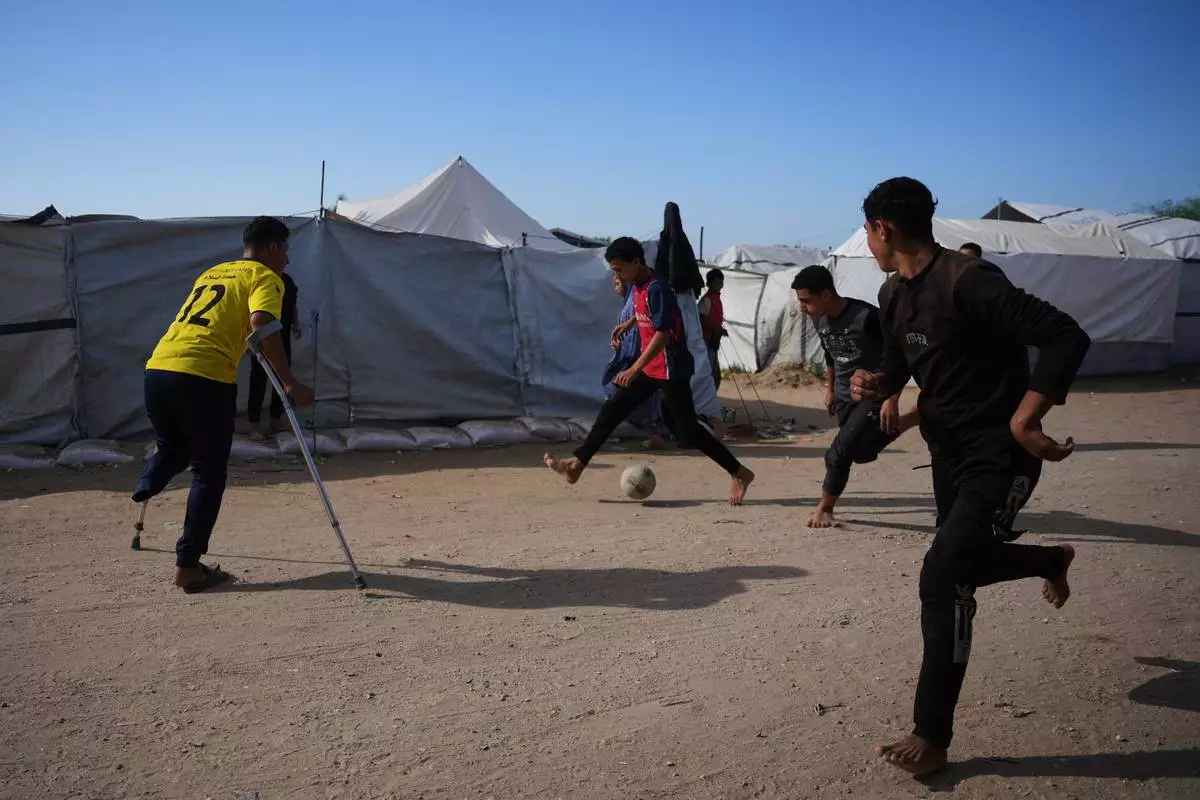
Sharif al-Namla, 14, who lost a leg in an Israeli airstrike, plays soccer with friends at a displacement camp in Khan Younis, southern Gaza Strip, Thursday, Nov. 19, 2026. (AP Photo/Abdel Kareem Hana)