BOSTON--(BUSINESS WIRE)--Nov 19, 2026--
Gradiant, the world's first water-tech unicorn, today announced that its core operating business will focus on water for AI infrastructure. To support this, Gradiant has formed Entropy, a new platform that will build and scale the company’s emerging technologies, where each will have a dedicated team and runway.
This press release features multimedia. View the full release here: https://www.businesswire.com/news/home/20261119142764/en/
A focused operating business, built for the AI economy
More than 90% of Gradiant’s core operating business now serves the AI economy, including semiconductor fabs, data centers, and the power and industrial plants that support them. The business is on track for about $150 million of EBITDA in 2027, with EBITDA above 20% of revenue. Its order backlog already covers most of expected 2027 earnings and about 35% of 2028. EBITDA has tripled from 2024 to 2026 and is on track to more than double again in 2027. That is a growth rate without precedent in the water industry.
Entropy: dedicated teams for the next wave
Entropy brings together Gradiant's emerging technologies, each led by a focused team:
Other early-stage technologies will join over time. Entropy remains part of the Gradiant group. It will pursue these opportunities with a long-term horizon and concentrate investment on the few technologies that can reshape their markets.
"AI runs on chips, and chips run on water," said Prakash Govindan, Co-Founder and CEO of Gradiant. "Our operating business has become the water layer of the AI economy, and it deserves our full focus. alkaLi, ForeverGone and Turing each address a huge market of their own. Entropy gives them the teams and the focus to lead it."
"Lithium, PFAS and AI for water each need a different kind of runway," said Anurag Bajpayee, CEO of Entropy. "Giving them dedicated teams lets every part of Gradiant move faster."
Customers will see no change. Their teams, contacts and projects stay the same.
About Gradiant
Gradiant is the Water Layer of the AI Economy. Founded at MIT and headquartered in Boston, Gradiant builds the water and wastewater infrastructure behind AI's build-out, from chips and data centers to the energy and industries that depend on them. As AI demand accelerates, water is becoming the resource that determines what can be built. Gradiant's technologies reduce what industry withdraws, reclaim what it would waste, and renew clean water to nature, with more than 3,000 treatment plants built across 92 countries. Learn more at gradiant.com.
This release contains forward-looking statements, including expected financial results, which involve risks and uncertainties. Actual results may differ.
Gradiant Doubles Down on Water for AI, Forms Entropy International for Its Emerging Technologies
COPENHAGEN, Denmark (AP) — Denmark’s parliament on Thursday approved a hard-wrought deal with Greenland and the United States to strengthen security in the Arctic and North Atlantic, a final step aimed to defuse months of tensions over the Trump administration's pressure about a possible U.S. takeover of the vast, mineral-rich island.
The trilateral deal — between U.S. President Donald Trump and Danish and Greenlandic leaders — paves the way for more U.S. bases in Greenland, a semiautonomous territory of NATO ally Denmark. It also eases tensions in the Atlantic alliance and with the European Union over Trump’s repeated calls for the vast island to become part of the U.S.
The 109-0 vote in the Folketing amounts to a final step: The deal enters into force once the parliaments of Denmark and Greenland have signed on, followed by formal notification of the United States in a diplomatic note.
Greenland’s parliament approved the deal earlier this month, also with no opposition.
“Today is a big day,” Danish Prime Minister Mette Frederiksen wrote on Facebook. “It hasn’t been an easy process.”
She said the agreement respects Denmark's sovereignty and territorial integrity, and the right of Greenlanders to self-determination.
Greenlandic Prime Minister Jens-Frederik Nielsen wrote on Facebook that Thursday's vote proved that Greenlanders can stand firm in their rights while also finding solutions through dialogue and cooperation.
“We have been through a difficult time, during which many people here at home have been concerned about our country and our future,” he said. “I hope that today’s decision will help bring greater calm and a sense of security.”
The U.S. ambassador to Denmark, Kenneth Howery, welcomed the "strong support" in the Danish parliament for ratification of the deal “paving the way for it to enter into force.”
"The agreement is a tremendous accomplishment, one that modernizes our partnership for the security challenges of the future and bolsters the security of the United States, the Kingdom of Denmark, including Greenland, and all of NATO," he wrote on X.
The aim is to bolster the U.S. military presence on Greenland but keep the self-governing island under Danish control. It would still apply if Greenland eventually chooses independence.
Trump and the leaders of Greenland and Denmark signed the deal in September in New York, after months of quiet, behind-the-scenes negotiations to address his security concerns and Danish and Greenlandic fears of a possible U.S. takeover.
Under the deal, which builds on a defense agreement dating to 1951, the United States can expand its military presence on the island and “modernize and expand” its activities at the remote Pituffik Space Base in the northwest.
The U.S. can also set up “defense areas” at Narsarsuaq in the south and Mestersvig in the east of Greenland, and can establish additional defense areas in the territory and strengthen its military operations or sites.
The three sides expressed support for a stronger NATO engagement in the Arctic, and for allowing the U.S. military access to Greenland to defend the NATO area — including through the “ Golden Dome ” defense system.
After repeated U.S. warnings about the threat in the region from geostrategic rivals Russia and China, the agreement says only NATO members can establish manned or unmanned military installations on Greenland.
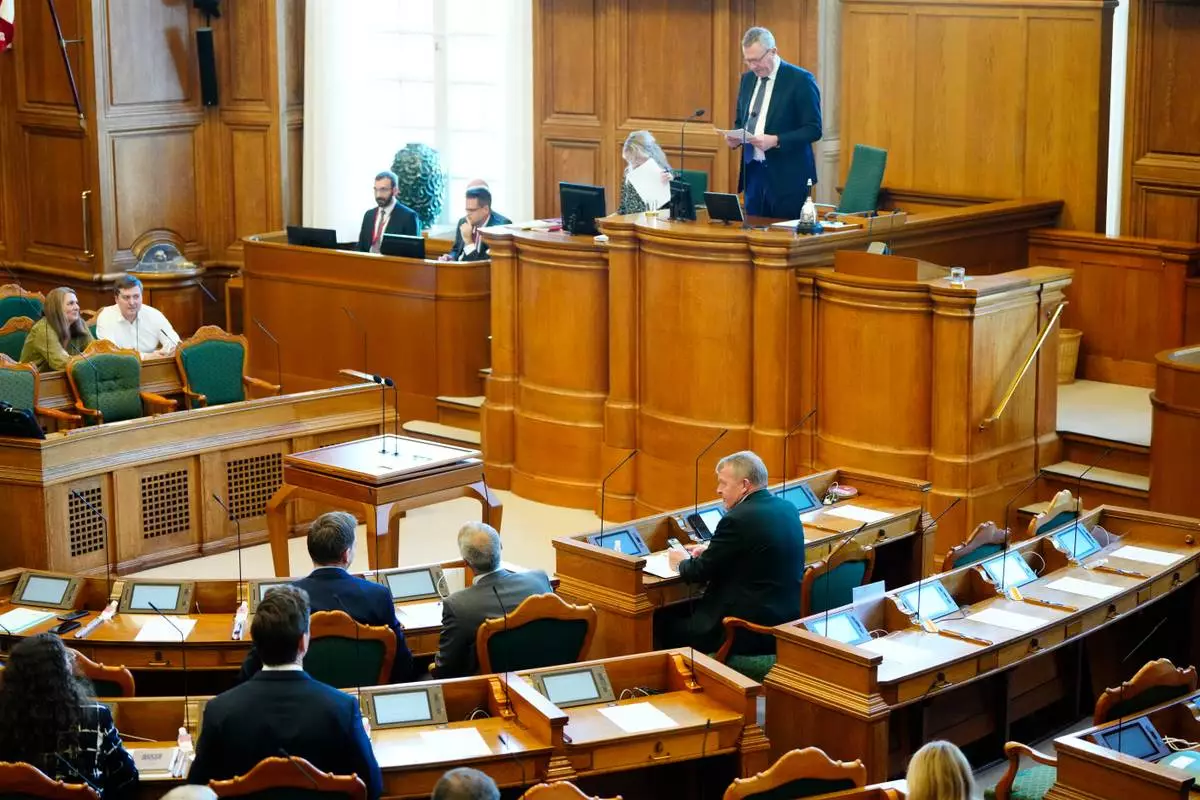
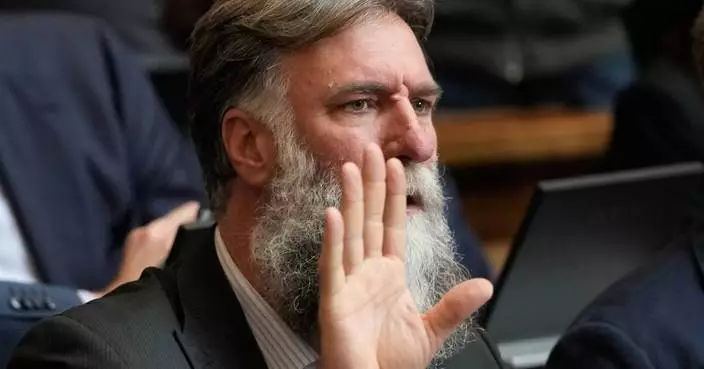
Denmark's Foreign Minister Lars Lokke Rasmussen, right, attends the second legislative process and vote on the security agreement between Denmark, Greenland, and the USA in the Parliament Hall at Christiansborg in Copenhagen, Thursday, Nov. 19, 2026. (Mads Claus Rasmussen/Ritzau Scanpix via AP)