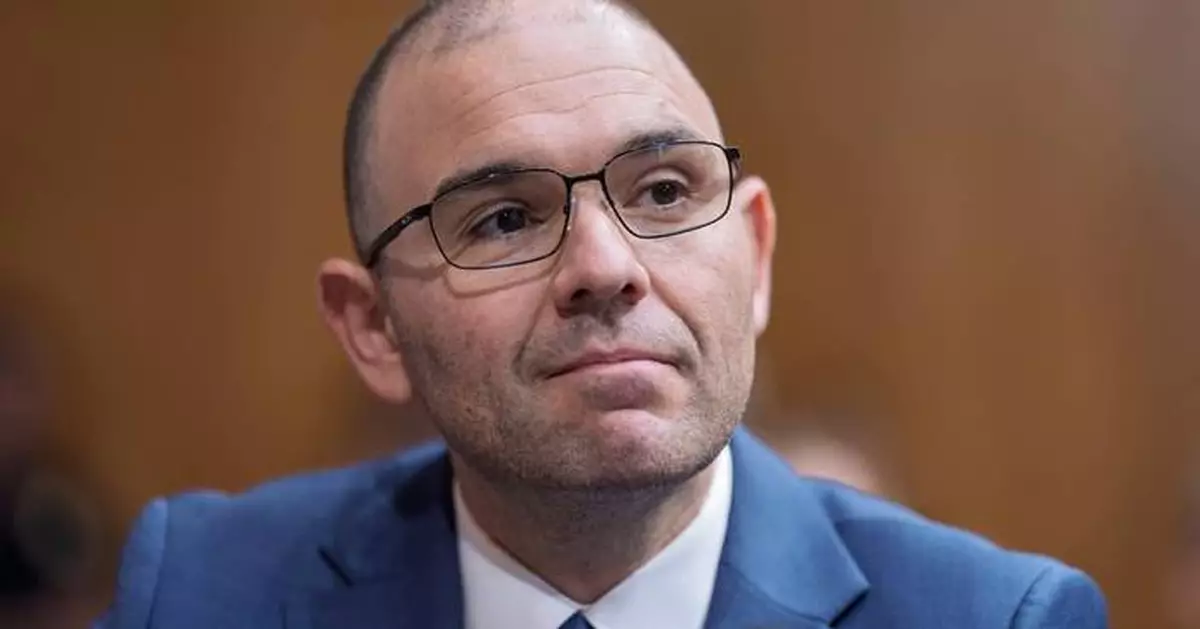
President Donald Trump's pick to lead an agency with a key role in protecting U.S. elections told senators during a confirmation hearing Thursday that he wouldn't characterize the Jan. 6, 2021, U.S. Capitol insurrection as an “attack."
The response by Michael LoSapio, nominated to head the Cybersecurity and Infrastructure Security Agency, came as part of an exchange with U.S. Sen. Richard Blumenthal, D-Conn., who has made inquiries about the violence and the 2020 election part of his line of questioning for a number of Trump nominees.
It's also part of Republicans' rush to confirm Trump's picks before Democrats take power in Congress early next year.
“No, I don’t believe it was an attack,” LoSapio told Blumenthal. “I wasn’t involved in politics. I know what I saw on the news.”
The White House did not immediately return a request seeking comment on the remark by LoSapio, who if confirmed would inherit an agency mired in partisan tensions over the role it should play in combating false claims about voting or election fraud.
He also isn't the first Trump nominee to answer the Jan. 6 question similarly.
During his own June confirmation hearing for the post of Department of Justice inspector general, Don R. Berthiaume — also during questioning from Blumenthal — acknowledged “violence on the Capitol grounds” on Jan. 6, 2021, but also said, “I don’t know if I would use the term attack.”
Several of Trump's judicial nominees have also shied away from characterizing the violence as an “attack” during their own confirmation hearings.
On Thursday, Blumenthal also asked LoSapio, currently chief information security officer at artificial intelligence firm Palantir, who won the popular vote in the 2020 presidential election, which Trump has falsely claimed that he won.
“I’m not going to answer the question about an election six years ago,” LoSapio said, later adding that his “only involvement” in that election was voting for Trump.
CISA — formed in 2018 during the first Trump administration and nested within the Department of Homeland Security — is charged with protecting the nation’s critical infrastructure, from dams and nuclear power plants to banks and voting systems.
It's received bipartisan praise from many state and local election officials, but Trump and his allies remain angry over its efforts to counter misinformation about the 2020 presidential election and the coronavirus pandemic.
The agency’s first director, Chris Krebs, was fired by Trump after highlighting election officials' statement calling the 2020 election the " most secure in American history.”
CISA has also been without a Senate-confirmed director for nearly two years. Jen Easterly left the agency as Trump returned to office last year, and Nick Andersen has led the agency in an acting capacity since February. Sean Plankey withdrew in April when his nomination stalled.
Meg Kinnard can be reached at http://x.com/MegKinnardAP
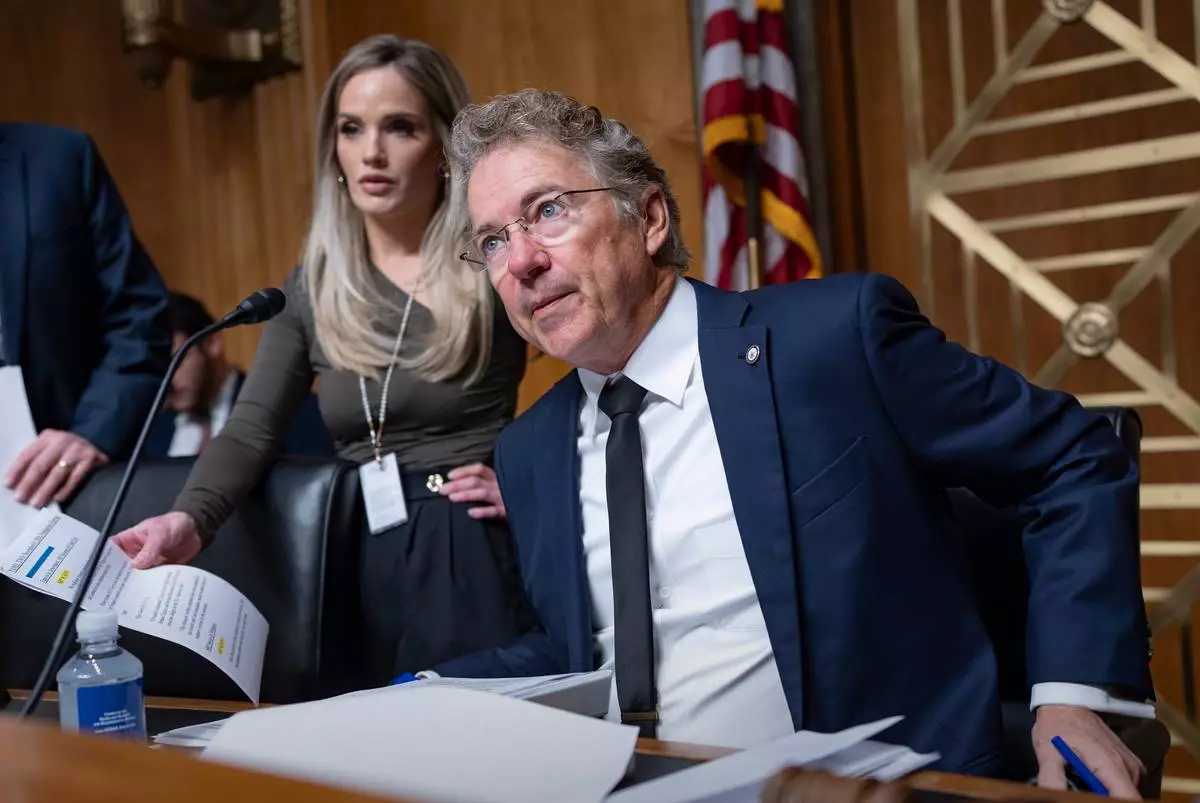
Senate Homeland Security Committee Chairman Rand Paul, R-Ky., prepares to lead a confirmation hearing for Michael LoSapio, President Donald Trump's nominee to lead the Cybersecurity and Infrastructure Security Agency, left, and nominee Eric Ueland, to be comptroller general and lead the Government Accountability Office, at the Capitol in Washington, Thursday, Nov. 19, 2026. (AP Photo/J. Scott Applewhite)
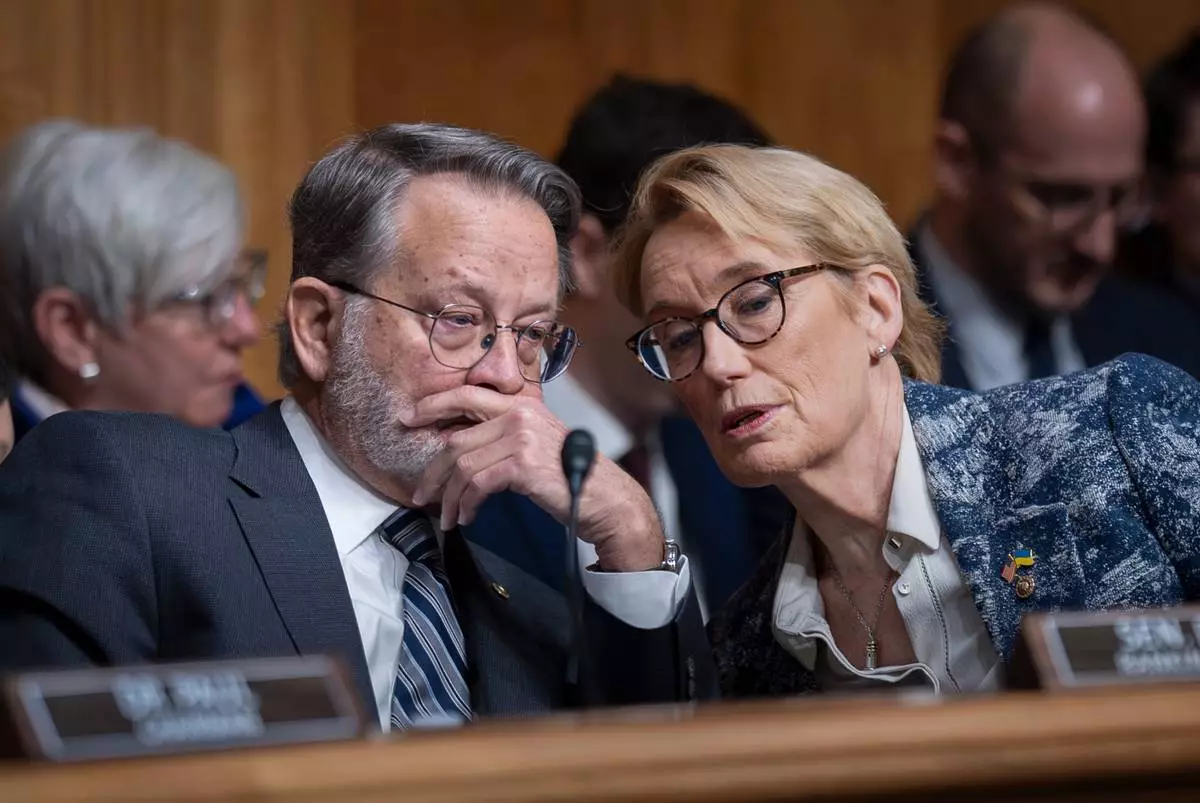
Sen. Gary Peters, D-Mich., left, the ranking member of the Senate Homeland Security Committee, confers with Sen. Maggie Hassan, D-N.H., who will chair the panel when the Democratic majority takes over in January, during a confirmation hearing for President Donald Trump's nominees Michael LoSapio, to lead the Cybersecurity and Infrastructure Security Agency, left, and Eric Ueland, to be comptroller general and lead the Government Accountability Office, at the Capitol in Washington, Thursday, Nov. 19, 2026. (AP Photo/J. Scott Applewhite)
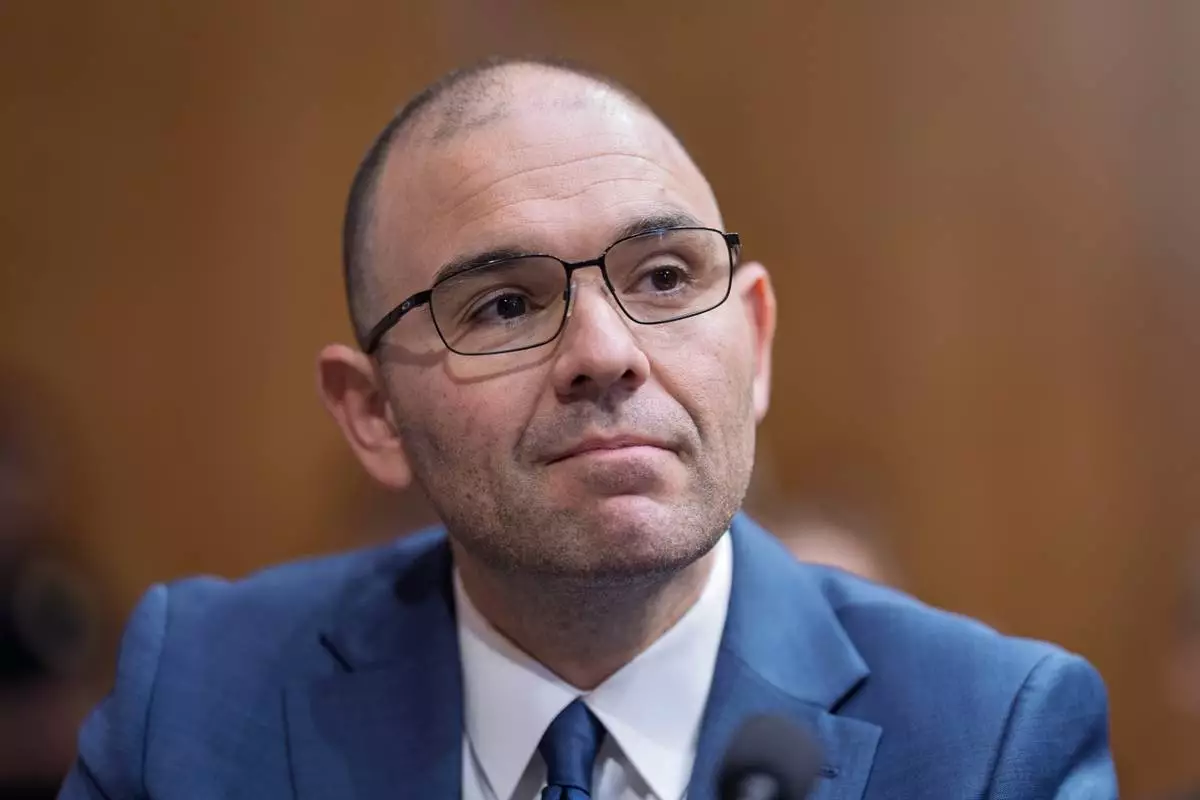
Michael LoSapio, nominee to lead the Cybersecurity and Infrastructure Security Agency, appears before the Senate Committee on Homeland Security and Governmental Affairs for confirmation, at the Capitol in Washington, Thursday, Nov. 19, 2026. (AP Photo/J. Scott Applewhite)
JACKSON, Miss. (AP) — Democratic lawmakers in Mississippi are calling for an investigation after a spike in the number of people listed as inactive on voter rolls before this year’s midterm elections — an increase of nearly 60,000 since the presidential election two years ago.
The shift apparently was caused by the integration of data from Experian, one of the major credit reporting agencies, into the voter roll maintenance process. It came before a historic election for Democrats, who unseated one of the Deep South state's Republican senators.
The lawmakers want an investigation and legislative changes to ensure that eligible voters are not mistakenly moved to inactive status, especially as the party tries to maintain its political momentum going into next year's race for governor. Democrats are focusing on voting issues as they hope to build on Democrat Scott Colom’s win in the race for U.S. Senate.
“Mississippians did their part. They showed up to vote,” said Democratic state Rep. Kabir Karriem, who chairs the Mississippi Legislative Black Caucus. “Now election officials owe them an answer to the most basic question in our democracy: Did my vote count?”
During a news conference Thursday, the caucus requested that legislative oversight committees investigate how credit reporting data was used on the voter rolls and called for a public hearing.
Karriem said his caucus wants to know how many voters were marked inactive, what guidance county officials were given on how to use the Experian data and why some provisional ballots cast by those who were marked as inactive were counted while others were not.
Caucus leaders also called for changes to the state's voting laws. They are pressing for early voting, for people to have the ability to register to vote online and for a process that allows voters to fix any problems with absentee ballots. They also are seeking to repeal or amend laws that allow the use of third party data in determining a voter’s eligibility.
The caucus members said the investigation and legislative changes should be completed quickly, before next year's elections for statewide offices, the Legislature and state Supreme Court.
“We need urgency, we need accountability, and above all we need to restore public trust in our elections,” said Democratic state Rep. Zakiya Summers.
Messages left with leaders of the Republican-controlled Legislature were not immediately returned.
Mississippi for years had primarily relied on U.S. Postal Service change of address data to maintain its voter rolls. In 2025, Republican Secretary of State Michael Watson announced a partnership with Experian that was intended to “strengthen the integrity” of the state’s elections.
Under the agreement, county elections officials were given access to credit and Social Security data. They were to use that in addition to Postal Service data to verify voters’ addresses.
Mississippi law requires election officials to move voters whose addresses are questioned to inactive status at the same time they mail them a confirmation card, which voters can use to reestablish their active status. Many other states do it differently, generally allowing voters time to respond to the notice before their status is changed to inactive.
Mississippi's process meant voters may not have known they had been switched to inactive until they showed up to vote, forcing them to cast a provisional ballot.
Kameisha Smith, a community advocate who helped register hundreds of people to vote in the midterms, was among those caught up in the voter roll confusion.
She said she had to cast a provisional ballot — called an affidavit ballot in Mississippi — after she was moved to inactive status. An elections commissioner at her Holmes County polling place told Smith her name had been found to be associated with an address in San Antonio, even though she had never lived in Texas.
Smith said she called Experian, which acknowledged the address was inaccurate and removed it from her report after the election. She later learned that her provisional ballot had been rejected.
“Because of this inaccuracy, my right to vote was taken away," she said.
Before this year's election, more than 230,000 people were marked as inactive on Mississippi's voter rolls, according to the secretary of state, after the Experian data was included in the verification process. That compares with 185,000 listed as inactive during the 2022 midterm elections and 171,000 during the presidential election two years ago, according to Associated Press data.
Elizabeth Jonson, a spokesperson for the secretary of state's office, said the 230,000 figure was “accumulated over more than five years of maintenance by local officials” and that the state does not classify voters as inactive solely based on the Experian data.
The rise in the number of inactive voters this year was caused by integrating Experian data into the overall verification process, Watson said.
In a social media video, Watson said the state has started using data from a new vendor, Interactive Data, which draws on information from all three major credit bureaus, to maintain its voter rolls.
“I don’t apologize for cleaning voter rolls,” Watson said in an interview. “That is my job.”
Experian has not provided services to Mississippi since early 2025, said Scott Anderson, a spokesperson for the company. He said any decisions regarding voter registration are made by election officials.
In another social media video, Watson said any “mistakes” made in the voter roll maintenance process could be corrected by casting a provisional ballot.
Those ballots are reviewed by county election commissioners, who approve or reject them.
Jonson said 21,484 provisional ballots were cast in this year's midterms, which she said was “nearly identical” to the 21,321 such ballots cast in 2024, a presidential election year in which turnout was higher.
Not all were accepted at the same rate, however. The secretary of state’s office said 75% of provisional ballots had been approved statewide for the November election. But AP data shows that dropped to just 34% in Hinds County, which is majority Black and home to the state capital of Jackson. In the 2024 election, 60% of provisional ballots there were accepted.
State Rep. Cheikh Taylor, chair of Mississippi’s Democratic Party, said he intends to introduce legislation in the new year that would increase transparency in how the credit data is used to verify voter eligibility.
It also would give voters whose records are flagged an opportunity to confirm their identities before they are deactivated.
“This is not a partisan issue,” Taylor said. "The right to vote and the freedom to vote belongs to us all.”
Republican state Sen. Jeremy England suggested that legislation to increase transparency in the use of credit data on voter lists could draw GOP support.
“I don’t think there was anything nefarious involved with it, but look, Mississippi also does have a dark past when it comes to elections,” England said. “It’s something we definitely need to look at more and make sure that we’re doing it in a better way, so that if someone’s registered to vote, you know, they’re not marked as inactive for a reason they shouldn’t be.”
Baker reported from Washington. Ryan Dubicki, James Bazinet and Tyler Meselsohn of The Associated Press Election Services team contributed to this report.
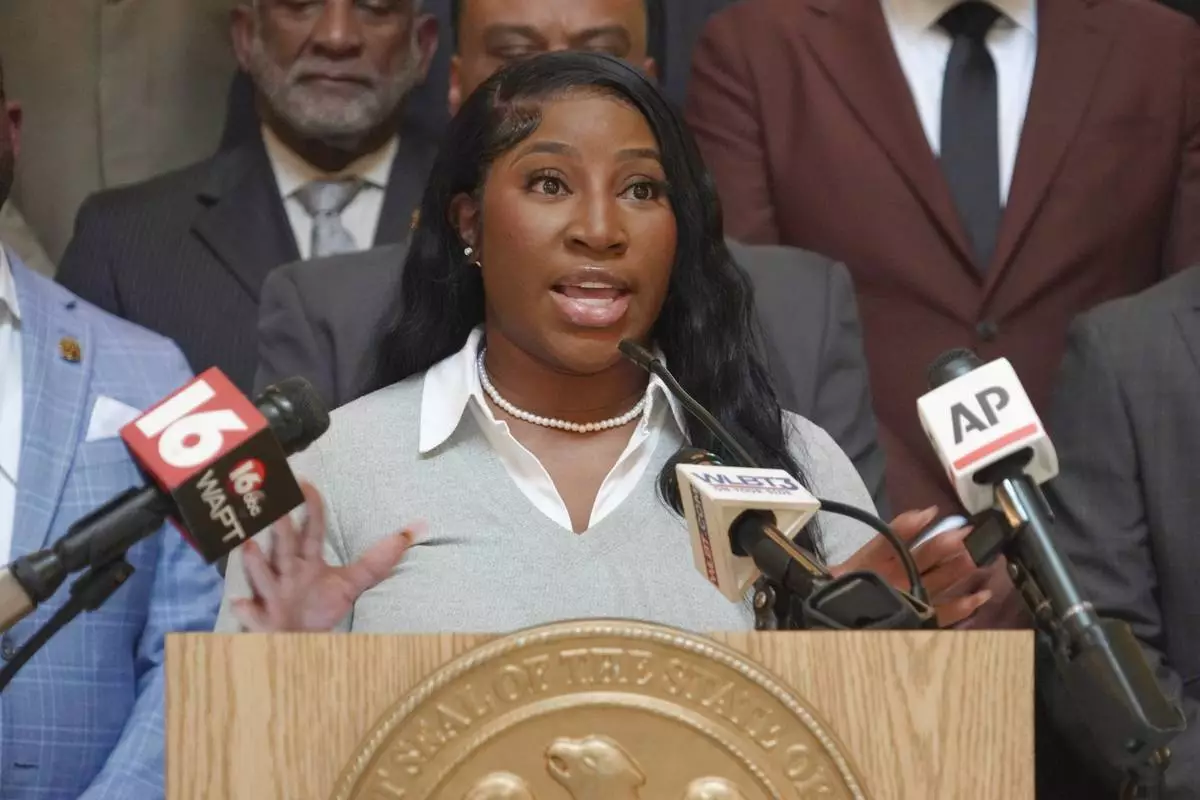
Kameisha Smith, who said Experian data caused her to be removed from her county's voting rolls, speaks at a press conference alongside members of the Mississippi Legislative Black Caucus on Thursday, Nov. 19, 2026, in Jackson, Miss. (AP Photo/Sophie Bates)
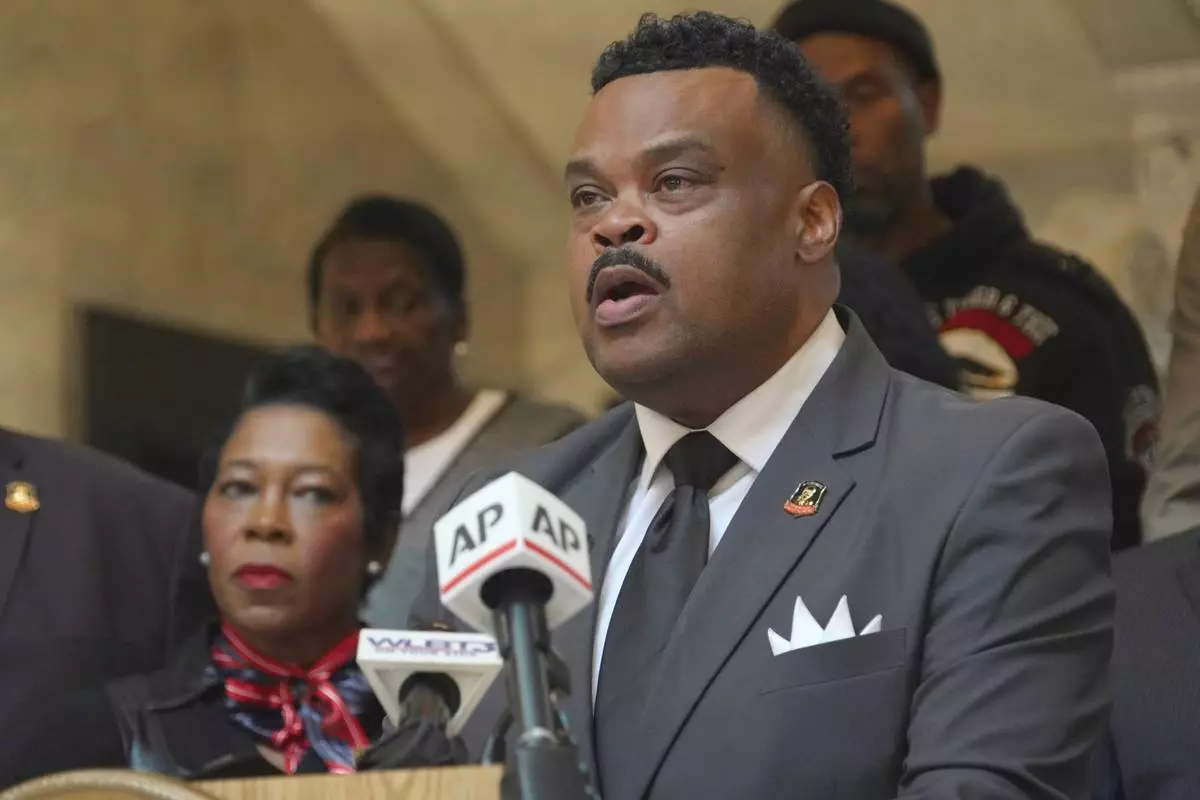
Mississippi Legislative Black Caucus Chairman Rep. Kabir Karriem calls for an investigation into the Mississippi Secretary of State's Office over midterm election concerns during a press conference on Thursday, Nov. 19, 2026, in Jackson, Miss. (AP Photo/Sophie Bates)
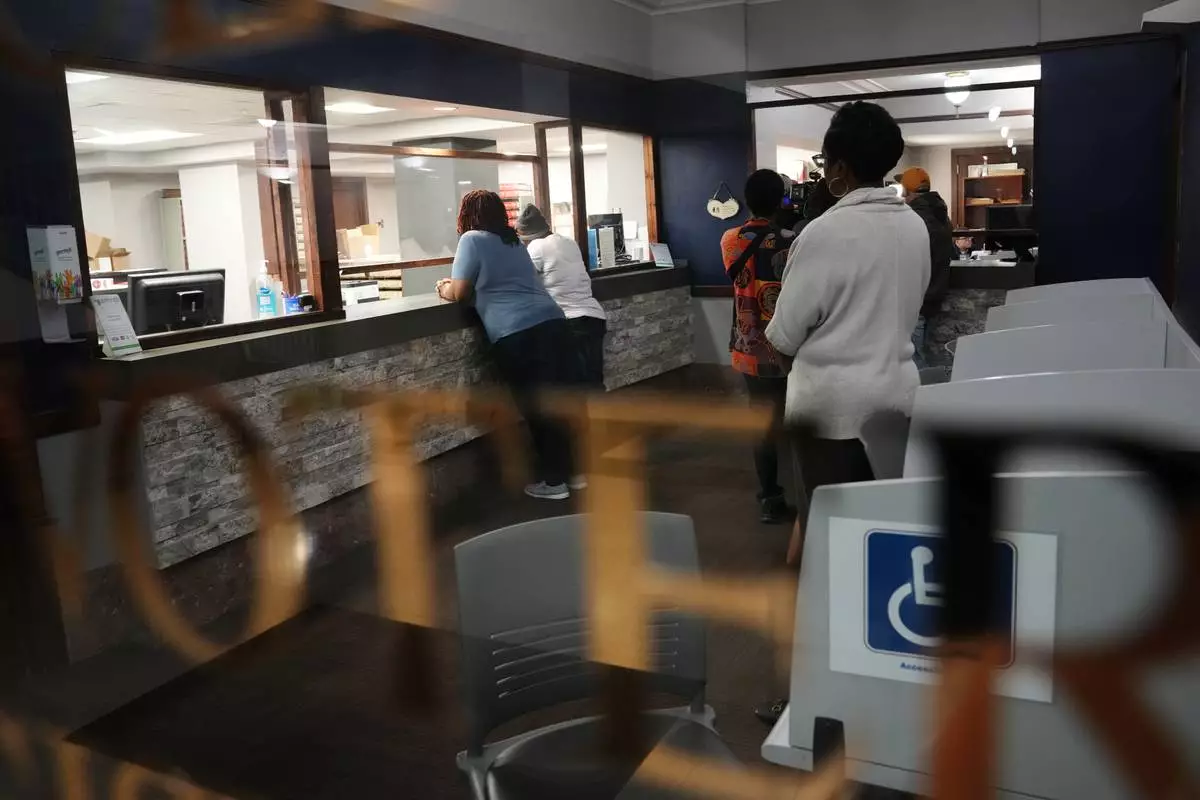
Voters wait in line to verify their identification after voting by affidavit on Election Day, Monday, Nov. 9, 2026, at the Hinds County Courthouse in Jackson, Miss. (AP Photo/Ellen Schmidt)
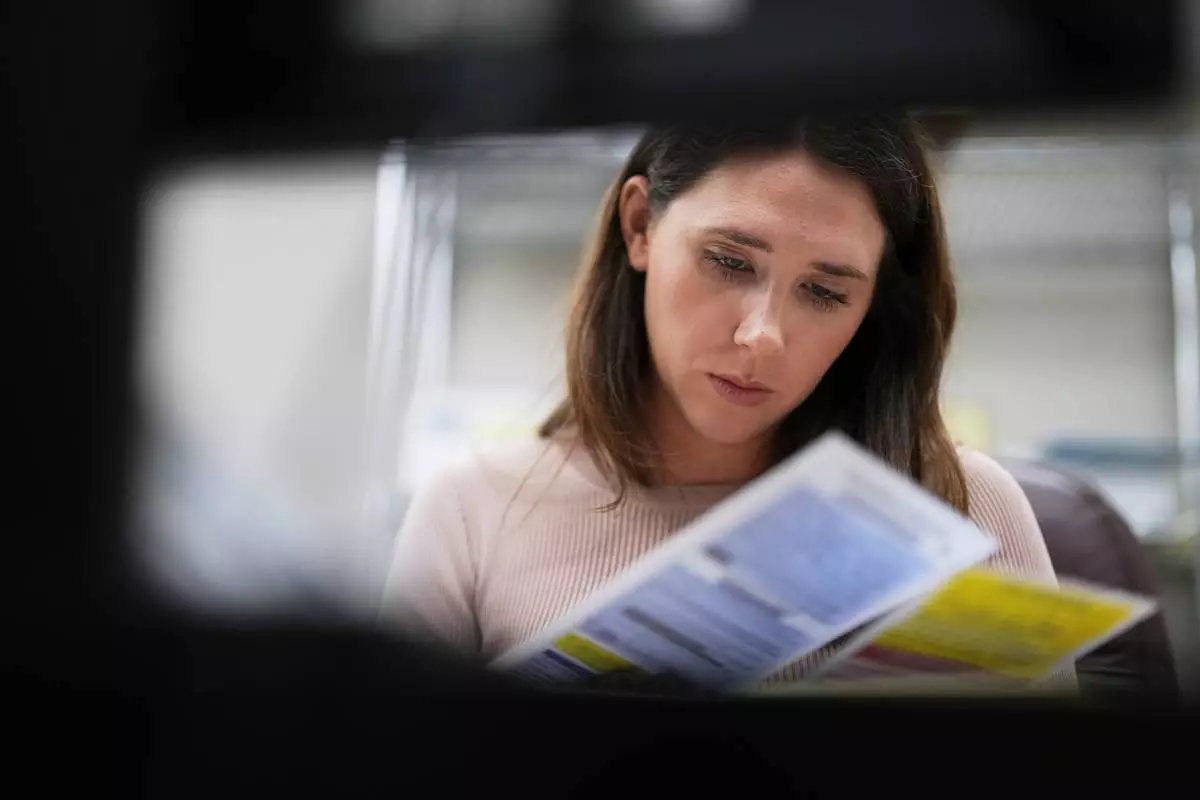
Election Commissioner Madison Hill processes affidavit ballots at the Rankin County Election Commission in Brandon, Miss., Monday, Nov. 9, 2026, as the U.S. Senate race between Democratic candidate Scott Colom and the incumbent Republican Sen. Cindy Hyde-Smith remains uncalled. (AP Photo/Ellen Schmidt)
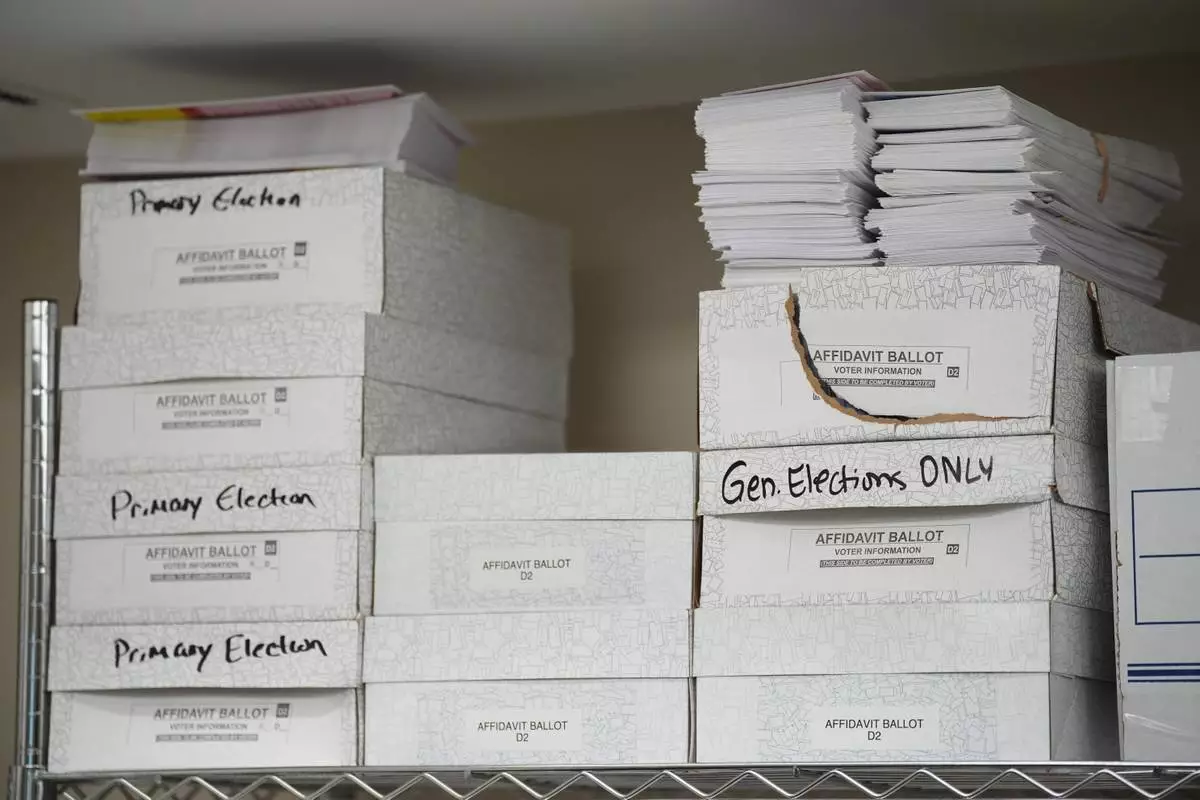
Boxes of affidavit ballots are stored on a shelf at the Rankin County Election Commission in Brandon, Miss., Monday, Nov. 9, 2026, as the U.S. Senate race between Democratic candidate Scott Colom and the incumbent Republican Sen. Cindy Hyde-Smith remains uncalled. (AP Photo/Ellen Schmidt)
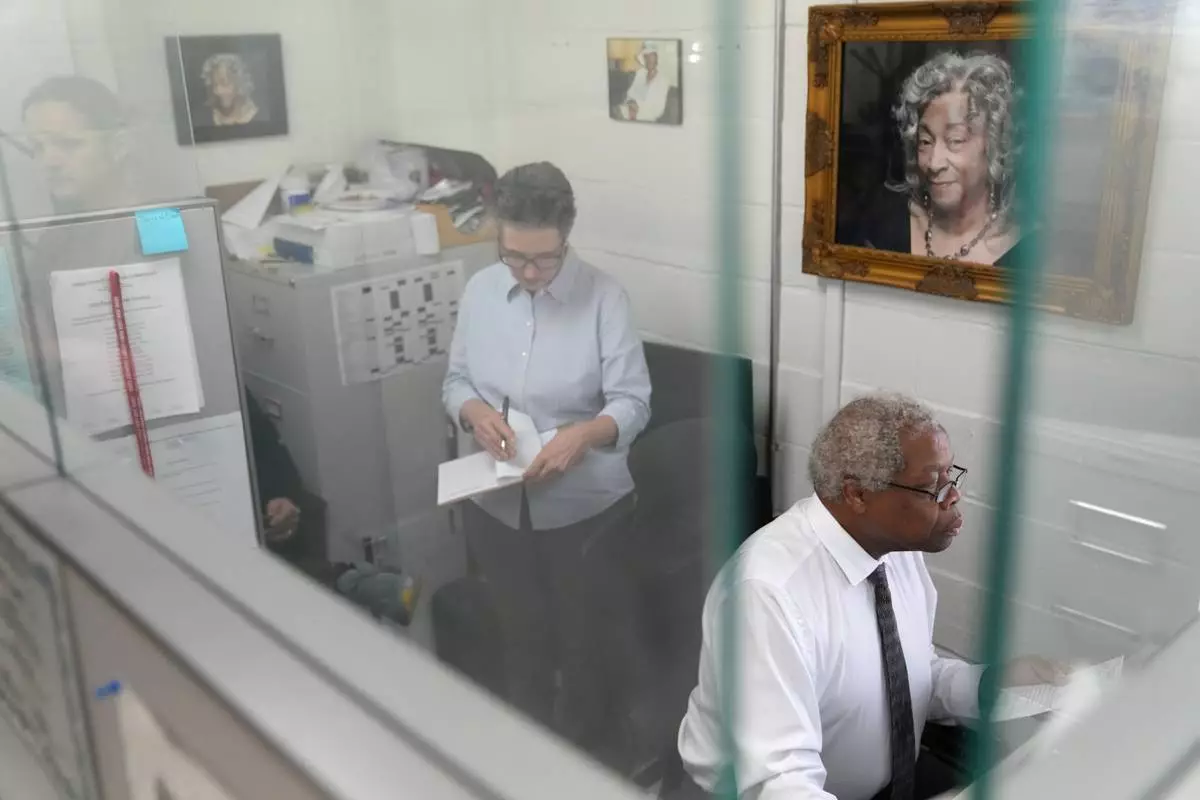
Election commissioner Jermal Clark, right, processes affidavit ballots while election monitors watch as the U.S. Senate race between Democratic candidate Scott Colom and incumbent Republican Sen. Cindy Hyde-Smith remains uncalled, Tuesday, Nov. 10, 2026, at the Hinds County Election Commission in Jackson, Miss. (AP Photo/Ellen Schmidt)
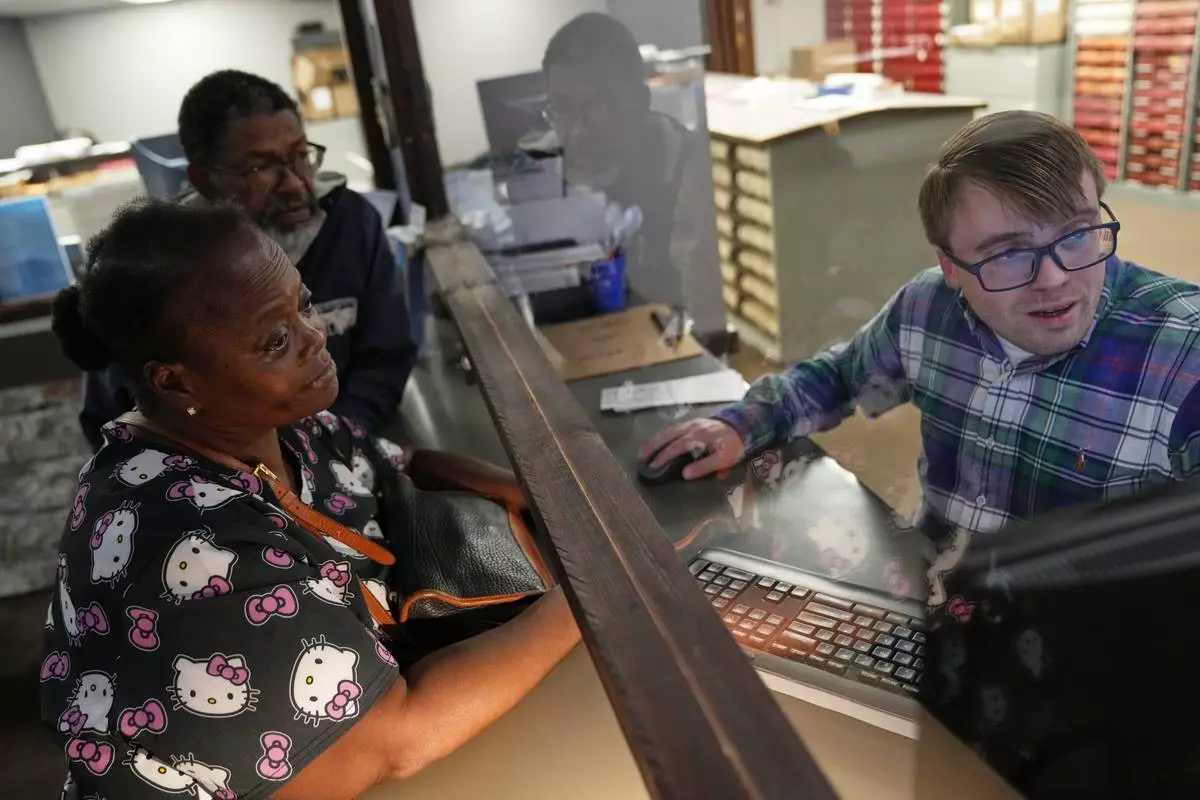
Deputy clerk Devin Black, right, assists Cheryl McGee and Johnny McGee Sr., who came to verify their identification after voting by affidavit on Election Day, Monday, Nov. 9, 2026, at the Hinds County Courthouse in Jackson, Miss. (P Photo/Ellen Schmidt)