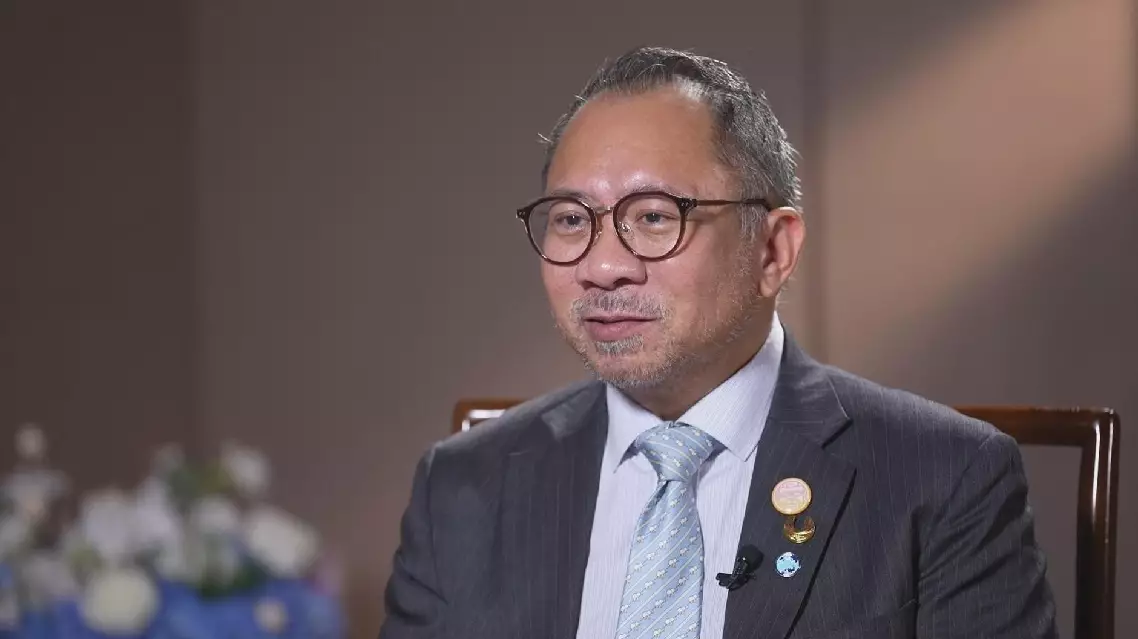
Eduardo Pedrosa, executive director of the Asia-Pacific Economic Cooperation (APEC) Secretariat, said the vision of building an Asia-Pacific community is shared by all APEC members and runs through all of APEC's work.
In an interview with China Media Group in Shenzhen ahead of the 33rd APEC Economic Leaders' Meeting in 2026, Pedrosa laid out his take on this year's APEC theme, "Building an Asia-Pacific Community to Prosper Together."
"We have actually set plans. It's not the secretariat's plans, but it's APEC's plans. APEC is a member-driven organization. So we've agreed to this vision of an open, dynamic, resilient and peaceful Asia-Pacific region. And so what we are seeing over the years is APEC members coming together and agreeing on specific topics and frameworks that move us along that vision. That idea of an Asia-Pacific community is ever present in all of our work, but I would focus on the word 'community'. Sometimes you think of a community as being quite a small group, a village almost. But in the context of APEC, it's a huge region, 60 percent of global GDP, 40 percent of global population. But what we're trying to do through our work is increase those connections, increase empathy, understanding, which is really necessary if we're going to open up to each other and really achieve this sort of dynamic and especially peaceful Asia-Pacific region," he said.
Pedrosa also pointed out that China's growing leadership, especially in advancing technology-focused agendas, has reshaped its role within APEC. It has moved from learning the rules of the global economy to taking on a leading role.
"Of course, China is now the second largest economy in the world. China is now a member of, I think, the Regional Comprehensive Economic Partnership, that's an enormous agreement. Where are we going to see the biggest differences, the leadership, if you like? It has to be in the things that are moving forward - technology. So, in the WTO, for example, helping push forward on issues like e-commerce, pushing forward on artificial intelligence and APEC is a good platform for that. APEC is about cooperation, a cooperative approach to developing ideas and how we can move forward together as an organization, as a community," he said.
APEC members agree on Asia-Pacific community vision: executive director
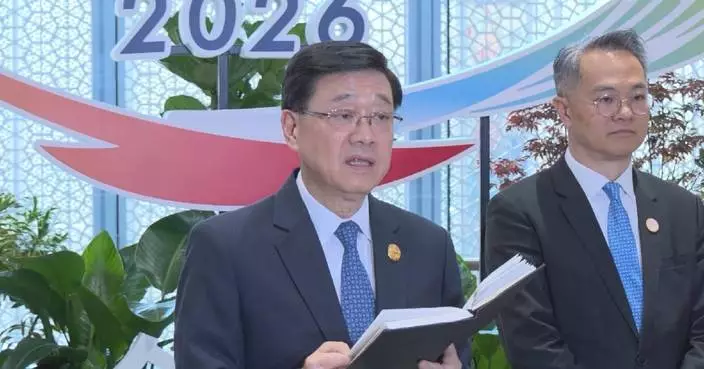
The Hong Kong Special Administrative Region (SAR) will look to leverage its status as an international financial hub and seek more free trade and investment agreements across the Asia-Pacific, the region's chief executive John Lee Ka-Chiu said Thursday.
Lee spoke to the media after attending the 33rd Asia-Pacific Economic Cooperation (APEC) Economic Leaders' Meeting, which concluded in south China's Shenzhen on Thursday.
Asked by a China Global Television Network (CGTN) reporter on how Hong Kong could serve as a "super-connector" and "super value-adder" between the mainland and the world, Lee highlighted the city's extensive overseas trade and investment network.
"We can make full use of APEC and other international platforms to showcase the Hong Kong SAR as an international hub. We can also expand the global trade and investment network and through our 15 overseas ETOs (Economic and Trade Offices), together with the Hong Kong Trade Development Council and Invest Hong Kong offices, our network covers 68 cities and 129 countries," he said.
While noting that trade with APEC economies accounts for 87 percent of Hong Kong's total external trade value, Lee also outlined plans to reach more emerging markets, pursue entry into regional trade pacts, and advance Hong Kong's own strategic initiatives.
"We will deepen engagement with emerging economies in ASEAN (Association of Southeast Asian Nations), the Middle East, Central Asia and South America, pursue early RCEP (Regional Comprehensive Economic Partnership) accession, and aim at reaching more free trade agreements [and] promotion and protection of investment agreements.
"I think we can also leverage Hong Kong's status as an international center to contribute to the country's high-quality development. We will press ahead with the development of the 'four centers and one hub' to serve the country's high-level opening up," Lee said, with the 'four centers and one hub' strategy referring to Hong Kong's standing as a center for international finance, shipping, trade, innovation and technology, and as a talent hub.
Lee also explained how Hong Kong will look to align itself with China's national development priorities and closely integrate with the Greater Bay Area, a major city cluster encompassing the Hong Kong and Macao special administrative regions and nine cities across south's China Guangdong Province. He cited the Northern Metropolis, a development in the north of the Hong Kong SAR near Shenzhen, as being one area that can help further this goal.
"As regards deepening our integration into national development, first of all, I think we can deepen Greater Bay Area development through hard, soft and 'heart' connectivity, and take forward the Northern Metropolis [development] for integrating into national development. Second, we can contribute to Belt and Road cooperation. Third, we can, through the GoGlobal Task Force (Task Force on Supporting Mainland Enterprises in Going Global), support mainland enterprises in leveraging Hong Kong's world-class professional services and extensive global network, in using Hong Kong as a springboard to expand into global markets," Lee said.
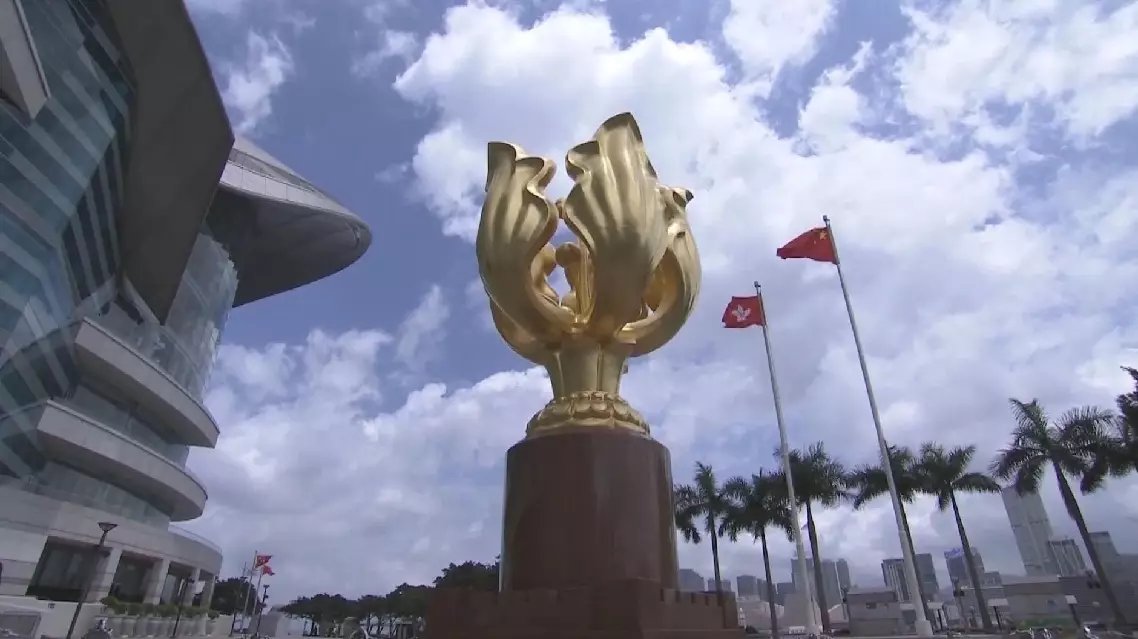
Hong Kong chief executive eyes deeper trade with Asia-Pacific
Hong Kong chief executive eyes deeper trade with Asia-Pacific