-NIPA's K-Digital Contents Pavilion connects eight Korean companies with Japanese partners and secures three partnerships
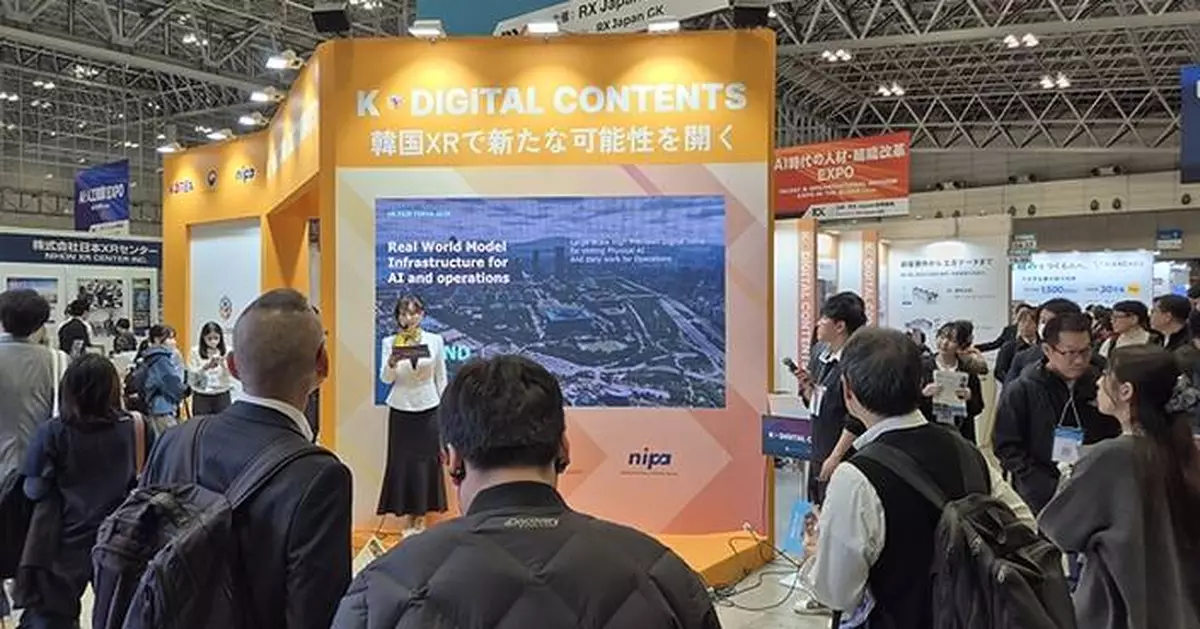
CHIBA, Japan, Nov. 20, 2026 /PRNewswire/ -- The National IT Industry Promotion Agency (NIPA), under Korea's Ministry of Science and ICT, operated the K-Digital Contents Pavilion at XR Fair Tokyo Autumn 2026. Eight promising Korean digital content companies met Japanese and global partners, investors and buyers there.
The show was held November 11–13, 2026, at Makuhari Messe in Chiba as part of NexTech Week Tokyo [Autumn] 2026. At Booth 15-30 in Hall 1, the companies presented digital twins, 3D digital humans and AI agents, AI-powered XR experiences, interactive displays, AR learning, 3D product configuration and AI memorial content.
Over the three days, the pavilion held around 300 business meetings with Japanese and global companies. Several of these meetings led to concrete partnerships on site.
3i Inc., provider of the Beamo 360-degree digital twin solution, agreed to cooperate with a leading Japanese building automation company in digital twin-based facility management.
Artygen Space, developer of the AR and AI reading platform bookar, signed an MoU with a Japanese partner company on joint development and business cooperation.
Millennial Works, known for its Animoment AI photo kiosk and SpaceV interactive exhibition, signed an MoU with the same Japanese partner to jointly participate in supply projects for educational programs and teaching materials for the global market.
The other participating companies also met with Japanese and global buyers and partners, and are expected to pursue follow-up discussions after the show.
JL Standard – Soul Link Pro AI digital memorial platform
Mirroroid – TILTO real-time XR interactive displays
OMOTION – 3D digital humans and AI kiosks
Planningo – VIVAR 3D product configuration and quotation solution
Tech Tree Innovation – AROUND.map synthetic data for autonomous driving
NIPA also hosted the K-Digital Contents Session on November 12, 2026, on the pavilion stage. The session drew 50 to 60 attendees, who heard the companies present their technologies and solutions.
** This press release is distributed by PR Newswire through automated distribution system, for which the client assumes full responsibility. **
Korean Digital Content Companies Hold Around 300 Business Meetings at XR Fair Tokyo Autumn 2026
Powered by Open Hybrid AI Infrastructure and Three Intelligent Factories, Huawei Helps Global Financial Institutions Build Differentiated Competitive Advantages
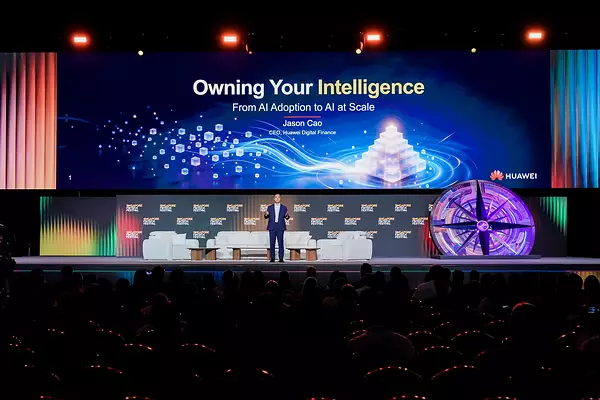
SINGAPORE, Nov. 20, 2026 /PRNewswire/ -- At SFF 2026, Huawei shared insights on "Accelerating Financial AI at Scale, Advancing Agentic Finance" with global financial institutions and industry partners, showcasing its technologies and solutions.
Jason Cao, CEO of Huawei Digital Finance, and Alvin Feng, President of Huawei International Financial BU, delivered keynotes on the Festival Stage and Frontier Stage. Huawei showcased solutions for resilient infrastructure, application modernization, insurance, securities, and central banks, plus joint solutions under the RONGHAI Financial Partner Program and achievements from its 4-Win ecosystem collaboration.
To Move from AI Adoption to AI at Scale, Financial Institutions Must Build Their Own AI Capabilities
The competitive focus in financial AI is shifting from model performance to enterprise-grade system capabilities. Financial institutions must be able to independently select, securely operate, replicate at scale, and continuously evolve their AI capabilities.
Jason Cao shared lessons from China's AI journey: an open ecosystem makes AI affordable; extreme engineering makes it effective; and commercialization at scale makes AI deeply integrated and reliable in business. He identified four characteristics among China's financial institutions: ongoing application modernization (Zero Legacy); hybrid infrastructure combining on-premises deployment and public cloud; enterprise-grade AI architecture for centralized development and management; and AI in core business workflows such as mobile banking, credit, and risk control, reshaping business processes to enhance competitiveness.
As AI evolves to understand intent, plan, and act proactively, customers and employees will rely on their own AI agents. Banks must ensure their financial services can be understood, connected, and invoked by these agents, while building an AI flywheel linking data, execution, learning, and feedback toward Customer-AI-Friendly Finance.
Huawei is exploring a "Two Super Agents, Multiple Specialized Agents" architecture. The Customer Super Agent and Employee Super Agent understand user intent, deliver personalized services, and flexibly invoke specialized banking capabilities. Multiple Specialized Agents support domains such as credit, marketing, risk management, and wealth management through human-AI and multi-agent collaboration. Banks can turn expertise in compliance rules, credit judgment, marketing strategies, and risk management into invokable, reusable, continuously evolving AI capabilities. Through the Two Super Agents and Multiple Specialized Agents, Huawei helps banks connect customers and employees, coordinate business tasks, and continuously capture and refine expert intelligence to build self-evolving, enterprise-grade systems.
Cao said scaling AI for business growth requires hybrid infrastructure combining on-premises deployment and public cloud for flexible options, open architecture for technical agility, standardized engineering to build and replicate AI efficiently, and proven knowledge, skills, and agent capabilities as shared assets for reuse across teams and scenarios. He stressed that financial institutions must own their data, knowledge, and business logic—the core assets underpinning differentiated competitiveness—and integrate them deeply with business processes to create financial-grade AI capabilities.
Three Intelligent Factories on Open Hybrid AI Infrastructure Accelerate Production-Grade Deployment of Financial Agents
On the Frontier Stage, Alvin Feng delivered a keynote titled "Owning Your AI, Advancing Agentic Finance" and unveiled Huawei's Fintelligent AI Solution. He outlined an enterprise-grade framework to address security, sustainability, and scalability: open architecture for flexibility and continuous technological evolution; standardized engineering for mass production of AI agents; and shared assets for reuse across teams and scenarios.
Built on open hybrid AI infrastructure, the solution brings these capabilities together through three intelligent factories: the Agent Factory for agent development and governance; the Token Factory for full-lifecycle token operations; and the Data&Knowledge Factory for continuous, high-quality data and knowledge supply.
At the Huawei Finance Exhibition Area, Huawei showcased its capabilities and partner practices for scaling AI worldwide. With 16 years in finance, Huawei has served more than 7,100 financial customers, including 54 of the world's top 100 banks.
** This press release is distributed by PR Newswire through automated distribution system, for which the client assumes full responsibility. **
Huawei Unveils Financial AI Scaling Capabilities at Singapore FinTech Festival 2026