Skip to Content Facebook Feature Image

Senate to vote on bill to speed up permitting reviews, force data centers to pay for energy costs

News

Senate to vote on bill to speed up permitting reviews, force data centers to pay for energy costs
News

News

Senate to vote on bill to speed up permitting reviews, force data centers to pay for energy costs

2026-11-20 10:04 Last Updated At:10:20

WASHINGTON (AP) — The Senate is nearing a vote on bipartisan legislation aimed at speeding up permitting reviews to build power plants, transmission lines and other energy infrastructure as lawmakers seek to increase the nation's energy supplies to lower electricity prices and meet surging demand.

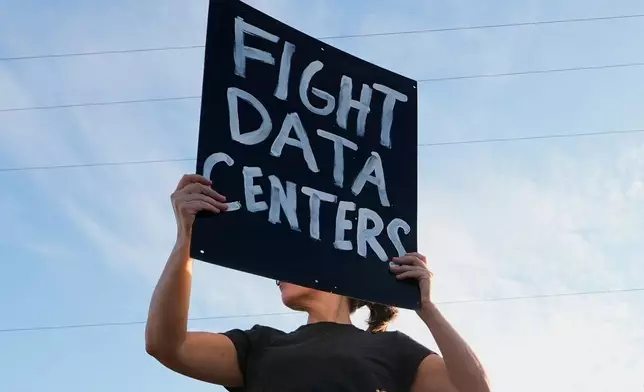
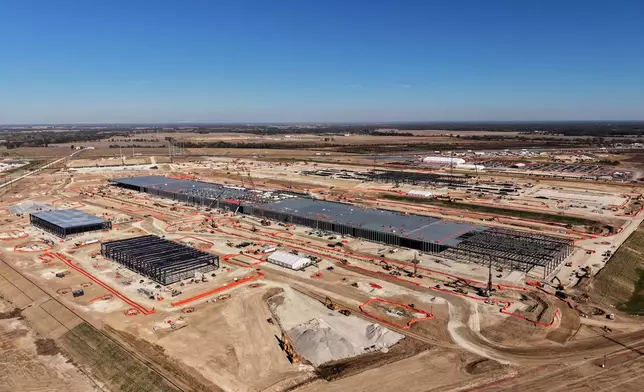
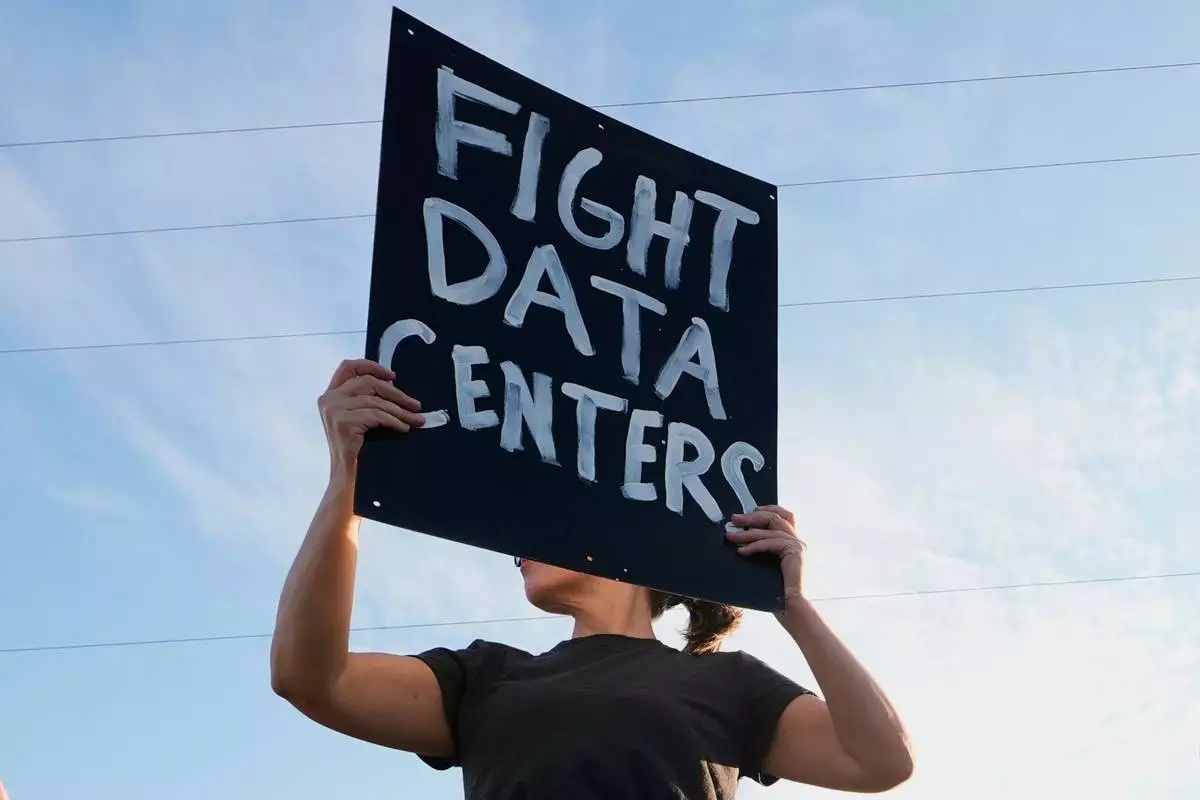
The legislation’s sweeping changes would shorten the timeline to start big energy projects — both clean energy and fossil fuel — and ensure data centers that propel artificial intelligence pay for the energy they use. Anger over data centers and rising electricity prices helped usher in a wave of Democrats at the state and federal levels pledging to clamp down on the massive, energy-hungry structures.

More Images
FILE - A protester holds a Fight Data Centers sign Oct. 12, 2026, in Mason, Mich. (AP Photo/Paul Sancya, File)
FILE - A protester holds a Fight Data Centers sign Oct. 12, 2026, in Mason, Mich. (AP Photo/Paul Sancya, File)

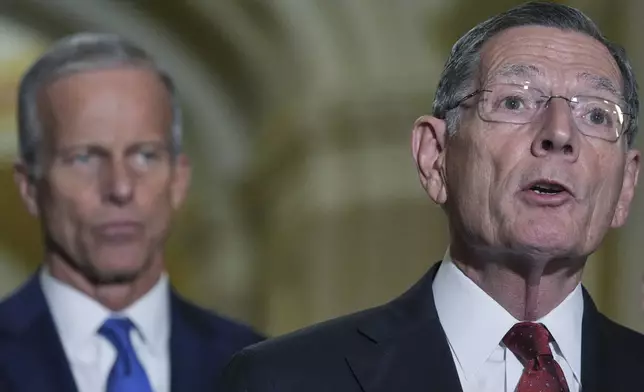
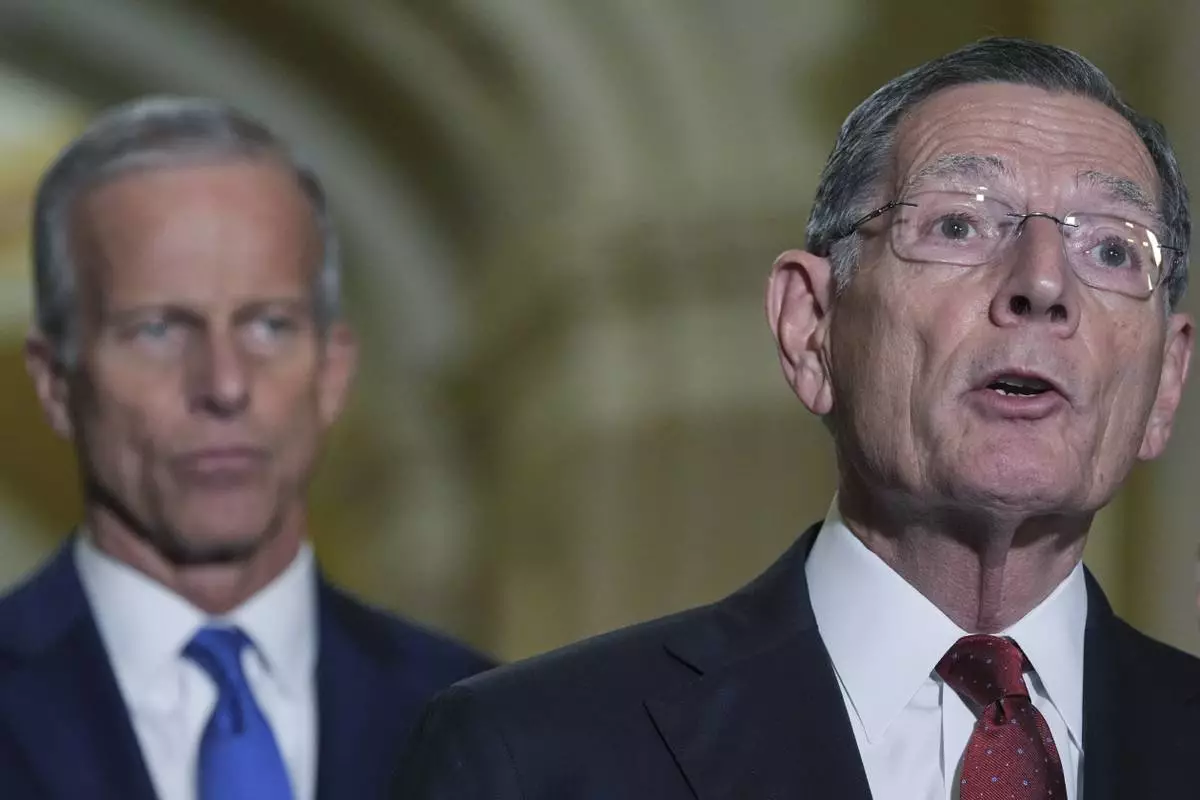
Sen. John Barrasso, R-Wyo., speaks as Sen. Majority Leader John Thune, R-S.D., left, listens during a news conference after a policy luncheon on Capitol Hill, Tuesday, Nov. 10, 2026, in Washington. (AP Photo/Mariam Zuhaib)

Sen. John Barrasso, R-Wyo., speaks as Sen. Majority Leader John Thune, R-S.D., left, listens during a news conference after a policy luncheon on Capitol Hill, Tuesday, Nov. 10, 2026, in Washington. (AP Photo/Mariam Zuhaib)

Sen. Sheldon Whitehouse, D-R.I., walks through the Capitol basement, Monday, Nov. 9, 2026, in Washington. (AP Photo/Allison Robbert)
Sen. Sheldon Whitehouse, D-R.I., walks through the Capitol basement, Monday, Nov. 9, 2026, in Washington. (AP Photo/Allison Robbert)

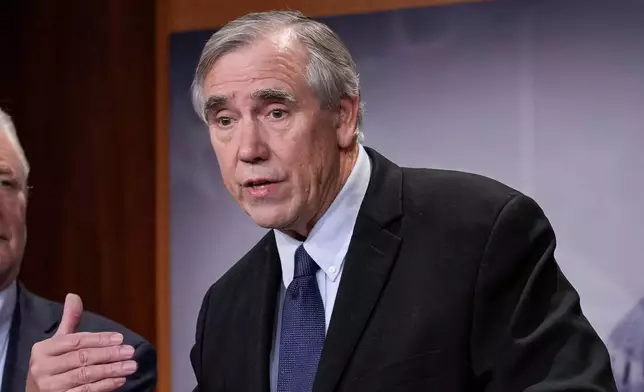
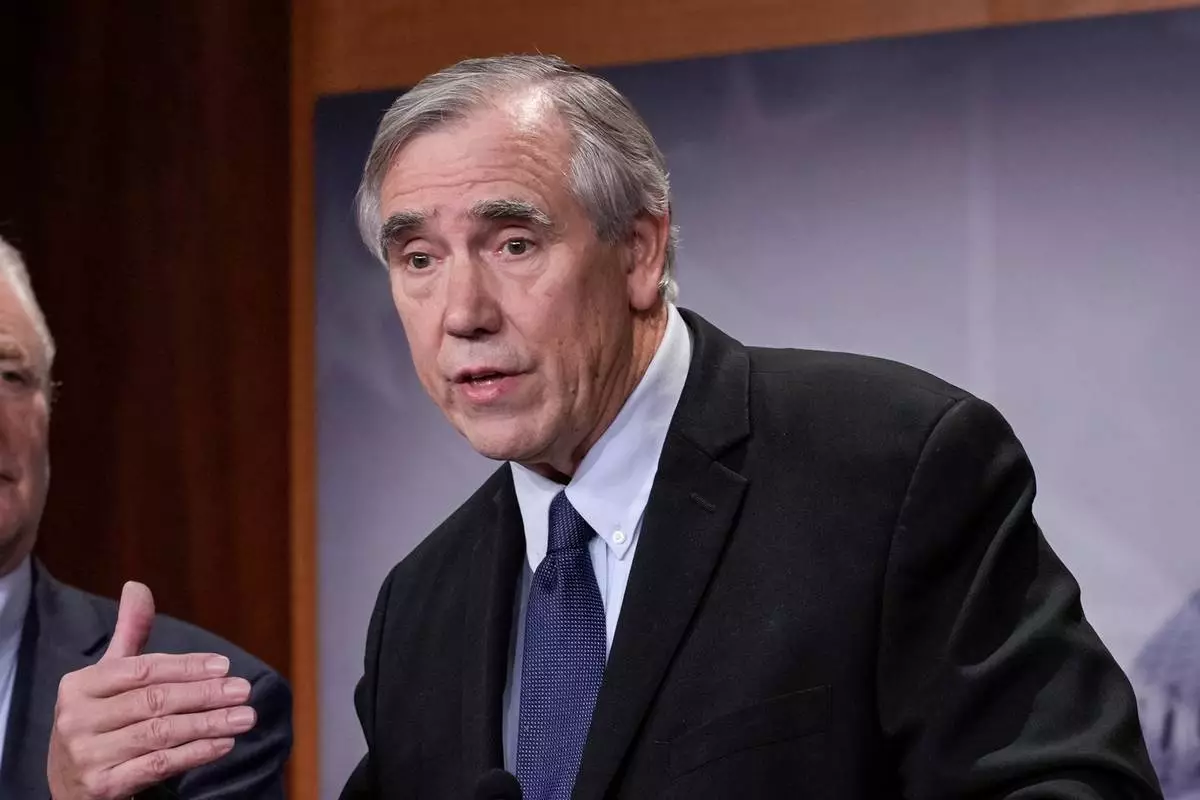
Sen. Jeff Merkley, D-Ore., talks to reporters about their ideas to streamline Senate procedures and rules for the new Congress with a Democratic majority, at the Capitol in Washington, Thursday, Nov. 19, 2026. (AP Photo/J. Scott Applewhite)
Sen. Jeff Merkley, D-Ore., talks to reporters about their ideas to streamline Senate procedures and rules for the new Congress with a Democratic majority, at the Capitol in Washington, Thursday, Nov. 19, 2026. (AP Photo/J. Scott Applewhite)

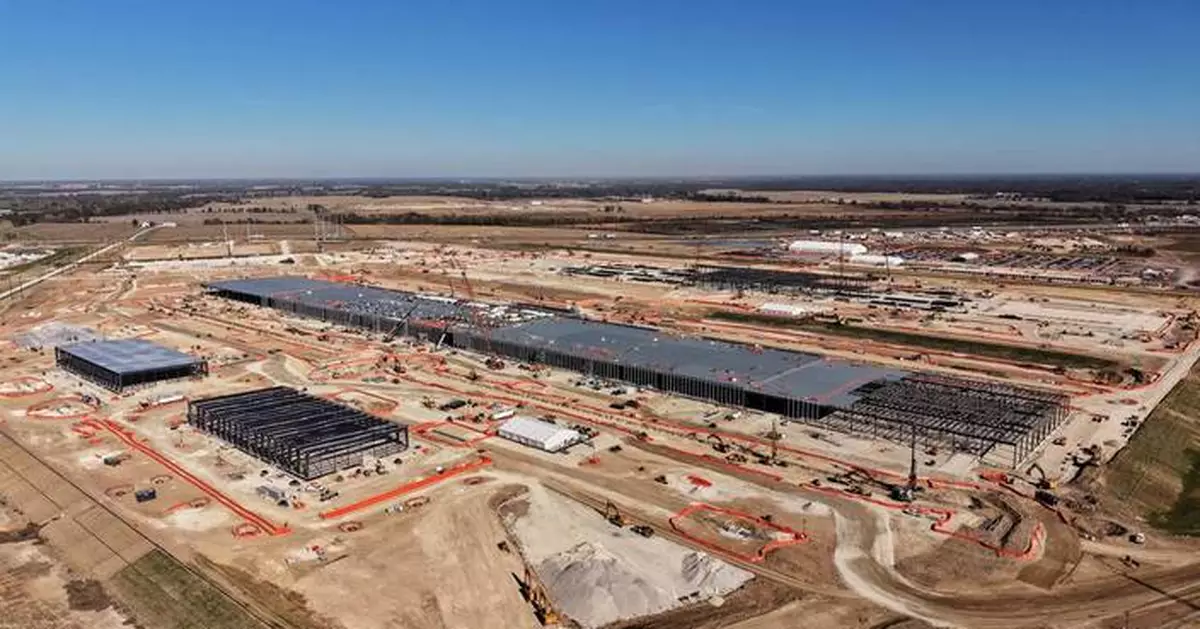
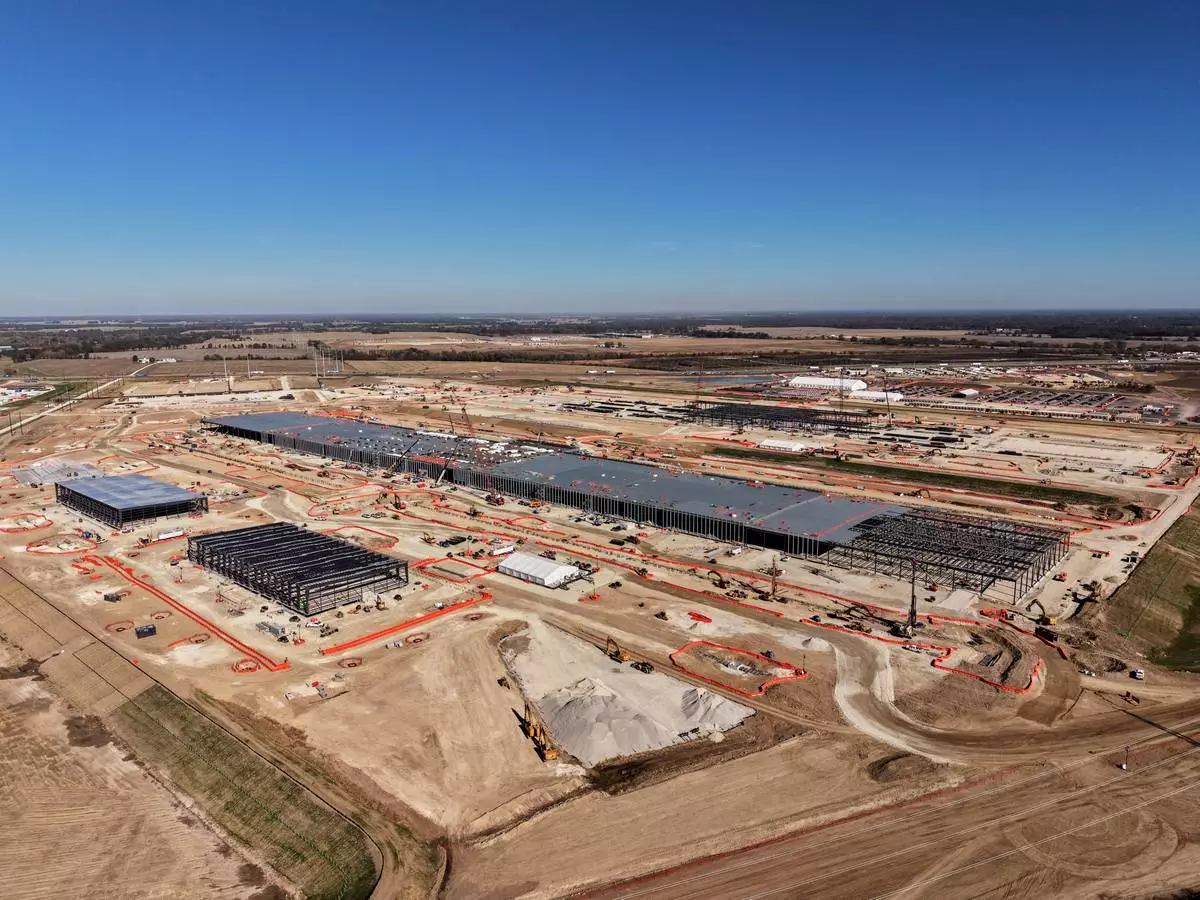
FILE - An Amazon data center is under construction in New Florence, Mo., Nov. 9, 2026. (AP Photo/Jeff Roberson, File)

FILE - An Amazon data center is under construction in New Florence, Mo., Nov. 9, 2026. (AP Photo/Jeff Roberson, File)

A vote on the permitting bill is expected as soon as Thursday and would be Congress’s first major action since this month’s midterm elections that soundly repudiated President Donald Trump and congressional Republicans.

The bill would overhaul several environmental laws to make it easier to build energy infrastructure, drawing criticism from Democrats and environmental groups about limits on judicial review and changes to bedrock laws such as the National Environmental Policy Act, Clean Water Act and Endangered Species Act.

Trump urged approval of the Senate bill, calling it a “BIG WIN for U.S. ENERGY INDEPENDENCE and DOMINANCE” in a recent social media post. The bill, formally known as the Bipartisan American Affordability and Jobs Act of 2026, will ensure the U.S. can build pipelines, mines and power plants more quickly, “lowering Energy Costs for American Families,” Trump wrote.

Major industry groups representing developers in clean energy and the oil and gas sector support the bill as a way to deliver more electricity to the grid and avoid delays for infrastructure projects that can stretch a decade or more.

However, many environmental organizations have denounced the measure, saying it would lock in fossil fuel development, weaken environmental safeguards and make it harder for communities to challenge energy project approvals.

“Make no mistake: This backroom deal will pave the way for even more fossil fuel projects like gas power plants for data centers, oil and gas pipelines and (liquefied natural gas) terminals while sacrificing fundamental and common-sense public health and environmental protections for communities across the U.S.,” said Jen Duggan, executive director of the Environmental Integrity Project.

Benefits for renewable energy are outweighed by likely increases in greenhouse gas emissions and air and water pollution from the fossil fuel industry, Duggan and other critics said. She called the bill “a gift to some of the biggest polluters in America” and complained that it was being rushed through a lame-duck Congress without public hearings or sufficient debate.

A final vote on the measure was held up this week as Oregon's two Democratic senators pushed to add amendments, including one to ban data centers on public lands.

Sens. Jeff Merkley and Ron Wyden are among several Democrats in both chambers who say the party should use its stronger position in the next Congress to pass legislation that boosts clean energy, such as solar and wind power, while limiting expansion of oil, natural gas and other fossil fuels.

“Getting more renewable electrons where they are needed doesn’t tackle climate change if you simultaneously promote the burning of more fossil fuels. Unfortunately, this bill does exactly that,” Merkley said.

Major environmental groups, including the Sierra Club and National Wildlife Federation, oppose the bill, citing concerns about limits on judicial review and changes to the National Environmental Policy Act and other laws. The environmental policy law, known as NEPA, requires agencies to consider a project’s possible impacts and allows the public to be heard before a project is approved. The current review process often takes five years or more, and shortening that time frame is a key goal of the bill.

“In America today, it takes too long and costs too much to build,” said Wyoming Sen. John Barrasso, the No. 2 Republican in the Senate. “Energy projects that would help lower prices remain frozen for years” as they await approval by the federal government.

“Construction cannot start without first spending years in the regulatory penalty box” driving up costs and creating uncertainty, Barrasso said.

The bill’s four main champions — two Democrats and two Republicans — have released a detailed set of amendments designed to bolster support for the legislation.

The four senators, who lead the chamber’s energy and environment panels, negotiated the deal a few weeks before the election. Republican Sens. Shelley Moore Capito of West Virginia and Mike Lee of Utah and Democratic Sens. Martin Heinrich of New Mexico and Sheldon Whitehouse of Rhode Island say Americans are tired of paying more in utility bills while projects that could lower costs sit stuck in the planning phase for years.

Whitehouse, a longtime climate hawk who has been criticized by longtime allies for supporting the permitting bill, said the measure is “the floor, not the ceiling, of our climate and environmental aspirations,” adding that he hopes “to accomplish big things with our big Democratic majorities” over the next two years.

But Democratic Sen. Maria Cantwell of Washington state said the bill has been rushed and its impacts are not fully considered.

Cantwell, who met Tuesday with tribal, outdoor recreation and conservation leaders, said the bill would undermine tribal nations and weaken protections for the nation’s bodies of water, land and wildlife.

“Now is the time to slow this process down, to actually have a formal process” to debate and amend the bill, she said. “Don’t sacrifice the Clean Water Act or hunting or fishing grounds, historic or sacred sites, or protections of tribal sovereignty. We all need new sources of energy and power. But this bill, as it’s currently drafted, is not the answer.”

Oneida Nation Vice Chairman Jameson Wilson said the bill threatens the tribe's ability to protect its sacred spaces, ancestors, traditional ceremonies and culture. “Any effort to accelerate development must strengthen, not diminish and erode tribal sovereignty and meaningful consultation,” he said.

Former Energy Secretary Jennifer Granholm, who led the agency in the Biden administration, said she understands those concerns, but believes recent changes by bill sponsors strengthen protections for tribal consultation and restore important state authority over water quality.

“A bigger Democratic majority can write a stronger bill,” Granholm wrote in a social media post. “But it would still need this president’s signature.”

Lawmakers “have a bipartisan deal in front of us today that can get more clean power onto the grid and protect ratepayers,” she said, urging them to take the opportunity.

Associated Press writer Jennifer McDermott contributed from Providence, Rhode Island.
FILE - A protester holds a Fight Data Centers sign Oct. 12, 2026, in Mason, Mich. (AP Photo/Paul Sancya, File)
FILE - A protester holds a Fight Data Centers sign Oct. 12, 2026, in Mason, Mich. (AP Photo/Paul Sancya, File)

Sen. John Barrasso, R-Wyo., speaks as Sen. Majority Leader John Thune, R-S.D., left, listens during a news conference after a policy luncheon on Capitol Hill, Tuesday, Nov. 10, 2026, in Washington. (AP Photo/Mariam Zuhaib)

Sen. John Barrasso, R-Wyo., speaks as Sen. Majority Leader John Thune, R-S.D., left, listens during a news conference after a policy luncheon on Capitol Hill, Tuesday, Nov. 10, 2026, in Washington. (AP Photo/Mariam Zuhaib)

Sen. Sheldon Whitehouse, D-R.I., walks through the Capitol basement, Monday, Nov. 9, 2026, in Washington. (AP Photo/Allison Robbert)
Sen. Sheldon Whitehouse, D-R.I., walks through the Capitol basement, Monday, Nov. 9, 2026, in Washington. (AP Photo/Allison Robbert)

Sen. Jeff Merkley, D-Ore., talks to reporters about their ideas to streamline Senate procedures and rules for the new Congress with a Democratic majority, at the Capitol in Washington, Thursday, Nov. 19, 2026. (AP Photo/J. Scott Applewhite)
Sen. Jeff Merkley, D-Ore., talks to reporters about their ideas to streamline Senate procedures and rules for the new Congress with a Democratic majority, at the Capitol in Washington, Thursday, Nov. 19, 2026. (AP Photo/J. Scott Applewhite)

FILE - An Amazon data center is under construction in New Florence, Mo., Nov. 9, 2026. (AP Photo/Jeff Roberson, File)

FILE - An Amazon data center is under construction in New Florence, Mo., Nov. 9, 2026. (AP Photo/Jeff Roberson, File)
For the first time, United Nations climate talks are likely to conclude that the world will have to suck heat-trapping gases out of the air as well as cut carbon pollution because society has failed to keep Earth out of the warming danger zone.

Doing that will cost tens of trillions of dollars and rely on still unproven technology, but it's the best the globe can hope for because it is now inevitable that the world will blow beyond the safe temperature threshold set by the 2015 Paris climate agreement and confirmed by subsequent scientific reports, scientists and United Nations officials said.

Earlier this year, a United Nations annual report acknowledged it's certain that the planet will breach the Paris threshold of keeping long-term warming below 1.5 degrees Celsius (2.7 degrees Fahrenheit) since the mid 1800s. While that key temperature threshold is measured over a couple decades, short-term warning signs continue to mount. October's global average temperature set a record for highest above pre-industrial times for any month of the year, at 1.8 degrees Celsius (3.2 degrees Fahrenheit) higher, said scientists at Berkeley Earth, who also predict that 2026 will pass 2024 as the hottest year on record.

The U.N. climate negotiations, known as COP31, are scheduled to end Friday in Turkey, though they rarely finish on time.

Early drafts of the end-of-conference communique acknowledge that the world has failed at preventing 1.5 degrees of warming, will enter a period of decades of temperatures in a more dangerous zone and then somehow bend the curve back down below 1.5. Doing that requires sharp cuts in carbon dioxide emissions and the removal of carbon from the atmosphere, according to the drafts. Carbon dioxide emitted from the burning of fossil fuels such as coal, oil and gas traps heat in the atmosphere and causes the planet to warm.

“Carbon removal is the magic eraser we’re left with when we’ve busted the world’s carbon budget, such as the 1.5C target,” Stanford University climate scientist and emissions tracker Rob Jackson said in an email. “Is carbon dioxide removal feasible technically? Yes. Is it likely to happen at the billion-ton scale needed to make a difference? No.”

The world needs to remove 320 billion metric tons (350 billion tons) of carbon dioxide from the atmosphere this century to bend the curve back down, United Nations Environment Programme Director Inger Andersen said at the climate conference this week. That's eight years' worth of global emissions, she said.

Berkeley Earth climate scientist Zeke Hausfather calculated that it costs about $22 trillion to reduce global temperatures by every tenth of a degree Celsius (.18 degrees Fahrenheit) through carbon removal. Even if the world were to peak at two or three tenths of a degree Celsius (.36 to .54 degrees Fahrenheit) above the Paris threshold — the most optimistic scenario — it would cost $44 to $66 trillion by 2100 to get back underneath the threshold, Hausfather said.

Planting more trees would not remove anywhere near enough carbon, experts said. In the past decade, increased tree planting and other nature-based solutions removed, at most, 2 billion metric tons of carbon dioxide, Andersen said.

So what's needed are mechanical methods, such as huge devices resembling giant fans that suck carbon out of the air, some of which are being tested at pilot scale. This nascent technology currently removes as much carbon dioxide in a year as fossil fuel burning plants put in the air every half hour, said Johan Rockström, director of the Potsdam Institute for Climate Impacts Research in Germany. And the current hope is that it could scale up to 5 billion metric tons by 2050, he said.

This type of carbon removal is different than carbon capture and storage technology that some industries use to prevent their own pollution from escaping into the air. The climate talks are also likely to encourage more of that type of carbon capture.

The world will need to remove massive amounts of carbon dioxide, “but there’s not much point of thinking about that until we have deep emission reductions,” Climate Analytics CEO Bill Hare said at the conference. That's because unless policies around the world change, the world is heading for at least 2.7 degrees Celsius of warming by 2100, and there's no way the world can remove enough carbon from the air to compensate for that, he said.

Still, the world has to seriously consider carbon removal “because there really are no good outcomes above 1.5 degrees, ” Andersen said, noting that warming is already causing stronger heat waves, droughts, floods and extreme storms.

She and others said carbon removal - sometimes called negative emissions - is not a replacement for steep emission cuts, but rather an addition to them.

“We need deep emission reductions. That is, and will always remain, the most important tool at our disposal,” said Denmark's environment minister Samira Nawa. That's why Denmark is aiming for a 110% reduction of emissions, going beyond net zero emissions to putting 10% less carbon in the air than what oceans and forests naturally take out.

Denmark and Ethiopia, the chair of next year's climate talks, are leading a newly formed coalition called the Group of Negative Emitters, or GONE.

Officials, analysts and scientists say humans have put the planet in a tough spot. Because society has not heeded years of calls for steep emissions cuts, they say the planet is essentially stuck with relying on carbon removal.

“This is something I don’t think everyone has internalized yet. If you’re a champion of 1.5 degrees C, then you’re also a champion of reaching net-negative emissions," said World Resources Institute's global climate and economics director Melanie Robinson.

Even though he pointed out the difficulties in carbon removal, Rockström said, "we must keep this as our safe landing temperature, now that we fully understand how dangerous it is to exceed 1.5°C."

The Associated Press’ climate and environmental coverage receives financial support from multiple private foundations. AP is solely responsible for all content. Find AP’s standards for working with philanthropies, a list of supporters and funded coverage areas at AP.org.

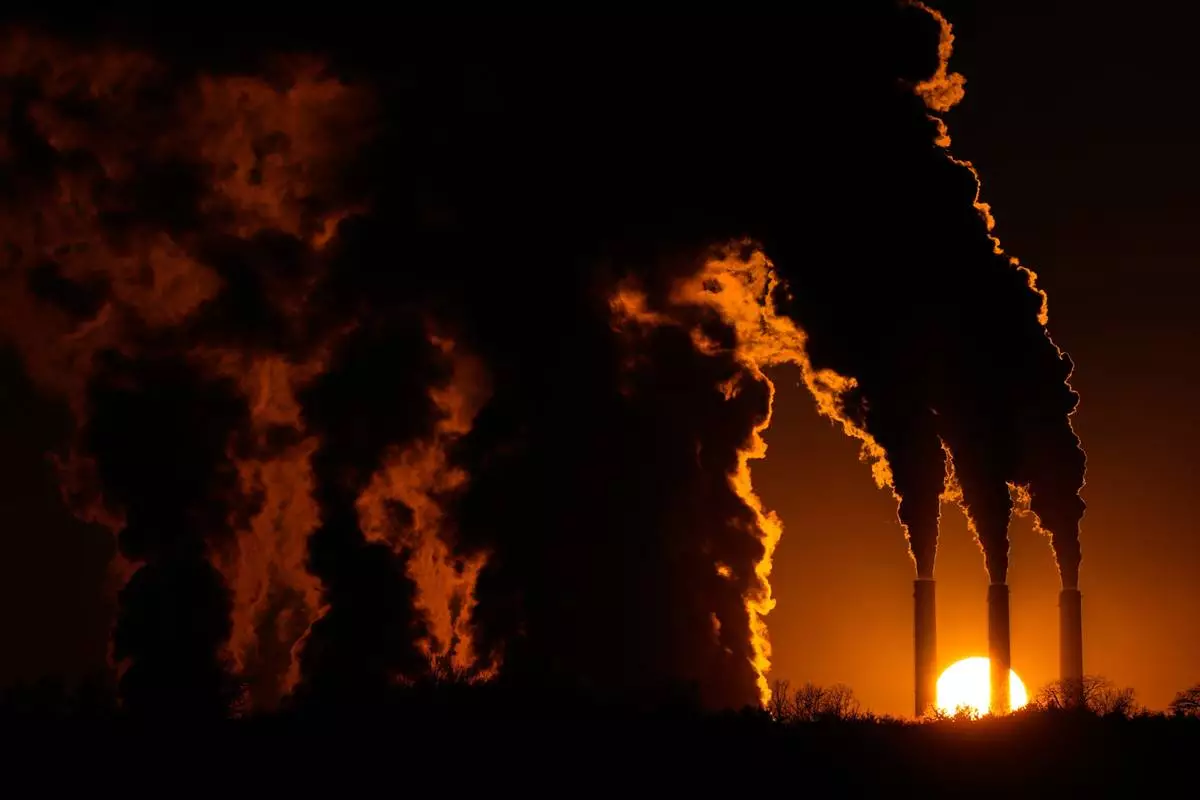
FILE - The Jeffrey Energy Center coal-fired power plant operates at sunset near Emmett, Kan., Jan. 3, 2026, in Topeka, Kan. (AP Photo/Charlie Riedel, file)

FILE - The Jeffrey Energy Center coal-fired power plant operates at sunset near Emmett, Kan., Jan. 3, 2026, in Topeka, Kan. (AP Photo/Charlie Riedel, file)

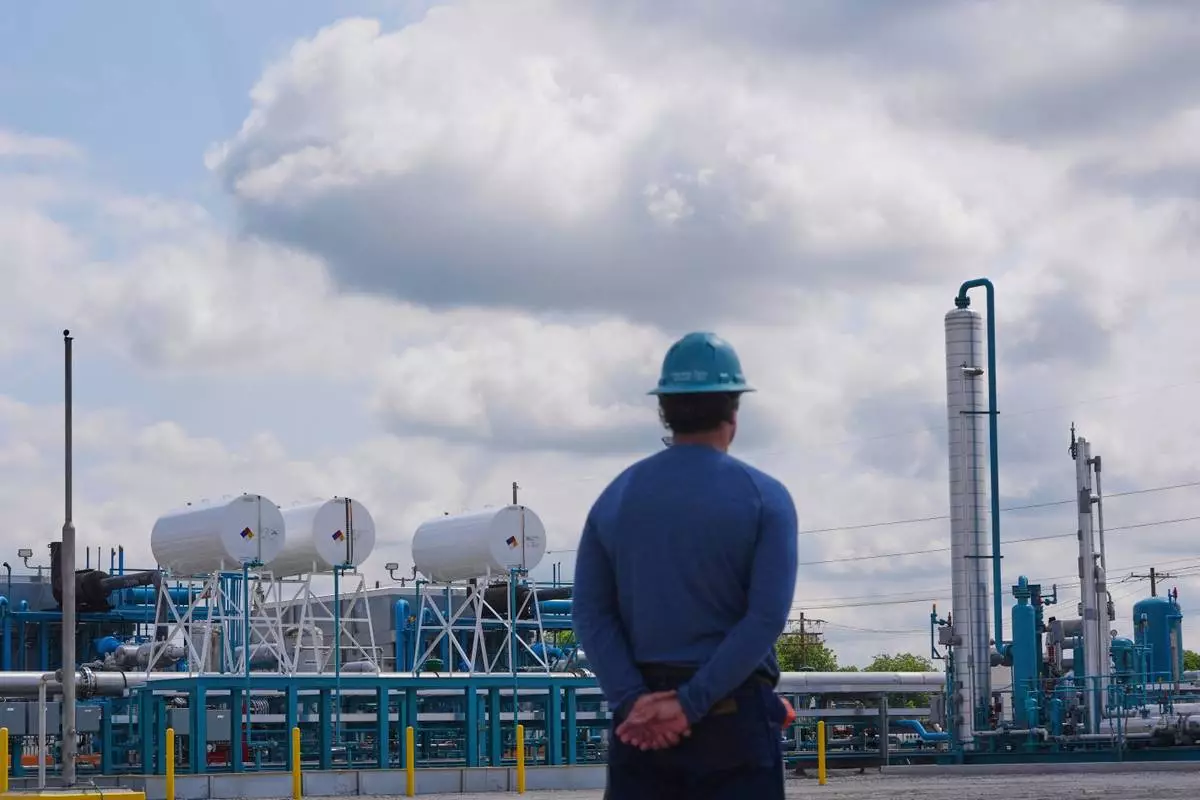
FILE - BKV Carbon Ventures health and safety advisor Adam Pope looks on at a compression station that is part of a carbon capture and sequestration process in Bridgeport, Texas, May 29, 2025. (AP Photo/LM Otero, File)

FILE - BKV Carbon Ventures health and safety advisor Adam Pope looks on at a compression station that is part of a carbon capture and sequestration process in Bridgeport, Texas, May 29, 2025. (AP Photo/LM Otero, File)

Recommended Articles