HUNTSVILLE, Texas (AP) — After covering capital punishment for The Associated Press in Texas since 1983 — and witnessing nearly 500 lethal injections — I've become accustomed to a certain routine in the procedure, although I'm reticent to describe any execution as “routine.”
It was 6 p.m. Thursday — a bell from a nearby church tolling the hour — when I and other witnesses climbed the concrete steps into the more than century-old Huntsville Unit of the Texas Department of Criminal Justice. We were led into a reception office for what normally is a very brief period to await the short trek to the death chamber to watch condemned killer Reinaldo Dennes die.
A large state of Texas clock on a wall ticked off the moments. By about 6:20 p.m., we still hadn't moved.
I knew one of two situations was likely: Dennes was resisting the execution team's attempts to insert a pair of intravenous needles into his arms, or the execution team was having difficulty finding a suitable vein for the needles.
Thirty minutes later, as we were led into the chamber by corrections officers, Dennes appeared docile. His eyes were closed and his head was pointed toward the ceiling. His white prison garb was not disheveled and no additional restraints were applied to his head, meaning no evidence of a struggle.
Now I've seen over the years any number of final statements and reactions from condemned inmates who spoke in foreign languages, prayed, recited poetry, sang, cursed, expressed love, insisted on their innocence or acknowledged their crime and one who even told a joke.
Dennes was like no other.
Asked by the warden if he had a final statement, Dennes talked about being “extremely blessed” by the love of “the father” and hoped his family and loved ones “get to know this great gift and great grace of God the father.”
He told the warden: “Go.” Almost immediately as the procedure began, his demeanor changed.
“The pain!” he exclaimed. “Go! Go!”
For nearly three minutes — and standing there furiously scribbling notes, I thought it seemed much longer — Dennes repeatedly moaned.
“Take me father! ... Take me into your arms! ... Take me father!" He occasionally interjected his cries with obscenities, a grunt and then groans. His right leg was “killing me,” he said, likening the sensation to a cramp.
“I don't think this is normal,” he said at one point.
On that, he was right. I've heard inmates say the lethal drug was hot or cold, that they could smell or taste it, or that it hurt. No one I can recall went to such drama as Dennes.
At 7:08 p.m., after being examined by a physician, he was pronounced dead.
Texas prison officials said the execution team had difficulty finding suitable veins. Spokeswoman Amanda Hernandez said after repeated unsuccessful attempts — she couldn't say how many — the technicians found a vein in Dennes' left foot and another on the left side of his neck that were receptive to the IV needles.
I couldn't see. His feet were covered by a sheet and only the right side of his neck was visible to those of us who were witnesses.
The injection sites were in line with the prison system's procedures, Hernandez added. The alternate sites have been used in previous executions, although the need to do so is relatively rare.
Hernandez also suggested Dennes may have been faking, saying he had been complaining about pain from areas where no injections were attempted.
As a reporter, I'd like to find out the truth about the matter. But there's no way to know for sure.
Dennes himself, as reporters are known to say, wasn't available for further comment.
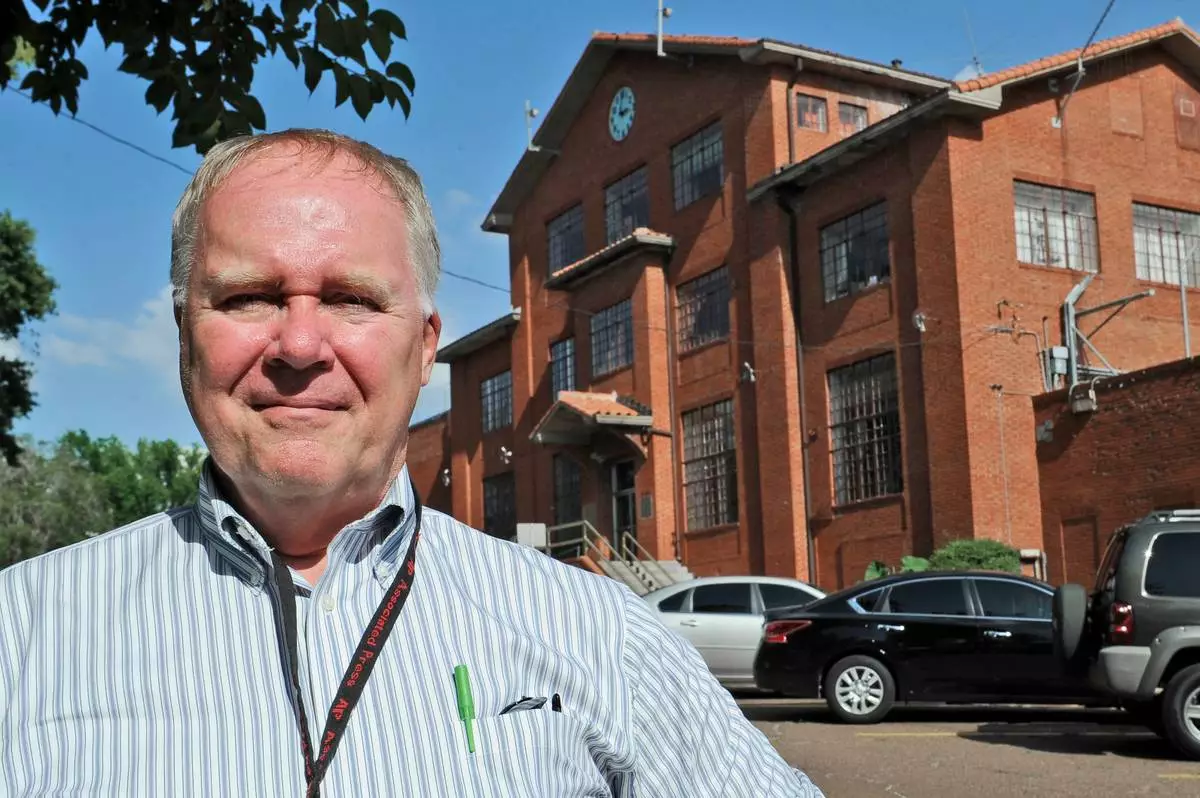
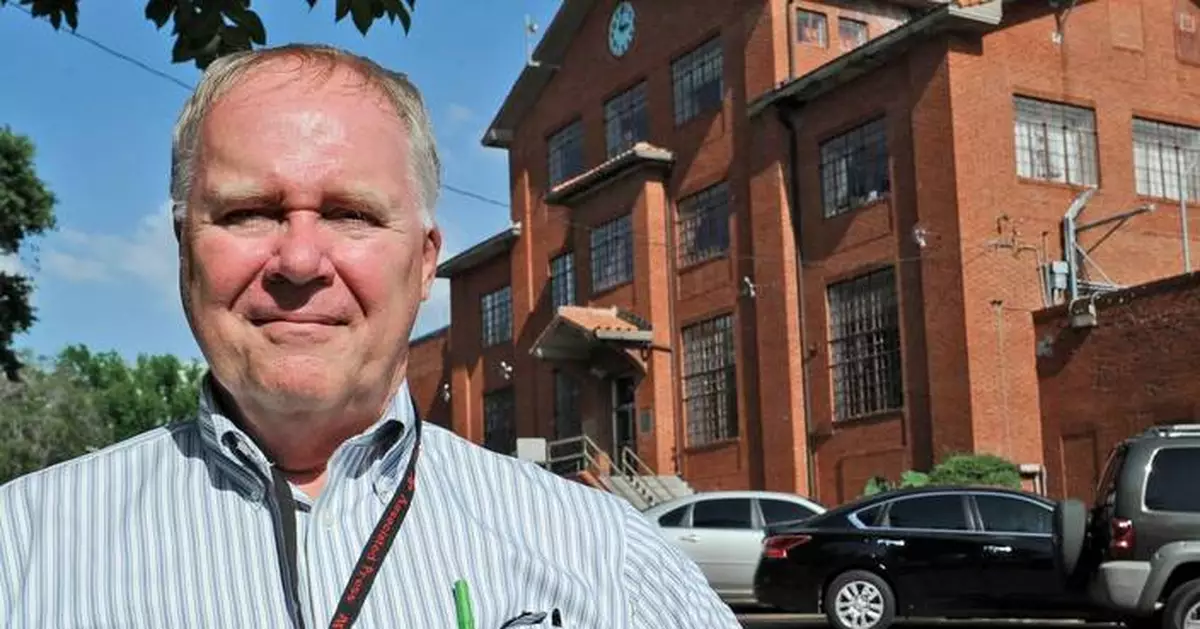
FILE - In this June 12, 2013, file photo, Associated Press reporter Michael Graczyk stands outside the Huntsville Unit before witnessing the execution of confessed killer Elroy Chester in Huntsville, Texas. (AP Photo/Pat Sullivan, File) CORRECTION: Corrects to remove the extra sentence from the caption
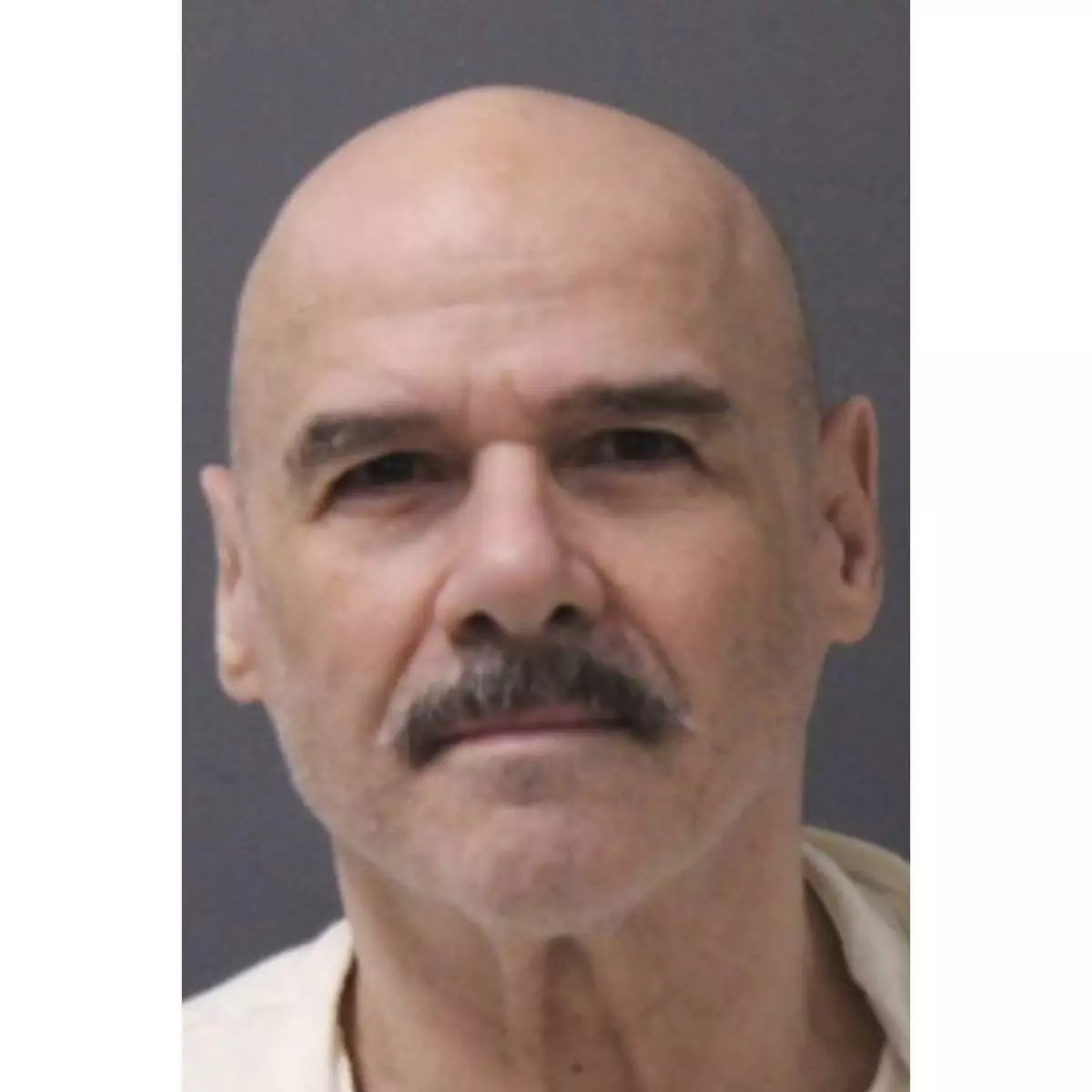
This image provided by the Texas Department of Criminal Justice shows Reinaldo Dennes on April 14, 2026. (Texas Department of Criminal Justice via AP)
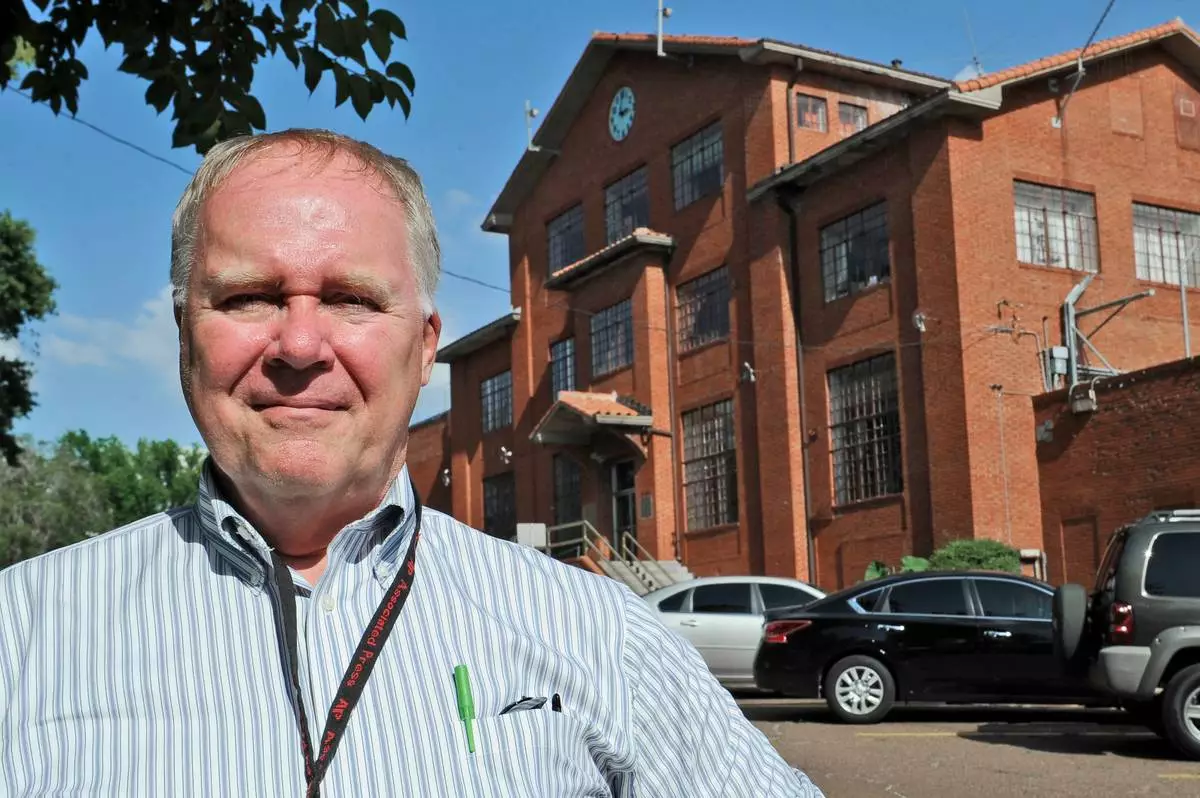
FILE - In this June 12, 2013, file photo, Associated Press reporter Michael Graczyk stands outside the Huntsville Unit before witnessing the execution of confessed killer Elroy Chester in Huntsville, Texas. Graczyk, who witnessed and chronicled more than 400 executions as a criminal justice reporter in Texas, will retire Tuesday, July 31, 2018, after 45 years. (AP Photo/Pat Sullivan, File)
ANTALYA, Turkey (AP) — As this year's U.N. climate talks wrap up in Turkey, negotiators are still debating over how to address global warming, even as warnings are growing that only slashing fossil fuels can avert its most catastrophic effects.
Friday marks the scheduled end of the two-week summit, known as COP31, in the Turkish resort city of Antalya. The talks have so far failed to advance any big ideas on how to move away from fossil fuels — mainly coal, oil and gas — that contribute to disasters such as Europe’s deadly heat waves and Nepal’s devastating flooding.
These summits often end with a final text, or cover decision, which is then adopted by nearly 200 nations participating in the process. While Friday is the official last day, negotiators often go into overtime to iron out these often voluntary and non-binding agreements.
Past COPs have failed to agree on how to transition away from fossil fuels, which is still a sticking point in Turkey this year.
“It’s about time we tell the truth to our citizens and to ourselves. The COPs need to be reformed,” said Panama's Minister of Environment Juan Carlos Navarro. The Panama delegation has vowed to block any outcome that does not meet several demands, including a cap on oil production.
"We are crashing against the wall of perverse futility and the most blatant inflexibility from those who should lead the way," he said.
One of the main deals on the table is an electrification goal that aims to increase the share of electricity in total global energy consumption from roughly 21% today to 35% by 2035.
While the agreement prefers that this goal is reached through renewable energies, like solar and wind, it doesn't spell that out. This means power plants running on coal and other fossil fuels could be used to supply power grids, at least initially.
“The removal of explicit language on transitioning away from fossil fuels in the cover decision is concerning," said Ghiwa Nakat, executive director of Greenpeace in the Middle East and North Africa. “At a time when the climate crisis demands decisive action, weakening commitments on fossil fuel phase-out risks undermining the progress."
Leaders from countries ravaged by climate change — mostly poorer, vulnerable nations that don't emit a lot of greenhouse gases — are also at COP31 and have said that a United Nations fund set up to help them recover from climate disasters and adapt to a warmer world is not nearly large enough.
“After 12 months, in which we’ve seen terrible climate impacts from Nepal to Mozambique, countries cannot move forward even an inch,” said Mohamed Adow, director of Power Shift Africa. "Front-line communities will look on with despair.”
Many of the world's most polluting nations did not participate directly at COP31, including the United States, the world’s largest economy and a major emitter. The U.S. is absent for the second year in a row.
It's richer nations, like the U.S., that vulnerable countries want funding from. That's hard to ask for without the American government officially in the room.
“COP31 has been muzzled on the most important threat causing the climate crisis," Adow said.
Efforts to slow global warming have essentially stalled for the past five years, according to a recent report by the nonprofit Climate Action Tracker.
In the lead-up to COP31, the U.N. announced the world is dangerously close to missing its goal of limiting global warming to 1.5 degrees Celsius (2.7 degrees Fahrenheit) above pre-industrial temperatures.
“Disappointment is rife," said Iskander Erzini Vernoit, an adviser to African negotiators in Turkey. Next year’s climate summit is scheduled to take place in Ethiopia’s capital, Addis Ababa, in November 2027.
“Hope is not lost, but absent a course correction, we are headed toward a low-ambition set of outcomes at COP31,” he said.
The Associated Press’ climate and environmental coverage receives financial support from multiple private foundations. The AP is solely responsible for all content. Find AP’s standards for working with philanthropies, a list of supporters and funded coverage areas at AP.org.
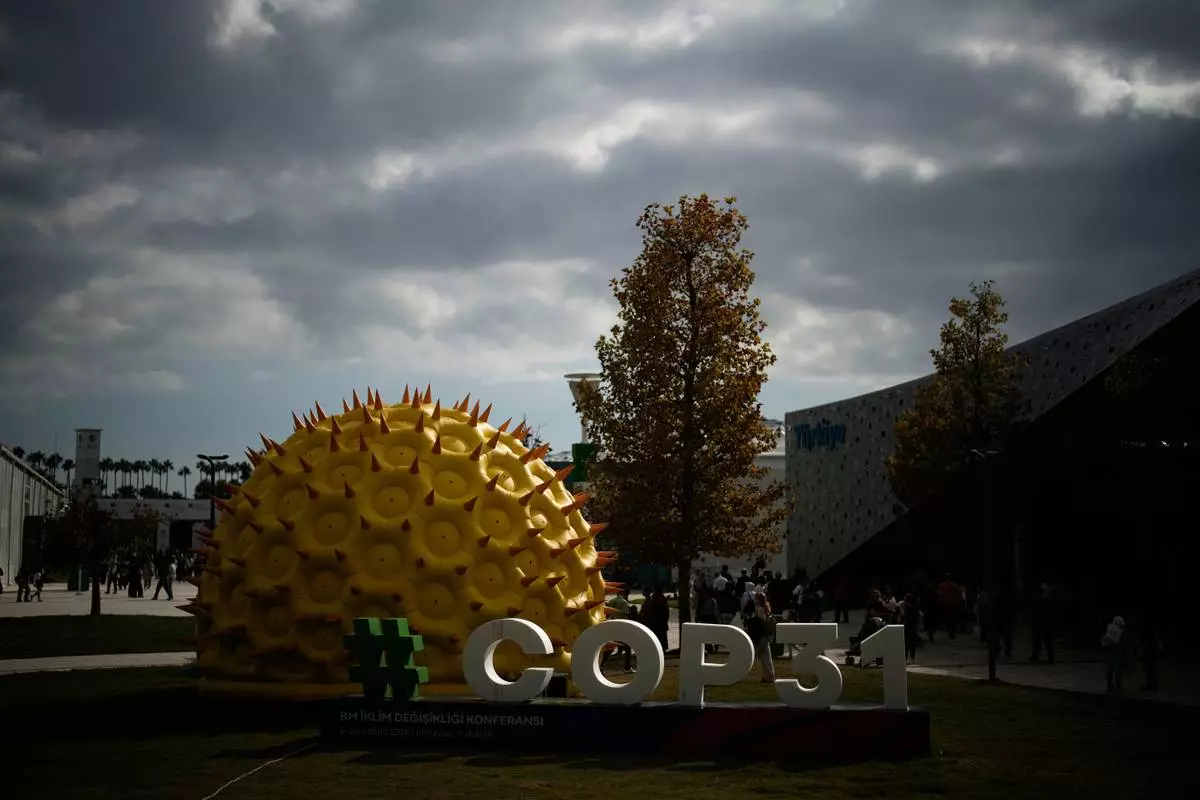
A sign for the COP31 U.N. Climate Summit is displayed Thursday, Nov. 19, 2026, in Antalya, Turkey. (AP Photo/Khalil Hamra)
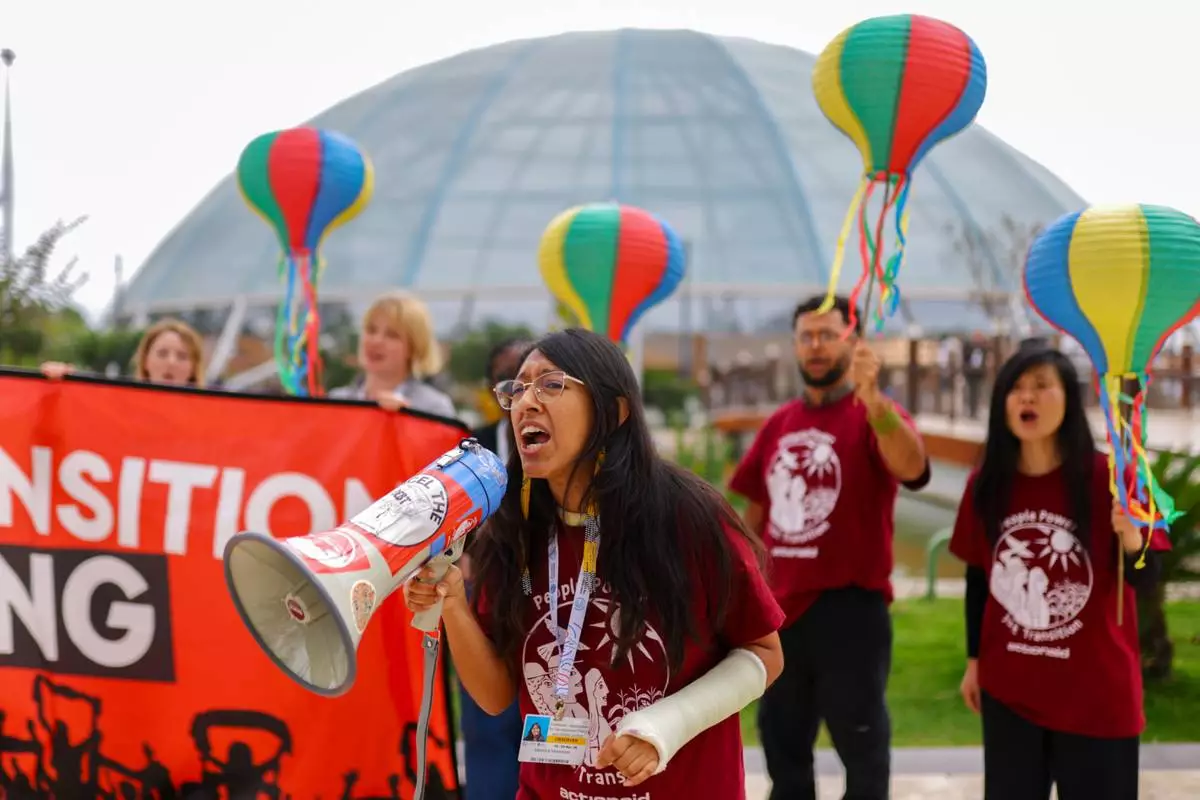
Activists participate in a demonstration at the COP31 U.N. Climate Summit, Thursday, Nov. 19, 2026, in Antalya, Turkey. (AP Photo/Riza Ozel)
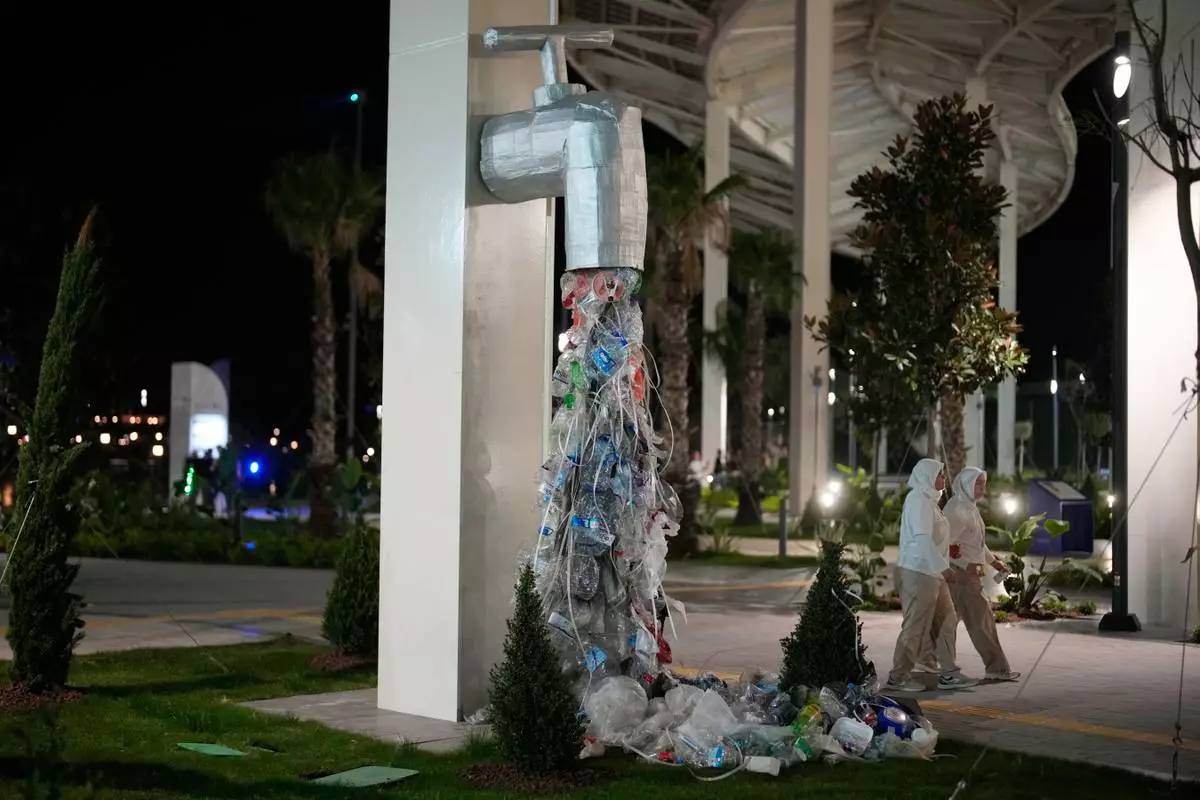
People walk past an art display on plastic pollution at the COP31 U.N. Climate Summit, Thursday, Nov. 19, 2026, in Antalya, Turkey. (AP Photo/Khalil Hamra)
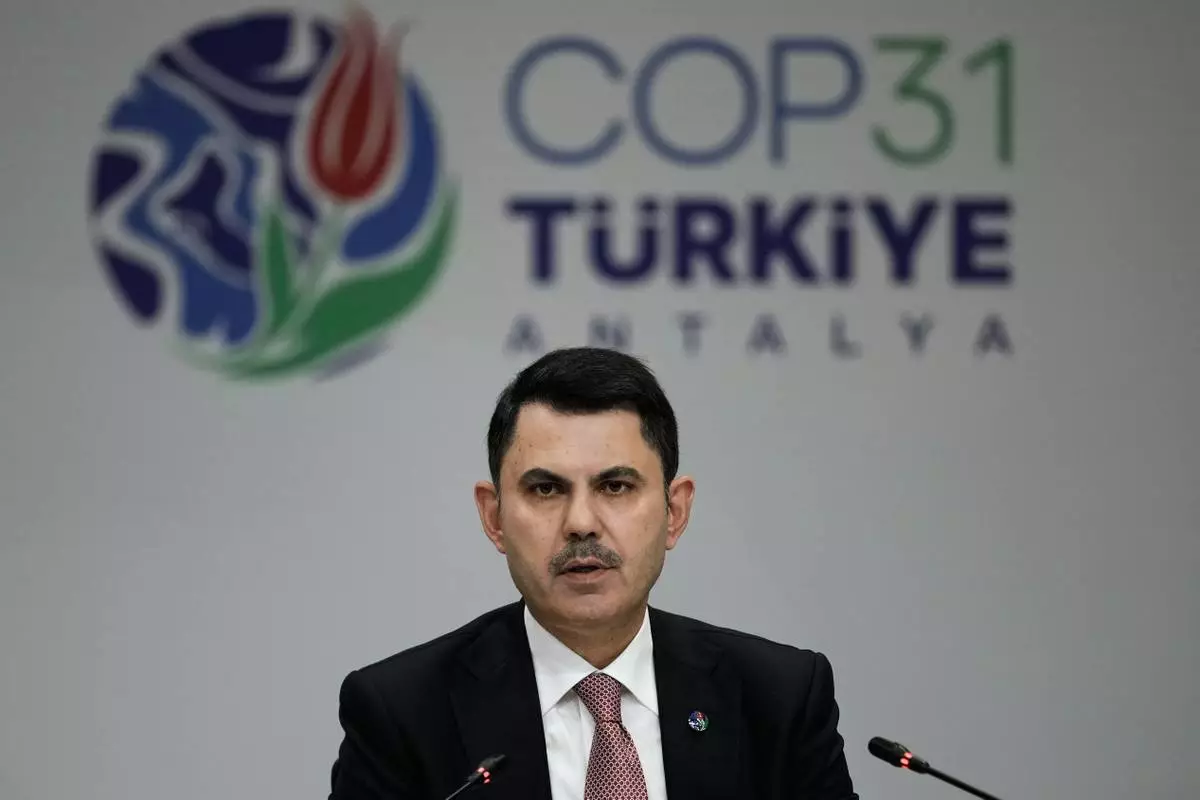
COP31 President Murat Kurum speaks during a news conference at the COP31 U.N. Climate Summit, Thursday, Nov. 19, 2026, in Antalya, Turkey. (AP Photo/Khalil Hamra)