Pre-hospital Stroke Diversion Scheme extended to all districts in Kowloon and Lantau
The following is issued on behalf of the Hospital Authority:
In line with the policy direction outlined in The Chief Executive's 2025 Policy Address, the Hospital Authority (HA) and the Fire Services Department (FSD) first implemented the Pre-hospital Stroke Diversion Scheme (Primary Diversion Scheme) in the New Territories East Cluster (NTEC) and the New Territories West Cluster (NTWC) late last year. Under the Primary Diversion Scheme, FSD ambulance personnel directly convey patients assessed as having suspected large vessel occlusion (LVO) stroke to designated HA hospitals within the respective service catchment areas for early treatment. The HA and the FSD announced today (November 20) that the Primary Diversion Scheme will be extended from the New Territories to all districts in Kowloon and Lantau Island starting from November 23 to benefit more acute stroke patients.
The Hospital Authority. Photo source: reference image
Spokespersons for the HA and the FSD said that the Primary Diversion Scheme has yielded very satisfactory results since its launch nearly a year ago. By eliminating the time required for interhospital transfers, transportation and other procedures, the average time from ambulance departure to receiving treatment for each patient has been shortened by about 80 minutes, enabling patients to receive appropriate treatment sooner. After reviewing its effectiveness, the HA and the FSD will further expand the Primary Diversion Scheme in accordance with the policy direction outlined in The Chief Executive's 2026 Policy Address, so that more eligible acute stroke patients can be conveyed to designated hospitals for treatment as soon as possible.
The FSD spokesperson said that the Primary Diversion Scheme will be officially extended to all districts in Kowloon and Lantau Island starting from 8.30am on November 23. Patients who meet the criteria under the pre-hospital stroke assessment will be conveyed directly by ambulance to Princess Margaret Hospital, Queen Elizabeth Hospital or Kwong Wah Hospital for treatment according to their service catchment areas. For instance, patients located in Lantau Island or Tsuen Wan will be conveyed directly to Princess Margaret Hospital; patients in Kwun Tong will be conveyed directly to Queen Elizabeth Hospital; and patients in Tseung Kwan O will be conveyed directly to Kwong Wah Hospital.
The Fire Services Department. Photo source: reference image
In accordance with established guidelines, ambulance personnel perform a pre-hospital stroke assessment through standardised medical evaluations before conveying patients to hospitals. If a patient is suspected of suffering from LVO stroke, they will be conveyed directly to the designated HA hospital within the respective service catchment area for follow-up. This arrangement aims to ensure that critical stroke patients meeting specific criteria are promptly triaged to designated hospitals equipped with the corresponding treatment services, thereby saving time on interhospital transfers and duplicated assessments, and allowing patients to receive timely and appropriate treatment.
The HA spokesperson stated that upon receiving notification from the FSD, the Accident and Emergency Departments (A&Es) of public hospitals will mobilise dedicated teams to arrange the necessary examinations and treatments for patients as quickly as possible. These include intravenous thrombolysis (IVT) or intra-arterial thrombectomy (IAT) when clinically suitable, with a view to restoring blood supply to the brain promptly, increasing the patients' chances of recovery, and reducing physical disabilities caused by stroke.
The Primary Diversion Scheme was officially launched in the HA's NTEC and NTWC on December 15 last year. As at August 31 this year, a total of 145 patients with suspected LVO stroke were conveyed directly by ambulance to the two designated hospitals, namely Prince of Wales Hospital and Tuen Mun Hospital, for treatment. During the same period, another 556 suspected acute stroke patients in these two clusters were conveyed by ambulance to the A&Es of nearby public hospitals for treatment under the Pre-hospital Stroke Notification mechanism jointly operated by the HA and the FSD.
Spokespersons for the HA and the FSD reminded the public that if individuals suspect themselves or someone nearby is suffering from a stroke, they should promptly attend the nearest A&E, where healthcare staff will immediately arrange for necessary assessments and examinations. When calling the FSD ambulance services, members of the public should co-operate with the professional assessments and decision of ambulance personnel, who will convey the patients to suitable hospitals for further examination and treatment.
Currently, all public hospital A&Es can arrange appropriate treatment for stroke patients. Strokes can be generally classified into two types, namely hemorrhagic stroke and ischemic stroke, which require different treatment approaches. For ischemic stroke, all A&Es currently offer 24-hour IVT services. Meanwhile, Prince of Wales Hospital, Tuen Mun Hospital, Princess Margaret Hospital, Queen Elizabeth Hospital, Kwong Wah Hospital, Queen Mary Hospital and Pamela Youde Nethersole Eastern Hospital also provide 24-hour IAT services, supporting stroke patients across Hong Kong through a comprehensive service network.
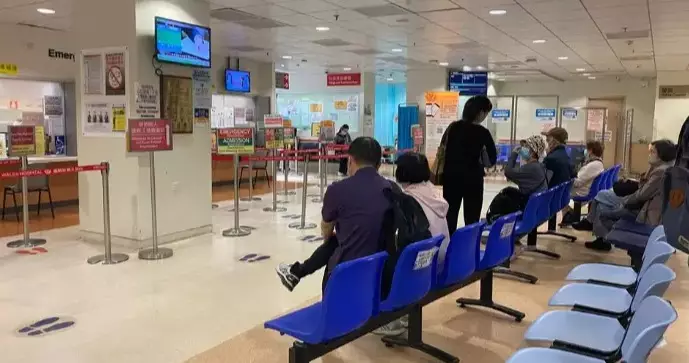
Hospital in Hong Kong. Photo by Bastille Post