MINNEAPOLIS--(BUSINESS WIRE)--Nov 20, 2026--
Pivot Bio's Year of One Million Thanks tour and its iconic Grati-Tractor, a real working tractor that has traveled around the country, will stop at the National WWI Museum and Memorial in Kansas City, Missouri, on Monday, Nov. 23, for a special gathering focused on the connection between military service and agriculture.
This press release features multimedia. View the full release here: https://www.businesswire.com/news/home/20261120068103/en/
Led by Pivot Bio Chief Growth Officer and U.S. Army veteran Ryan Degnan, the stop will recognize the contributions of farmers who have also served in the military, reflecting the shared values of service, resilience and commitment to community. As part of the tribute, museum visitors can write notes of thanks to America’s farmers and help the nationwide campaign reach its goal of one million messages.
"Growing up an Army brat and later serving in the Army myself, I have a deep appreciation for the sacrifices military families make, often long after their time in uniform has ended," said Degnan. "For veterans who return home to farm or find a new purpose in agriculture, there's another chapter of service that deserves to be recognized. Bringing our tour to a place dedicated to preserving the stories of those who served is especially meaningful to me. It's an opportunity to listen, learn and thank the men, women and communities whose contributions continue to shape our country.
“At Pivot Bio, we are immensely proud of the veterans and military families who are part of our team and the farming communities we serve. As we stop at this memorial, we are reminded of the extraordinary sacrifices made by generations of Americans in service to our country. It is an honor to recognize their courage, commitment and sacrifice. We also hope to play a small part in supporting those veterans who continue their legacy of service by dedicating themselves to farming and advancing American agriculture.”
Military service has deep ties to rural America, where approximately 4.5 million veterans live, according to the U.S. Department of Veterans Affairs. That connection extends to farming, with more than 305,000 producers reporting military service in the USDA's 2022 Census of Agriculture. In fact, 15% of U.S. farms have at least one producer who has served or is serving in the military.
The National WWI Museum and Memorial provides a meaningful setting for conversations about service and the contributions veterans continue to make long after leaving the military. Through a roundtable discussion and the tour's signature Buddy Seat conversations, participants will share their experiences with military service, transitioning to civilian life and finding opportunities in farming. The discussions will also explore ways to strengthen support for veterans and their families in rural communities. As part of the gathering, Pivot Bio will make a special check presentation to participating organizations in honor of farmers who have served in the U.S. military, recognizing their continued commitment to service and community.
About Pivot Bio
Pivot Bio, one of the world’s leading agtech companies, delivers patented crop nutrition technologies that harness the power of nature to help farmers reliably and productively grow the food the world needs in the face of increasing volatility. Currently available in North America and soon in Brazil, the company’s products represent a breakthrough innovation and one of the agriculture industry’s most promising solutions. Pivot Bio has been recognized three times by TIME magazine on its annual list of Best Inventions, by Fast Company on its World Changing Ideas and World’s 50 Most Innovative Companies lists, by CNBC on its Disruptor 50 list, by Fortune on its Impact 20 list, and by MIT Technology Review as one of 15 climate tech companies to watch. For more information, visit PivotBio.com.

Pivot Bio’s Grati-Tractor will stop at the National WWI Museum and Memorial in Kansas City, Missouri, on Nov. 23 as part of the Year of One Million Thanks tractor tour, honoring farmers who have served in the U.S. military.
As rumors swirl about a return to a full-scale war with Iran, U.S. President Donald Trump told reporters Friday that Tehran wants a deal but not one that is “acceptable” to him.
Meanwhile, the Saudi-led coalition fighting Iran-backed Houthis in Yemen said Friday that its forces struck targets used by the rebels to smuggle and transport weapons, while the rebels attacked neighboring Saudi Arabia. The exchanges came days after the Saudi-led coalition launched a major air campaign.
In Gaza, Israeli strikes killed six people, health officials said. Israel’s military said it attacked militants. And in Iraq, army troops and police deployed to a city south of the capital to assert control in a longtime stronghold of a powerful Iran-backed militia.
Here is the latest news from the Middle East on Friday. Read our full coverage here.
Trump has oscillated between wanting a resolution to the longstanding nuclear issue and saying that the U.S. does not need to make any deal with its longtime adversary.
“We want to make a real deal, not a fake deal,” he said at a press conference.
Earlier this week, Iran widened its attacks on its Gulf neighbors, targeting a U.S. air base in Kuwait and launching several attacks on Bahrain in what appeared to be retaliation for an American strike the day before.
Israeli strikes killed six people in central Gaza on Friday, according to health officials at Gaza’s Awda hospital and Al-Aqsa Martyrs hospital, where the casualties were taken.
An overnight strike killed one person in the Nuseirat Refugee camp, while a second strike killed another person in the city of Deir Al-Balah Friday afternoon. A third strike killed four people in the Bureij Refugee camp on Friday evening.
Israel’s military confirmed attacking “militants” in a few strikes in central Gaza, without elaborating.
The Saudi-led coalition fighting Yemen’s Houthis said Friday it targeted the rebels' operations to smuggle and transport weapons and ballistic missiles in Yemen’s main Red Sea port of Hodeidah.
It added that it had carried out a military operation in Yemen’s rebel-held capital of Sanaa early Friday, targeting the Houthis’ military capabilities to prevent attacks on civilians in Yemen and Saudi Arabia.
The Saudi-led coalition also said the kingdom intercepted five drones and one ballistic missile fired by the rebels Friday morning. Riyadh, the kingdom's capital and largest city, was among the targets.
A Houthi military spokesperson, Yahya Saree, claimed in a statement that the rebels attacked Jazan’s port in Saudi Arabia and a power station in the Al-Shuqaiq area in Jazan. The Saudi-led coalition had earlier acknowledged that debris from intercepted missiles fell in the Al-Shuqaiq area, but did not immediately report any damage.
The interceptions came a day after the Iran-backed rebels said they had targeted Saudi airports, air bases and Riyadh’s financial center.
Iraqi security forces set up a command headquarters Friday on the outskirts of the Jurf al-Sakhar area south of Baghdad, as they aim to assert control over a longtime stronghold of an Iran-backed militia, Kataib Hezbollah.
Tensions had flared after the government called for the militia to withdraw amid allegations that it was using the area for oil smuggling. Kataib Hezbollah had threatened to fight security forces if they attempted any incursion.
Two Iraqi officials, speaking on condition of anonymity because they were not authorized to comment publicly, said the government and Kataib Hezbollah had reached an agreement under which security forces could enter but the militia would not immediately withdraw.
The deal followed negotiations facilitated by Esmail Qaani, commander of Iran’s Quds Force, a branch of the paramilitary Revolutionary Guard that’s responsible for operations outside Iran and is key to Iran’s influence and ties to allies across the Middle East.
Under the agreement, the Iraqi army, federal police and energy sector police are deploying to the area. In a compromise, the deployment also includes fighters from the Popular Mobilization Forces, a collection of mostly Shiite armed groups close to Iran that are officially part of Iraq’s security forces. Kataib Hezbollah would withdraw its fighters within a month.
— By Qassim Abdul-Zahra
Substantial amounts of oil continue to flow to the global economy from Mideast producers despite a recent increase in Iranian attacks on shipping, energy analysts say.
Around 80% of the prewar amount of oil is being exported, most of it through the Strait of Hormuz under the protection of U.S. forces. Oil also is transported through pipelines leading to ports on the Red Sea and the Gulf of Oman that tankers can reach without making the dangerous run through the strait.
Oil flows in the first two weeks of November fell by around 20% to around 13 million barrels per day compared to October, when exports roughly equaled the prewar amounts of 15-16 million barrels per day, according to Rystad Energy.
Reasons for the November decline include Iranian attacks that discourage tankers from attempting the strait crossing, and reduced flows through a key Saudi pipeline to the Red Sea port of Yanbu that has been attacked several times.
Amiri reported from New York, Abdul-Zahra from Baghdad, Khaled from Cairo and Metz from Jerusalem. Associated Press writers David McHugh in Frankfurt and Wafaa Shurafa in Deir Al-Balah contributed to this report.
This report will be updated throughout the day as new developments emerge.
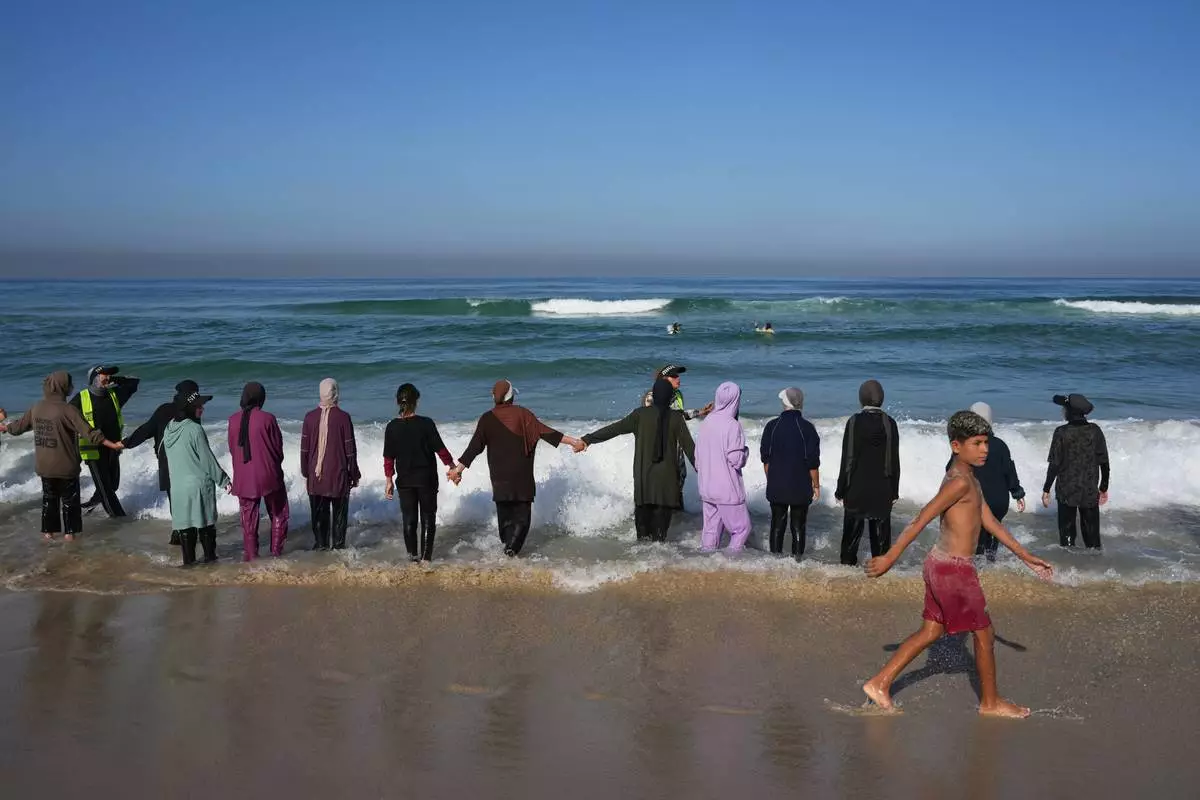
Palestinian children line up to enter the Mediterranean Sea during the "Swimming with Gaza" event in Khan Younis, southern Gaza Strip, Friday, Nov. 20, 2026. (AP Photo/Abdel Kareem Hana)
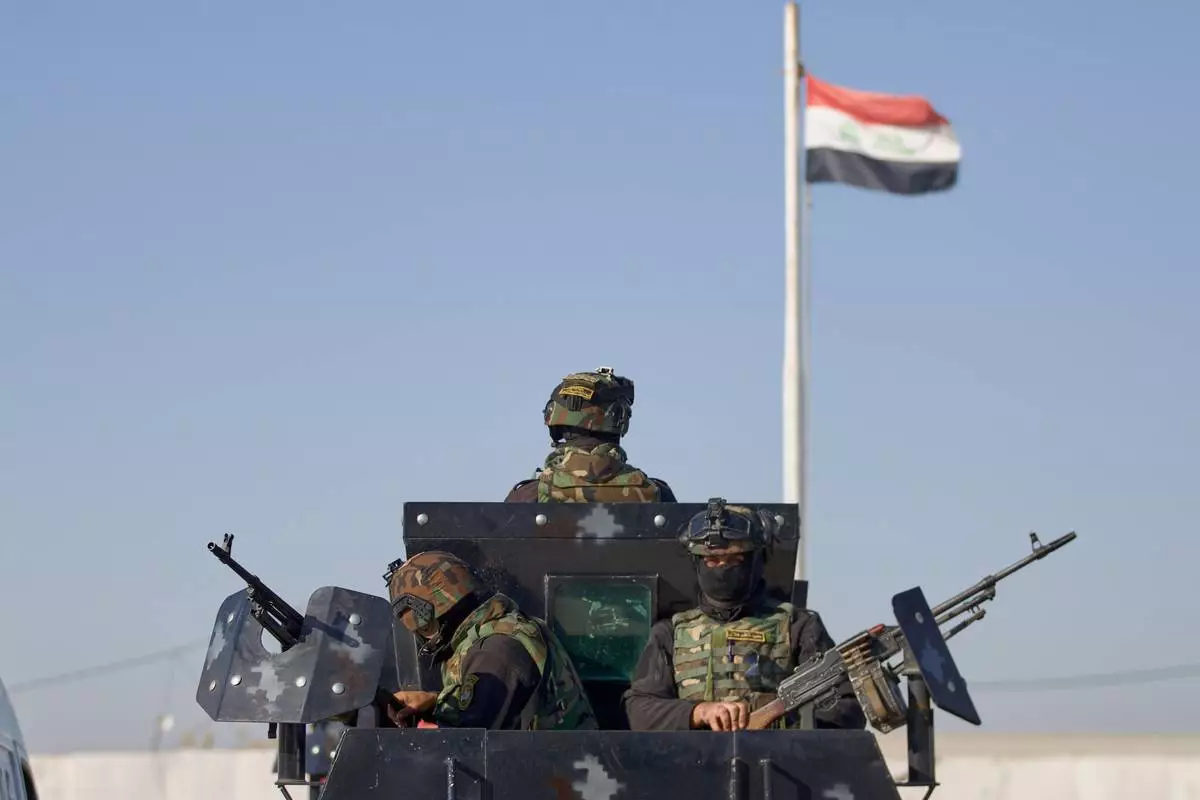
Iraqi security personnel man a military vehicle during a ceremony to establish a new command center in Jurf al-Sakhar, a longtime stronghold of the Iran-backed Kataib Hezbollah militia in Iraq's Babil province, south of Baghdad, Friday, Nov. 20, 2026. (AP Photo/Anmar Khalil)
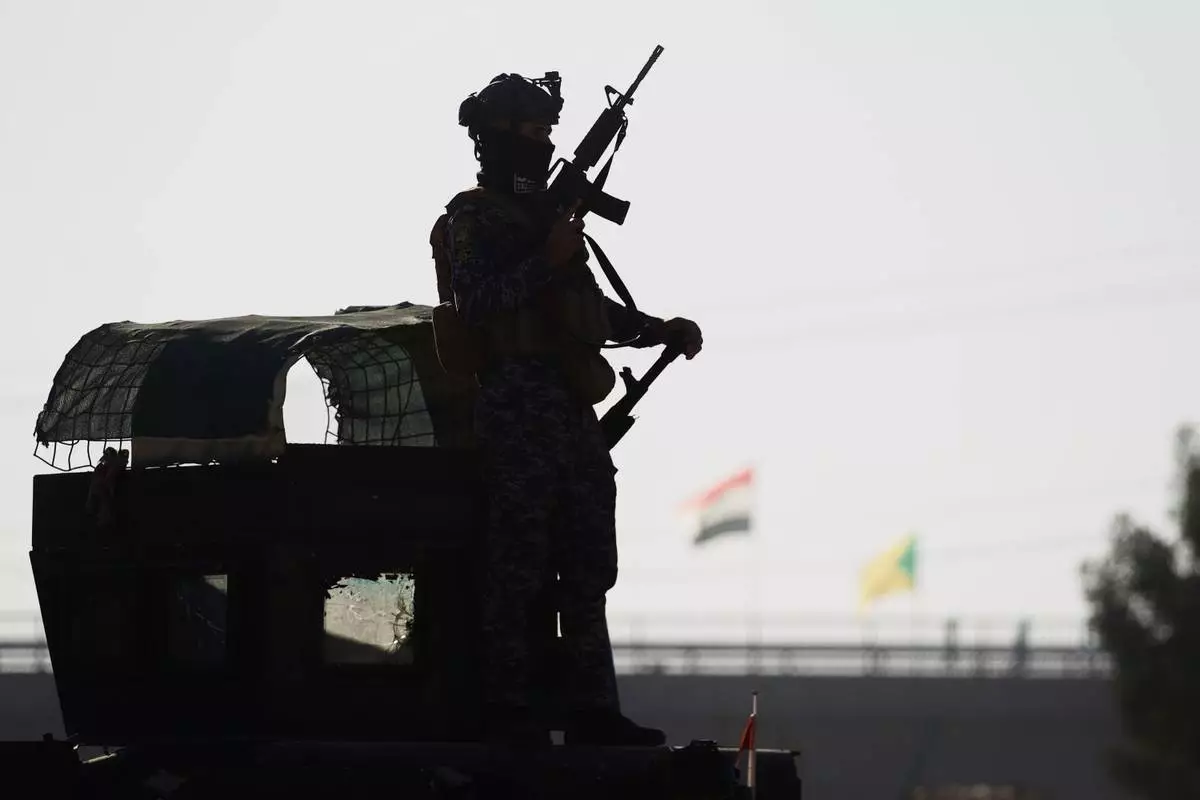
An Iraqi security officer stands atop a military vehicle ahead of an official ceremony to establish a new command center in Jurf al-Sakhar, a longtime stronghold of the Iran-backed Kataib Hezbollah militia in Iraq's Babil province, south of Baghdad, Friday, Nov. 20, 2026. (AP Photo/Anmar Khalil)

Iranian musicians perform "Petros Enì," composed by Italian composer Antonio Pappalardo, with the Tehran Symphony Orchestra at Unity Hall in Tehran, Iran, on Wednesday, Nov. 18, 2026. (AP Photo/Vahid Salemi)