LONDON (AP) — British endurance swimmer Lewis Pugh has swum in the North Pole and Antarctica to draw attention to environmental causes. But battling freezing waters and extreme conditions hasn't prepared him for his latest challenge: swimming the Strait of Hormuz while tankers are attacked and blown up nearby.
Pugh, who is a United Nations Patron of the Oceans, spent three days this week swimming parts of the dangerous waterway to highlight how the war with Iran threatens the area's habitat and wildlife.
Wearing only swimming trunks, goggles and a cap bearing the U.N. logo, the athlete started from the Musandam peninsula, on the southern tip of the strait, and ended by rounding the Cape of Hormuz, completing about 15 kilometers (9.3 miles) in total. Pugh is believed to be the first person to undertake a long-distance swim there since the war started.
The swimmer said that minutes after he entered the water on Monday, he heard two loud explosions that rocked the sea.
“I looked up and I could see that an oil tanker about four kilometers away had been hit,” he told The Associated Press after he returned to London. “The explosion was so loud, two booms, and then fighter jets coming in. And at that moment I realized we have to get out of here right now.”
Pugh, 56, managed to finish his feat after more stops and starts, including passing another vessel that sent fireballs into the sky after it was attacked.
“Most people, when they think about the Strait of Hormuz, they think of a shipping lane,” he said. “But it is also one of the most beautiful places I have ever been … it's one of the treasure troves of the natural world.”
“With all these ships being sunk, this area is under severe threat,” he added. “It’s going to take years, decades for this area to recover.”
Iran has in recent weeks increased attacks on vessels that it claimed traveled along unauthorized routes in the strait as it seeks to impose its control on the crucial waterway, where a fifth of all oil traded passed through before the U.S. and Israel launched the war on Feb. 28.
Several tankers have also struck sea mines laid by Tehran, in some cases exploding and bursting into flames, among them one that was carrying over 2 million barrels of oil last month.
Pugh warned of how oil leaking from the dozens of tankers damaged since February could create lasting problems for the region's animals, as well as its coastlines, coral reefs and mangrove forests.
He described seeing large numbers of dolphins following his boat as he sailed in, as well as turtles and ospreys. He also marveled at the hundreds of turtles he saw during a swim along the Omani coast before the war.
“When oil gets in there, when chemical pollution gets in there, it becomes very, very difficult to clean up that type of mess,” he said. “It lasts for generations.”
Pugh has had plenty of experience facing extreme temperatures and predators, including great white sharks. But swimming in a conflict zone presented entirely new dangers.
To stay safe, the challenge was done in sections over three days, with a total of about six and a half hours of swimming. The athlete recalled seeing a gas carrier being struck as he returned to the harbor on the second day.
“I’ll never ever forget going past that gas carrier, the smell of the chemicals and then the flames, they were literally like fireballs going up into the sky. Around the ship, the water was on fire,” Pugh said.
“And to think of the impact which a casualty like this has on nature — it was very, very acute.”
Pugh has spent much of the past 40 years swimming in places from Antarctica to the Red Sea and the English Channel to urge more action to protect marine environments from climate change, pollution and loss of biodiversity.
He was the first athlete to swim across the North Pole and complete a long-distance swim in every one of the world’s oceans. In 2023, he swam all 315 miles (507 kilometers) of the Hudson River to highlight the importance of clean rivers.
His foundation says the challenges have helped secure official agreements to protect more than 3.5 million square kilometers (about 1.35 million square miles) of vulnerable ocean.
Some have dubbed Pugh’s blend of epic swimming and political outreach as “Speedo diplomacy.”
“Sport opens doors, it creates dialogue, it enables people to start thinking about these important issues,” Pugh said.
“My message is very simple,” he added. “We’ve got to stop the war. We’ve got to open the strait, and we’ve got to clean up the pollution.”
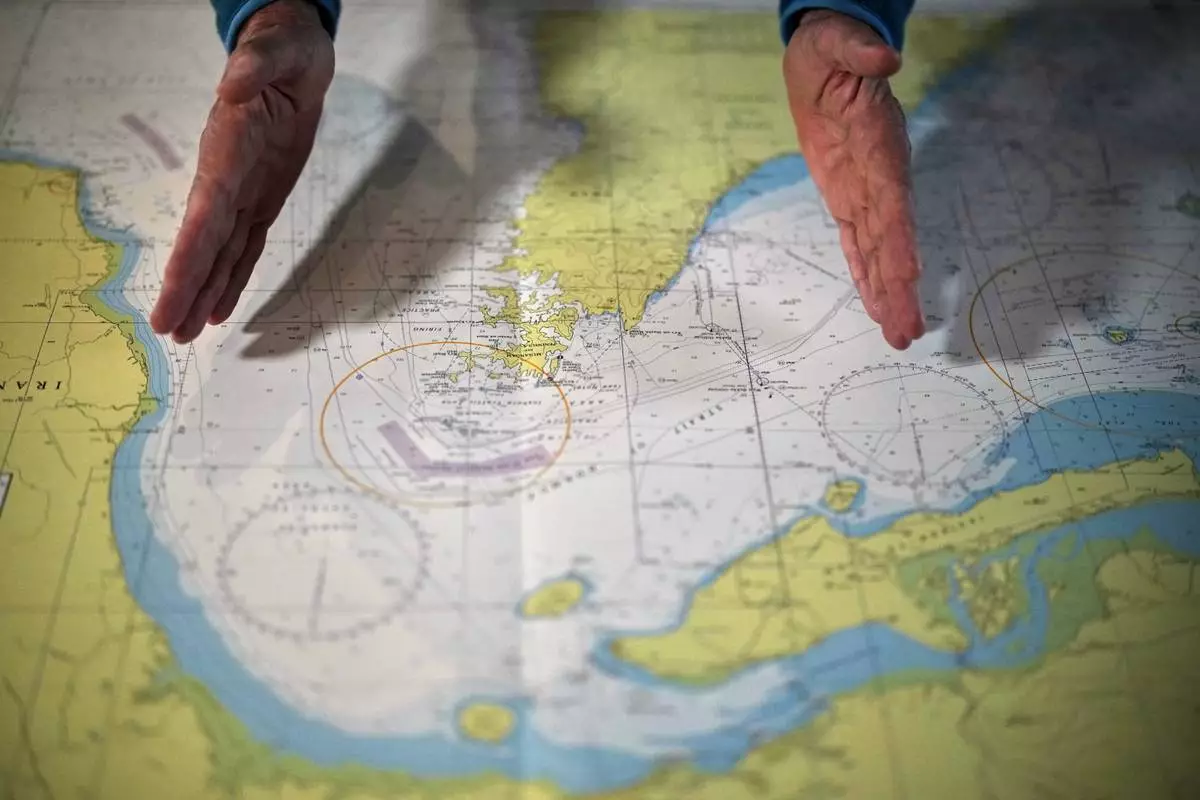
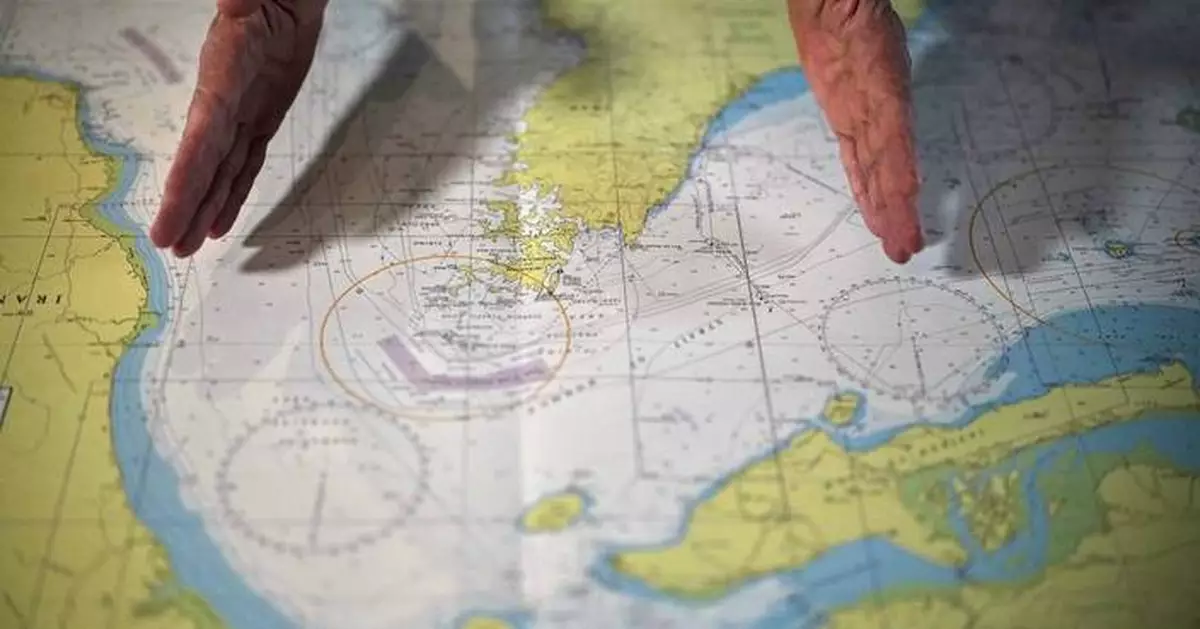
Lewis Pugh gestures as looks at a map of the Strait of Hormuz before he swims in Plymouth Sound, off the coast of Devon, England, Wednesday, Nov. 11, 2026. (AP Photo/Alastair Grant)
JERICHO, West Bank (AP) — For years, this lush Palestinian city was an oasis of calm in the occupied West Bank. Jericho's warm weather drew tourists year-round and its perch low in the Jordan Valley kept it somewhat isolated from the violence elsewhere in the territory.
But that relative peace was shattered this week when Palestinians said Israeli settlers who had newly infiltrated the outskirts of Jericho shot and killed a 72-year-old woman during clashes with local youth.
The killing late Monday of Fadda Fheidat came just days after the settlers had seized a cluster of Palestinian homes they said they purchased — a claim that rights groups and Palestinian residents contest.
The takeover was the first time in decades that Israelis had settled within a residential neighborhood around a major Palestinian city.
And now, as armed settlers patrol their streets, Palestinian residents say the violence has raised fears that a new phase of settlement expansion is reaching West Bank cities once considered safe from encroaching settlers.
Israel has occupied the West Bank since it captured the territory, along with east Jerusalem and the Gaza Strip, from Jordan and Egypt in the 1967 Mideast war. Since then, it has built a network of settlements for more than half a million Israelis on land Palestinians seek for a future independent state.
The international community overwhelmingly considers the settlements illegal. But Prime Minister Benjamin Netanyahu's right-wing government has approved more than 100 new settlements during its tenure. Settlers have also erected unauthorized outposts, which they’ve used to attack Palestinian shepherds, rampage through communities and drive people from their homes.
The seizure of the homes in al-Duyuk al-Tahta followed a similar pattern, residents and rights groups say, starting with the construction of a new outpost nearby in 2024. The neighborhood lies just outside Jericho’s city limits, near a prized archaeological site that Israel has invested in developing as a tourist destination.
"We are writing a new chapter of Jewish life. We have returned home," Israel Ganz, who heads the local council governing Israeli settlements in the area, declared on social media after the settlers moved in on Nov. 4.
The Israeli rights group B’Tselem described the settlers' arrival as the latest in a series of increasingly bold and largely unchallenged efforts to drive Palestinians from their land. It warned of "a reality similar to Hebron ” — the only city where Israeli settlers have for decades lived under military protection in the heart of a built-up Palestinian urban area.
The settlers' arrival introduces a permanent Israeli presence "with increased military deployment, restrictions on Palestinian movement, and settler militia violence and intimidation, which will affect the lives of tens of thousands of Palestinians,” the group said in a statement.
A major turning point came in February when settlers from the nearby outpost, emboldened by Israeli demolition orders for several houses on the edge of al-Duyuk al-Tahta, drove trucks and tractors into the community and spent nearly eight hours ransacking and bulldozing homes, Palestinian residents said.
Soon after that, the Israeli government legalized the outpost. By October, settlers had taken some of the Palestinian community's farmland and began setting up new irrigation systems.
On Nov. 4, dozens of Israelis, some of them armed, moved into eight Palestinian homes.
The settlers say they have proof-of-purchase documents for the houses, but Palestinian residents say they don’t know how, when or by whom the properties were sold.
Palestinian officials and Israeli human rights groups have questioned the legality of the sales under both Israeli and Palestinian laws. Most of the properties sit on farmland that Palestinian shepherds have grazed for generations and that Israel classifies as state land.
Under Israeli law, plots designated as state land generally cannot be privately bought or sold. Under the Palestinian Authority, the internationally backed body that administers semiautonomous parts of the West Bank, including Jericho, selling land to Israelis is a criminal offense.
Almost immediately after the settlers moved in, they began policing the neighborhood, often with guns and in ATVs, Palestinian residents said.
“They started to control our lives,” said Mustapha Fheidat, a farmer whose extended family makes up much of the population in al-Duyuk al-Tahta. “They stop us and ask for our IDs and what we’re doing here. They prevent us getting from the main road to our farms.”
According to four members of the Fheidat family, it was one of these settler patrols that set off Monday's deadly clash, after settlers hurled insults at Palestinian residents, who responded by pelting them with rocks.
Israel’s military said in a statement that the sequence of events that led to Monday's shooting death were under investigation. Citing testimony collected by soldiers at the scene, it said the clash erupted after a Palestinian driver ”carried out an attack by ramming" into an Israeli settler's vehicle as youths threw rocks at the settlers.
Fadda Fheidat was “likely injured by fire from an Israeli civilian," the military said.
No arrests of Israelis were announced in connection with the shooting. Two Palestinian men were arrested in connection with the “ramming” incident, the military said.
Members of the Fheidat family who witnessed the violence denied the collision was intentional, saying it happened when Fadda Fheidat's son was rushing to the scene of his mother's shooting and skidded into the settler's vehicle.
They said Fadda Fheidat and her daughter-in-law, Na'ima, were driving a relative who had been shot to a nearby hospital but turned back after Palestinians warned that more settlers were on the road ahead.
The violence was still underway when the women returned home. As they got out of the car, Na'ima Fheidat said she heard her children scream: "'Grandma has been killed! Grandma has been killed!’”
Ahmed Fheidat was inside his home when he heard the shouting and gunfire. He rushed outside and found his sister-in-law lying on the ground with a gunshot to the head.
“Her skull was completely broken. My hand was full of blood,” he said.
He carried her inside to wait for an ambulance, barely noticing that he, too, had been shot in the leg.
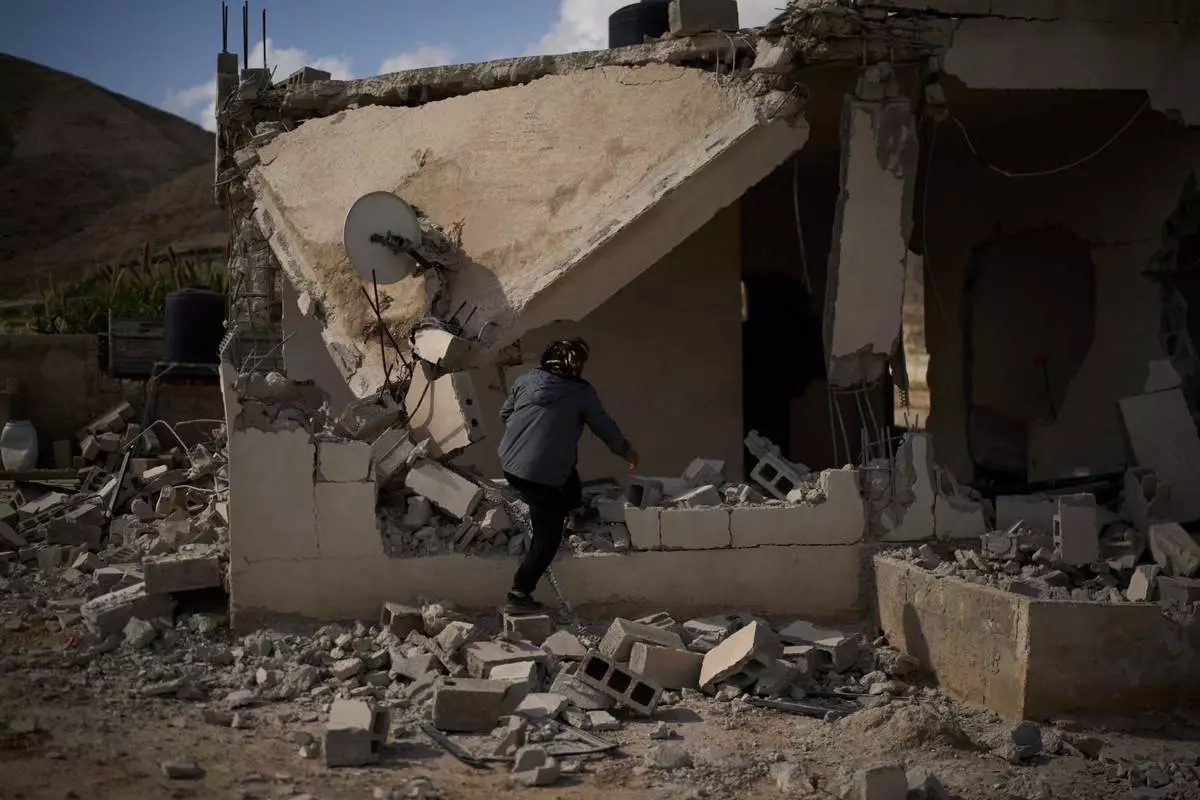
FILE.- Rashid Yousef Al-Ma'ina, a Bedouin, inspects a house he says was heavily damaged in an Israeli settler attack the previous day in Al-Dyouk Al-Tahta, on the outskirts of the West Bank city of Jericho, Wednesday, Feb. 11, 2026. (AP Photo/Leo Correa, File)
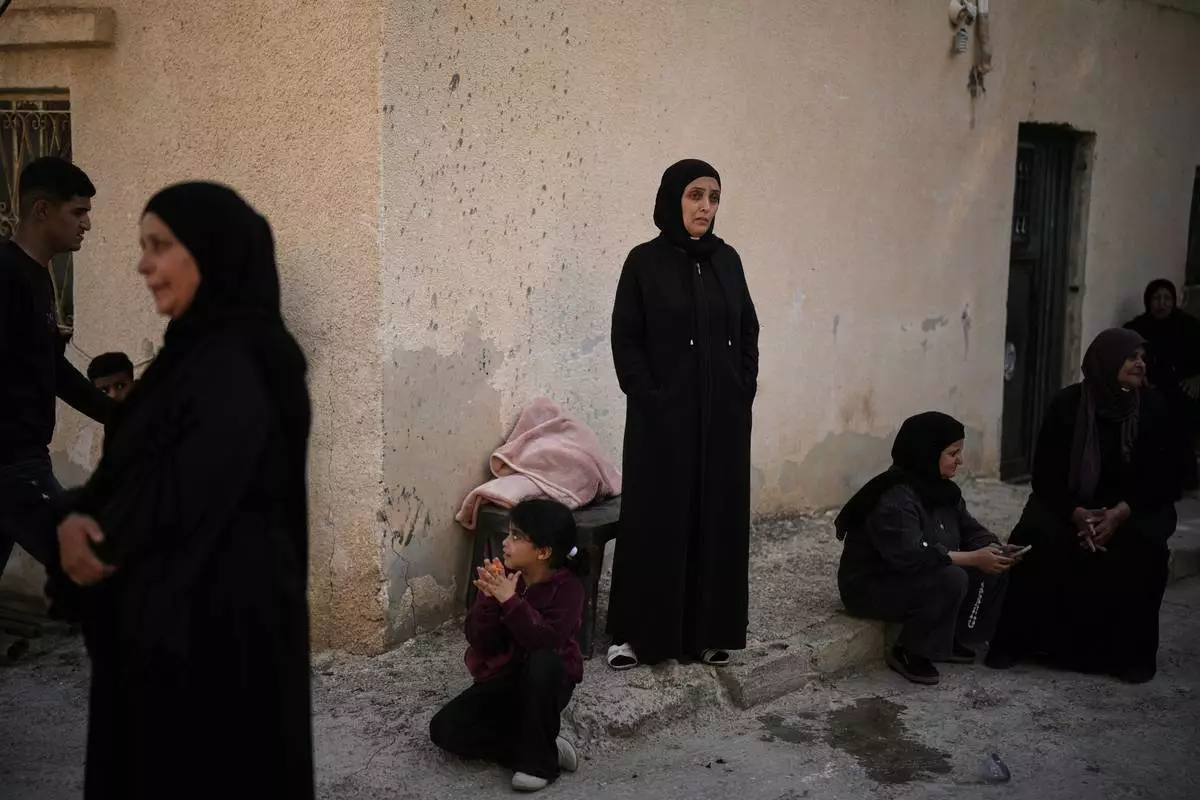
Friends and relatives gather near the site where Fadda Fheidat, a 72-year-old Palestinian Bedouin woman, was shot and killed by Israeli settlers in the village of Al-Duyuk al-Tahta, on the outskirts of the West Bank city of Jericho, Tuesday, Nov. 17, 2026. (AP Photo/Leo Correa)
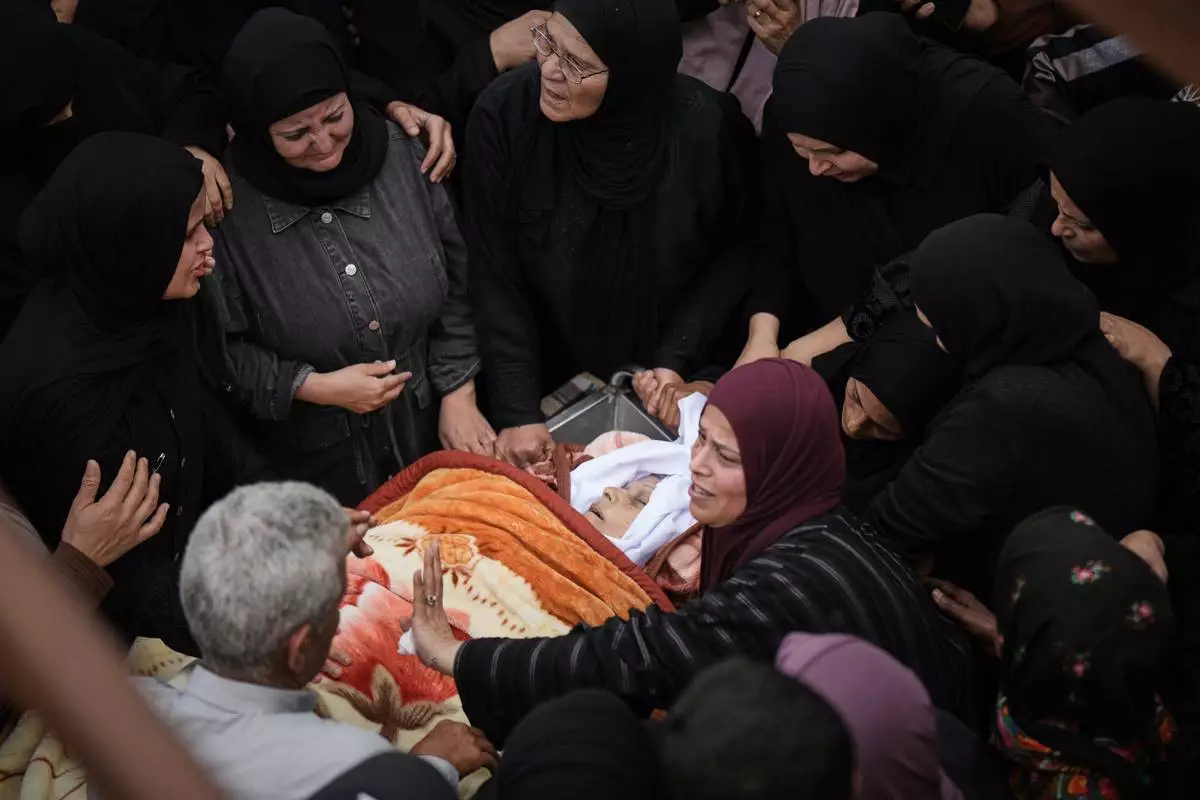
Friends and relatives mourn around the body of Fadda Fheidat, a 72-year-old Palestinian Bedouin woman who was shot and killed by Israeli settlers, during her funeral in the village of Al-Duyuk al-Tahta, on the outskirts of the West Bank city of Jericho, Tuesday, Nov. 17, 2026. (AP Photo/Leo Correa)
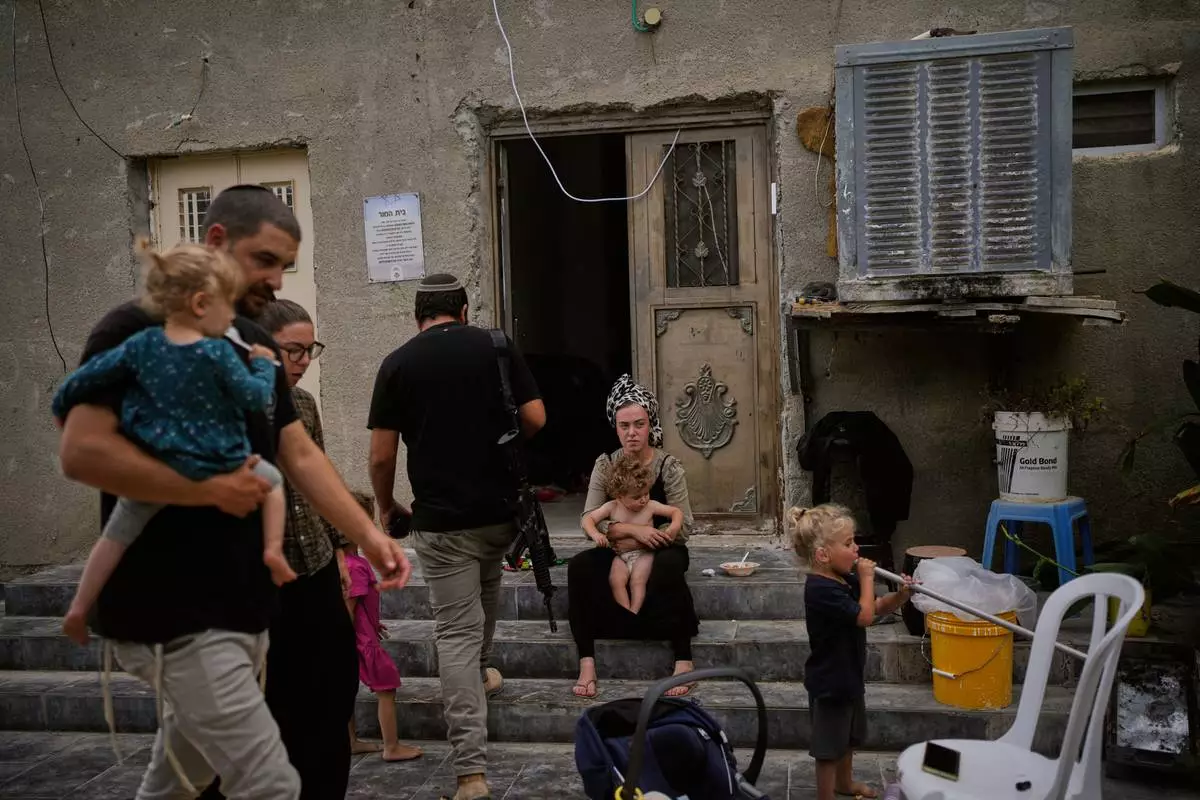
Israeli settlers gather at an eight-house compound that settlers claim to have purchased on the outskirts of the Palestinian city of Jericho in the occupied West Bank, Thursday, Nov. 5, 2026. (AP Photo/Ohad Zwigenberg)