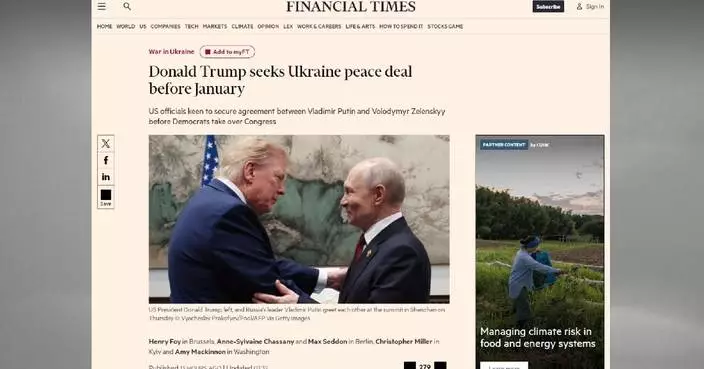
International observers have welcomed Chinese President Xi Jinping's vision for building an Asia-Pacific community, lauding China's leading role in promoting regional cooperation.
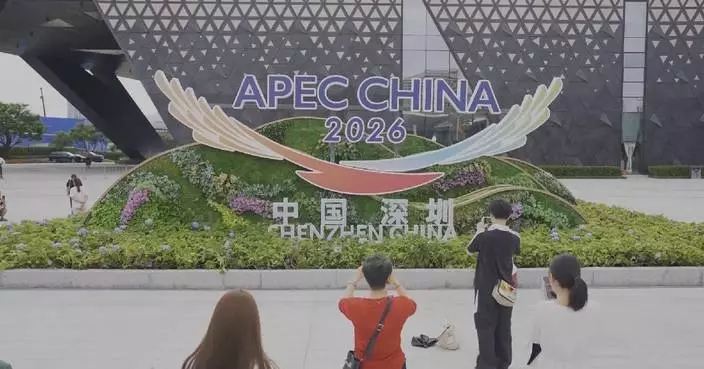
President Xi delivered a keynote speech at the 33rd Asia-Pacific Economic Cooperation (APEC) Economic Leaders' Meeting, which was held in south China's Shenzhen from Wednesday to Thursday.
In the speech, Xi said China is prepared to work with all parties to build up the four key pillars of an Asia-Pacific community -- economy and trade, connectivity, innovation, and development.
This framing could form a strong foundation for cooperation in the region, according to Nicole Wong Siaw Ting, special officer to Malaysian Deputy Prime Minister Ahmad Zahid Hamidi.
"What impressed me most is President Xi's overall vision for building an Asia-Pacific community delivered in this APEC speech. This entire keynote set a core tone for this year Asia-Pacific cooperation -- the 'four pillars' framework for the Asia-Pacific community initiated by President Xi in his systematic blueprint to turn community vision into [creating] regional action," Wong said.
Piti Srisangnam, associate professor of economics at Thailand's Chulalongkorn University and executive director of the ASEAN Foundation, underscored the importance of this year's APEC Economic Leaders' Meeting and related events. He highlighted that China's efforts to build consensus for regional cooperation will deliver benefits to people across the Asia-Pacific.
"We can say that the APEC Economic Leaders' Meeting and related events, including the summit among the heads of state of China, Russia and the United States held during the meetings, marked an important milestone in international relations in the 21st century. China is playing a constructive and leading role, working to turn everyone's misgivings into consensus, which will undoubtedly have a positive impact. For Thailand and other ASEAN member states, we firmly believe that amid the current intertwining of contradictions and conflicts, promoting economic development and improving people's quality of life are the most important things," he said.
Roy Van Den Hurk, CEO of Milk New Zealand Dairy Limited, said he was "really encouraged" by President Xi's remarks on promoting open trade. He stressed that China's consistent effort to boost regional cooperation is beneficial for everyone.
"I think his speech was really good. His speech was really all about opening up trade, getting common themes going in terms of countries, getting people to work together, making the region stable. But our focus as a business is really about the trade, so that's the part that we focus on the most and I think that's the part that we're really encouraged by his speech, that he's been consistent [in pledging] -- he's wanting to open China up, he's wanting openness with every other country, and he wants all the countries to work together. So, I think that's great for the world, I think it's great for China, I think it's great for New Zealand, I think it's good for everyone," he said.
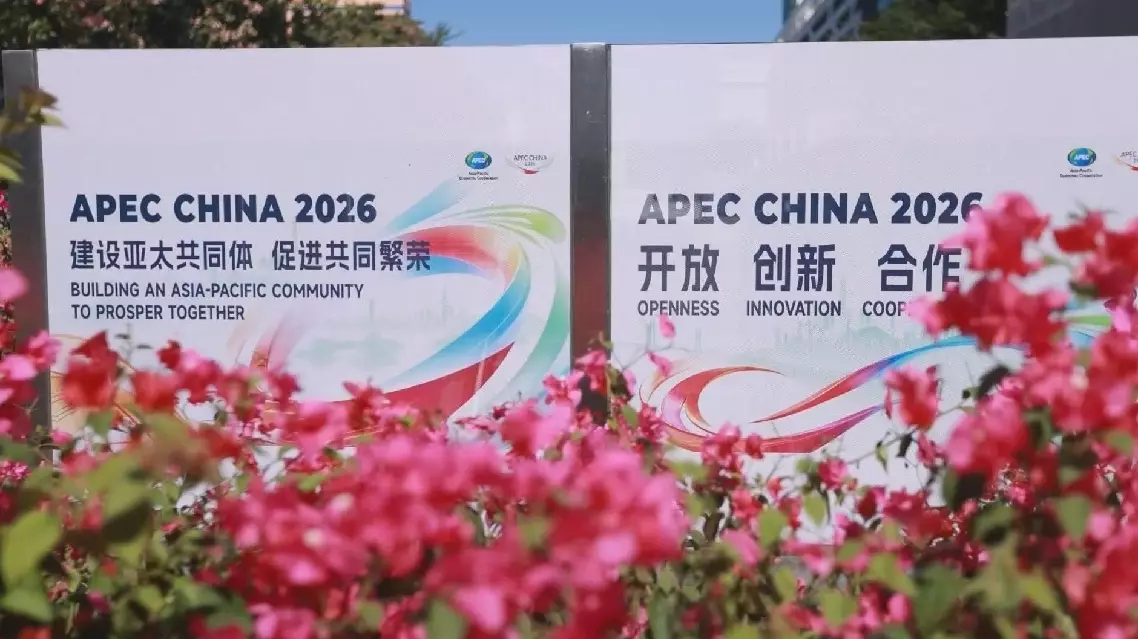
Int'l observers laud Xi's vision for building Asia-Pacific community