TUCSON, Ariz. (AP) — When Frank Bencomo was growing up, his family struggled to pay the water bill. On a warm October morning during a home visit, he saw echoes of his own childhood.
At a modest house near the Tucson high school he attended, a disabled Vietnam War veteran raising two grandchildren frowned at a water bill topping $100.
Click to Gallery
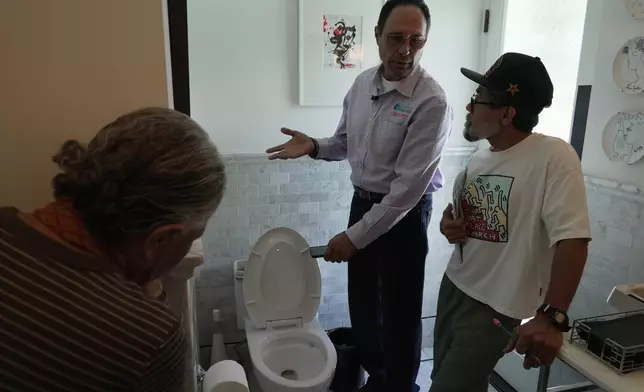
Frank Bencomo talks to a customer during a free water audit at his home Monday, Oct. 12, 2026 in Tucson, Ariz. (AP Photo/Brittany Peterson)
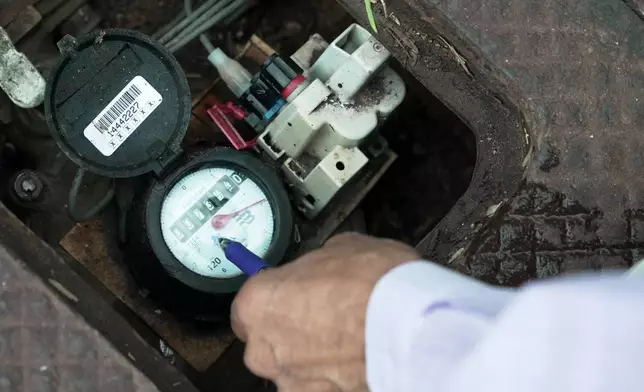
Frank Bencomo reads a meter during a free water audit at a residential property Monday, Oct. 12, 2026 in Tucson, Ariz. (AP Photo/Brittany Peterson)
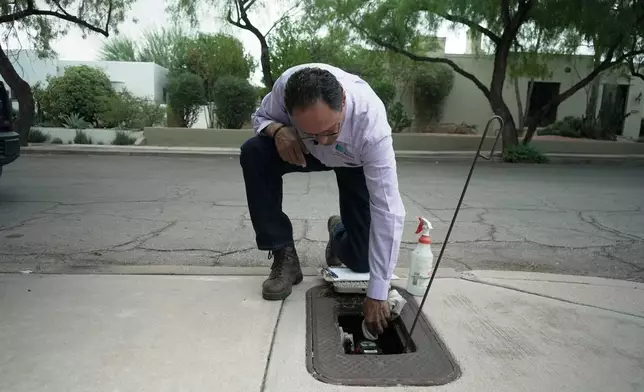
Frank Bencomo wipes dust off a meter during a free water audit at a residential property Monday, Oct. 12, 2026 in Tucson, Ariz. (AP Photo/Brittany Peterson)
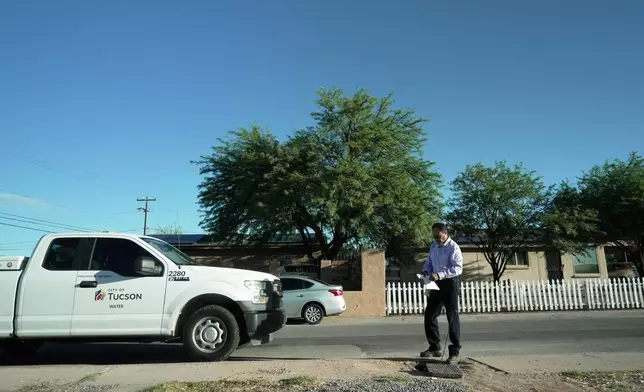
Frank Bencomo takes notes at a meter during a free water audit at a residential property Monday, Oct. 12, 2026 in Tucson, Ariz. (AP Photo/Brittany Peterson)
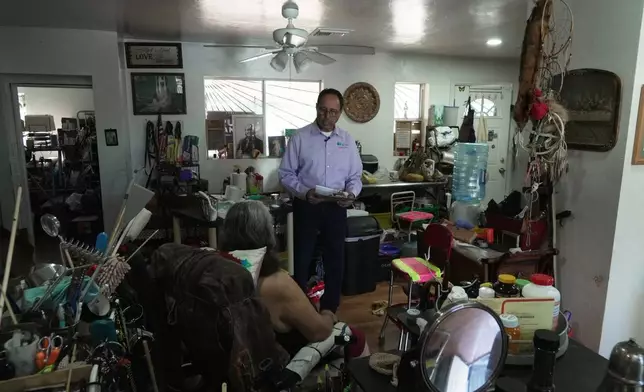
Frank Bencomo conducts a water audit at a residential property, Monday, Oct. 12, 2026 in Tucson, Arizona. (AP Photo/Brittany Peterson)
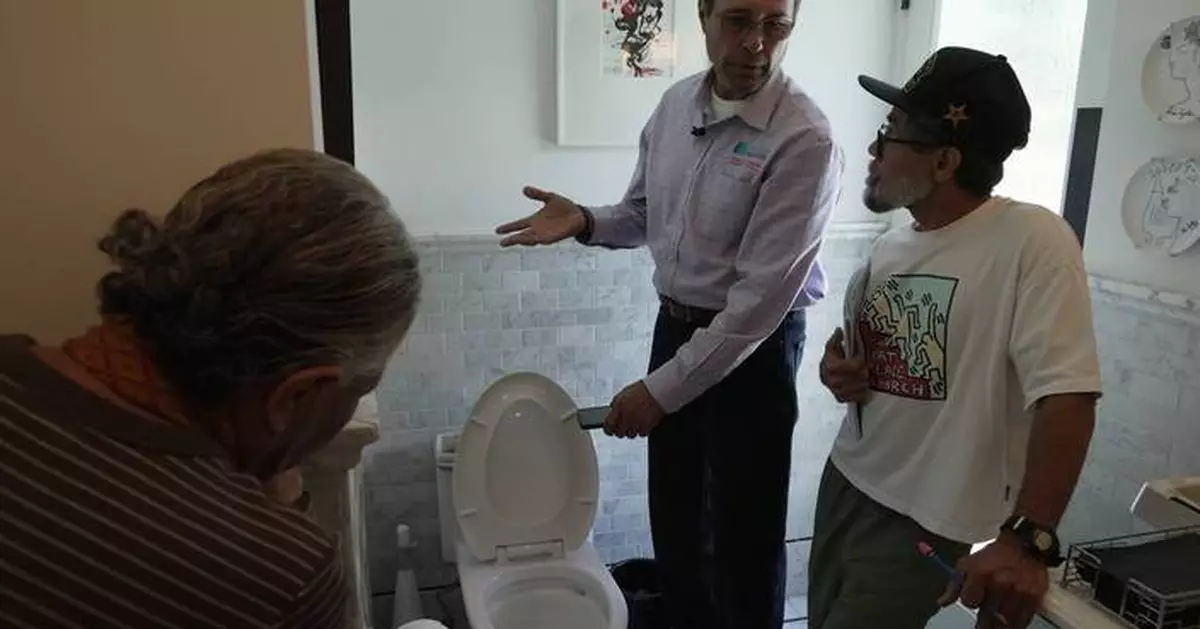
Bencomo inspected the home’s water meter, pipes and two toilets, adjusted a loose valve that kept water running slowly from the tank, and showed the man’s 11-year-old grandson how to address a leaking toilet, which often makes a hissing sound.
“If I can get you to stop wasting the precious resource that we all need and I can help you pay your bill, that’s what I’m about,” said Bencomo, one of six Tucson Water specialists known as zanjeros, Spanish for “ditch riders."
Dozens of cities in the West are trying to scale up similar home efficiency programs as surface water supplies, like the Colorado River, are dwindling and water rates are rising, according to water experts and managers.
Tucson estimates it has reduced water use by nearly a third per person over 25 years, making it one of the most water-efficient cities in the desert Southwest.
“Expanding programs like the zanjero program throughout cities in the West really can go a long way toward building an ethic around using water wisely,” said Candice Rupprecht, conservation manager for Tucson Water. “It provides this educational opportunity that lasts with customers.”
One of four children raised by a single mother, Bencomo remembered coming home from school to find the water had been shut off.
Now 61, trim and suntanned with a chatty manner, he has spent nearly 15 years helping residents conserve what he once lacked. His customers are across the economic spectrum — from families counting every buck to afford $100 bills to owners of second homes paying thousands for landscape irrigation.
For over two decades, zanjeros in Tucson have offered free in-person water-efficiency checkups to identify waste from leaking toilets and overwatered yards in Arizona's second-largest city. Tucson Water conducts about 1,000 visits to residential and business users annually, each showing a 25% water savings on average the following year.
The program has saved an estimated 1.9 billion gallons (7.2 million cubic meters) since 2009 — enough to supply roughly 15,000 average U.S. households for a year, Rupprecht said.
She estimates the savings from decades of conservation efforts in Tucson spared residents about 12% on their water bills and helped avoid costly expansions of water treatment infrastructure.
Phoenix looked to Tucson as it ramped up its own water efficiency audit program in recent years. The Eastern Municipal Water District, which serves nearly 1 million people in Southern California, reported a four-time surge in demand for such consultations in recent months. Aurora, Colorado, set back-to-back records for its summer outdoor water assessments in 2024 and 2025, then matched its high this year.
Later that day, Bencomo pulled up to a sprawling property with a pool, fountains and an expansive garden. The owners asked for a consultation after seeing a $5,000 water bill.
In the landscaped backyard, Bencomo admired the mesquite trees, desert willows, organ pipe cactus, and yellow lantanas, quipping that most of them were native and needed little water. Kneeling beside a shrub, he pointed to root rot, scraping away soggy bark near the trunk.
After crunching data and checking on the plants, he spotted the culprit: the drip irrigation system ran five hours a day, seven days a week, even after rain, consuming nearly 1,200 gallons each morning.
He recommended moving the emitters farther from the tree trunks, installing a rain sensor and gradually cutting irrigation from seven days a week to four, then further as winter approached.
Phillip DeLeon, who helps his 90-year-old mom oversee the house, said he hadn’t expected such a thorough assessment of the water use and practical ways to reduce it.
“This is wildly helpful,” DeLeon said. “We’re overdoing what we were doing.”
Bencomo believes that much more water can still be saved across the region.
“Everybody says we live in the desert, but not everybody lives like we live in the desert,” Bencomo said.
Tucson relies on a mix of surface water and groundwater, some of which has been stored intentionally to weather future shortages. If it keeps consuming water at the current rate, it has enough groundwater for roughly the next 50 years, Rupprecht said.
Not all of Bencomo’s customers understand that the supplies are finite. When homeowners seem dismissive of his advice, he sometimes shifts the conversation to last year's record-low snowpack, dwindling reservoirs and an impending reduction of up to 20% in the city's Colorado River supply.
City officials see conservation programs like the zanjero audits as a way to stretch those supplies without mandating residential water restrictions.
“In almost every case, water conservation is going to be your cheapest and fastest source of new supply in communities,” said Lindsay Rogers, policy manager for municipal conservation at Western Resource Advocates.
Still, expanding conservation requires funding and expertise, said Ron Burke, president and CEO of the nonprofit Alliance for Water Efficiency. He said utilities depend heavily on ratepayers to fund conservation programs, while specialists must be thoroughly trained in areas from plumbing to irrigation and landscaping.
Before his first audit in Tucson, Bencomo studied meter reading, watershed management and native plant selection, and spent a two months learning from more experienced zanjeros on site. Since then, he has documented more than 2,000 home visits in stacks of notebooks.
“We have stored water, but that stored water won’t last forever,” he said. “We’ve got to keep on conserving for our grandchildren, their grandchildren, and future generations to have water.”
The Associated Press’ climate and environmental coverage receives financial support from multiple private foundations. AP is solely responsible for all content. Find AP’s standards for working with philanthropies, a list of supporters and funded coverage areas at AP.org.
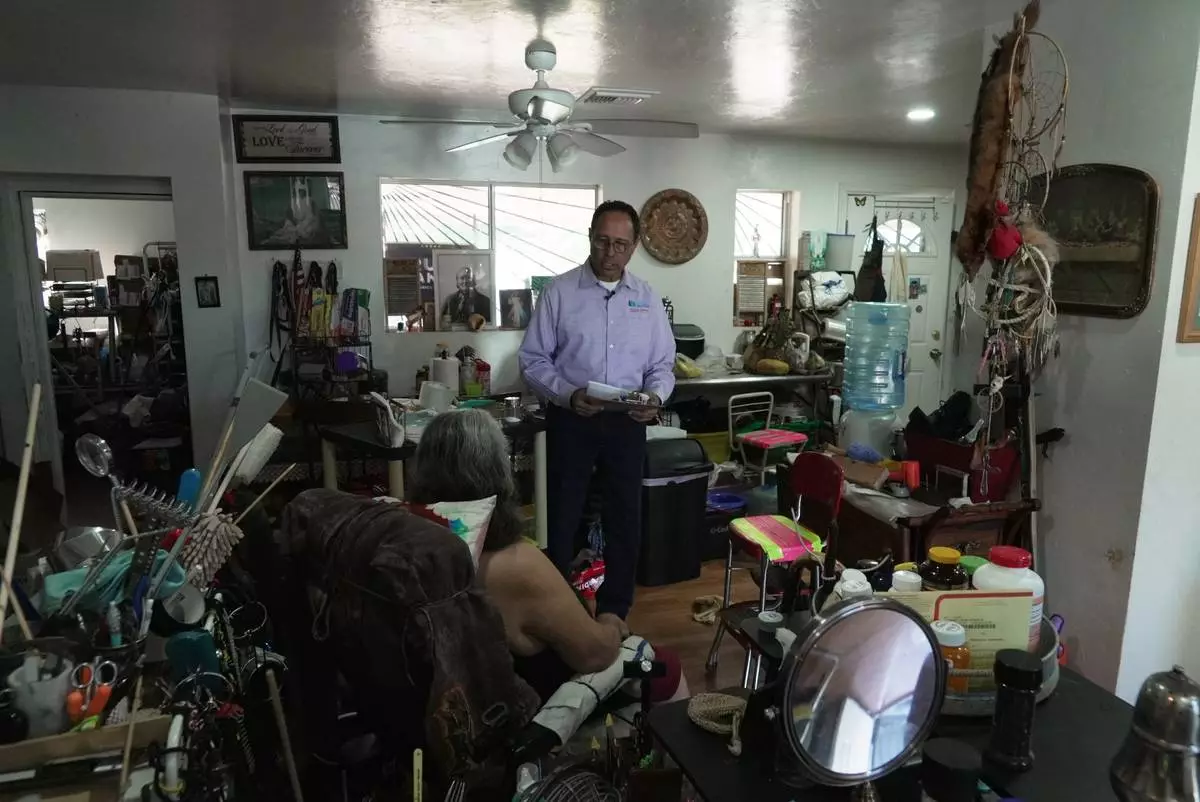
Frank Bencomo talks to a customer during a free water audit at his home Monday, Oct. 12, 2026 in Tucson, Ariz. (AP Photo/Brittany Peterson)
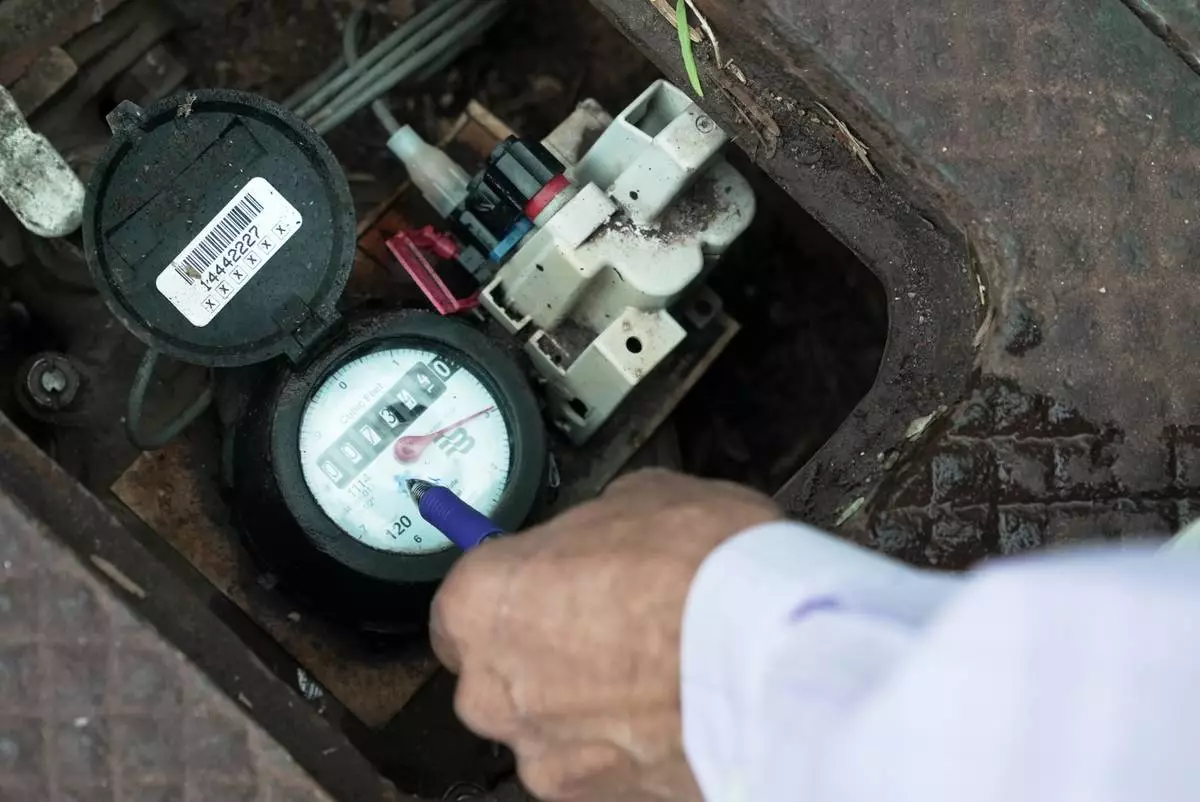
Frank Bencomo reads a meter during a free water audit at a residential property Monday, Oct. 12, 2026 in Tucson, Ariz. (AP Photo/Brittany Peterson)
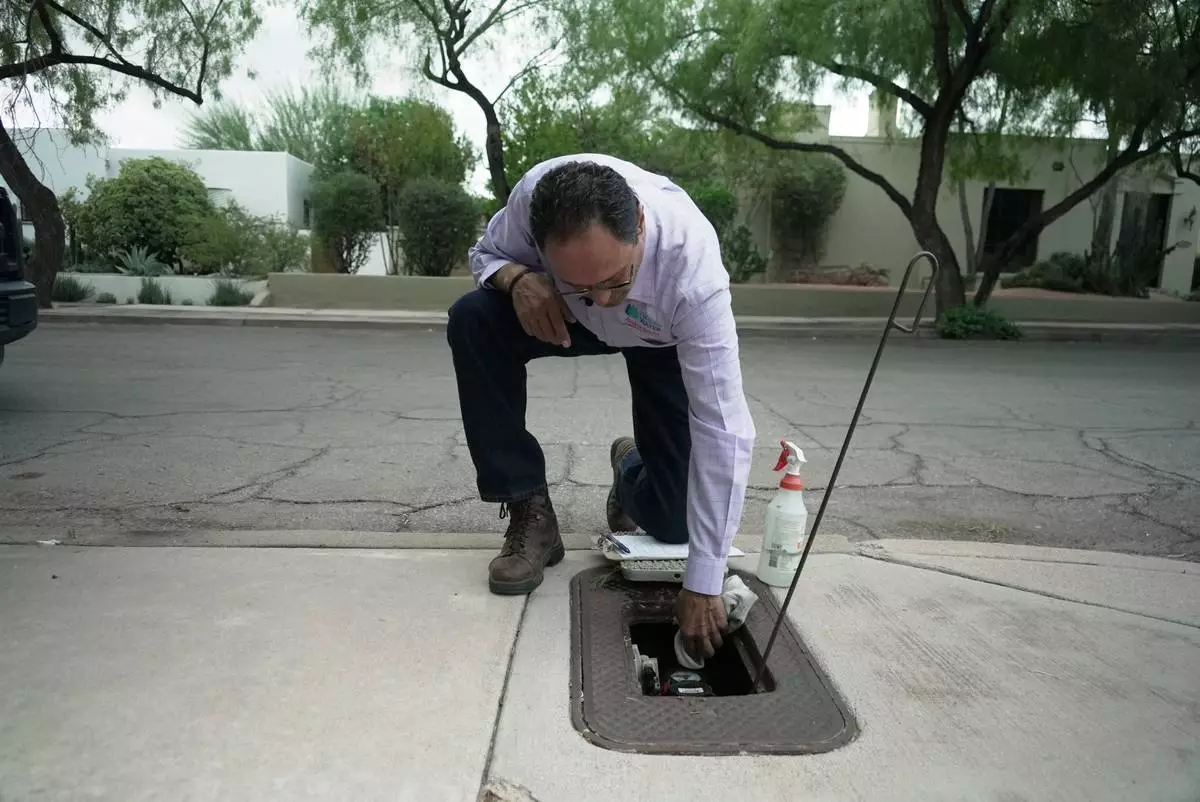
Frank Bencomo wipes dust off a meter during a free water audit at a residential property Monday, Oct. 12, 2026 in Tucson, Ariz. (AP Photo/Brittany Peterson)
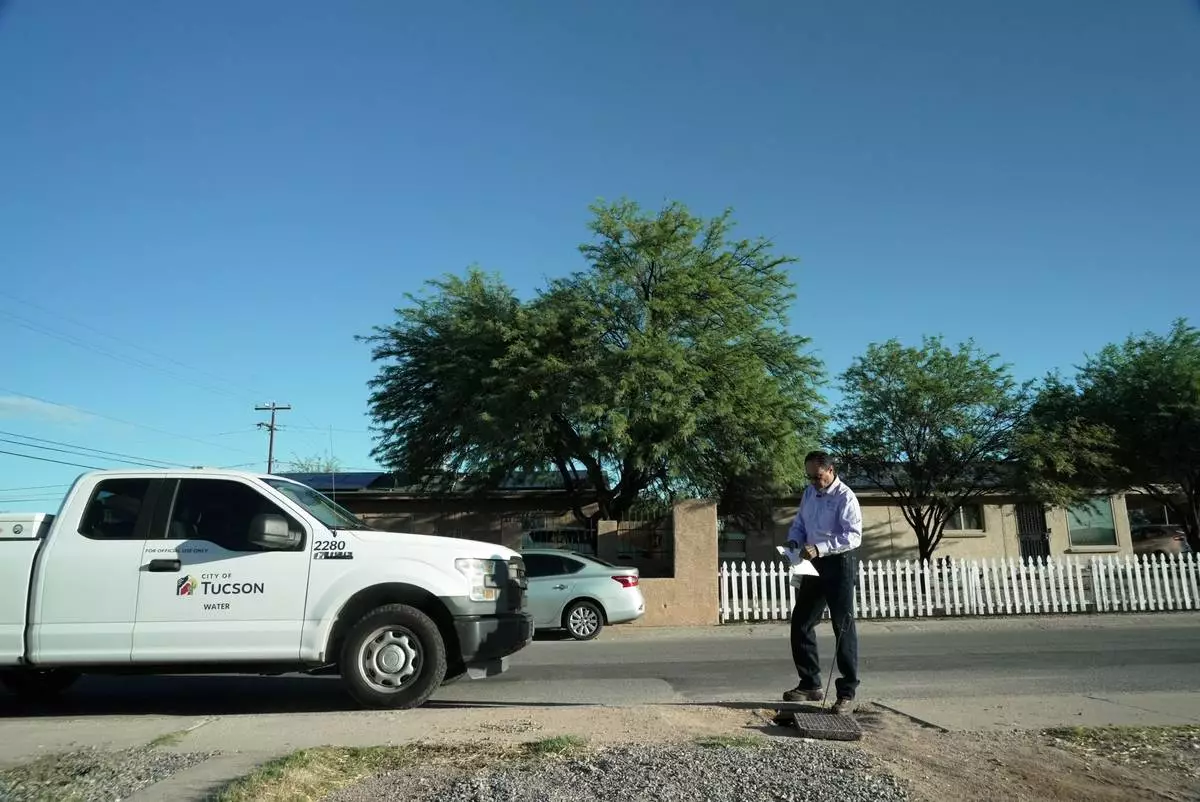
Frank Bencomo takes notes at a meter during a free water audit at a residential property Monday, Oct. 12, 2026 in Tucson, Ariz. (AP Photo/Brittany Peterson)
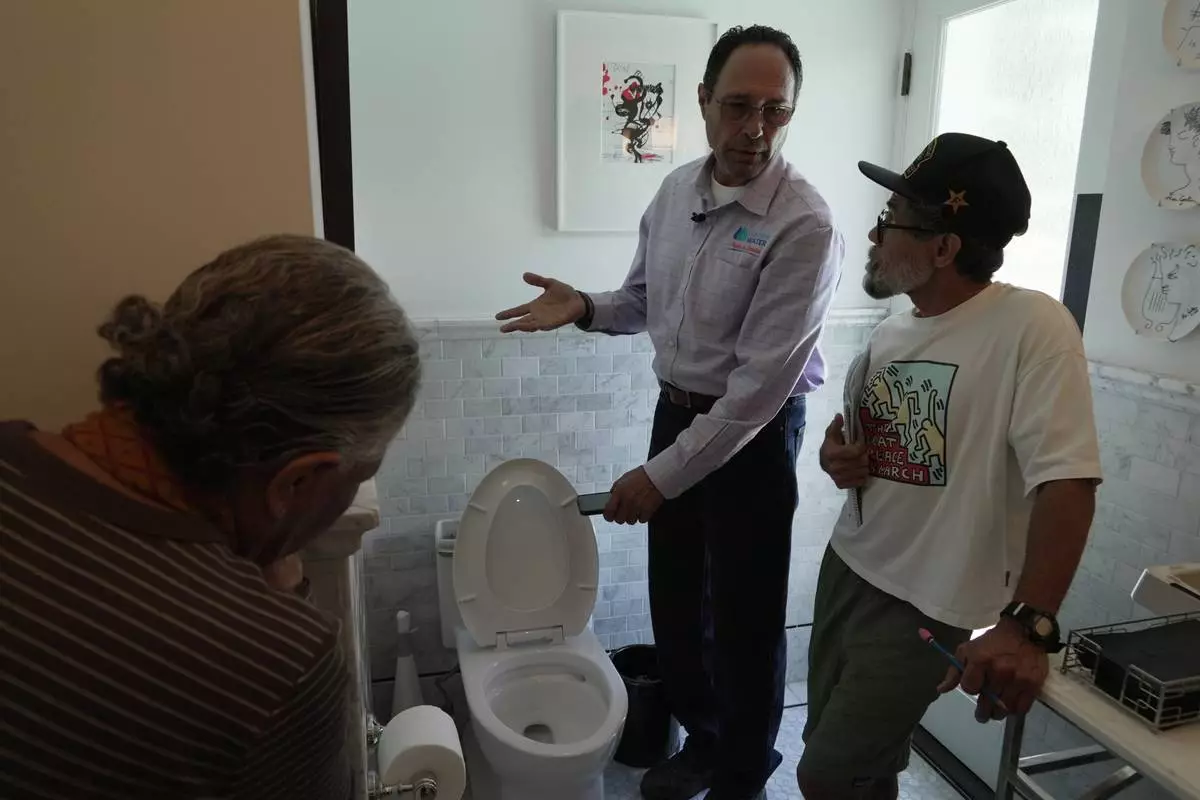
Frank Bencomo conducts a water audit at a residential property, Monday, Oct. 12, 2026 in Tucson, Arizona. (AP Photo/Brittany Peterson)