TALLAHASSEE, Fla. (AP) — CJ Bailey threw for 292 yards and three touchdowns as NC State defeated Florida State 28-10 on Saturday.
Davion Gause had 25 carries for 292 yards and added five receptions for 71 yards for the Wolfpack, who have won five straight in the series against the Seminoles.
Bailey and Gause, who both grew up in South Florida, returned to the Sunshine State and helped NC State (5-6, 3-4 Atlantic Coast Conference) snap a two-game skid. The 6-foot-6 Bailey completed 23 of 36 passes and connected with Darius Johnson, Preston Douglas and Davion Dozier for touchdowns.
Ashton Daniels completed 17 of 32 passes for 183 yards and an interception for Florida State (5-6, 3-5). Jasen Lopez caught seven passes for 58 yards, including a 30-yarder.
Florida State’s Rick Stockstill and NC State’s Todd Goebbel faced off in the first meeting between interim head coaches in an ACC football game since at least 1996, according to research by the league office.
NC State’s defense allowed a touchdown on the opening drive but then settled in, forcing Florida State to turn it over on downs twice and grabbing a pair of interceptions.
Florida State started Parks, its No. 5 running back, and managed just 77 yards on 25 carries. The Seminoles’ top four running backs are out due to injury.
NC State: Closes out the season at home against North Carolina on Saturday.
Florida State: Hosts rival Florida on Friday.
Sign up for Top 25 poll alerts here, visit the Top 25 here and see AP’s full college football coverage here
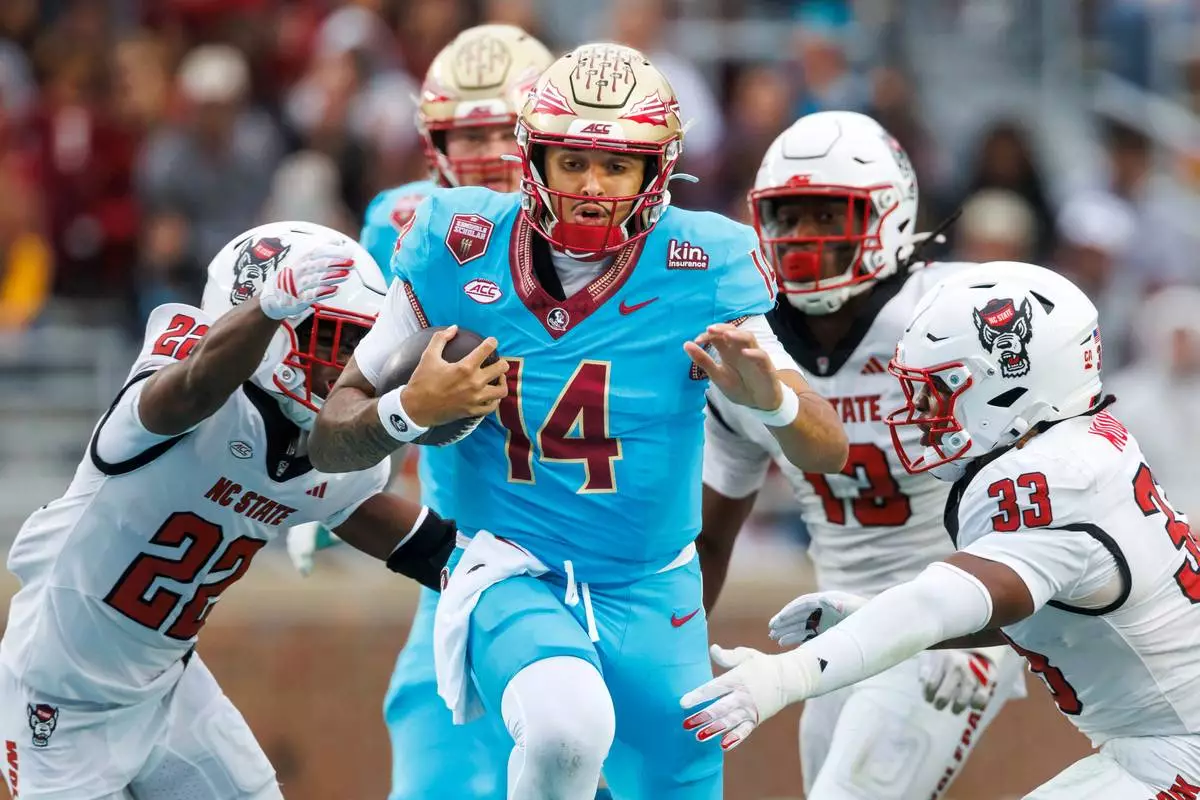
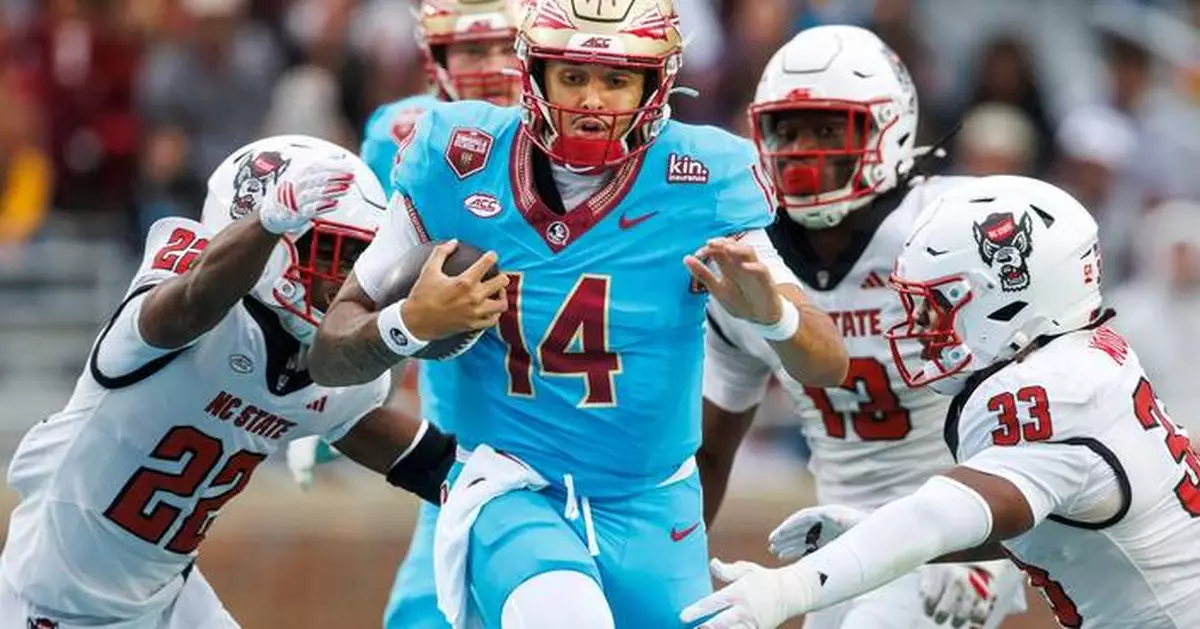
Florida State quarterback Ashton Daniels (14) rushes as North Carolina State defensive back Jackson Vick (22), defensive end Joseph Adedire (13) and linebacker Ziggy Moore (33) close in during the first half of an NCAA college football game, Saturday, Nov. 21, 2026, in Tallahassee, Fla. (AP Photo/Colin Hackley)
GUASAVE, Mexico (AP) — Heavy gunfire, helicopters and burning trucks marked Mexico's Sinaloa state Saturday after authorities captured cartel boss Fausto Isidro Meza Flores, known as “El Chapo Isidro,” in an operation that left at least 11 people dead.
Meza Flores, one of the FBI’s 10 most wanted fugitives, was captured and flown to Mexico City on Saturday after the firefight between Mexican forces and cartel gunmen overnight left residents of the city of Guasave terrorized.
Mexico’s Defense Ministry on Saturday afternoon said that seven alleged cartel gunmen and four Mexican soldiers were killed.
The capo climbed the cartel ranks to lead the Beltrán Leyva cartel and later became the leader of his own group, the Meza-Flores Transnational Criminal Organization. The United States had a $5 million reward offer for information leading to his arrest, and he was wanted for trafficking drugs to the U.S. and illegally carrying firearms.
Mexico's government said in a report early Saturday that intelligence from the Trump administration helped authorities capture him, but provided few details about how authorities in Mexico and the United States coordinated to detain Meza Flores.
He was also a key ally to “Los Mayos,” a faction of the Sinaloa Cartel, which was designated as a foreign terrorist organization by the Trump administration last year. His capture represents a blow to the cartel as it fights with another faction for control of the northern Mexican state.
Authorities in the United States and Mexico celebrated the arrest as a security win. U.S. President Donald Trump has pressured Mexico's government to go after criminal groups.
As a fierce firefight settled into a tense calm Saturday, experts warned that picking off capos could set off another wave of violence in a region already caught up in a power struggle between warring cartel factions.
The capture of Meza Flores and his No. 2 in the city of Guasave, Sinaloa, set off a wave of violence when a firefight broke out around 7 p.m. on Friday, according to residents of the 290,000-person municipality. Soon, military helicopters and drones were flying overhead, and helicopters opened fire on key locations across the city.
Videos show screaming civilians fleeing gunfire at a baseball game, burning cars and businesses, and circling helicopters shooting at people below. Such shows of force by cartels are common following the capture or killing of leaders.
“The fighting was happening all over Guasave,” said Alma Camacho, a Guasave resident and local journalist. “It spread throughout the city.”
Mexican authorities said that they used “stealth and surprise” to arrest Meza Flores, establishing a security perimeter around the building where he was located. After coming under attack with guns and explosives from suspected cartel operatives, armed forces personnel entered a home and detained him.
Video shared by Mexico's Defense Ministry shows Meza Flores and two others being marched by heavily armed soldiers onto a military aircraft to appear before prosecutors in Mexico City. A total of eight people were detained, according to authorities.
Because of the violence, the Mexican army and National Guard special forces were unable to extract Meza Flores from Guasave until 4 a.m. on Saturday, said a federal official who spoke on condition of anonymity because he wasn’t authorized to discuss the case.
“Getting him (Meza Flores) out was extraordinary,” the official said, describing an intense response by members of the criminal group who maintained at least “10 roadblocks” with burning vehicles on Guasave’s streets.
Guasave resident and firefighter Paola Sánchez said that thousands of people were terrorized late Friday as they took shelter from intense gunfire in grocery stores and other locations.
“Last night, many businesses were burned ... along with cars and trucks,” Sánchez told The Associated Press.
She said that the city’s firefighters had to take shelter at their station and wait until Saturday morning for orders from their superiors to dispatch the first crews to check whether any businesses or vehicles were still burning.
An uneasy calm seemed to settle over the city Saturday. Mexican Security Secretary Omar García Harfuch wrote on X on Saturday morning that armed forces would remain deployed in Sinaloa state to protect civilians. He lamented the deaths of the four soldiers killed in the operation.
Burned-out trucks continued to line the freeway leading into the town, blocking roadways on Saturday.
“The aftermath of last night’s war still lingers. Burned cars in the streets, several Oxxo stores completely burned down,” Camacho said, referring to a chain of convenience stores in Mexico.
Guasave residents remained “very afraid” because security forces were absent from the streets, Camacho said.
Meza Flores' detention marks another high-profile capture of a cartel leader as Mexican President Claudia Sheinbaum faces pressure from Trump to crack down on cartels. Sheinbaum has gone after illegal groups more aggressively than her predecessors, and homicides have dipped significantly in her two years in office.
The U.S. and Mexican governments celebrated the capture on Saturday, with the DEA commending Mexican authorities.
“Results like these don’t happen overnight. They are built on sustained cooperation and trust. This is what partners can accomplish together,” U.S. Ambassador Ronald Johnson said in an X post. “We will continue the hunt.”
Mexican Security Secretary García Harfuch called the detention “an important step in pacifying Sinaloa.”
Sheinbaum's government has targeted a number of cartel kingpins, including Jalisco New Generation Cartel leader Nemesio Oseguera Cervantes, known as “ El Mencho,” who was killed by the military in February.
Mexican security analyst David Saucedo said that the capture of Meza Flores marked another case of the governments of Mexico and the U.S. increasingly falling back on a longstanding security strategy that critics warn could fuel more violence in the long run.
The so-called kingpin strategy relies on zeroing in on capos like Meza Flores as a way to combat cartels. But experts say that it often triggers violent power disputes among groups, like the one underway in Sinaloa.
“What is evident is this is a product of pressure from the United States,” Saucedo said. “What they do is capture high-profile kingpins — the leaders — but they don’t dismantle the entire organization. They arrested the No. 1 and No. 2, but the entire network of hit men, street-level drug dealers, businesses and political and police connections remains intact.”
Janetsky and Sánchez reported from Mexico City. Associated Press writer Thomas Strong contributed to this report from Washington.
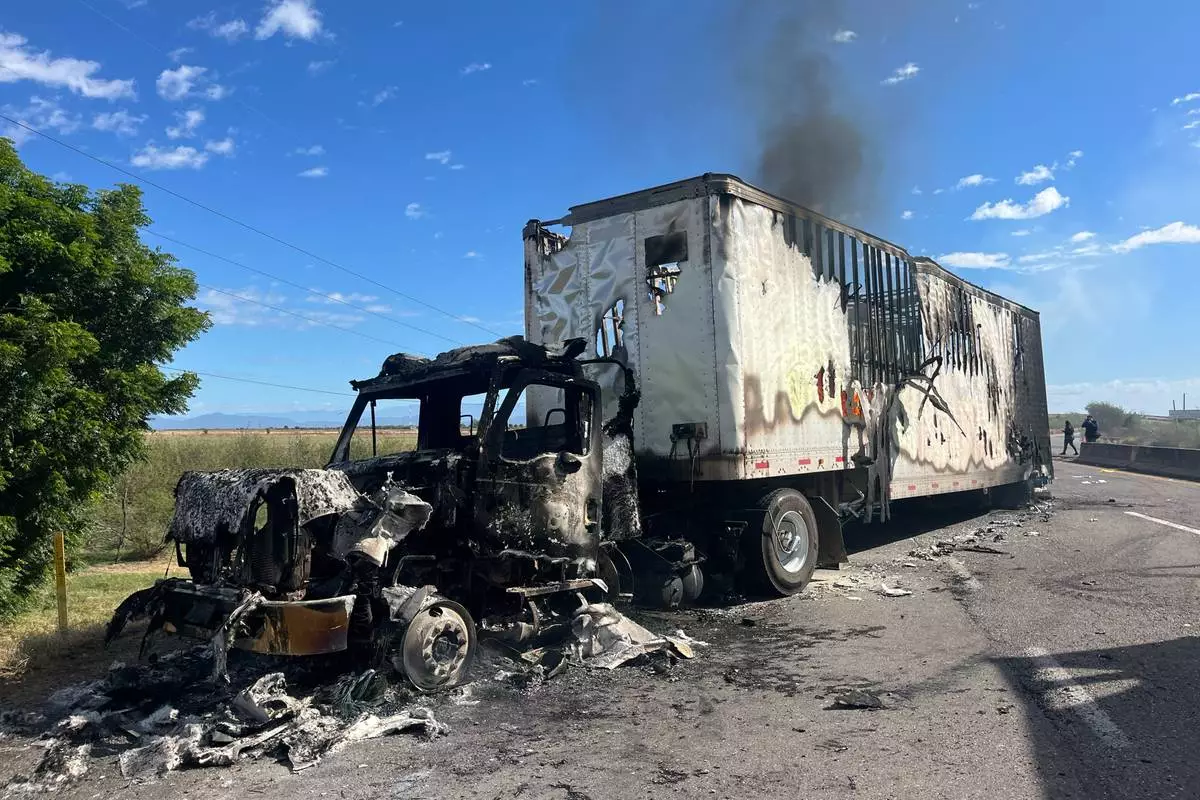
A burned out cargo truck sits on a highway between Guamuchil and Guasave in Sinaloa state, Mexico, Saturday, Nov. 21, 2026, following overnight violence after Mexican authorities captured cartel boss Fausto Isidro Meza Flores, better known as 'El Chapo Isidro', in Guasave. (AP Photo/Martin Urista) Photo taken with a smartphone.
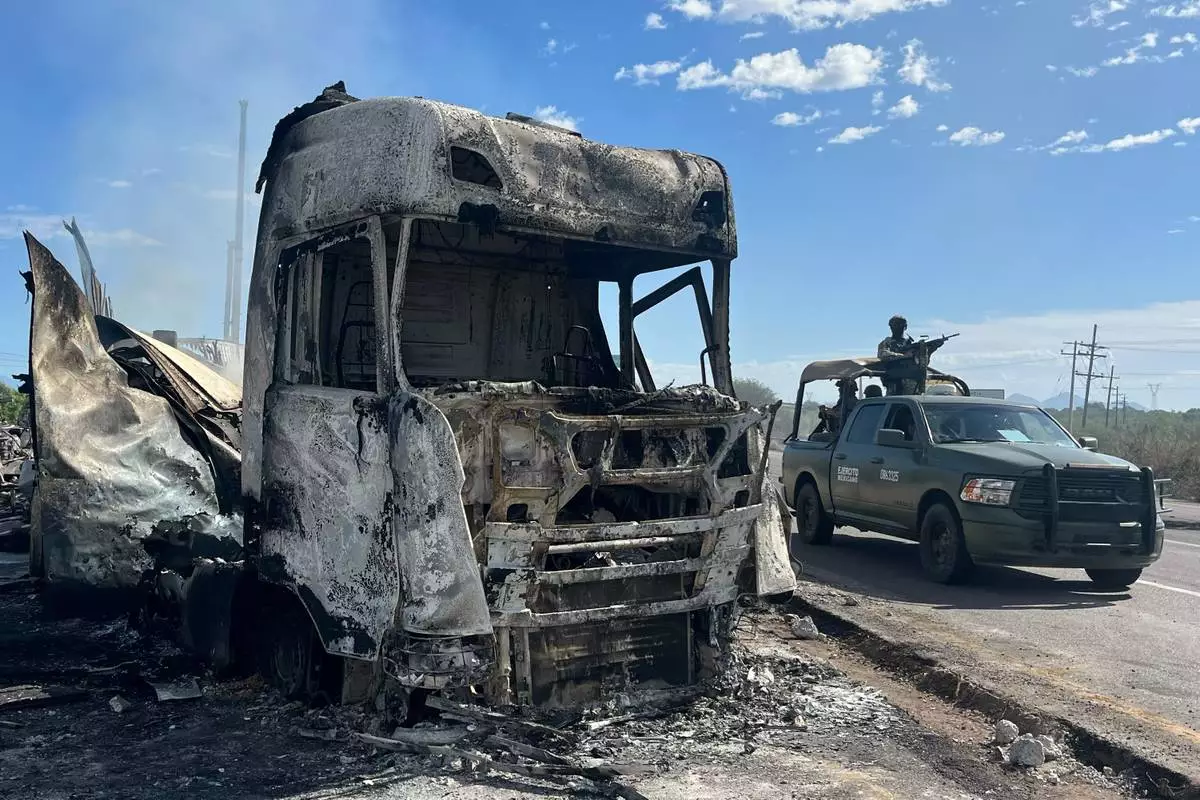
Soldiers drive past a burned out cargo truck on a highway between Guamuchil and Guasave in Sinaloa state, Mexico, Saturday, Nov. 21, 2026, following overnight violence after Mexican authorities captured cartel boss Fausto Isidro Meza Flores, better known as 'El Chapo Isidro', in Guasave. (AP Photo/Martin Urista) Photo taken with a smartphone.
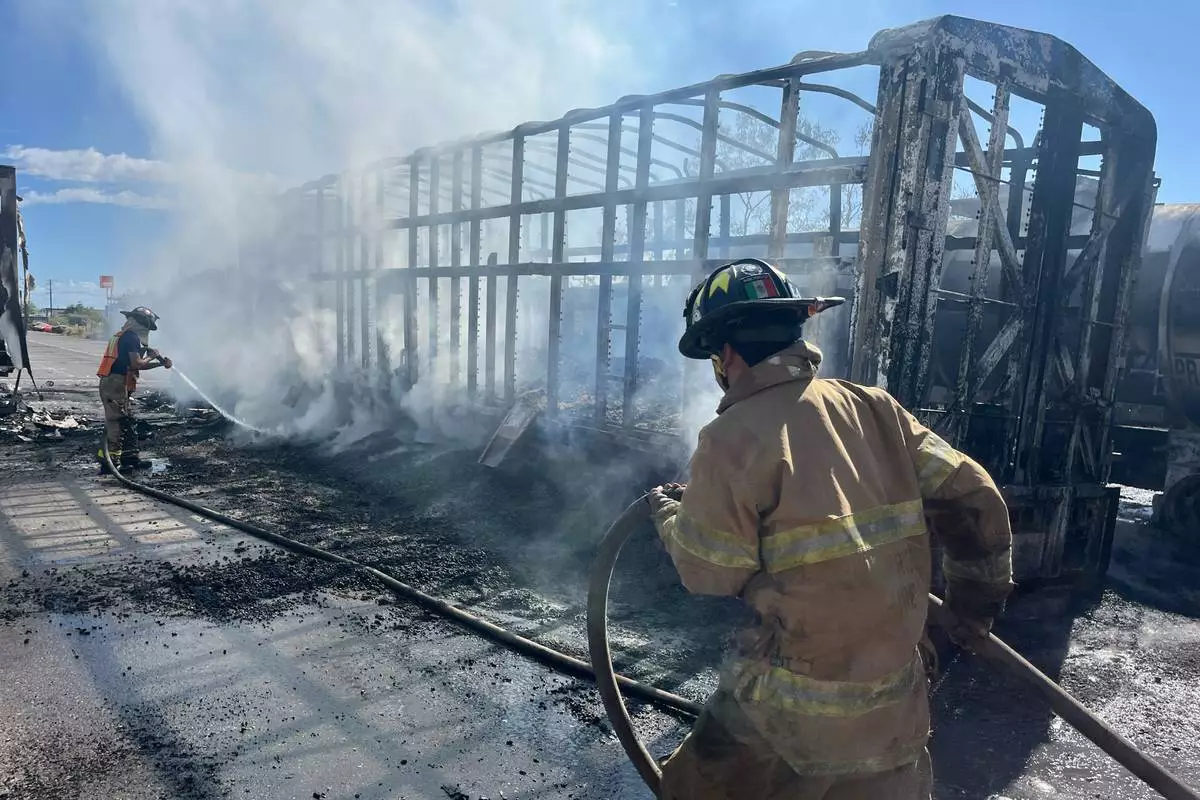
Firefighters hose down a burning cargo truck on a highway between Guamuchil and Guasave in Sinaloa state, Mexico, Saturday, Nov. 21, 2026, following overnight violence after Mexican authorities captured cartel boss Fausto Isidro Meza Flores, better known as 'El Chapo Isidro', in Guasave. (AP Photo/Martin Urista) Photo taken with a smartphone.
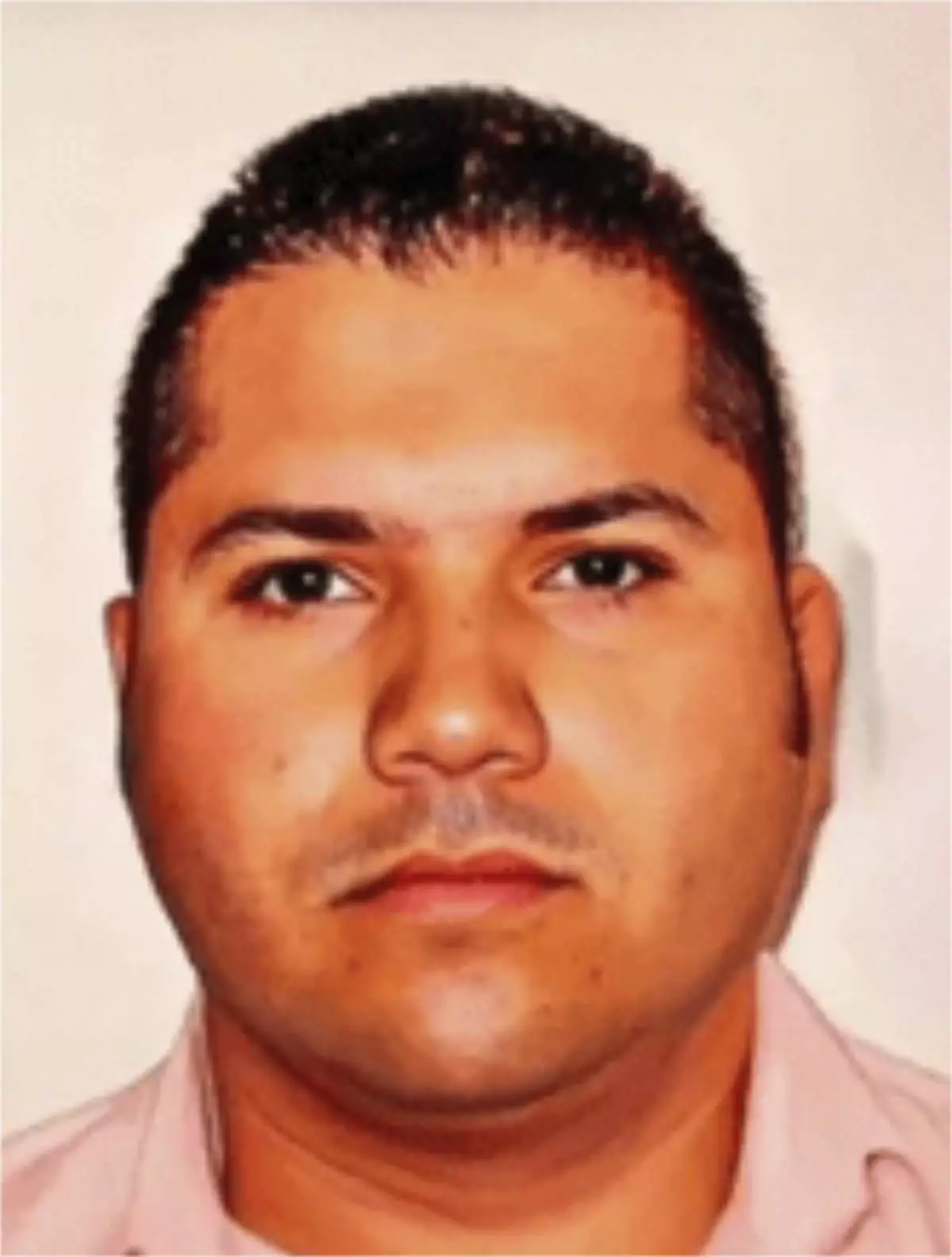
This undated image released by the U.S. Department of State shows Fausto Isidro Meza-Flores. (U.S. Department of State via AP)
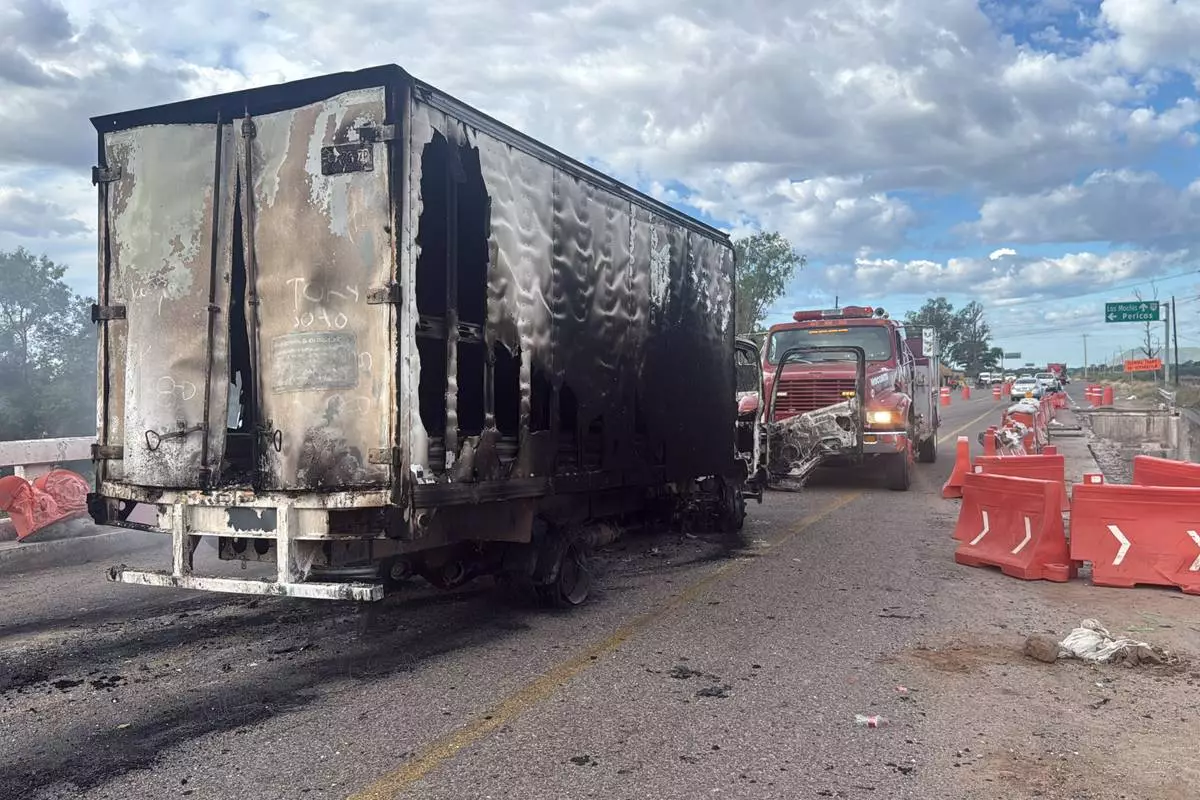
A burned cargo truck sits on a highway between Guamuchil and Guasave in Sinaloa state, Mexico, Saturday, Nov. 21, 2026, following overnight violence after Mexican authorities captured cartel boss Fausto Isidro Meza Flores in Guasave. (AP Photo/Martin Urista)
FILE - Mexico's coat of arms decorates a large flag in Mexico City, on Nov. 13, 2025. (AP Photo/Claudia Rosel, File)