KYIV, Ukraine (AP) — A Russian attack struck an apartment building in a village near Ukraine's capital on Sunday, killing at least two people and wounding four others, authorities said. Nearly a dozen people were feared trapped beneath the rubble.
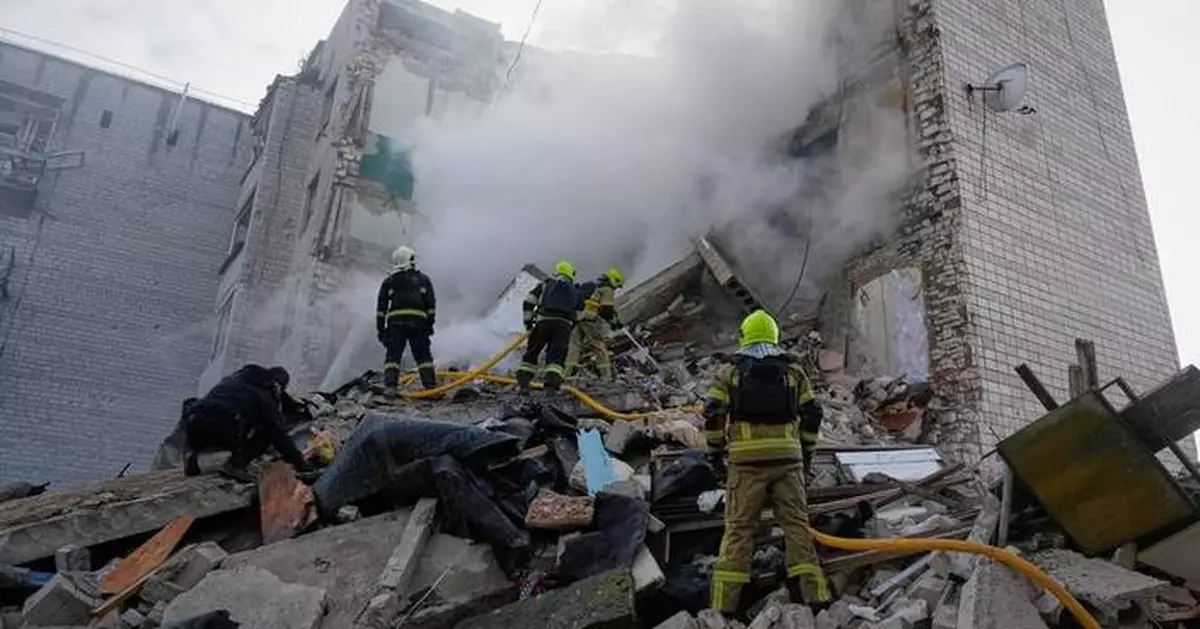
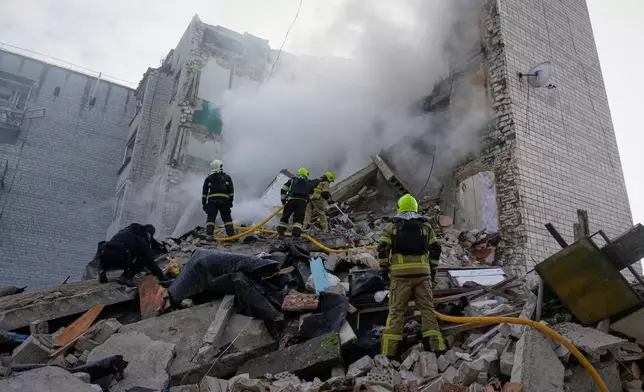
The morning strike destroyed the five-story building in Dymer, which is north of Kyiv.
Click to Gallery
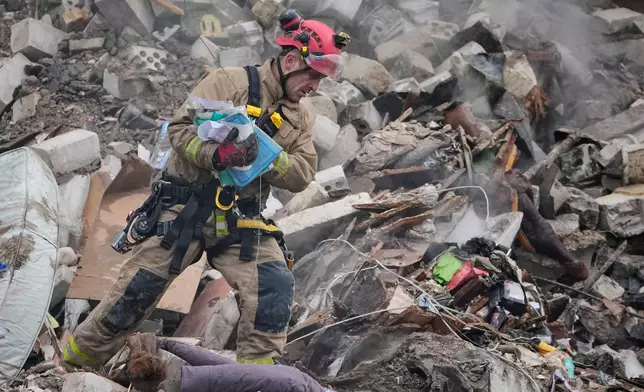
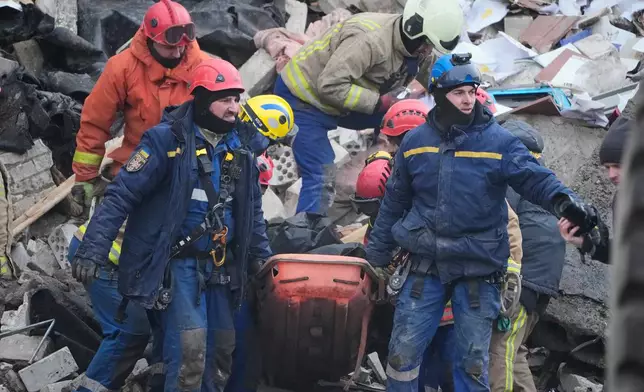
Rescuer clears the rubble of an apartment building after a Russian attack in Dymer, Kyiv region, Ukraine, Sunday, Nov. 22, 2026. (AP Photo/Efrem Lukatsky)
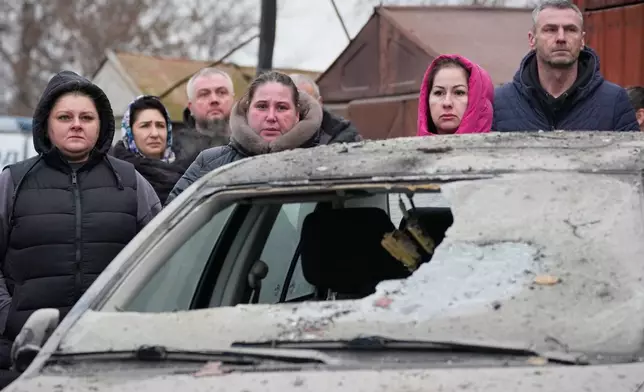
Local residents stand near a car damaged during a Russian attack in Dymer, Kyiv region, Ukraine, Sunday, Nov. 22, 2026. (AP Photo/Efrem Lukatsky)
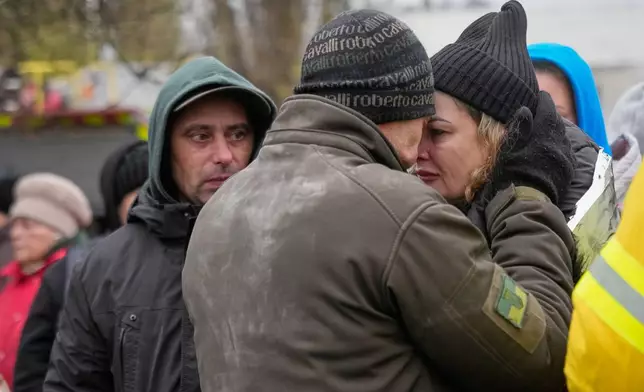
People react at the site of a Russian strike that hit a residential building in Dymer, Kyiv region, Ukraine, Sunday, Nov. 22, 2026. (AP Photo/Efrem Lukatsky)
Searchers carry the body of a civilian from an apartment building following a Russian attack in Dymer, Kyiv region, Ukraine, Sunday, Nov. 22, 2026. (AP Photo/Efrem Lukatsky)
Firefighters try to extinguish a fire after a Russian attack in Dymer, Kyiv region, Ukraine, Sunday, Nov. 22, 2026. (AP Photo/Efrem Lukatsky)
Rescuers have evacuated nine people, including a child, authorities said, while another child was hospitalized with injuries. Search and rescue teams worked to find other survivors. Ukraine’s State Emergency Service said that 11 people were believed to be trapped.
“When (the explosion came), I literally flipped over in bed,” said Mykola Osadnyi, a relative of some of those trapped. “I live about 200 meters from here. Then we ran over here.”
“My father-in-law … was screaming, ‘Save me, I’m burning!’” Osadnyi said. “And now we’re just waiting again to see what happens.”
Another resident, Olena Kharkavliuk, recounted that “a terrifying sound woke us up, and then there was an explosion.”
“My husband and I have been waiting here since about 4 a.m., because my older daughter’s classmate and her mother are in there,” Kharkavliuk told The Associated Press.
Meanwhile, a rare air alert sounded in Kaliningrad, a Russian exclave near Poland and Lithuania, according to the local governor, as claims circulated online of drone activity near a major naval base there.
The alert late Saturday in Kaliningrad came hours after a drone strike in the Gulf of Finland set fire to a Russian cargo ship bound for the region, which is a key base for Russia's Baltic Fleet. Finnish emergency services were still working to extinguish the blaze on Sunday.
Photos and video posted online show drone activity around the city of Baltiysk, where much of the fleet is stationed. But The Associated Press couldn't immediately verify the authenticity of the images.
According to local media, air raid sirens were heard in Kaliningrad for the first time since Russia’s all-out invasion of Ukraine on Feb. 24, 2022.
The Kaliningrad governor, Alexei Bezprozvannykh, said that “a suspicious object coming from the direction of Lithuania” triggered the alert in the Nemansky district near the Lithuanian border, about 170 kilometers (105 miles) northeast of Baltiysk.
On Russian Telegram channels, posts by users saying they were Baltiysk residents described air defenses working there during the night. They featured photos and videos of bright streaks against the night sky, with crackling sounds heard in the background.
Kaliningrad authorities on Sunday denounced as fake one photo, supposedly from Baltiysk, that showed clouds of smoke rising into the night sky, while an orange haze glowed on the horizon. They told Russian state media that the photo “had nothing to do with the region.”
As of Sunday morning, Russian authorities reported no casualties or damage in Kaliningrad.
Lithuanian Foreign Minister Kęstutis Budrys wrote on X that Lithuania “categorically rejects false claims” regarding the country’s involvement in a drone attack against the region.
“The Republic of Lithuania has never authorized the use of its airspace for attacks against targets in the Russian Federation, including in the present case.”
Lithuania's authorities also said they hadn't recorded any drones or similar objects flying through the country’s airspace the previous night.
Meanwhile, emergency services tried to extinguish the fire aboard the Russian cargo ship Sparta II in the Gulf of Finland on Sunday morning, authorities in Finland said.
The Sparta II drifted into Finland's territorial waters following the attack, the Finnish Border Guard said. The contents of the ship’s cargo remain unknown.
A Border Guard representative told Finnish broadcaster Yle that the crew had been transferred to a Russian rescue ship. Once the fire is extinguished, the boat would be moved out of Finland's waters, the official said.
Both Finland and Russia have suggested that the drones that struck the ship were Ukrainian. As of Sunday morning, Ukrainian officials hadn't provided any comment.
A previous version of this story corrected the headline to show that four people have been wounded, not eight.
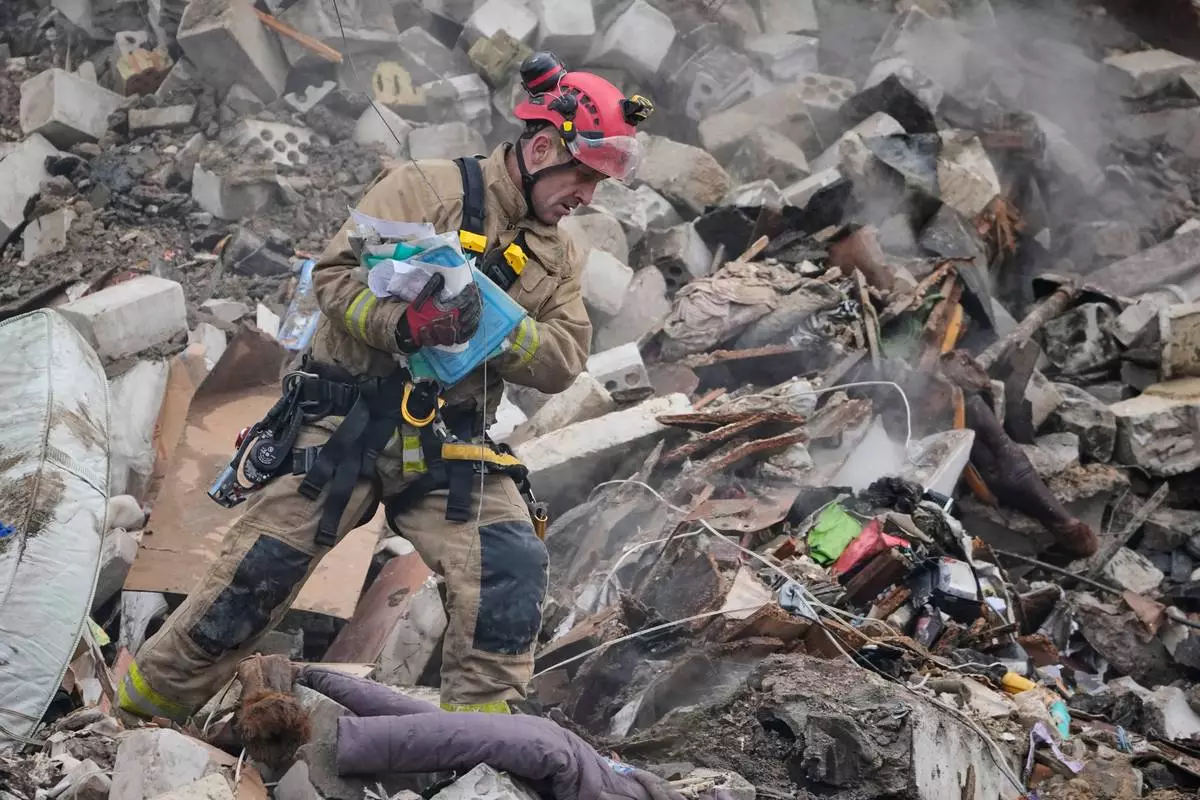
Rescuer clears the rubble of an apartment building after a Russian attack in Dymer, Kyiv region, Ukraine, Sunday, Nov. 22, 2026. (AP Photo/Efrem Lukatsky)
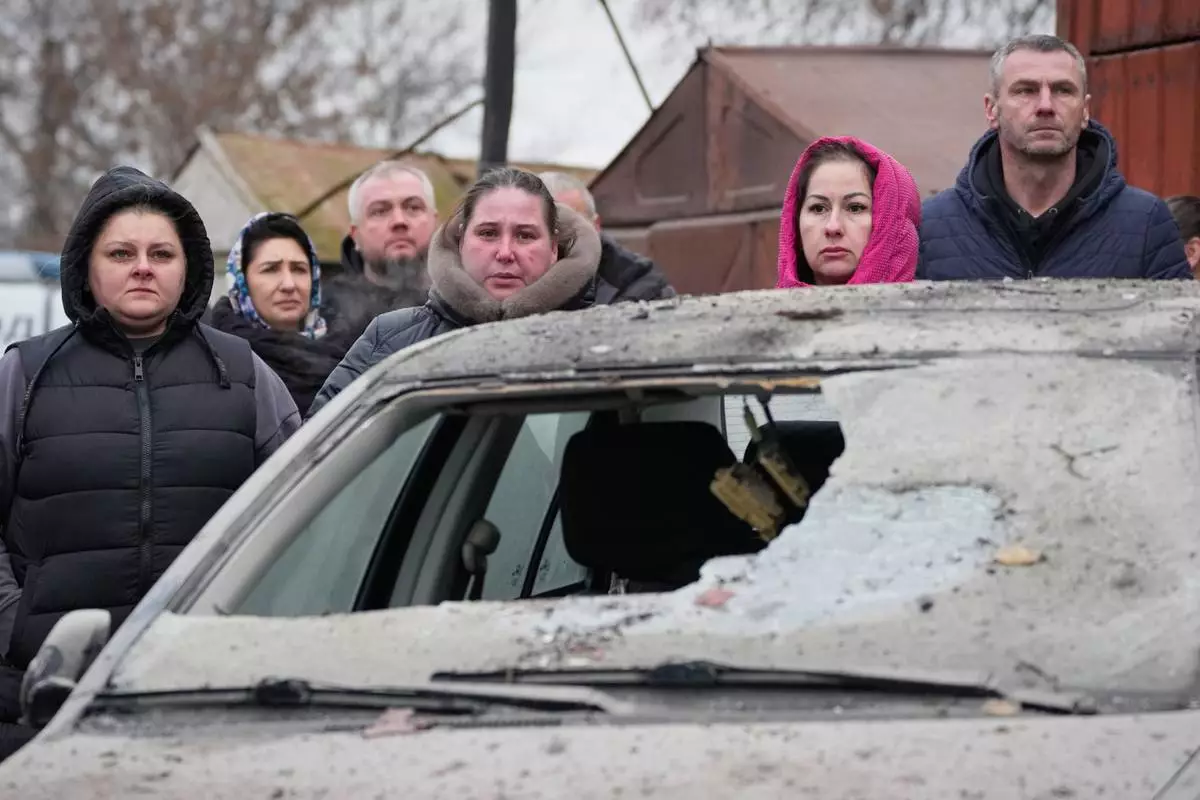
Local residents stand near a car damaged during a Russian attack in Dymer, Kyiv region, Ukraine, Sunday, Nov. 22, 2026. (AP Photo/Efrem Lukatsky)
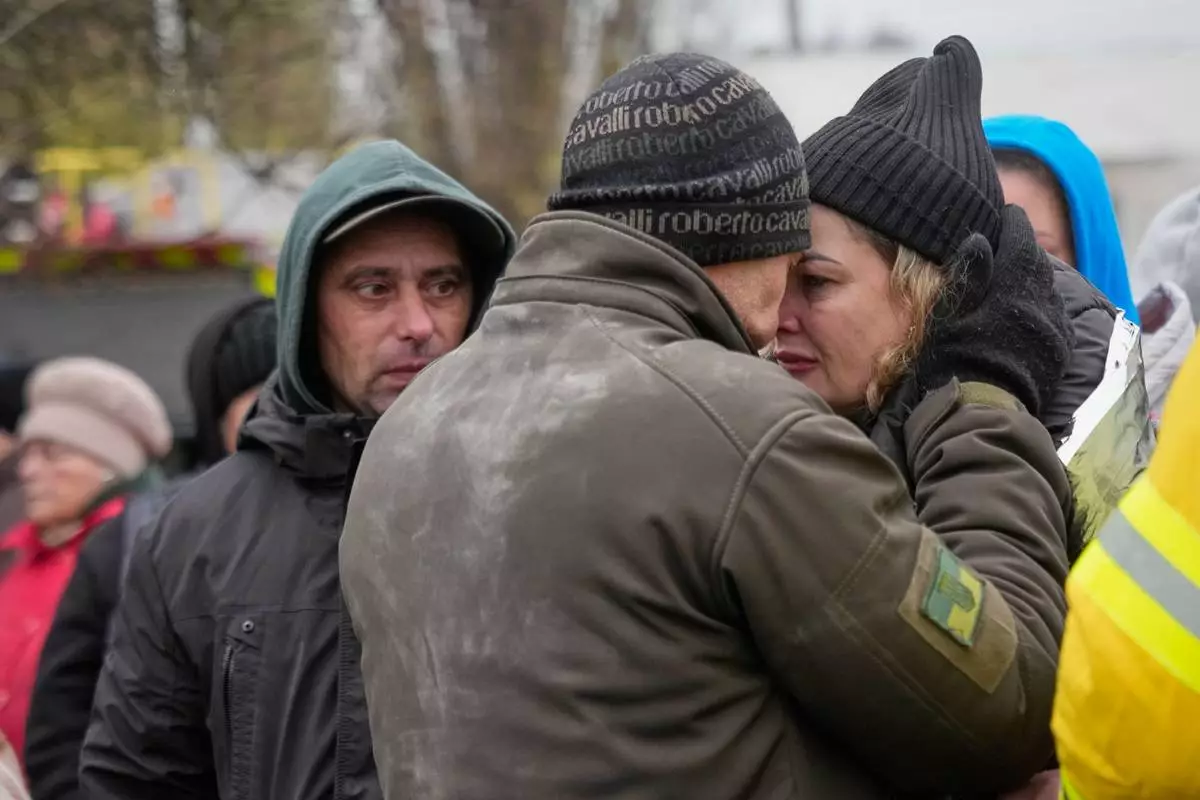
People react at the site of a Russian strike that hit a residential building in Dymer, Kyiv region, Ukraine, Sunday, Nov. 22, 2026. (AP Photo/Efrem Lukatsky)
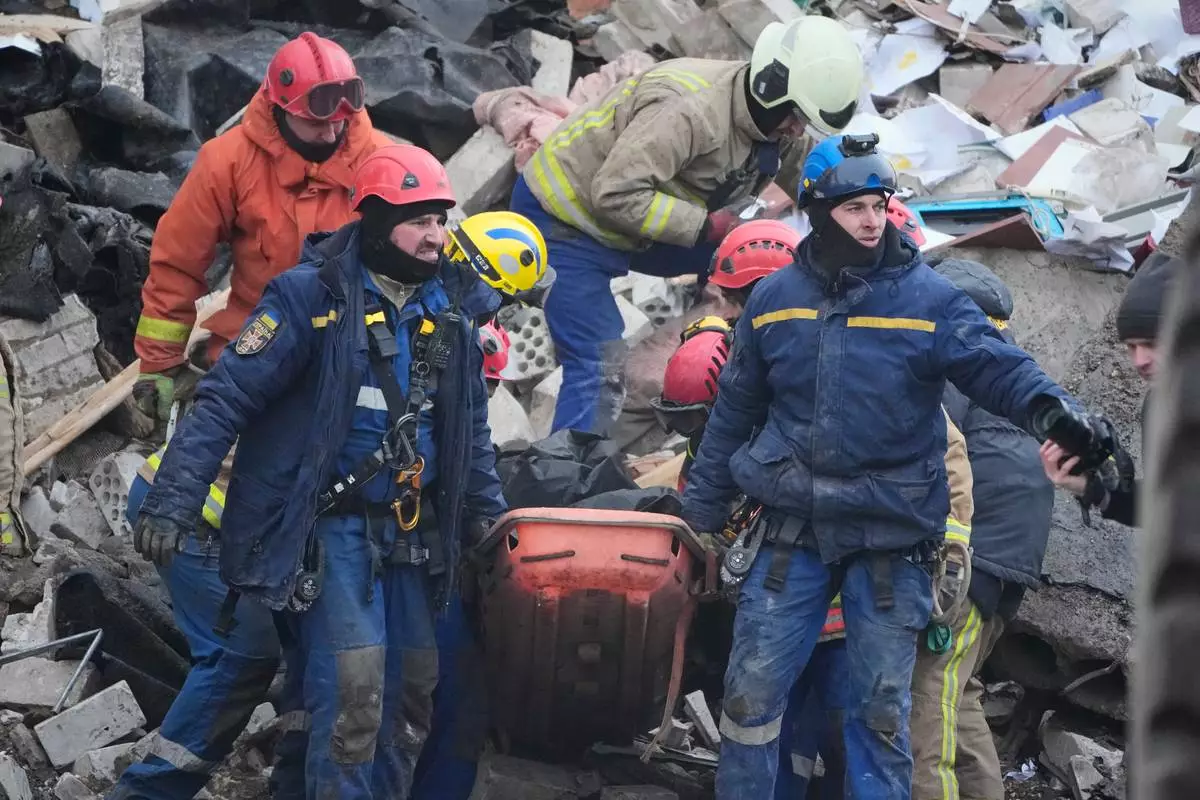
Searchers carry the body of a civilian from an apartment building following a Russian attack in Dymer, Kyiv region, Ukraine, Sunday, Nov. 22, 2026. (AP Photo/Efrem Lukatsky)
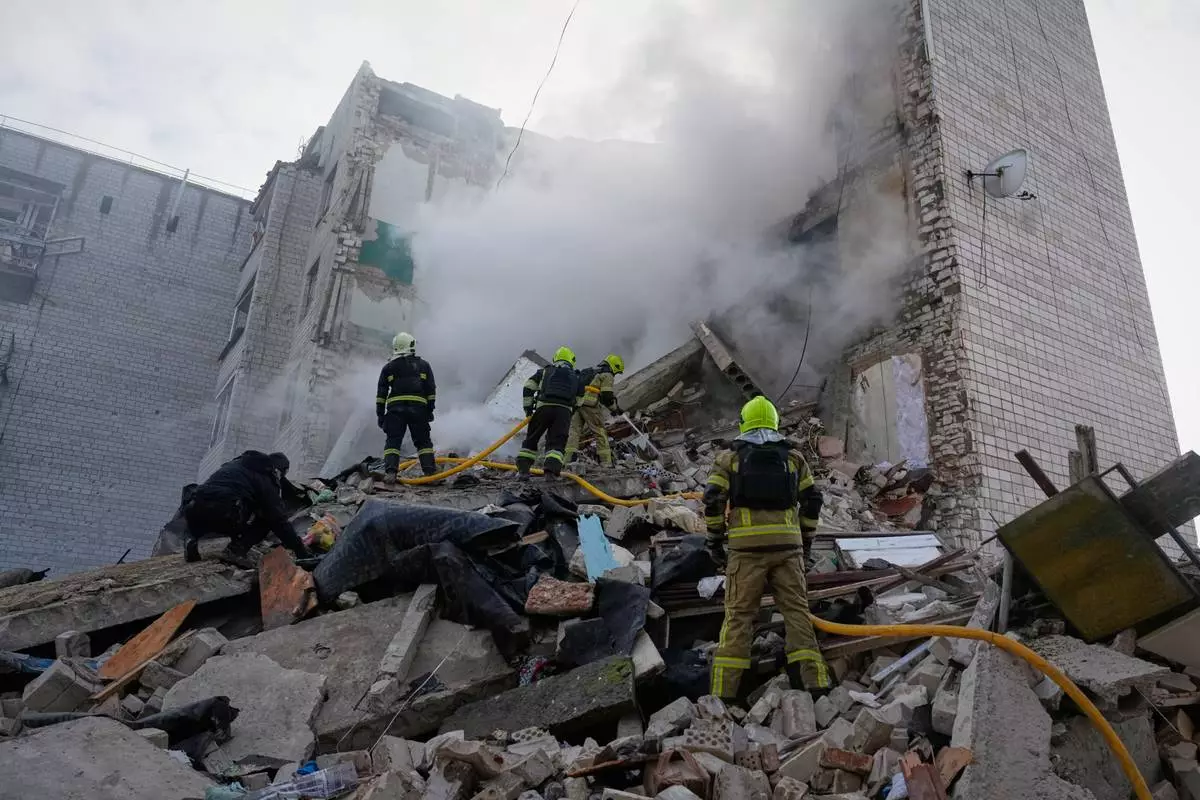
Firefighters try to extinguish a fire after a Russian attack in Dymer, Kyiv region, Ukraine, Sunday, Nov. 22, 2026. (AP Photo/Efrem Lukatsky)
ANTALYA, Turkey (AP) — Chaotic United Nations climate talks in Turkey could not reach an overarching agreement amid disagreements over whether to mention the fossil fuels that cause global warming.
Expectations had already been low heading into the two-week negotiations but discussions about explicitly including fossil fuels — the chief cause of global warming — and other issues including money proved irreconcilable. The talks, called COP31, continued without a main agreement known as a cover decision. The meeting had already made progress on smaller issues.
Any pact approved at the talks, called COP31, has to be by a near-unanimous consensus. Several countries and the 27-nation European Union said they could not accept the final proposal from the joint Turkish-Australian leadership that didn’t mention fossil fuels. A considerably larger number of nations said consensus on something was more important and accepted the decision, often reluctantly. Russia and Saudi Arabia were forces to keep fossil fuels out of the document.
THIS IS A BREAKING NEWS UPDATE. Check back for updates. AP’s earlier story follows below.
Several nations and blocs, including the European Union, the Marshall Islands and Panama, objected to a draft of the final agreement at United Nations climate talks because it failed to mention fossil fuels, the chief cause of global warming, or specifically call for a move away from climate-polluting coal, oil and gas.
Delegates said the current draft falls far short of what is needed to deal with the worsening impacts of climate change.
“It’s unconscionable that we would have a climate act that makes no reference to fossil fuels,” Darragh O’Brien, Ireland's climate minister, speaking on behalf of the EU, said at the climate talks running more than 44 hours overtime at the Turkish resort town of Antalya. This is the longest any climate talks have run overtime.
Russia, however, supported the decision to leave the explicit mention of “fossil fuels” out of the final deal.
The draft from Turkish Environment Minister Murat Kurum, co-president of the two-week conference in Antalya, Turkey, called COP31, was released before a final meeting was called on Sunday afternoon.
Earlier Sunday, Kurum gave negotiators only about three hours to make objections or request changes before the draft was to be presented to what may be the summit's final meeting, where countries will either accept, reject or express their reservations about the agreement.
Several nations have raised serious objections to the draft, which needs near-unanimous consensus for approval.
Speaking at the meeting, Antwi-Boasiako Amoah, chair of the African Group of Negotiators, said, “With all due respect Mr. President, you have not shown respect to a group of 54 countries (from Africa) and my country (Ghana) for that matter.”
Confusion ensued at the meeting Kurum was caught on a hot mic telling U.N. climate chief Simon Stiell, “to sit down," as Stiell tried to advise him on proceedings onstage.
The proposal includes a specific goal for supporting technology that captures carbon pollution and stores it, which is hotly debated and backed by the oil industry.
Activist groups have asked negotiators to reject the final decision, saying it falls far short of what the world needs now to deal with global warming. The conference, scheduled to end Friday, is now in double overtime.
Organizers worry that as negotiators depart Antalya there may not be enough delegates left in the room to pass the draft.
Earlier this week, Panamanian Environment Minister Juan Carlos Navarro said the talks were being held hostage by a “petroleum mafia” and needed to be reformed.
Fossil fuels went unmentioned in COP final decisions for more than 25 years, said Alden Meyer, with the think tank E3G. However, the “transition away from fossil fuels” was agreed to in Dubai in 2023, he added.
“It would be a real setback if we come out of here with no signal that we were serious about what we agreed to do three years ago,” Meyer said.
The proposed COP31 final agreement references the Dubai agreement, but key words and phrases — fossil, oil, coal or phase out — do not appear anywhere in the 10-page text.
The draft supports the highly-debated process of carbon capture and storage, with a specific goal of capturing, reusing and storing 1 billion metric tons of carbon. The proposal is intended to help industrial polluters who can’t easily switch to renewables capture the carbon dioxide in their emissions and bury it.
Carbon capture and storage could be used as an excuse to continue investing in fossil fuels, climate experts have warned.
“Fossil fuels are the root cause of climate change and there is no plausible pathway to limit climate overshoot without rapidly phasing them out,” said Rachel Cleetus of the Union of Concerned Scientists.
Turkey's cornerstone electrification goal is included in the draft agreement.
It calls for countries to increase the share of electricity in total final energy consumption from about 21% today to 35% by 2035. This would require nations to commit to measures such as switching transportation — including cars, trucks and planes — from fossil fuels to electricity and using electricity instead of coal to make industrial products.
Climate activists are demanding that the agreement spell out that the electricity should come only from renewable sources, such as wind and solar. They argue that allowing electricity powered by fossil fuels would defeat the goal's purpose of lowering emissions.
“Electrification that runs on coal and gas does not limit warming,” said Bill Hare, CEO of Climate Analytics.
Climate-vulnerable nations want the final agreement to include more details on past pledges to increase financial aid to poor countries to help them adapt to a warmer world.
Previous COP summits have mentioned tripling funding for this, but never established an explicit financial baseline.
Climate change has intensified disasters this year, including Europe’s deadly heat waves and Nepal’s devastating flooding.
“Floods and heat waves won’t wait," said Harjeet Singh, founding director of the Satat Sampada Climate Foundation. “Rich countries are offering a conversation instead of cash.”
Next year’s climate summit is scheduled to take place in Ethiopia’s capital, Addis Ababa, in November 2027.
Borenstein reported from Kensington, Maryland, Delgado from Bangkok and Arasu from Bengaluru, India.
The Associated Press’ climate and environmental coverage receives financial support from multiple private foundations. AP is solely responsible for all content. Find AP’s standards for working with philanthropies, a list of supporters and funded coverage areas at AP.org.
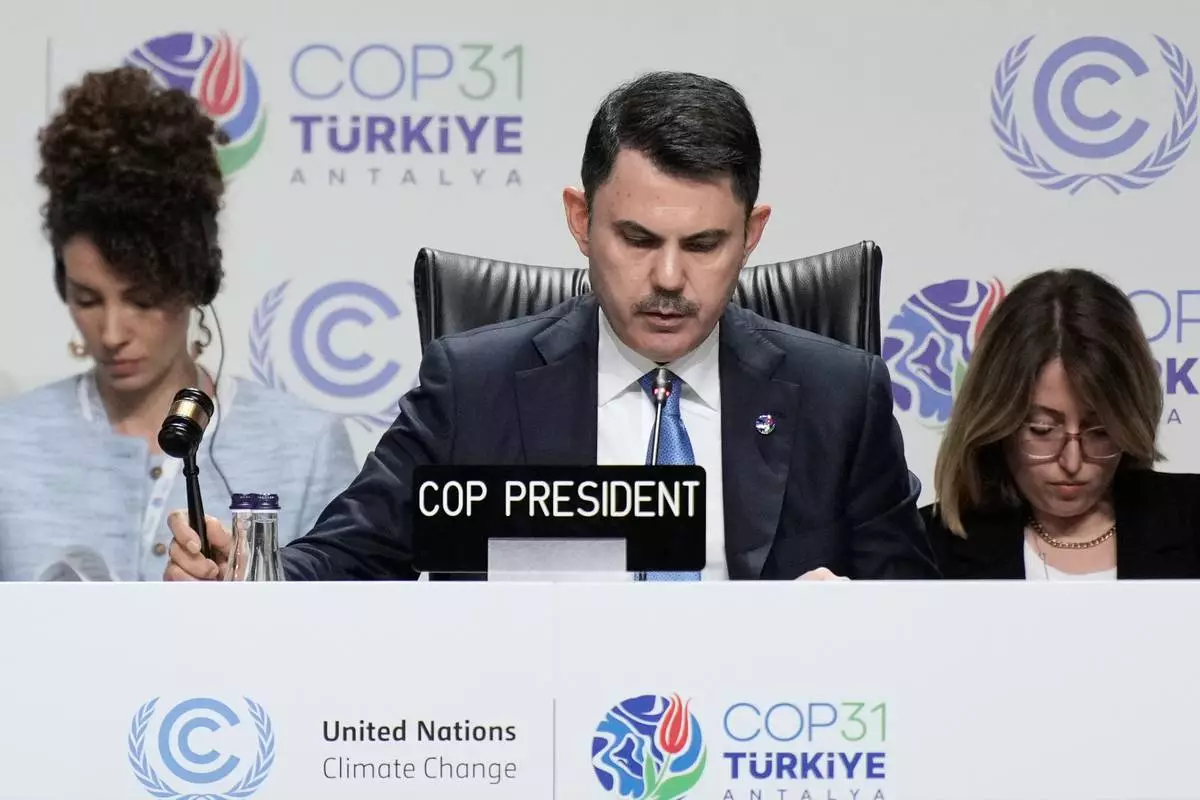
COP31 President Murat Kurum, center, bangs the gavel during a closing plenary session at the COP31 U.N. Climate Summit, Sunday, Nov. 22, 2026, in Antalya, Turkey. (AP Photo/Khalil Hamra)
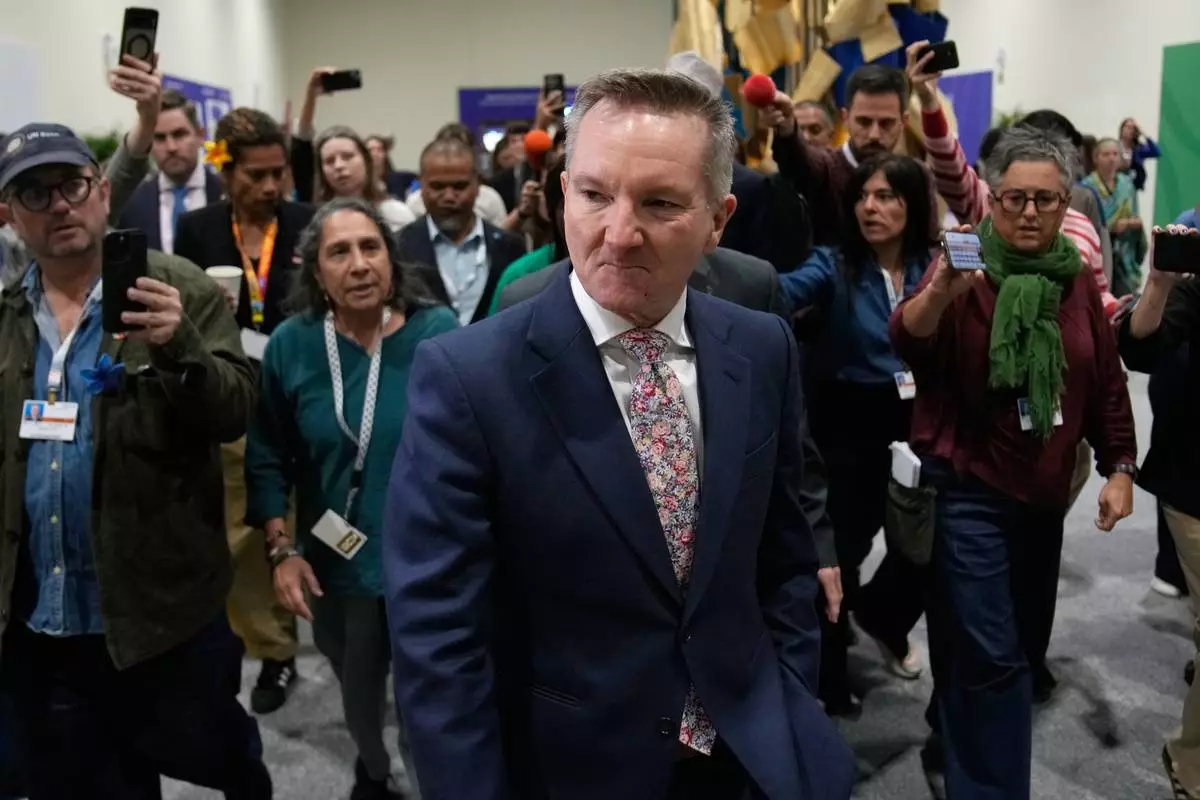
Chris Bowen, president of COP31 negotiations and minister for climate change and energy of Australia, walks through the venue for the COP31 U.N. Climate Summit, Sunday, Nov. 22, 2026, in Antalya, Turkey. (AP Photo/Khalil Hamra)

Wopke Hoekstra, EU climate commissioner, left, speaks with Darragh O'Brien, minister of climate, energy and the environment of Ireland, during a closing plenary session at the COP31 U.N. Climate Summit, Sunday, Nov. 22, 2026, in Antalya, Turkey. (AP Photo/Khalil Hamra)
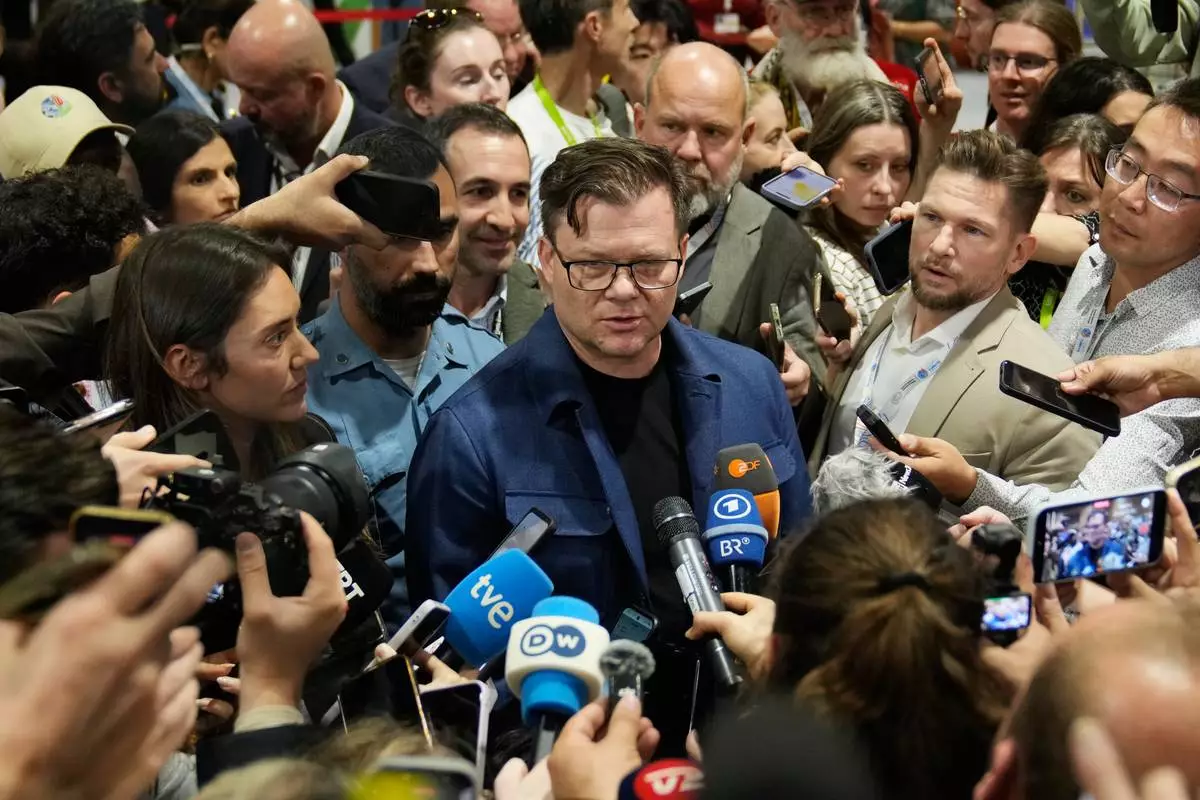
Carsten Schneider, Germany's minister of the environment, speaks to members of the media at the COP31 U.N. Climate Summit, Sunday, Nov. 22, 2026, in Antalya, Turkey. (AP Photo/Khalil Hamra)
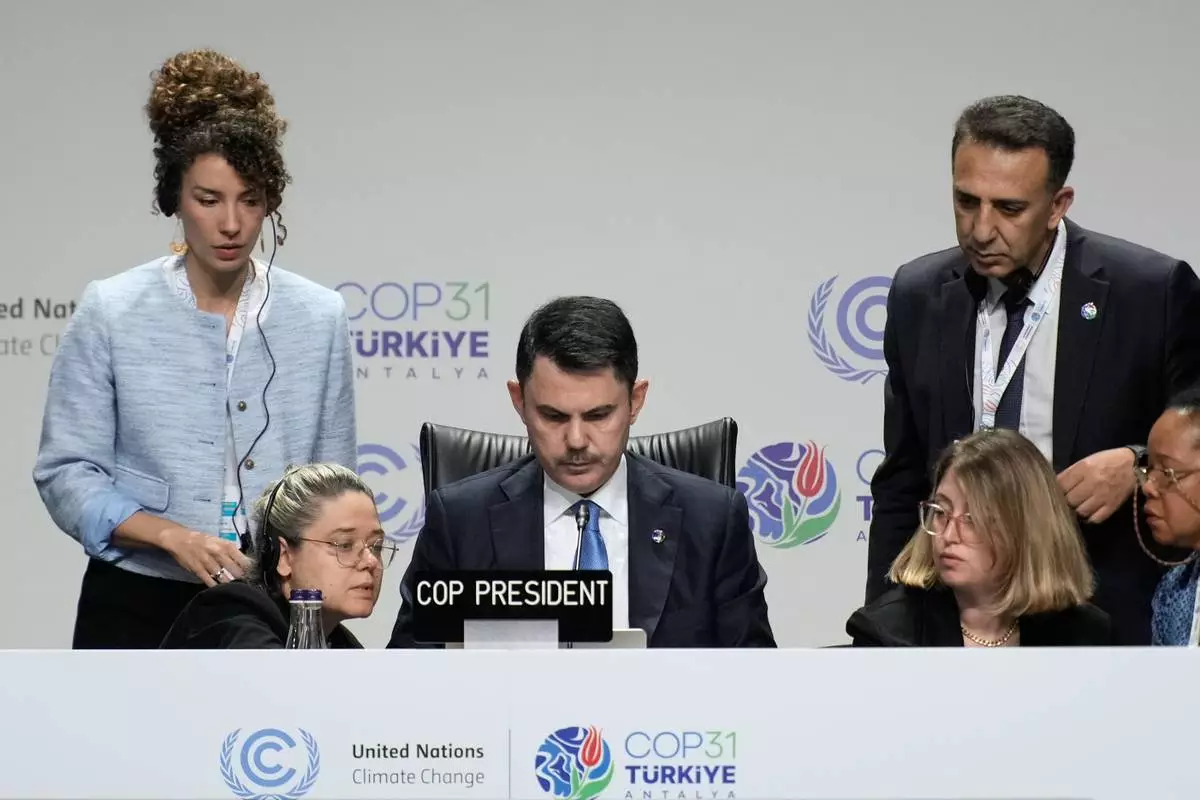
COP31 President Murat Kurum, sits at center, during a closing plenary session at the COP31 U.N. Climate Summit, Sunday, Nov. 22, 2026, in Antalya, Turkey. (AP Photo/Khalil Hamra)
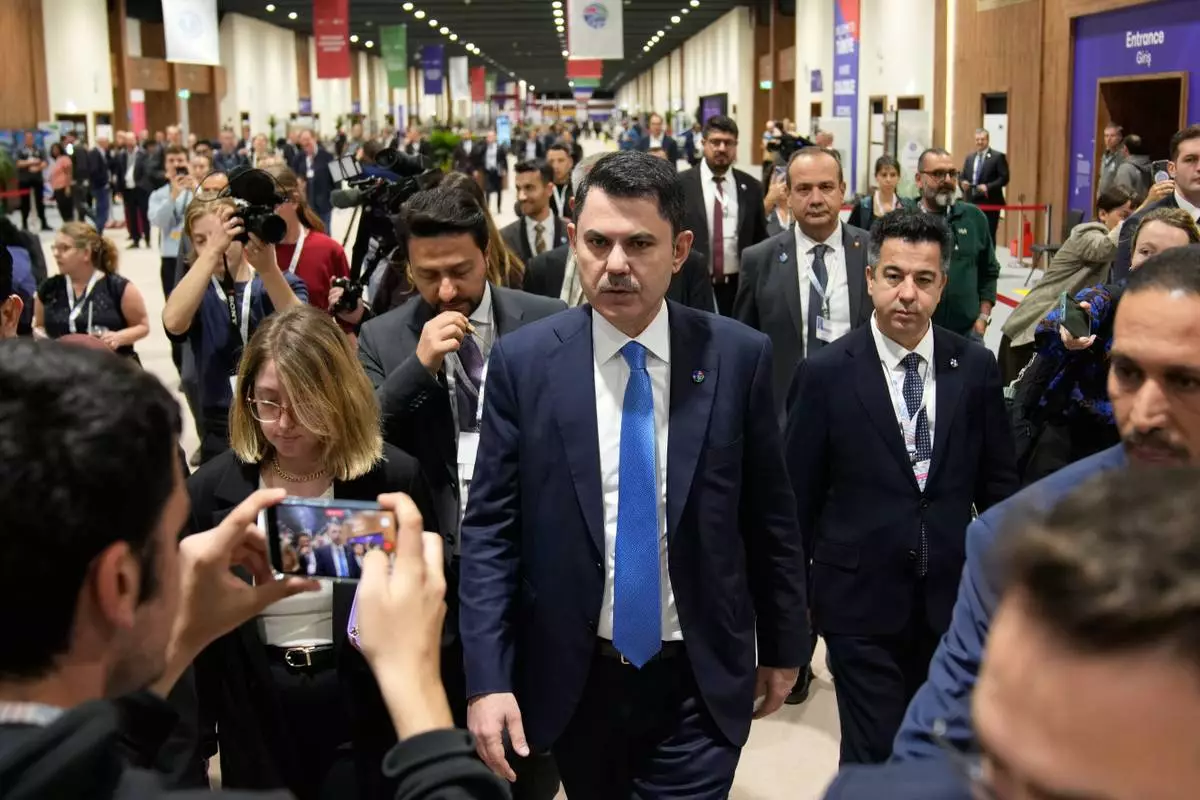
COP31 President Murat Kurum walks through the venue for the COP31 U.N. Climate Summit, Sunday, Nov. 22, 2026, in Antalya, Turkey. (AP Photo/Khalil Hamra)
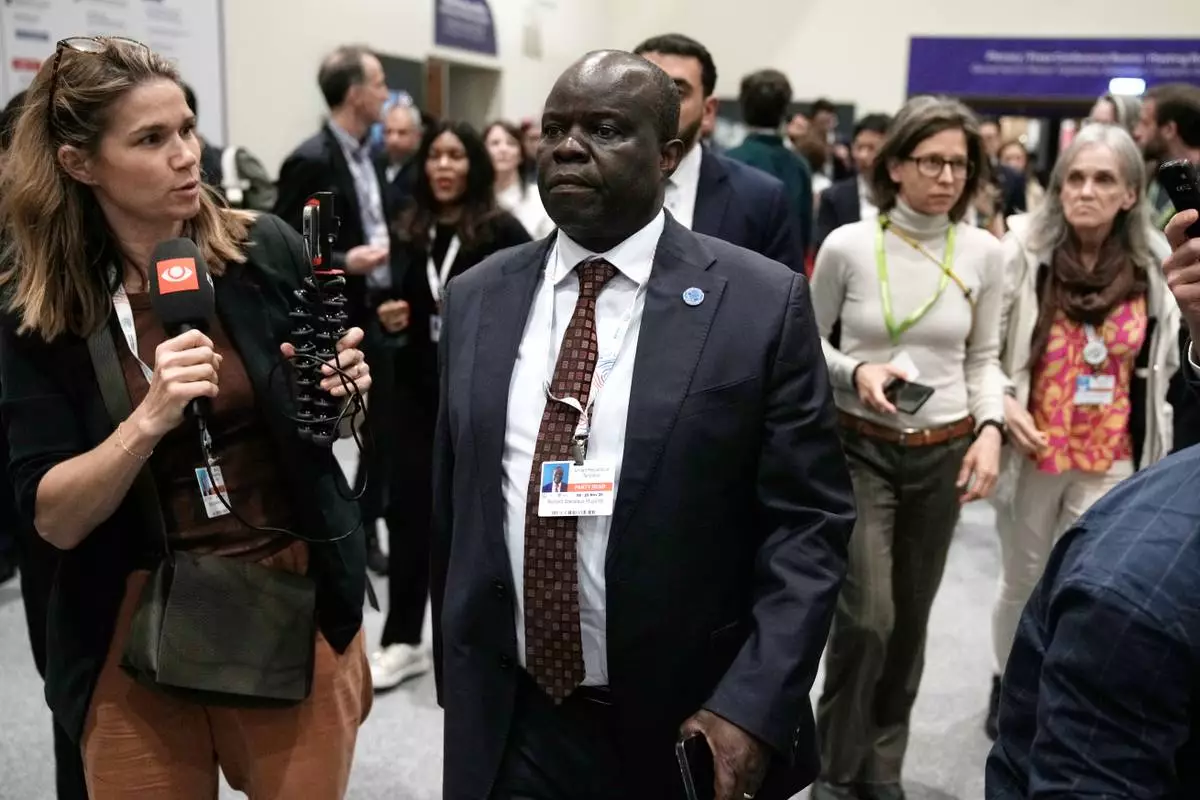
Richard Muyungi, Tanzania climate envoy, center, walks through the venue for the COP31 U.N. Climate Summit, Saturday, Nov. 21, 2026, in Antalya, Turkey. (AP Photo/Khalil Hamra)
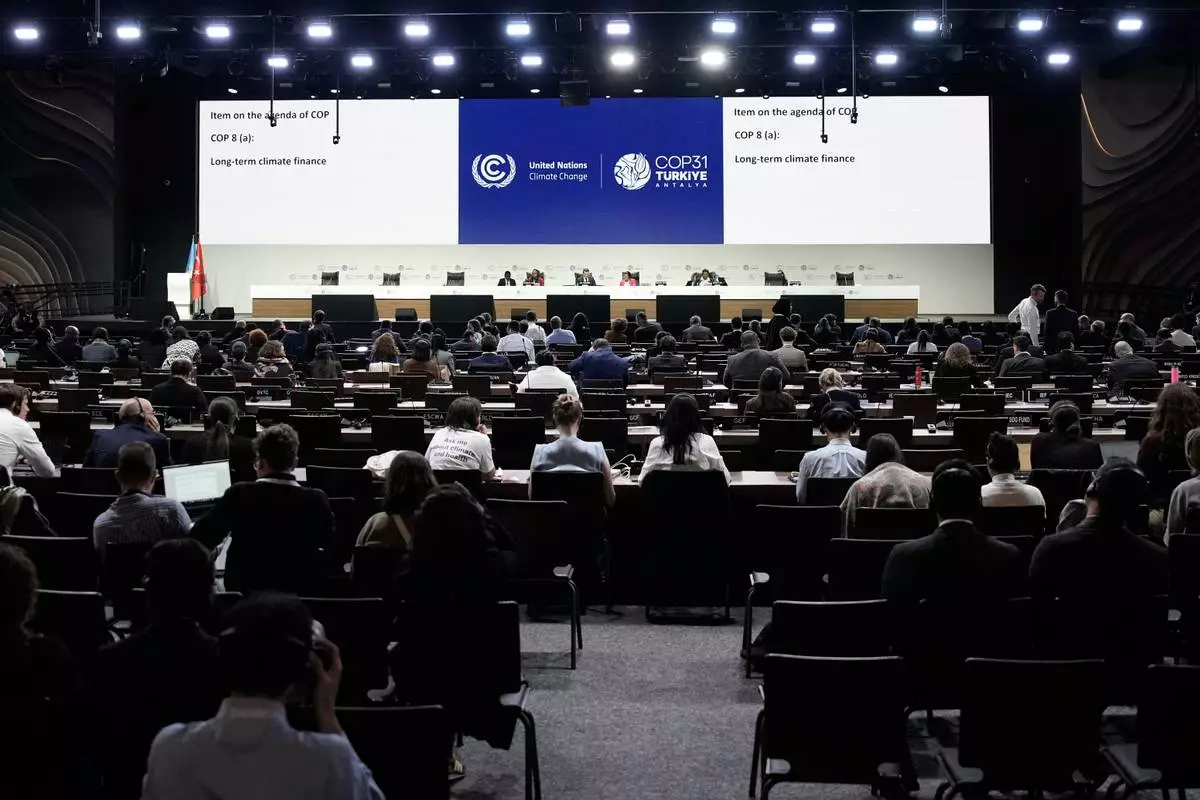
A closing plenary session takes place at the COP31 U.N. Climate Summit, Sunday, Nov. 22, 2026, in Antalya, Turkey. (AP Photo/Khalil Hamra)
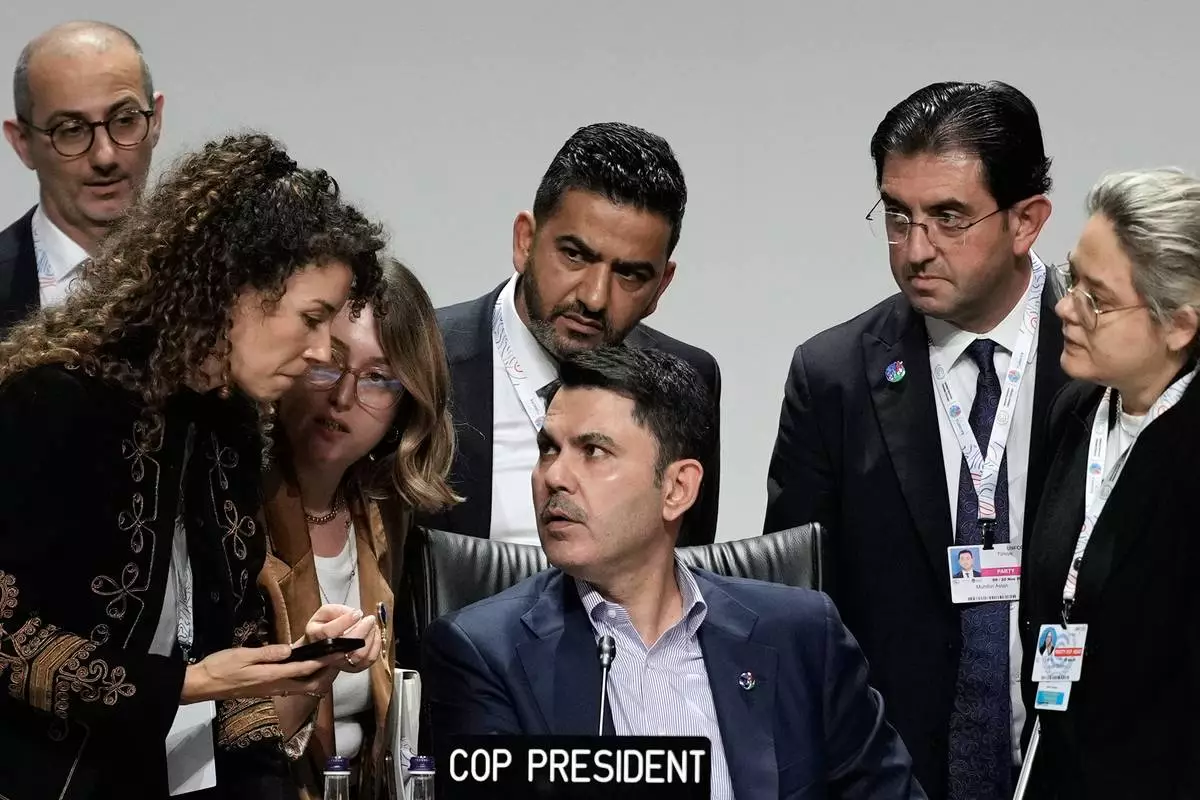
People gather around COP31 President Murat Kurum at a closing plenary during the COP31 U.N. Climate Summit, Sunday, Nov. 22, 2026, in Antalya, Turkey. (AP Photo/Khalil Hamra)