Skip to Content Facebook Feature Image

South Africa tightens water restrictions as El Nino raises drought risk

China

China

China

South Africa tightens water restrictions as El Nino raises drought risk

2026-11-23 14:42 Last Updated At:15:17

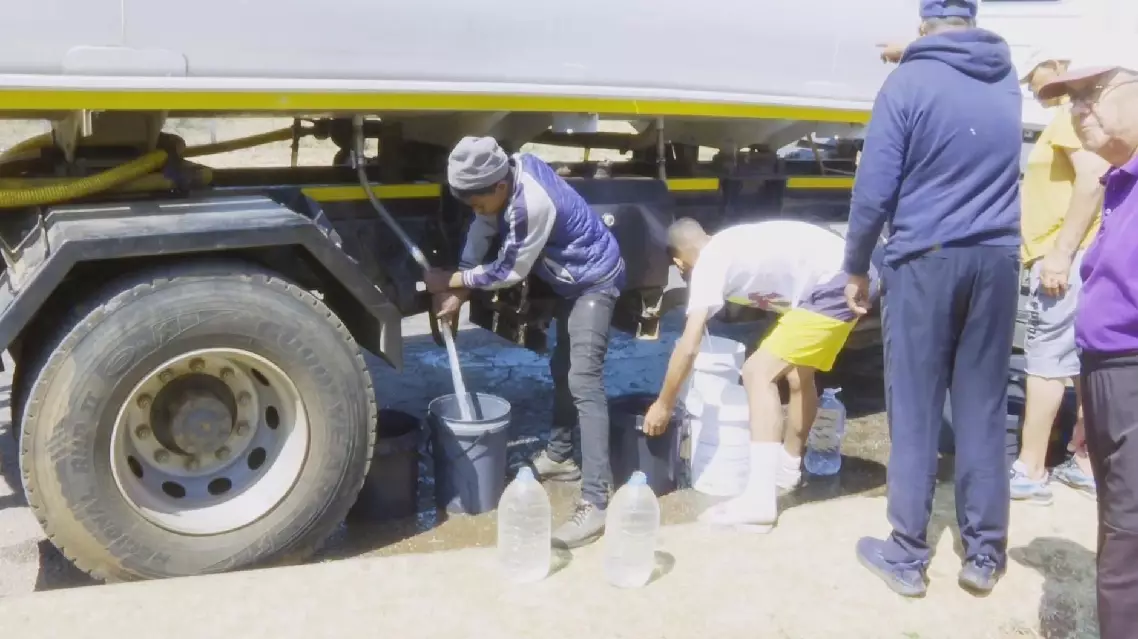
Major cities across South Africa are tightening water restrictions as the climate impact of a strengthening El Nino brings hotter, drier conditions and increases the risk of drought, putting further pressure on already strained water supplies.

Amid growing concerns, authorities on Saturday moved to implement Level 2 water restrictions across Gauteng Province, including Johannesburg, the country's largest city, and in the Tshwane Metropolitan Municipality, which houses the administrative capital Pretoria.

Johannesburg's municipal government estimate that daily consumption needs to be reduced by 200 million liters in order to stabilize supply and ease pressure on reservoirs.

Cape Town, the legislative capital, is set to introduce the less severe but still significant Level 1 water restrictions on Dec 1, which requires a 10-percent reduction in water consumption.

Under South Africa's water restriction framework, controls become progressively stricter at higher levels. The Level 1 restrictions focus mainly on curbing non-essential outdoor water use, while Level 2 forbids residents from using municipal tap water to water their gardens or public green spaces, and imposes higher charges on households that exceed their water-use limits.

The country's weather service expects the current El Nino phenomenon to rank among the strongest on record, with below-average rainfall and above-average temperatures likely over the coming summer months in South Africa, increasing the risk of drought.

Ferrial Adam, a water resources and geology expert who serves as executive director of WaterCAN (Community Action Network), a Johannesburg-based advocacy group committed to improving water quality and related issues, drew attention to the issues posed by El Nino.

She said the current El Nino cycle heightens the risk of extreme heat and drought in South Africa, while aging infrastructure compounds the pressure on water supplies.

"In terms of the challenges we're facing with regards to infrastructure as well as a super El Nino, I think this is very much El Nino's behavior, in terms of how it operates with the welling up of warm water, all of that. It creates different weather patterns, and so what we see is that you would get drier, hotter conditions," she said.

In the longer term, there are fears that the current climate event could also affect agricultural production and food prices from March next year, potentially threatening food security across southern Africa.

El Nino is the term widely used to describe the warming of sea surface temperature that occurs every few years, typically concentrated in the central-east equatorial Pacific, according to the British Met Office.
South Africa tightens water restrictions as El Nino raises drought risk

South Africa tightens water restrictions as El Nino raises drought risk
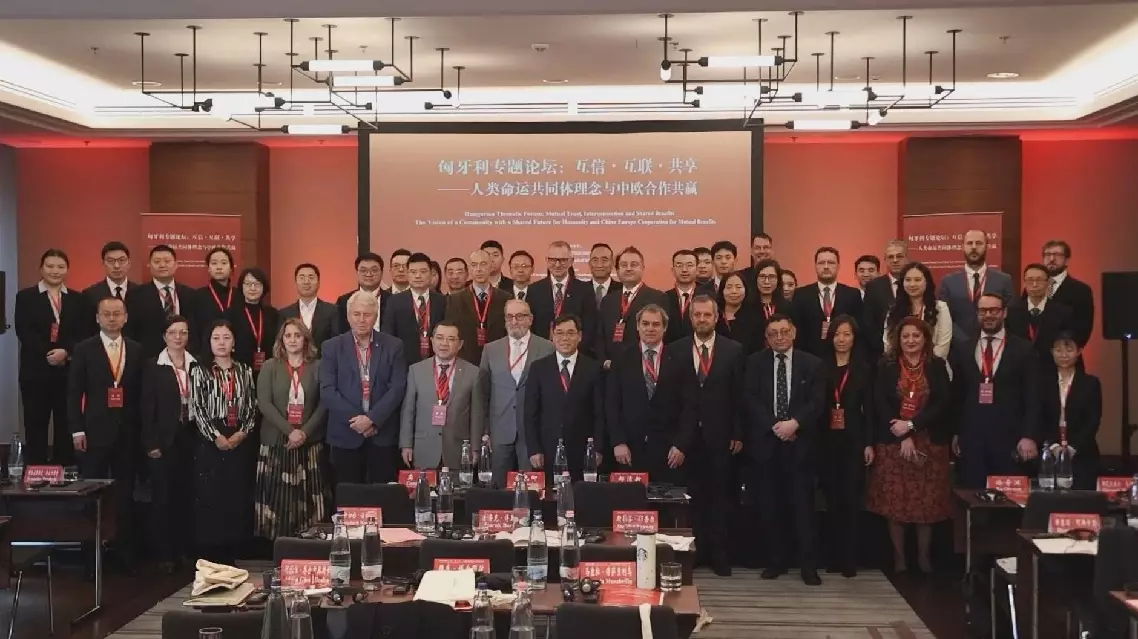
The Hungarian thematic forum of the 2026 edition of the International Forum on Overseas Studies of Xi Jinping Thought on Socialism with Chinese Characteristics for a New Era was held in Budapest on Saturday.

The forum was co-hosted by the Institute of European Studies of the Chinese Academy of Social Sciences and the China-CEE Institute under the theme "Mutual Trust, Interconnection and Shared Benefits: the Vision of a Community with a Shared Future for Humanity and China-Europe Cooperation for Mutual Benefits."

Experts and scholars from China and several European countries attended the forum, discussing topics including the global significance of Chinese modernization, the vision of a community with a shared future for humanity and China-Europe cooperation.

Hungary was the first European country to sign a cooperation document with China on the Belt and Road Initiative (BRI). Strengthening dialogue and cooperation between China and Europe is an important way to put the vision of a community with a shared future for humanity into practice and help translate the four major global initiatives into concrete results in addressing shared challenges, they said.

Hungary was the first European country to sign a cooperation document with China on the Belt and Road Initiative (BRI). Strengthening dialogue and cooperation between China and Europe is an important way to put the vision of a community with a shared future for humanity into practice and help translate the four major global initiatives into concrete results in addressing shared challenges, they said.

Connectivity is a practical means through which the vision of a community with a shared future for humanity takes tangible form, they said.

A Swedish scholar expressed the hope that his country can partner with China via the BRI too, and stressed that the initiative can help deepen cooperation between Europe and China.

"Hungary was the first European country to sign a memorandum of understanding with China on the Belt and Road, [which] shows that this is a channel for that kind of cooperation, [and] which I hope we will be able to achieve eventually in Sweden. This is, in my view, essential to begin a more fruitful and deeper understanding and friendship between Europe and China," said Stephen Brawer, chairman of Belt and Road Institute in Sweden.

Forum on overseas studies of Xi Jinping Thought on Socialism with Chinese Characteristics for a New Era held in Budapest

Forum on overseas studies of Xi Jinping Thought on Socialism with Chinese Characteristics for a New Era held in Budapest

Recommended Articles