Israeli Prime Minister Benjamin Netanyahu, reportedly considering launching an unilateral strike on Iran without U.S. approval, has been warned that it is likely to spark a multi-front conflict, according to media reports.
The Israel Defense Forces (IDF) warned Netanyahu that a potential strike on Iran could trigger a wider regional conflict, The Times of Israel reported Sunday.
The warning came during a closed-door meeting last week between Netanyahu and senior defense officials, as Israel weighs its military options against Iran, said the report, citing Channel 12, a Hebrew-language television network.
Military intelligence warned that an Israeli strike could ignite "multiple fronts," involving Lebanon, Syria and Gaza, contradicting expectations by Netanyahu and Israel's intelligence agency Mossad that the operation could be limited to three to five days, it said.
It added that opposition politician Avigdor Liberman had warned recently that Netanyahu may launch a unilateral strike without U.S. involvement or approval.
Liberman said last week that any Israeli attack right now would be unjustified and "completely motivated by politics."
Citing public broadcaster Kan, the report also said an anonymous source claimed that Netanyahu was urging U.S. President Donald Trump to strike Iran "as soon as possible."
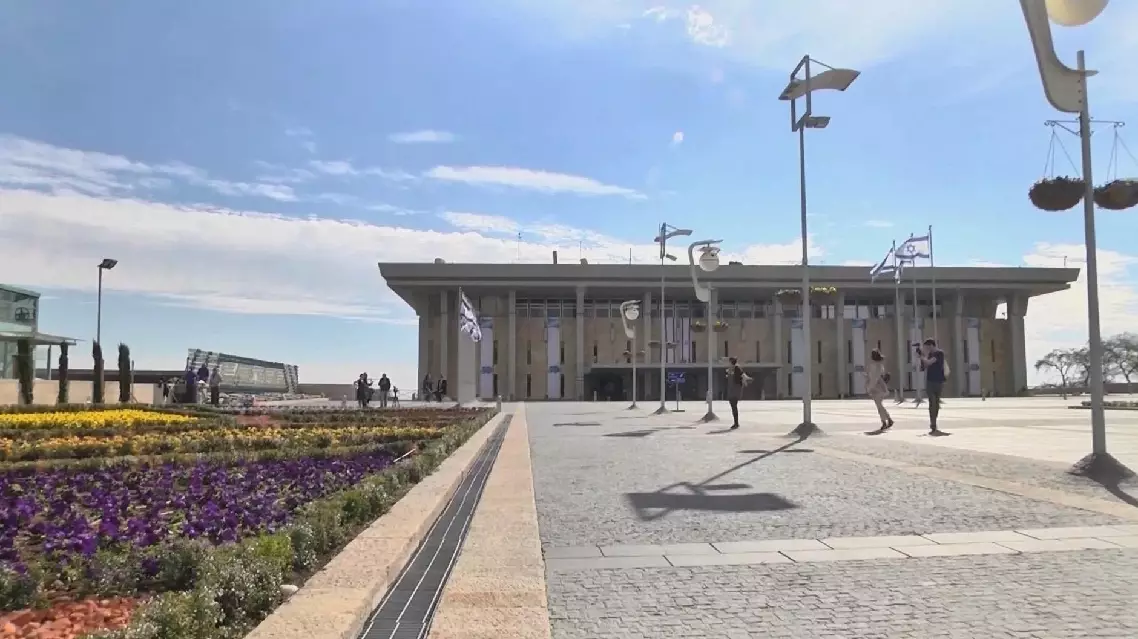
Netanyahu warned of multi-front conflict possibly triggered by strike on Iran: media
Kenyan President William Ruto and his Democratic Republic of the Congo (DRC) counterpart Felix Tshisekedi agreed Sunday to work toward fully restoring diplomatic relations, according to statements posted by each leader.
The agreement was reached during a quadripartite summit held in Oyo, a northern city in the Republic of the Congo, on the same day.
According to a statement posted by Ruto on social media platform X, the two leaders agreed to restore diplomatic representation at ambassadorial level, resume the Joint Grand Commission for Cooperation and strengthen regular diplomatic consultations.
The two countries also pledged to deepen cooperation in trade, economic development, security and culture, while promoting regional peace, stability and integration. "Our engagement will be guided by dialogue, mutual respect and the peaceful resolution of differences for the benefit of our two nations and peoples," Ruto said.
The DRC presidency said in a statement on X that the two leaders had agreed to fully restore bilateral relations, notably through the return of their respective ambassadors, in a spirit of mutual understanding and commitment to regional peace and stability.
The two presidents had also reaffirmed their commitment to the principles of state sovereignty, territorial integrity, non-interference in internal affairs, good-neighborliness and the peaceful settlement of disputes. The two sides also called for stronger economic cooperation, particularly in trade and investment, and agreed to intensify collaboration in the prevention and control of Ebola virus disease, the statement said.
The summit, hosted by President Denis Sassou Nguesso of the Republic of the Congo, brought together Ruto, Tshisekedi, and Faure Essozimna Gnassingbe, Togo's president of the Council of Ministers, who serves as an African Union mediator in the crisis in eastern DRC.
Relations between Kenya and the DRC have faced tensions since December 2023, when Kinshasa recalled its ambassador to Kenya following the launch of the Congo River Alliance, a political-military coalition which included the M23 rebel group.
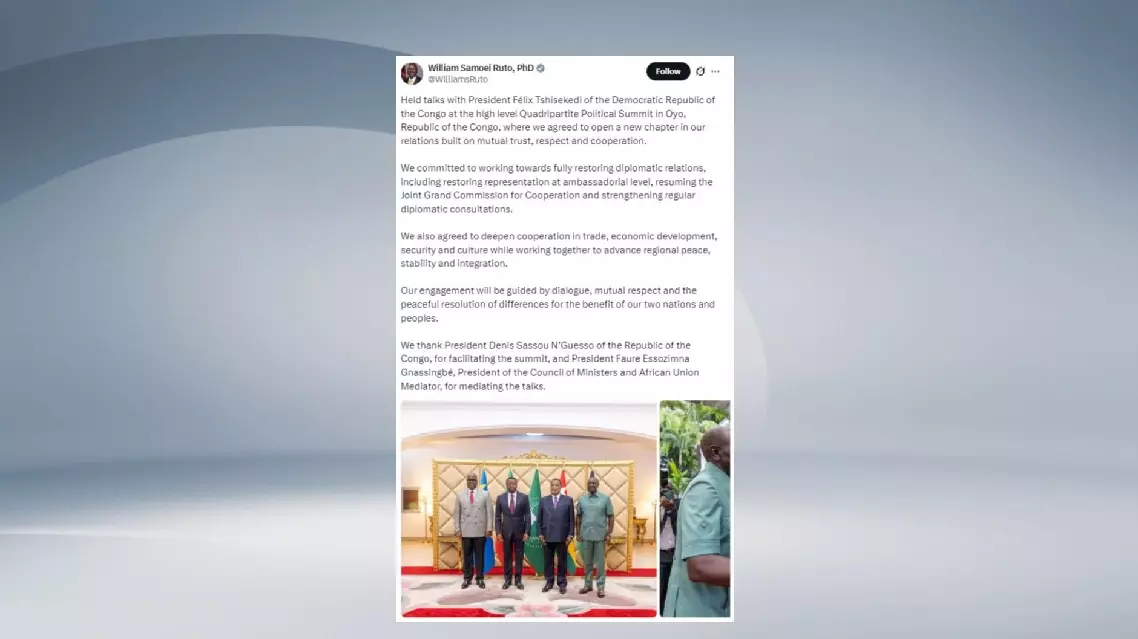
Kenya, DR Congo agree to fully restore diplomatic ties