HONG KONG (AP) — A year ago, Hong Kong's deadliest blaze in decades engulfed seven high-rise apartment blocks, shocking the world with its ferocity and the speed at which the inferno spread and killed 168 people.
While two building companies have been charged and government departments were found at fault, survivors and victims’ families are still waiting for justice.
Click to Gallery
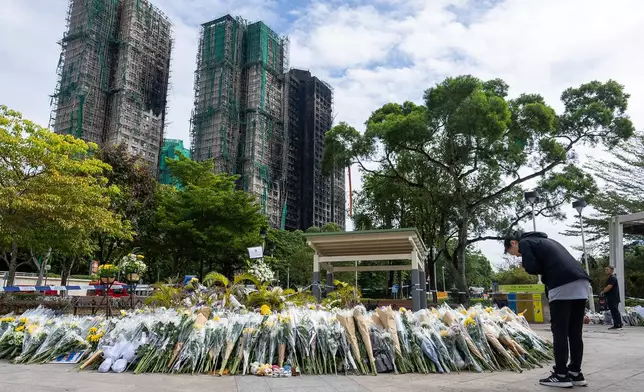
FILE - People offer flowers for the victims near the site of a deadly Wednesday fire at Wang Fuk Court, a residential estate in the Tai Po district of Hong Kong's New Territories on Monday, Dec 1, 2025. (AP Photo/Chan Long Hei, File)
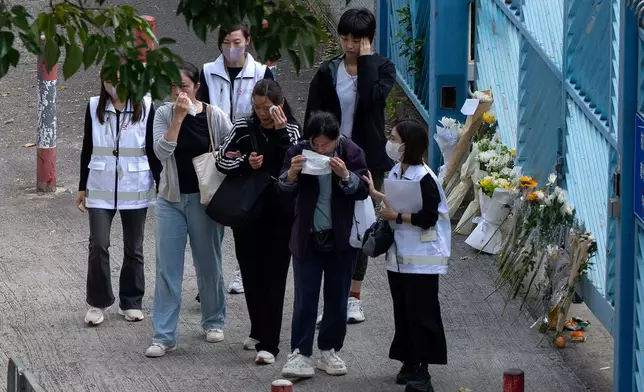
FILE - Relatives of the deceased weep after laying flowers at the site of a deadly fire at Wang Fuk Court, a residential estate in the Tai Po district of Hong Kong's New Territories on Tuesday, Dec. 2, 2025. (AP Photo/Ng Han Guan, File)
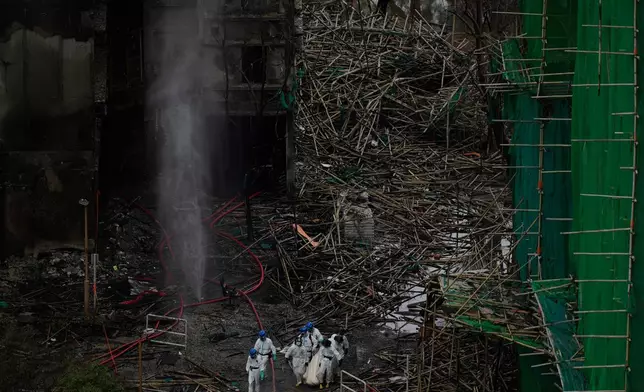
FILE - Emergency crew remove what appears to be a body bag from the site of a deadly Wednesday fire at Wang Fuk Court, a residential estate in the Tai Po district of Hong Kong's New Territories on Sunday, Nov. 30, 2025. (AP Photo/Ng Han Guan, File)
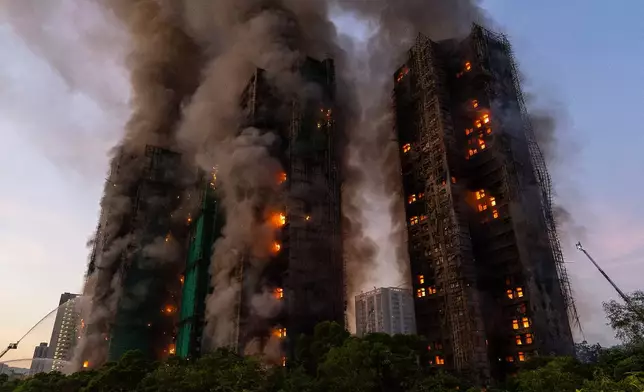
FILE - Smoke rises after a fire broke out at Wang Fuk Court, a residential estate in the Tai Po district of Hong Kong's New Territories, Nov. 26 2025. (AP Photo/Chan Long Hei, File)
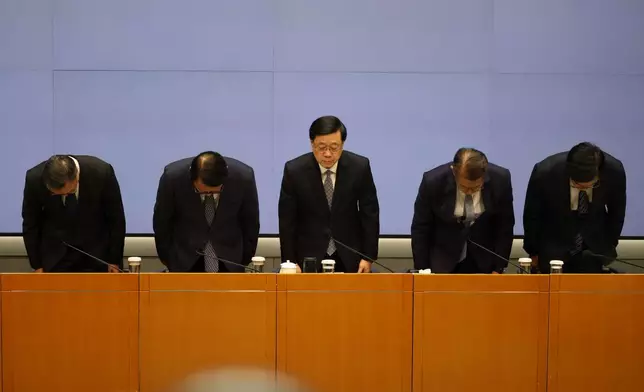
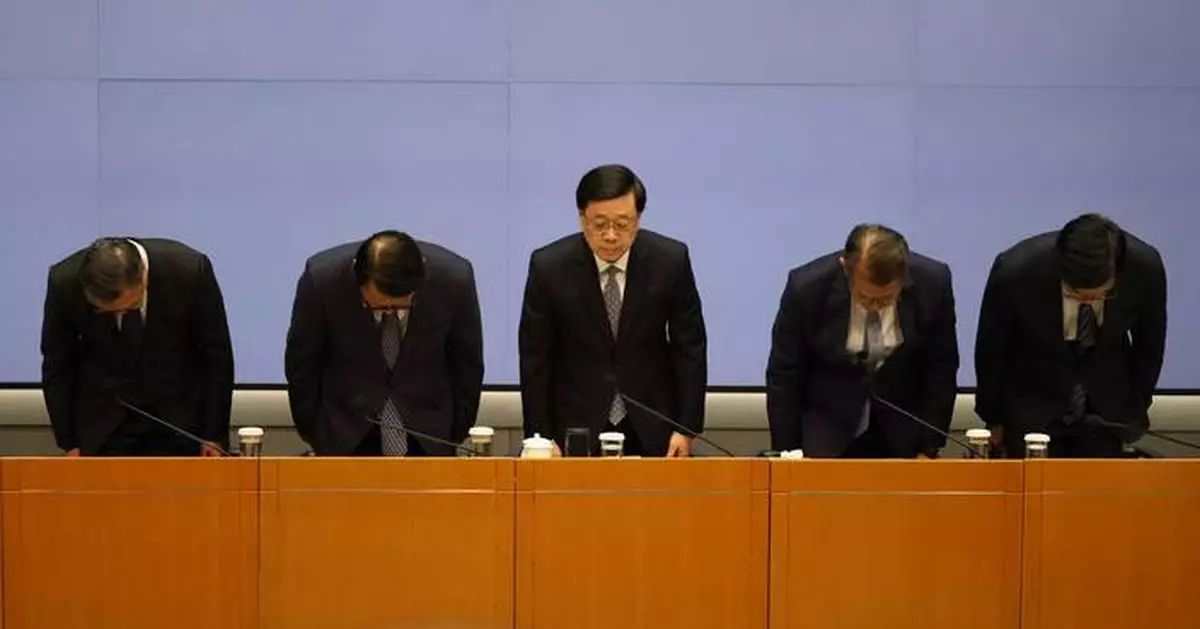
FILE -Hong Kong Chief Executive John Lee, center, leads other senior officials in bowing during a press conference on the Wang Fuk Court fire inquiry report in Hong Kong, Thursday, Oct. 29, 2026. (AP Photo/May James, File)
An official investigation report blamed the fire and high casualties on the use of substandard materials, deception in the building maintenance project and inadequate regulatory oversight.
“The inferno was just like a perfect storm, exposing a series of deficiencies in every sector responsible for the execution and supervision of the works,” said the report by a judge-led committee.
Before the massive blaze on Nov. 26, 2025, some residents had expressed concerns about fire hazards during Wang Fuk Court ’s renovation. Yet their worst fears became reality. The fire claimed the lives of their loved ones and neighbors and displaced thousands of people from the apartment complex in Tai Po, a northern suburban district.
The toll was more than double that of the 2017 Grenfell Tower fire in London, another tragedy that killed scores of residents and turned a modern high-rise tower into a charred shell.
Here's what to know about the blaze and what's next:
Evidence showed that the fire was likely caused by a cigarette that ignited paper on the flat roof outside two first-level apartments of Wang Cheong House. There was substantial evidence of construction workers smoking on site, including on the scaffolding, the report said. Complaints had been filed with the government about the smoking.
After the fire, cigarette ends and a substantial amount of partially burnt materials including cardboard boxes were found on the flat roof, the report said.
Non-fire-retardant scaffolding nets and canvases used in the maintenance project played a key role in helping the flames spread rapidly. Experts said if the nets had been fire-retardant, the initial fire might have self-extinguished.
Foam boards used to cover apartment windows were also a problem. Tests showed they would melt and fall off when heated, producing burning droplets that assisted secondary ignition.
The report said airborne burning fragments and flying embers, carried by winds, helped spread the fire to neighboring buildings.
Most of the deaths were caused by smoke inhalation. The report said some staircase windows were replaced with aluminum composite panels or wooden boards for workers’ convenience, allowing smoke to infiltrate escape routes.
That, combined with the shutdown of the buildings' fire alarm system, left residents little time to escape.
The report found that Will Power Architects Company, the consultant for the maintenance project, and Prestige Construction & Engineering Co., the main contractor, cut corners and were the “main culprits."
Prestige had multiple failings such as procuring non-fire-retardant scaffolding nets and failing to curb workers’ smoking effectively, the report said, but Will Power did not step in.
A month before the fire, Will Power told Prestige about an upcoming government inspection on the scaffolding nets. The contractor then urgently ordered a batch of fire-retardant nets to replace those at the bottom of the scaffolding before the check, the report said.
Evidence also showed that multiple registered contractors and professionals did no substantive work and signed statutory forms in return for a fee. The registered inspector responsible for supervising repair works was “rubber-stamping whatever statutory forms that were put before him," the report said.
The investigating committee found the maintenance project bore “the hallmarks of bid-rigging and anticompetitive conduct.”
In June, police and anti-corruption authorities charged Will Power, Prestige and seven people, including the registered inspector, with offenses such as manslaughter and conspiracy to defraud.
The two companies and some defendants were accused of conspiring to defraud the apartment owners by concealing Prestige’s previous litigation records. That eventually led to Prestige being awarded the renovation project contract, worth more than 300 million Hong Kong dollars (over $38 million), authorities said.
The committee also identified deficiencies in the work of the Housing Bureau’s independent checking unit, the Buildings Department, the Fire Services Department and the Labor Department.
Among the failings were a lack of proper investigations into the use of foam boards and the fire-retardancy of the scaffolding nets, as well as ineffective handling of concerns over workers' smoking.
“The regulator’s reliance on the good faith of the regulated parties left obvious fire hazards uninvestigated,” it said.
The report said the independent checking unit did not verify the authenticity of a certificate on the fire-retardancy of the nets in 2024 — and only found out it was not legitimate after the fire.
The committee acknowledged that regulatory loopholes could exist and that it might not always be clear which department should take charge when an issue arose. But the different departments “passed the ball” to others, instead of working together to resolve the problem, it said.
If government staff had handled the complaints properly, the misconduct and the fire hazards might have been rectified or removed before the fire, it said.
When the report was published last month, Hong Kong leader John Lee apologized, saying his housing minister had resigned to bear “political accountability.” Officials also announced a series of measures, including setting up an organization to support homeowners in maintenance projects and criminalizing bid-rigging in such works.
But for some fire survivors and families of the victims, the pursuit of justice is far from over.
A three-month investigation was launched to determine whether government employees had any dereliction of duty. Prosecution proceedings against Will Power, Prestige and other related individuals are still ongoing.
In February, an official said the administration was inclined to dismantle the seven buildings after buying homeownership rights from former Wang Fuk Court residents. The site could be transformed into a park or community facilities. But a detailed plan has not been announced.
The wait for answers goes on.
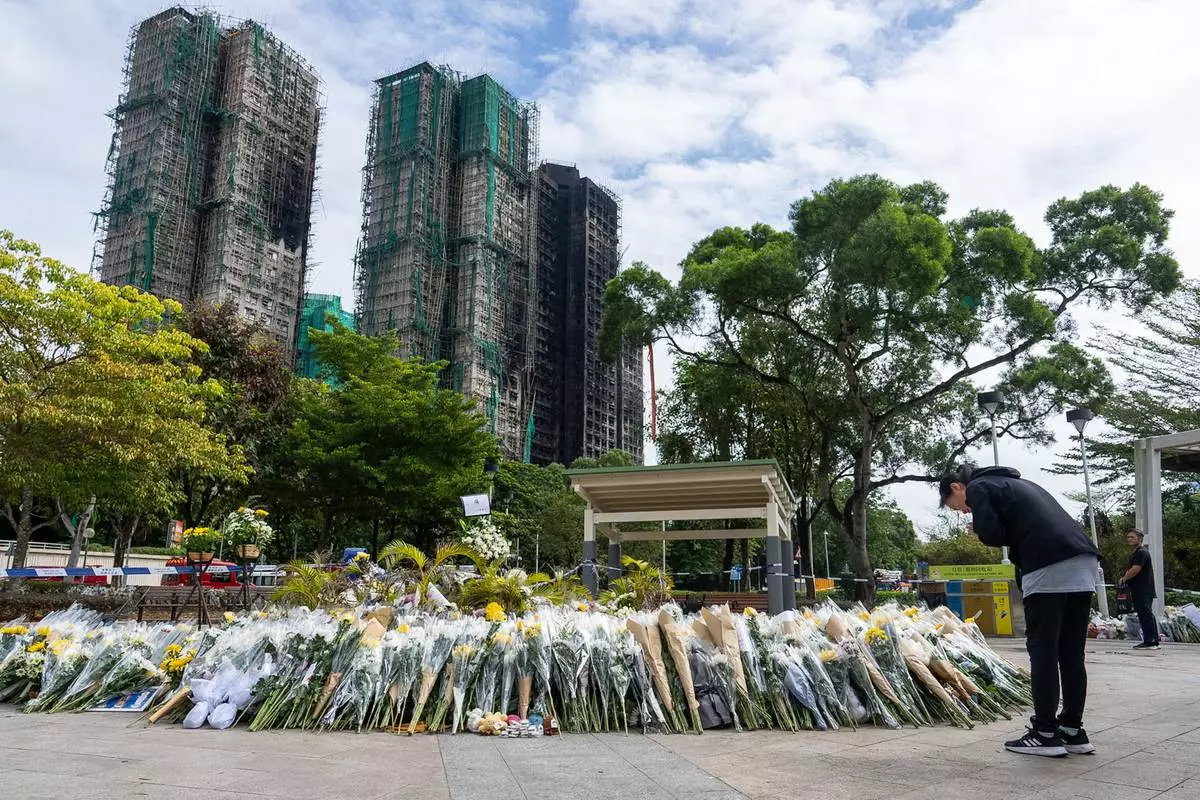
FILE - People offer flowers for the victims near the site of a deadly Wednesday fire at Wang Fuk Court, a residential estate in the Tai Po district of Hong Kong's New Territories on Monday, Dec 1, 2025. (AP Photo/Chan Long Hei, File)
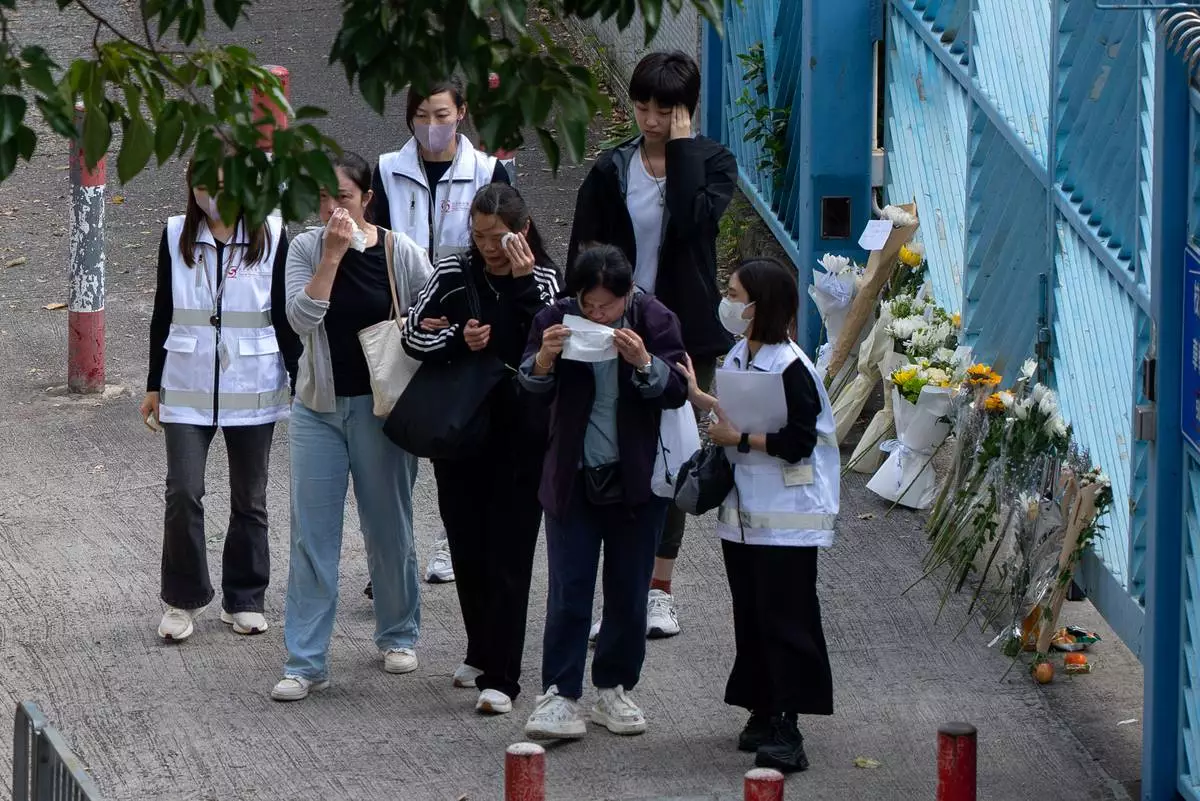
FILE - Relatives of the deceased weep after laying flowers at the site of a deadly fire at Wang Fuk Court, a residential estate in the Tai Po district of Hong Kong's New Territories on Tuesday, Dec. 2, 2025. (AP Photo/Ng Han Guan, File)
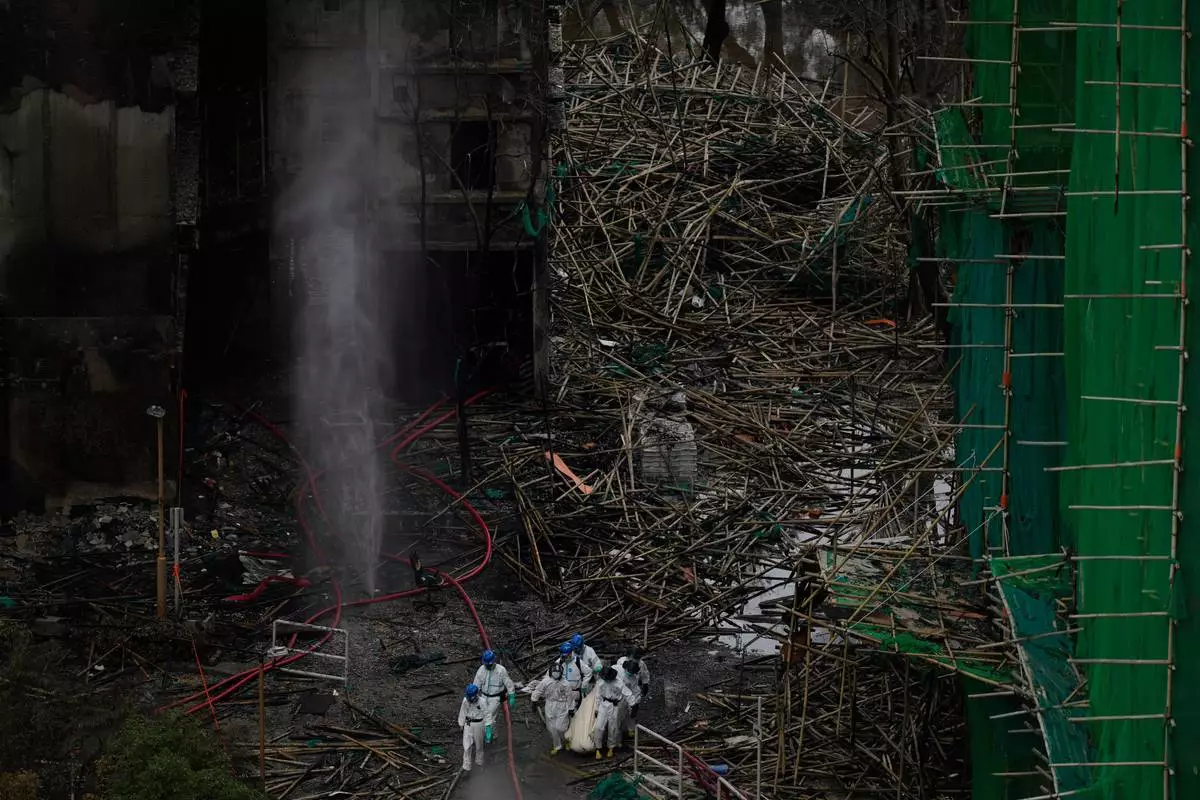
FILE - Emergency crew remove what appears to be a body bag from the site of a deadly Wednesday fire at Wang Fuk Court, a residential estate in the Tai Po district of Hong Kong's New Territories on Sunday, Nov. 30, 2025. (AP Photo/Ng Han Guan, File)
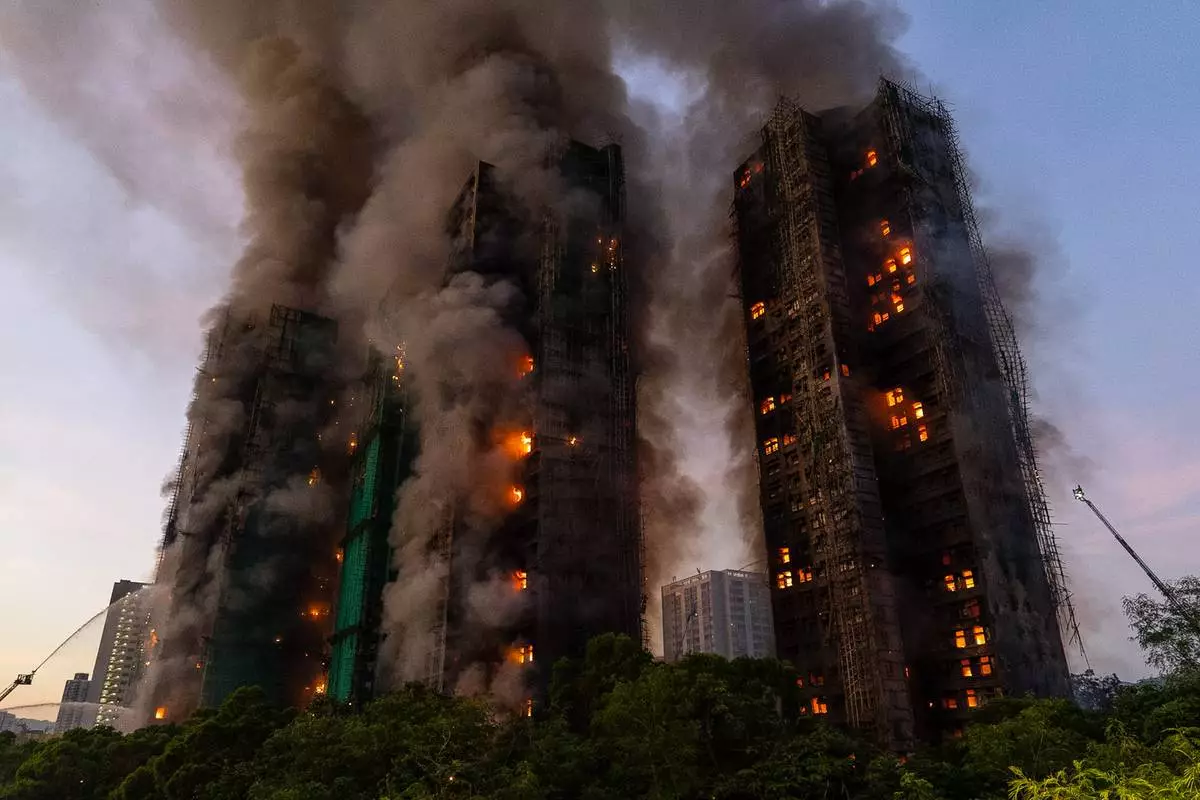
FILE - Smoke rises after a fire broke out at Wang Fuk Court, a residential estate in the Tai Po district of Hong Kong's New Territories, Nov. 26 2025. (AP Photo/Chan Long Hei, File)
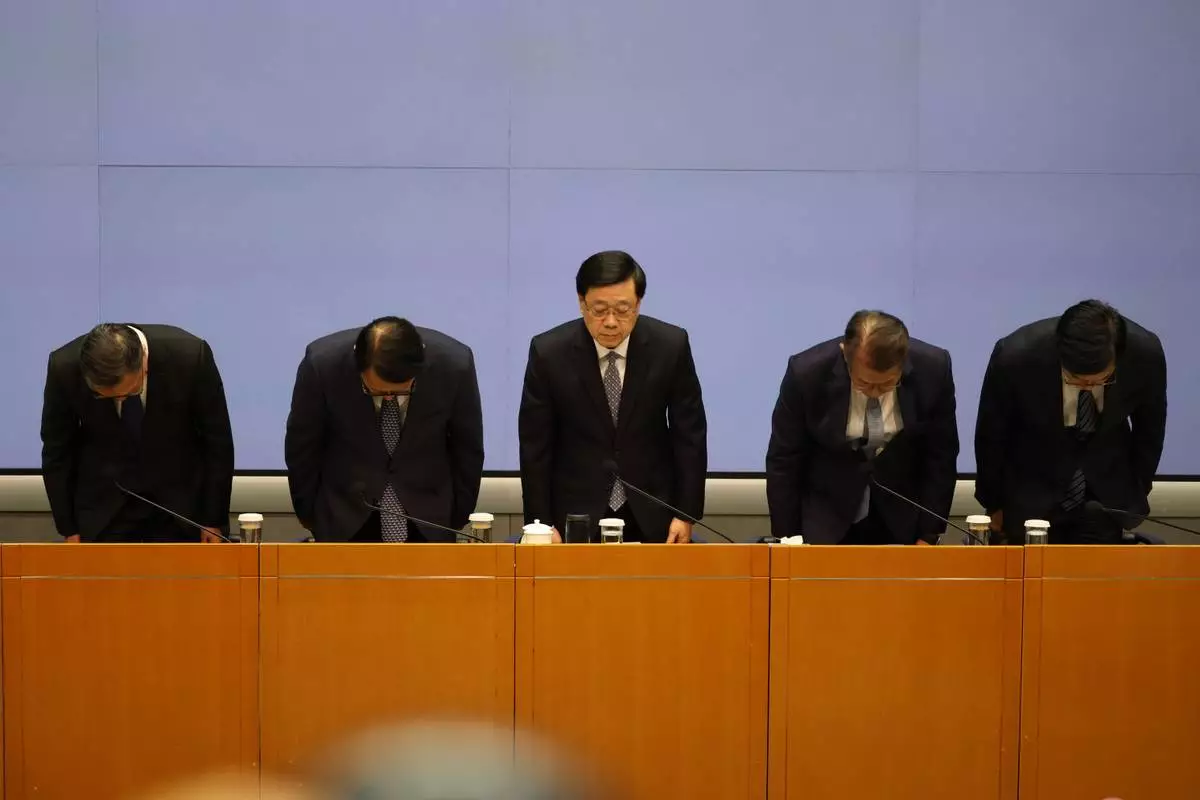
FILE -Hong Kong Chief Executive John Lee, center, leads other senior officials in bowing during a press conference on the Wang Fuk Court fire inquiry report in Hong Kong, Thursday, Oct. 29, 2026. (AP Photo/May James, File)