HANOI, Vietnam--(BUSINESS WIRE)--Nov 23, 2026--
Phenikaa University Hospital and GN Corporation have signed a Memorandum of Understanding (MoU) establishing a framework for collaboration in research, training and technology transfer in regenerative medicine, with an initial focus on cell therapies and tissue engineering.
This press release features multimedia. View the full release here: https://www.businesswire.com/news/home/20261123219013/en/
Under the MoU, the two parties will combine GN Corporation’s expertise in biomaterials, cell-based and tissue engineering technologies with the laboratory facilities and the scientific and clinical teams of Phenikaa University Hospital. Supported by Global Niche Corp (USA), the collaboration will focus on scientific exchange, training and strengthening local technical capabilities. Any clinical application will be pursued step by step, subject to scientific evaluation and approval by the competent Vietnamese authorities.
For Phenikaa University Hospital, the agreement is part of a broader effort to strengthen international scientific partnerships and build regenerative medicine capabilities in Vietnam.
About GN Corporation:
Established in 2002, GNCorp develops novel healthcare solutions using original Japanese technologies, through interdisciplinary research globally, with following accomplishments:
About Phenikaa University Hospital:
Phenikaa University Hospital, part of Phenikaa Group in Hanoi, aims to bring advances in medical science into clinical practice to improve the health and quality of life of people in Vietnam. The Hospital adopts and transfers medical technologies selectively, guided by scientific evidence, patient safety, and clinical effectiveness. In regenerative medicine and cell therapies, it places particular emphasis on rigorous evaluation, quality assurance, and the development of clinical and technical teams. By connecting research, training and patient care, and through international collaboration, the Hospital seeks to build local expertise and a sustainable foundation for mastering new technologies and expanding patient access to appropriate innovations.
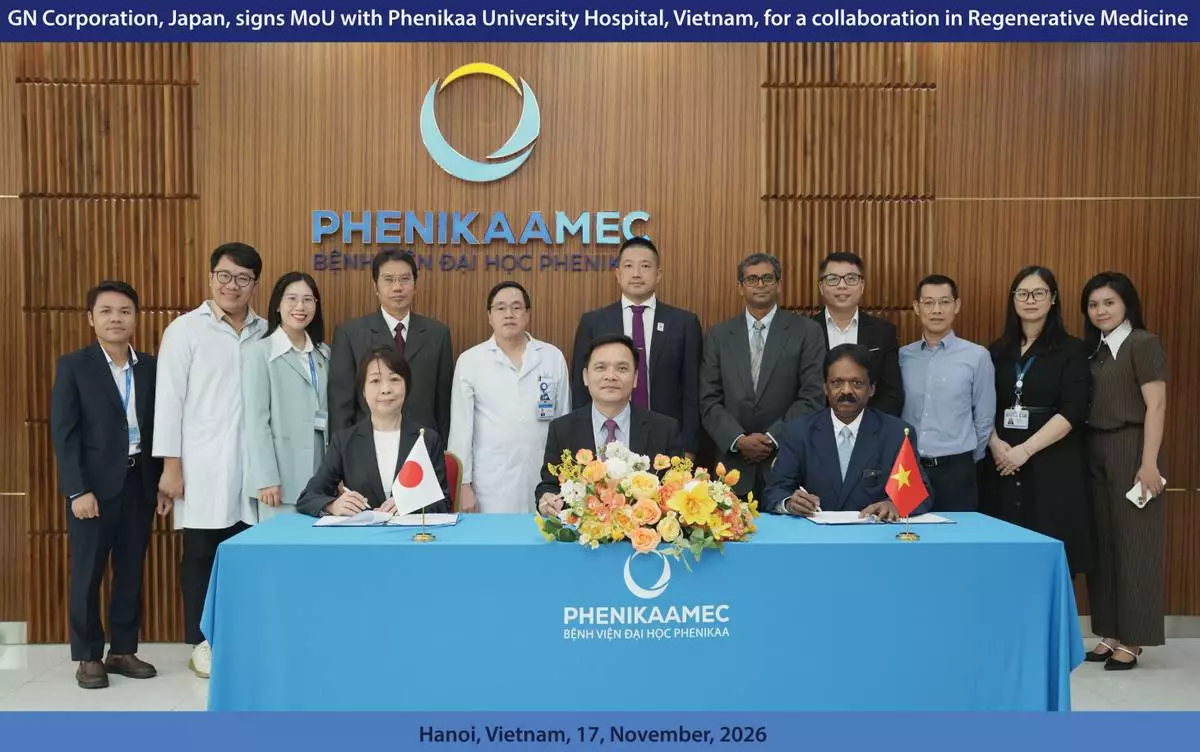
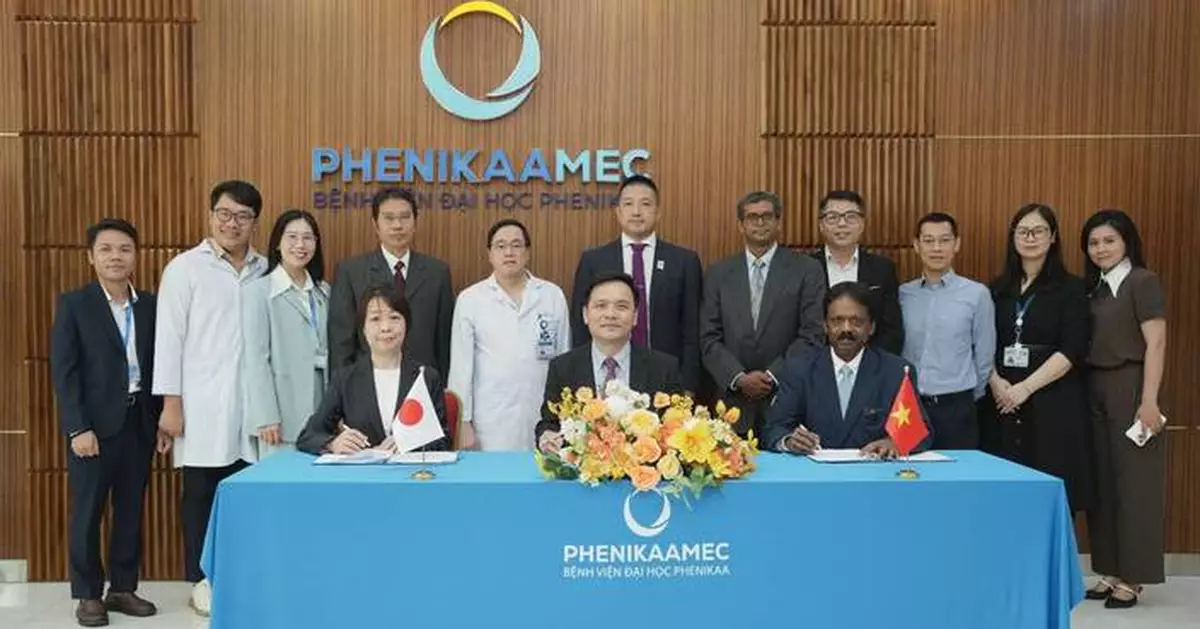
Representatives of Phenikaa University Hospital, Vietnam (PhenikaaMec), GN Corporation, Japan (GNCorp) and Global Niche Corp, USA (GNA) at the MoU signing ceremony, Hanoi, Vietnam, 17 November 2026; Sitting L>R: Ms. Yoshiko Amikura (GNCorp), Dr. Nguyen Thanh Hoi (General Director, PhenikaaMec), Dr. Samuel JK Abraham (GNA); The event was graced by Dr. Masafumi Saito, First Secretary, Embassy of Japan, Hanoi, Vietnam, (Stdg. 6th from Lt), joined by Dr. Hoang Minh Duc, Director, Stem cell center, PhenikaaMec (Stdg. 2nd from Lt), Dr. Rajappa Senthilkumar, Nichi-in Center for Regenerative Medicine, R&D collaborator of GNCorp, (Stdg. 5th from Rt), physicians and scientists of PhenikaaMec and the representatives of Technimex JSC.
MIDDLETOWN, Iowa (AP) — The U.S. Army plans to detonate bomb-making chemicals in Iowa on Wednesday morning after getting approval from a federal appeals court in a saga that has sowed confusion and included an unusual twist from President Donald Trump.
In a statement late Monday, the Army said it’s proceeding with a controlled removal of 68 barrels of lead azide in coordination with state, local and federal authorities.
“This is a consensus decision,” acting Army Secretary Adam Telle posted on social media. “Every expert agency agrees, and both Iowa’s current and incoming Governors say the call belongs to the experts.”
A three-judge panel of the 8th U.S. Circuit Court of Appeals said earlier Monday that the U.S. Environmental Protection Agency adequately incorporated safeguards in an emergency permit to minimize the dispersal of dust. Those conditions address the concerns of environmental groups that sued to stop the detonation, the court said.
The court pointed to barriers put up around the area where the barrels are stored along with weather restrictions. It also noted requirements for advance public notification, updated air modeling and environmental monitoring and sampling.
The judges said the record also reflected that the Army evaluated “a full range” of alternatives, including using other chemicals to neutralize the lead azide and thermal treatment.
In an unusual twist, Trump, commander in chief of the Army, said on social media earlier in the day that in addition to the court's go-ahead, he wanted Gov.-elect Rob Sand to approve the detonation. Sand, a Democrat who doesn't take office until January, has said the decision is fully up to the Trump administration.
The detonation of 68 barrels of lead azide was initially planned for last Friday, but the Army has since changed the date three times following an outpouring of public concern about potential health and environmental effects. It said the weather was most favorable this coming Wednesday.
Environmentalists sued last week to stop the detonation at the site near Middletown, not far from the Mississippi River about 90 miles (140 km) south of Cedar Rapids. The court temporarily halted the permit, prompting the Army to argue that it didn’t need authorization after all, given that it was an emergency.
An attorney for the environmentalists emphasized that their legal challenge centers on the validity of the EPA permit, not the Army’s decision to move forward with the detonation under the emergency provision.
Earthjustice managing attorney Rachel Rintelmann said the lawsuit has alerted the public to the threat.
“Today, the 8th circuit decided to let the Army proceed with its plan, and we respect that decision," Rintelmann said in a statement Monday. "But the Army created this emergency through neglect, and it owes the people of Iowa more information about the planned detonation and more safeguards for their health.”
Sand said in a social media post on Monday that the administration should “make this decision based on the information they have from the people they brought in to do the job months ago and have been on the ground in Middletown for weeks.”
On Sunday, Sand posted that because of previous decisions that have already been made, “No good options exist and the situation is more dangerous and unpredictable than it ever should have been.”
Current Gov. Kim Reynolds activated the state emergency management office on Friday. The state also created a dedicated website for information about the operation.
A flight with Army officials bound for Iowa departed Joint Base Andrews to help support the Army’s planned detonation before Trump’s Truth Social post went out on Monday, two people familiar with the travel arrangements confirmed to the AP. They spoke on condition of anonymity to discuss travel details that had not been made public.
Flight tracking websites showed an Army business jet take off from the base just before 1 p.m. Trump posted minutes later.
Some residents near Middletown have been sealing their windows and doors as a precaution to keep out any lead dust that might result from the detonation. Others who live farther away were raising concern on social media about the possible paths that the plume could take depending on the wind.
Officials acknowledge that lead is toxic and have recommended that people stay indoors whenever the detonation happens and clean off outdoor surfaces with water afterward to limit exposure to any lead particles.
Middletown Mayor Rodney Johnson said the detonation must take place “so we can move on with our lives.”
“Improper storage and disposal is where things go wrong,” he said on social media.
Leaders of states that border Iowa also expressed concern. Missouri Gov. Mike Kehoe said state agencies are working to establish additional monitoring of air and water quality, public health and agriculture resources.
“But I want to emphasize: this is a federal operation,” Kehoe said. “The states of Iowa, Missouri and Illinois do not have a say on when this is conducted."
In court filings over the weekend, Army Col. Aaron Teller, a munitions emergency response specialist, explained that less liquid inside the barrels means the solution inside is more susceptible to freezing, which increases the sensitivity of the crystals that have formed around the inside of the rim and underside of the lids.
“Even a small amount of friction can break the crystal formation, causing an explosive chain reaction,” he said in his declaration to the court.
In March, staff at the Iowa Army Ammunition Plant found several dozen barrels of degraded lead azide, which is used in munitions production. Crystallization of the material created an unstable and dangerous situation, prompting the Army to assemble experts in munitions chemistry, engineering and environmental safety to come up with a plan.
According to EPA documents, alternatives such as neutralizing and decomposing the drums’ contents with other chemicals were considered. But officials said handling the drums would increase the probability of an accidental, fatal detonation.
The environmental groups disagreed, arguing in their court filings that other alternatives were not fully considered.
Officials contend that the risk of an uncontrolled explosion is growing, particularly as temperatures drop in the coming days.
Lead azide is “very sensitive” and also susceptible to heat, freezing, shock, friction and “all sorts of things that could cause an accidental detonation,” said John Goodpaster, a chemistry professor at Indiana University, Indianapolis. It’s also old, which increases the risk because explosives become increasingly unstable as they age, he said.
Add in the environmental threat caused by the lead that will escape into the atmosphere and the challenge is significant, Goodpaster said.
“I do not envy the Army,” Goodpaster said. “They are in a situation where they’ve got a large amount of very dangerous material and not very many good options in terms of trying to dispose of it.”
But it’s impossible to predict when it could explode on its own, he said.
“The longer we wait, the longer the risk accumulates that they might have an accidental explosion,” Goodpaster said.
Montoya Bryan reported from Albuquerque, New Mexico. Associated Press writers Konstantin Toropin in Washington, D.C., Scott Bauer in Madison, Wisconsin, Jacques Billeaud in Phoenix, and Christopher Weber in Los Angeles contributed.
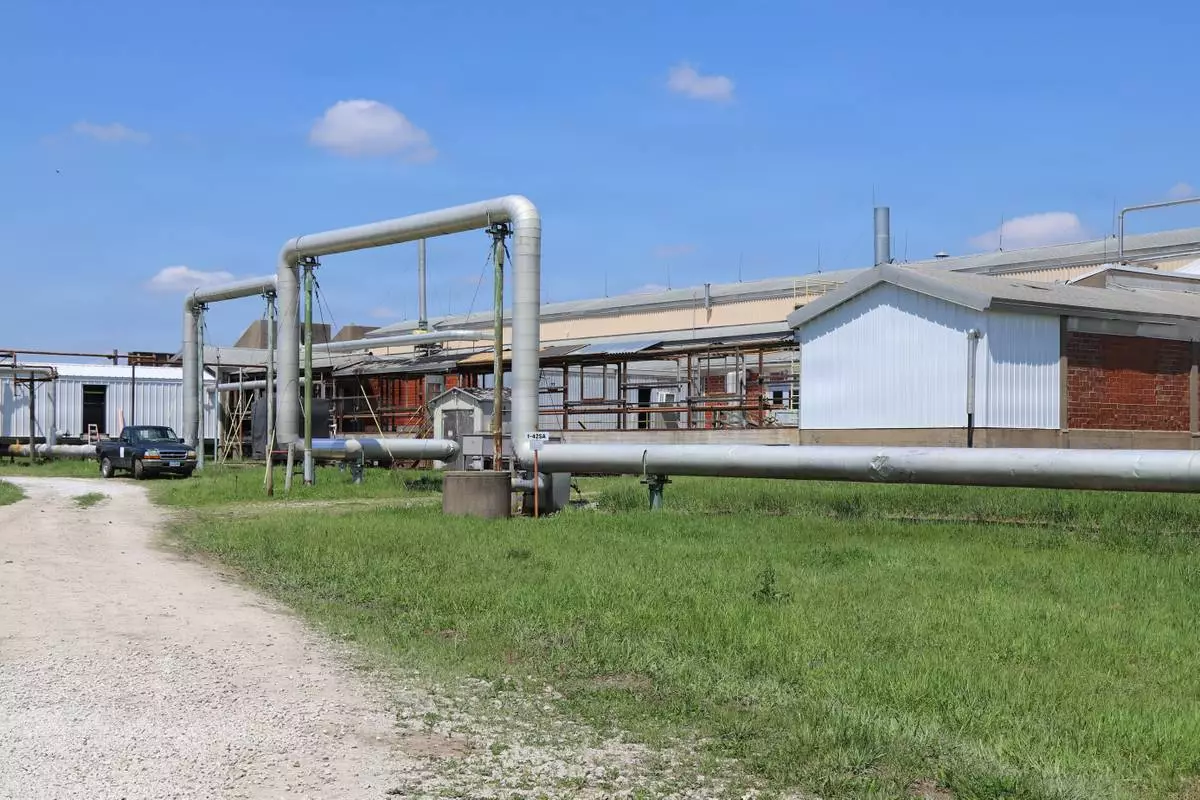
This photo provided by the U.S. Army shows the Iowa Army Ammunition Plant in Middletown, Iowa, on May 14, 2024. (Shawn Eldridge/U.S. Army via AP)