The Shenzhou-23 crew has achieved phased results and technical breakthroughs from the space experiments, said a spokesman for the China Manned Space Agency (CMSA) on Tuesday.
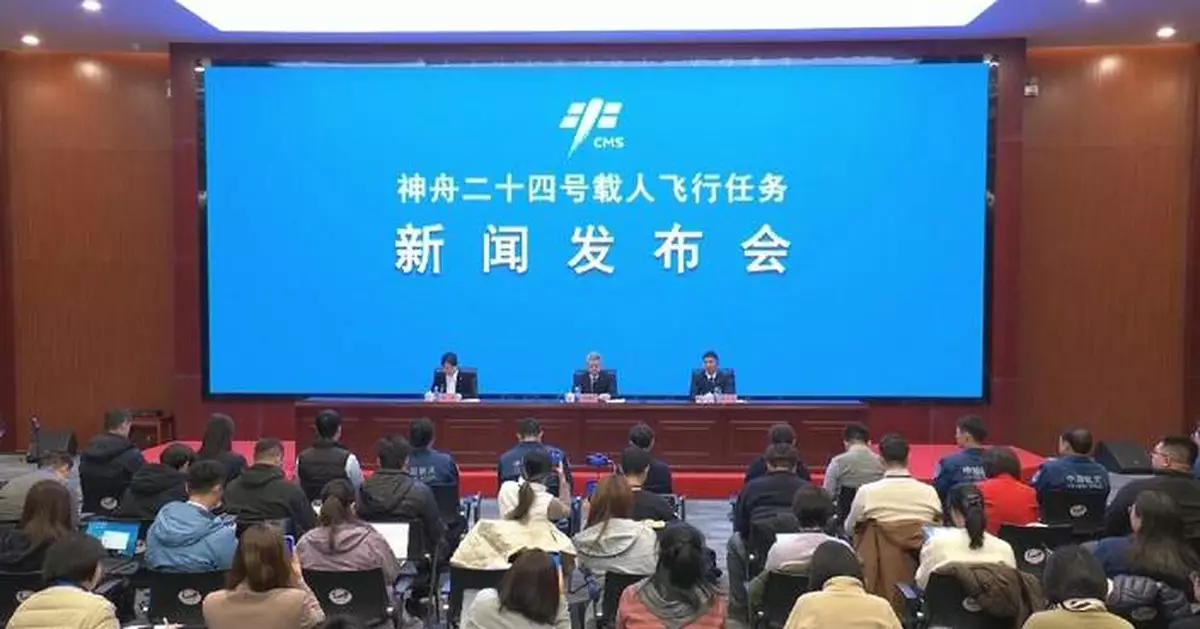
Zhang Jingbo, the spokesman, made the remarks at a press conference for the upcoming Shenzhou-24 mission at the Jiuquan Satellite Launch Center in northwest China.
"Since arriving at the space station on May 25 this year, the Shenzhou-23 crew have carried out a range of space science experiments and technical tests with high efficiency and in close coordination with the ground supporting teams. Their work has achieved phased results in fields including space life science, space materials science, space medicine and emerging aerospace technologies," said Zhang.
"In the field of space life sciences, a notable achievement involved the use of multi-omics researches has discovered that spaceflight reduces the specification efficiency of human-induced primordial germ cells by approximately 50 percent. Furthermore, key pathways -- including those related to extracellular matrix, cytoskeleton, translatome and transcriptome, and lipid metabolism -- have been identified as critical for the adaptation of germ cells to the space environment," he said.
"In the field of space materials science, millimeter-sized deep-ultraviolet nonlinear crystals -- specifically potassium beryllium fluoroborate -- have been successfully obtained for the first time aboard a space station. By leveraging the space environment, the crystals' growth characteristics and quality are significantly improved, providing a critical material for high-power deep-ultraviolet laser devices," he said.
"In the field of space medicine, the continuous acquisition of research data on the human body in space, at both the macro and micro levels, has deepened scientific understanding of the medical risks associated with long-duration spaceflight, thereby supporting the ongoing optimization of in-flight protective measures," Zhang said.
"In the field of aerospace technologies, an in-orbit verification platform for new types of energy storage batteries has been established for the first time in China. The successful in-orbit testing of an initial batch of semi-solid-state batteries has laid a technical foundation for the iterative upgrades of energy systems for space stations and lunar exploration projects," he said.
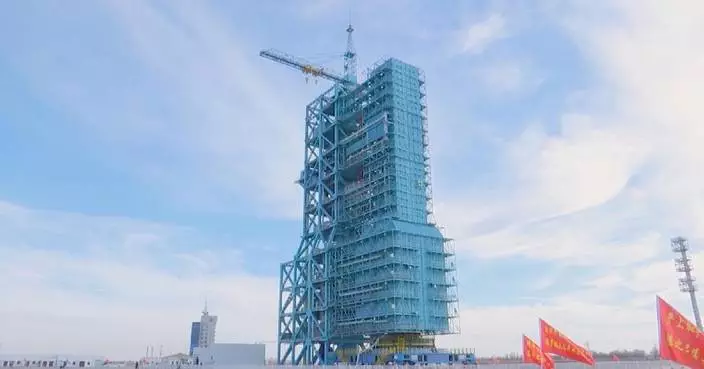
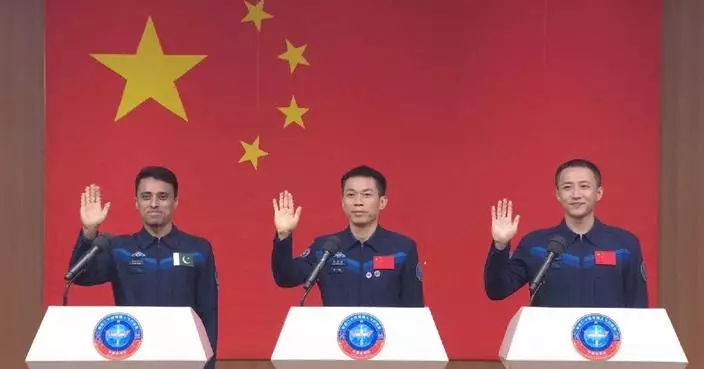
The Shenzhou-24 crewed spacecraft is scheduled to be launched at 08:18 Beijing Time on Wednesday from the Jiuquan Satellite Launch Center. Chinese astronauts Tang Hongbo and Wu Yi, along with Pakistani astronaut Muhammad Zeeshan Ali, will carry out the mission.
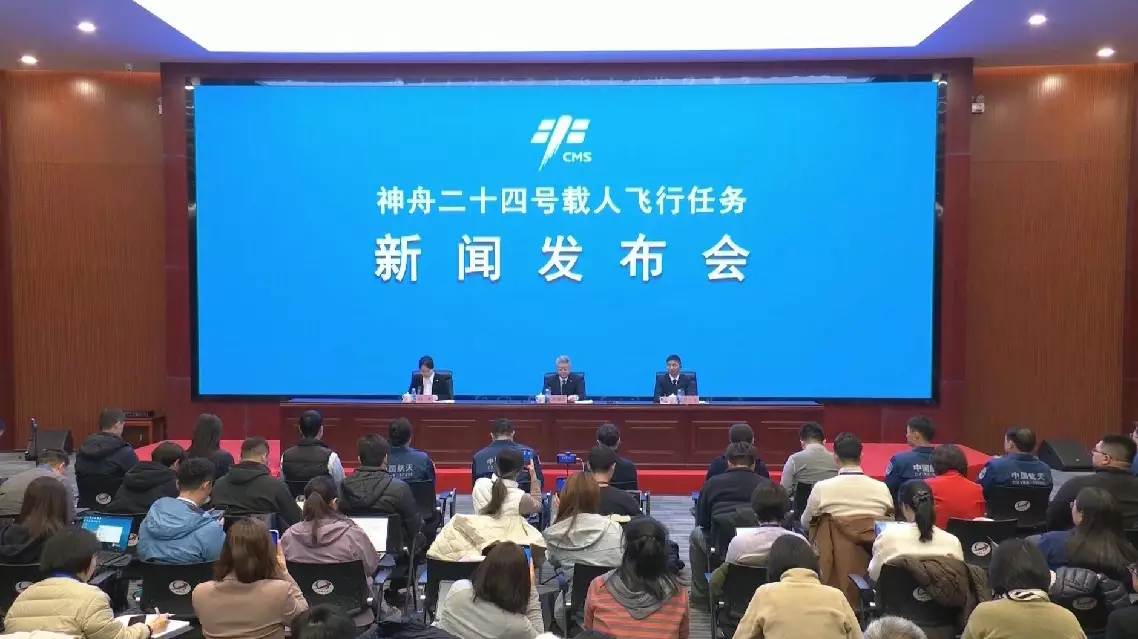
Spokesman briefs on technical breakthroughs of Shenzhou-23 mission
Pakistani astronaut Muhammad Zeeshan Ali, selected as a payload specialist to join the Shenzhou-24 spaceflight mission, will participate in four science experiments aboard China's Tiangong space station.
China's Shenzhou-24 crewed spaceship is scheduled to be launched at 08:18 (Beijing Time) Wednesday from the Jiuquan Satellite Launch Center in northwest China, the China Manned Space Agency announced on Tuesday.
The crew will consist of commander Tang Hongbo, flight engineer Wu Yi, and Pakistani payload specialist Muhammad Zeeshan Ali, marking the first joint flight involving Chinese and foreign astronauts in the history of China's manned space program.
In orbit, Ali will join in the crew's routine work and focus on joint China-Pakistan space science experiments, primarily installing experiment samples and units and carrying out in-orbit experiments as scheduled.
In preparation for the first joint flight involving Chinese and foreign astronauts, the crew has carried out extensive ground training, including task allocation, coordination, and emergency response procedures.
"The mission itself doesn't comprise of visiting the space station, it has many stages. The first one I've already talked about is the flying the Shenzhou spaceship, getting safely out of the atmosphere, going to the space station and then obviously returning safely back to the Earth. This is a huge part of this mission and we've already mastered the flight procedure for the Shenzhou spaceship," Ali said.
Pakistan had issued a nationwide call for proposals for space science experiments and received a total of 300 submissions. After multiple rounds of expert review, four projects were selected that are suitable for the space station's in-orbit conditions and possess scientific value.
These experiments will be conducted in orbit by the Pakistani payload specialist, who has also brought a set of specialized scientific experimental equipment from Pakistan.
"There are four experiments that I will be going with this Shenzhou-24 mission. Out of those four experiments, two are pertaining to life sciences and two are pertaining to the material sciences. And out of these four experiments, three are for the long duration experiments that would be there on the space station for one year and sequentially they will be conducted. But very important out of these experiments is the green micro factory experiment that I would be doing myself at the space station. If we are able to get a progress out of this, I think that can be very valuable for long-duration human flights as well as a regenerative life support and also it will improve the food security and the agricultural practices of human beings on the Earth as well," Ali said.
Ali will return to Earth aboard the Shenzhou-23 spaceship after completing a short-term joint flight, said Zhang.
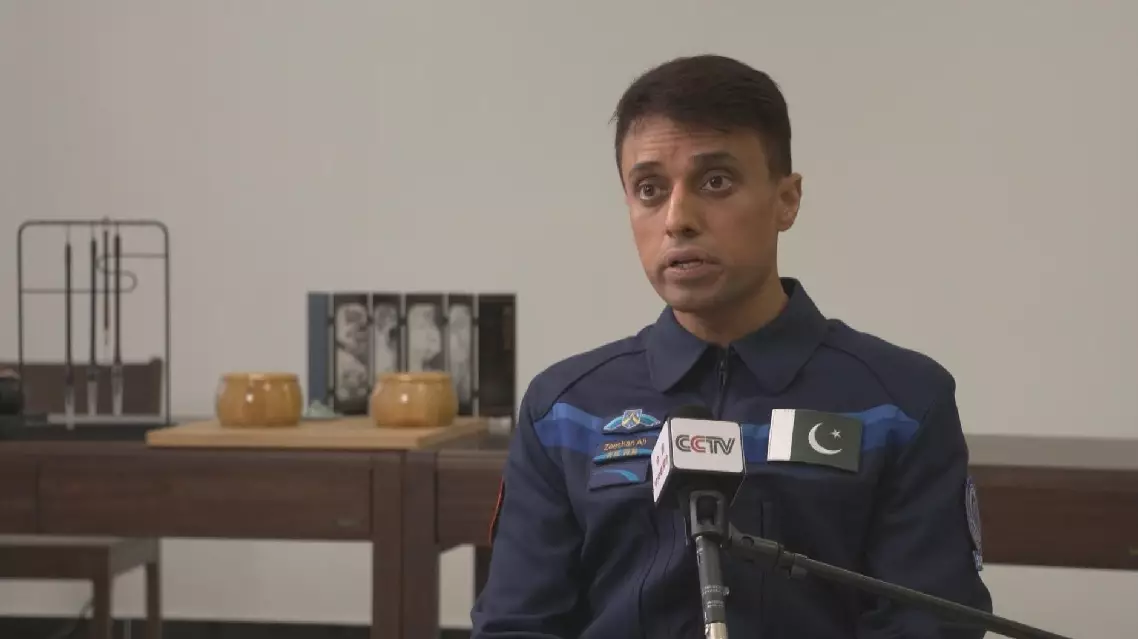
Pakistani astronaut to participate in four science experiments aboard China's space station