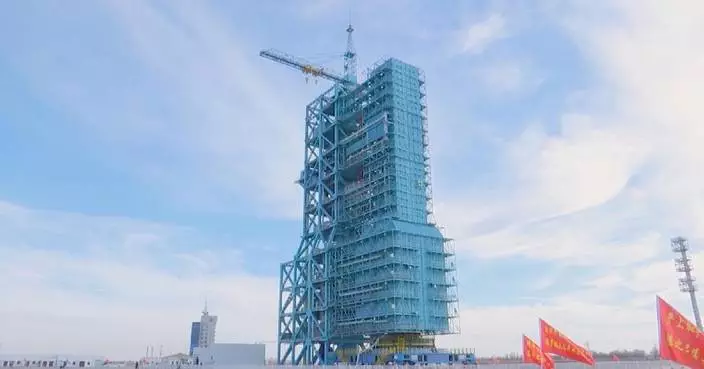
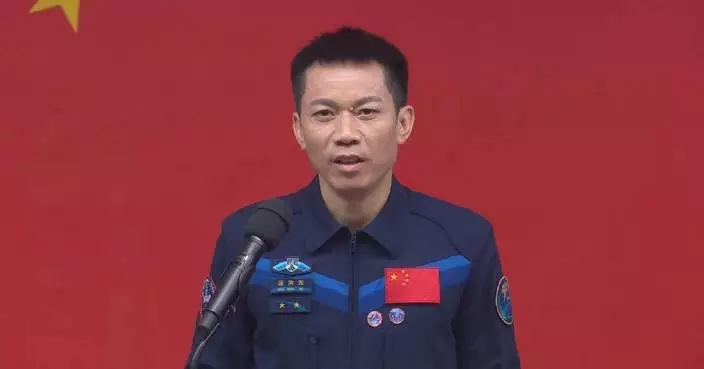
Skip to Content Facebook Feature Image

Flight engineer stresses zero-error readiness, crew unity for upcoming Shenzhou-24 space mission

China

China

China

Flight engineer stresses zero-error readiness, crew unity for upcoming Shenzhou-24 space mission

2026-11-24 12:34 Last Updated At:15:47

Chinese astronaut Wu Yi, a flight engineer of the upcoming Shenzhou-24 space mission, on Tuesday stressed zero-error readiness and crew unity at a press conference at the Jiuquan Satellite Launch Center in northwest China, saying that he is fully prepared and ready to enter the Tiangong Space Station.

Wu will board the Shenzhou-24 spaceship with commander Tang Hongbo and Pakistani astronaut Muhammad Zeeshan Ali, scheduled for launch at 08:18 (Beijing Time) Wednesday from the Jiuquan Satellite Launch Center.

Wu said that as an astronaut, he is in only two states: flying and preparing to fly.

"The moment I learned I had been selected for the crew, I was thrilled. What excited me was that after years of unremitting effort, my dream of spaceflight has finally become within reach. But after that brief excitement, I quickly regained my composure, because I know well that being selected for the crew is not the finish line of a dream but the starting point of a mission. This opportunity is not a halo of honor but a weighty responsibility," said Wu.

The astronaut said that, to make the training more targeted, the crew started each comprehensive training session with real-mission scenarios under the careful guidance of the teaching and research team and the dedicated mentorship of the commander. They repeatedly rehearsed various operating conditions, worked through different scenarios and contingencies, and integrated them into a comprehensive framework.

"Only by preparing ourselves for worst-case scenarios and training until responses become conditioned reflexes and muscle memory can we ensure that nothing goes wrong in orbit. Today I am fully ready. The stars are not far away, and my dream is in place. I look forward to entering the Tiangong space station and, together with my teammates, exploring the vast universe. Tiangong, here I come!" said Wu.

Wu said the joint crew's training and coordination model has many new features. First, it placed higher requirements on communication, making close coordination and mutual understanding all the more important. After half a year of joint efforts, the crew has progressed from simply understanding one another to being able to anticipate each other's needs and actions. Although they come from different cultural backgrounds, they share the same dream of exploring space. The Pakistani astronaut has been working hard to learn Chinese, while the Chinese astronauts also use English to facilitate communication when necessary. By overcoming language barriers and working toward a common goal, the crew is determined to ensure the complete success of this joint mission.

Another key feature, Wu noted, is the deep integration of the crew and the establishment of absolute mutual trust.

"Once in space, there is no distinction between Chinese and foreign astronauts -- there is only one crew. The ironclad China-Pakistan friendship is reflected in our tacit coordination during training and, during the mission, in mutual trust and mutual reliance. My greatest expectation is to work closely with the third astronaut under the commander's leadership -- coordinating closely, operating meticulously, working efficiently and living healthily -- to complete the mission successfully!" he said.
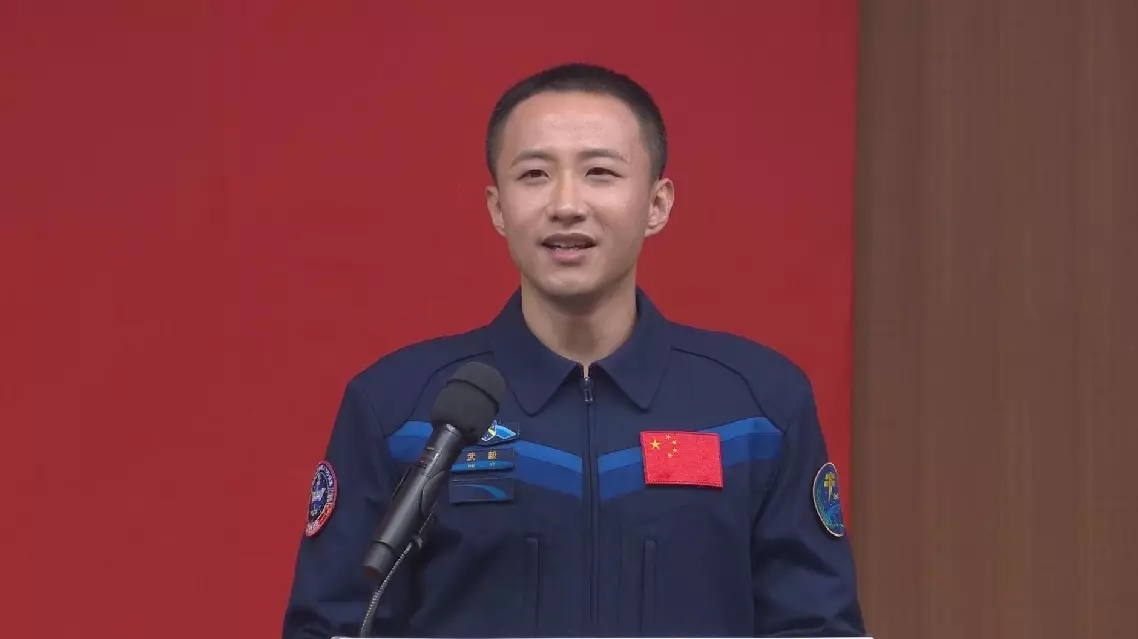
Flight engineer stresses zero-error readiness, crew unity for upcoming Shenzhou-24 space mission

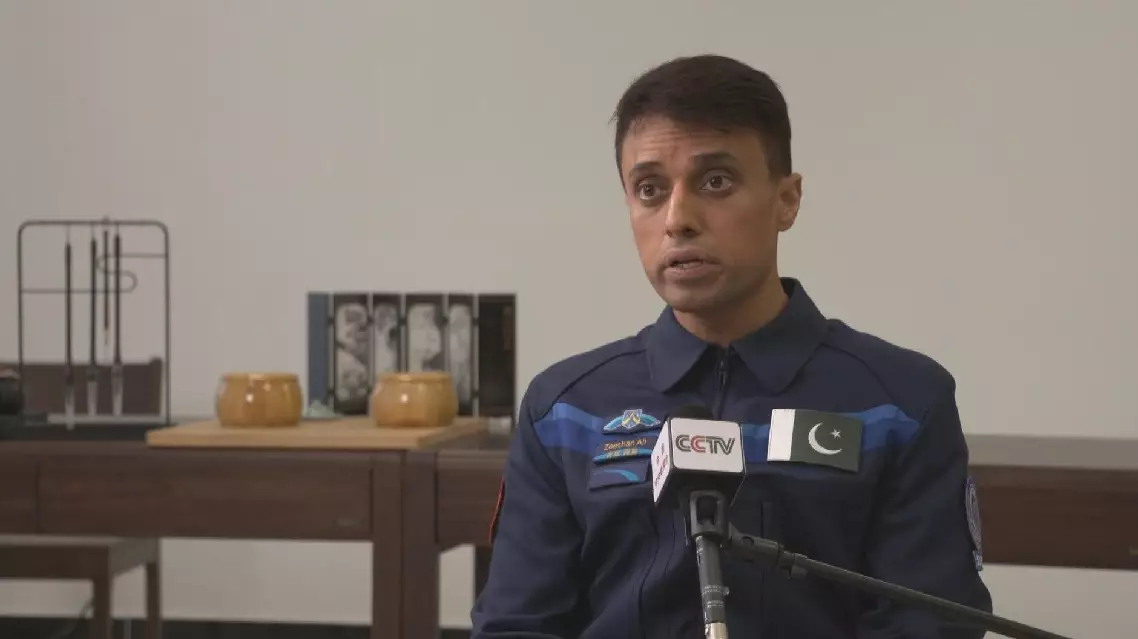
Flight engineer stresses zero-error readiness, crew unity for upcoming Shenzhou-24 space mission
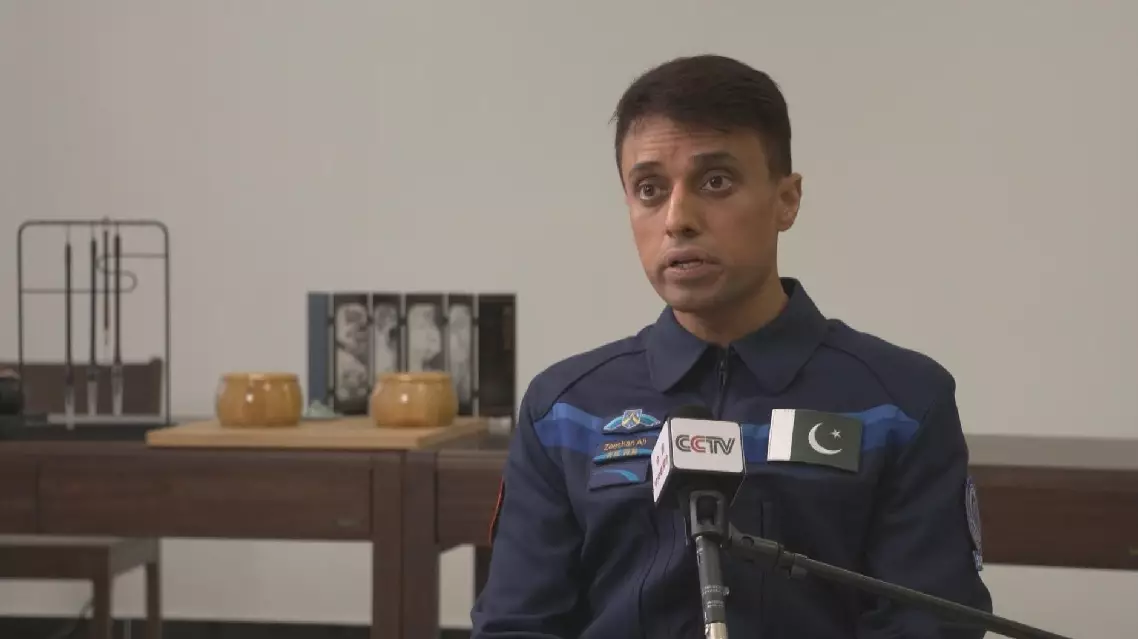
Pakistani astronaut Muhammad Zeeshan Ali, selected as a payload specialist to join the Shenzhou-24 spaceflight mission, will participate in four science experiments aboard China's Tiangong space station.

China's Shenzhou-24 crewed spaceship is scheduled to be launched at 08:18 (Beijing Time) Wednesday from the Jiuquan Satellite Launch Center in northwest China, the China Manned Space Agency announced on Tuesday.

The crew will consist of commander Tang Hongbo, flight engineer Wu Yi, and Pakistani payload specialist Muhammad Zeeshan Ali, marking the first joint flight involving Chinese and foreign astronauts in the history of China's manned space program.

In orbit, Ali will join in the crew's routine work and focus on joint China-Pakistan space science experiments, primarily installing experiment samples and units and carrying out in-orbit experiments as scheduled.

In preparation for the first joint flight involving Chinese and foreign astronauts, the crew has carried out extensive ground training, including task allocation, coordination, and emergency response procedures.

"The mission itself doesn't comprise of visiting the space station, it has many stages. The first one I've already talked about is the flying the Shenzhou spaceship, getting safely out of the atmosphere, going to the space station and then obviously returning safely back to the Earth. This is a huge part of this mission and we've already mastered the flight procedure for the Shenzhou spaceship," Ali said.

Pakistan had issued a nationwide call for proposals for space science experiments and received a total of 300 submissions. After multiple rounds of expert review, four projects were selected that are suitable for the space station's in-orbit conditions and possess scientific value.

These experiments will be conducted in orbit by the Pakistani payload specialist, who has also brought a set of specialized scientific experimental equipment from Pakistan.

"There are four experiments that I will be going with this Shenzhou-24 mission. Out of those four experiments, two are pertaining to life sciences and two are pertaining to the material sciences. And out of these four experiments, three are for the long duration experiments that would be there on the space station for one year and sequentially they will be conducted. But very important out of these experiments is the green micro factory experiment that I would be doing myself at the space station. If we are able to get a progress out of this, I think that can be very valuable for long-duration human flights as well as a regenerative life support and also it will improve the food security and the agricultural practices of human beings on the Earth as well," Ali said.

Ali will return to Earth aboard the Shenzhou-23 spaceship after completing a short-term joint flight, said Zhang.

Pakistani astronaut to participate in four science experiments aboard China's space station

Pakistani astronaut to participate in four science experiments aboard China's space station

Pakistani astronaut to participate in four science experiments aboard China's space station

Pakistani astronaut to participate in four science experiments aboard China's space station

Recommended Articles