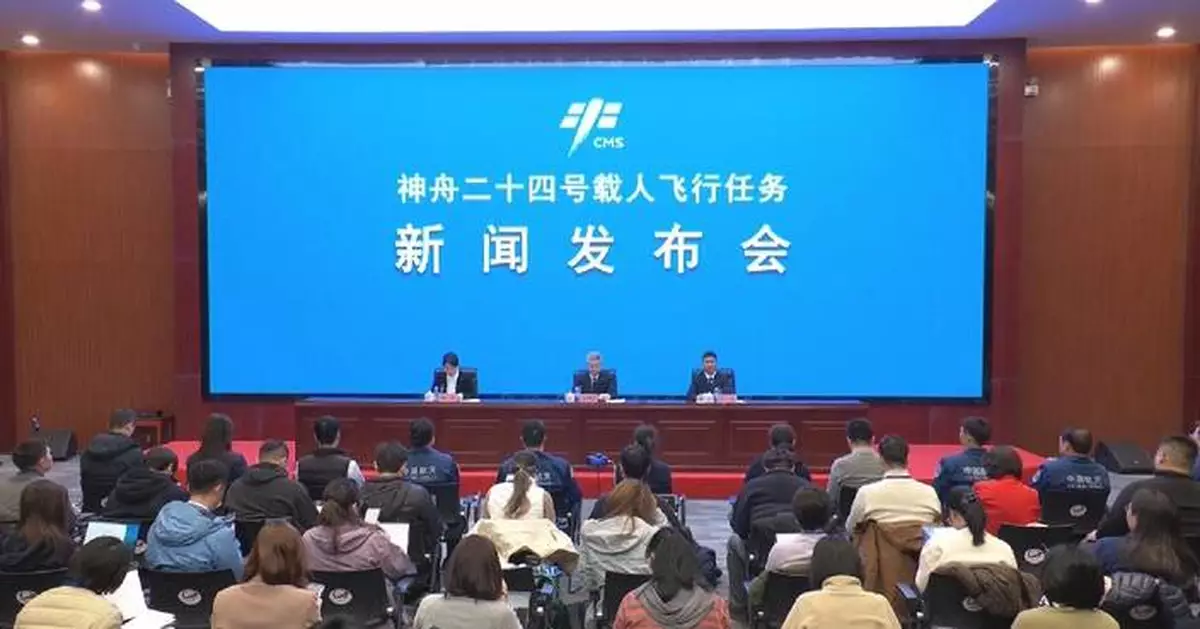
China's space station has produced the coldest known man-made matter, a milestone that caps 15 years of technological research by Chinese scientists, according to a press conference for the Shenzhou-24 crewed spaceflight mission held on Tuesday morning.
For space-based research, the unique value of the orbiting station lies in its environment, Zhang Jingbo, spokesman for the China Manned Space Agency (CMSA), told the press at the Jiuquan Satellite Launch Center in northwest China's Gansu Province.
"The most precious value of conducting scientific research on the space station lies in that it could rely on special environment like unique microgravity, high vacuum, strong radiation and high cleanliness to uncover scientific laws that are hard to reveal under Earth conditions through sustained space experiments and accumulation, and combined with research on the ground, thus opening new paths and creating new possibilities for major scientific discoveries and technological breakthroughs," Zhang said.
In the field of basic physics, the quest to approach absolute zero degree has challenged scientists for more than a century, Zhang said.
"After 15 years of technological research and scientific experiments, Chinese scientists used all-optical trap cooling technology in the ultracold atomic physics facility aboard the space station to lower the equivalent temperature of a rubidium atomic cloud to 9.7 picokelvin -- about 14 orders of magnitude colder than room temperature. The ultracold state can be sustained for up to seven seconds," he said.
The record-breaking result is the coldest man-made matter known to date, shattering humanity's previous low-temperature record and opening up new frontiers for basic physics research and related technological applications, Zhang said.
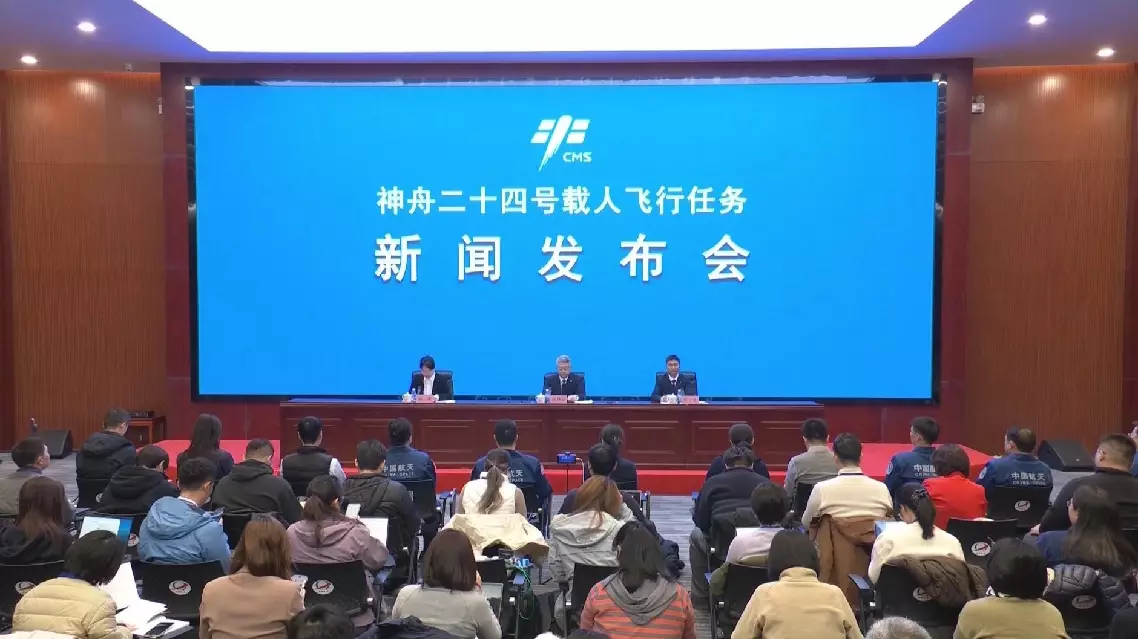
China's space station creates coldest man-made matter: spokesman