It has been a difficult year for the people who make video games, with seemingly every other week bringing news of mass firings at major studios. That’s bad news for those of us who play games.
The three major console manufacturers — Nintendo, Sony and Microsoft — pushed out lackluster lineups, seemingly forgetting how to make the kind of software that attracted so many devotees in the past. Other publishers, meanwhile, steered away from competing with the massively hyped “Grand Theft Auto VI.” (We’ll get back to that.)
And yet, there were still enough satisfying releases for fans who knew where to look. Here are my top 10 video games of 2026.
Coen is a simple peasant in medieval Europe — until the moon rises, when he turns into a vampire. That dichotomy opens up all sorts of interesting questions. Should Coen give in to the evil that threatens to consume him, or cling to humanity? Is faith possible in a society ruled by bloodthirsty monsters? It’s a cleverly constructed role-playing epic with challenging combat and fascinating characters, a very promising start to what I hope will be a long-running series. (Available on PlayStation 5, Xbox Series X and S, and PC.)
Rockstar Games lives up to the publicity, delivering high-octane thrills at a level rivaled only by the wildest Hollywood blockbusters. Come for the car chases and gunfights, and try not to get swept up in the romance between two criminals who are trying to make their way in a profoundly damaged America. It’s the most compelling “GTA” yet, and a landmark in interactive storytelling. (Available on PlayStation 5 and Xbox Series X and S.)
“Star Wars” is at its best when it zooms in on the misfits in its chaotic galaxy. This adventure follows a small team of mercenaries who are recruited to stop a mysterious paramilitary cult. The missions are a series of turn-based tactical pursuits — your crew is plopped down on a map and needs to take out the enemies one-by-one. If you like smart strategic challenges, the force is strong here. (Available on PlayStation 5, Xbox Series X and S, and PC.)
The title character of this endearing indie hit is a mouse who cracks a mean whip, which she needs to deal with the monsters that have swarmed her island home. She can also burrow underneath them, which lets her sneak up behind them to attack. The pixelated, top-down graphics recall the original “Legend of Zelda,” and it’s filled with the sort of puzzly dungeons that old-school gamers will adore. (Available on Nintendo Switch, Nintendo Switch 2, PlayStation 5, Xbox Series X and S, and PC.)
The zombies have returned to Raccoon City in the latest chapter of the 30-year-old horror series. “Requiem” toggles between two protagonists: FBI analyst Grace Ashcroft has limited weapons, so she needs to be stealthy. Franchise regular Leon Kennedy has a more powerful arsenal, so his sequences are more action-heavy. Whichever approach you prefer, publisher Capcom again proves it delivers the gore like nobody else. (Available on Nintendo Switch 2, PlayStation 5, Xbox Series X and S, and PC.)
In Capcom’s other major 2026 release, Hugh is an astronaut trapped on a lunar base that’s been overrun by malevolent artificial intelligence. His only companion is a kid-sized android named Diana. Hugh can shoot down the hostile robots, while Diana helps by scrambling their software. The combination turns every encounter into a fast-paced mix of gunplay and puzzle-solving that demands both reflexes and brainpower. (Available on Nintendo Switch 2, PlayStation 5, Xbox Series X and S, and PC.)
South Korean developer Pearl Abyss has thrown everything into this high-fantasy adventure. There are massive skirmishes between human factions. There are intense one-on-one fights against dragons and other monsters. You have to reassemble a broken society, build an economic engine and figure out why your character was brought back from the dead. Not all of it works, but you’ll get dozens of hours of fun from the tasks you do enjoy. (Available on PlayStation 5, Xbox Series X and S, PC and Mac.)
In this follow-up to the 2019 cult classic “Disco Elysium,” a spy named Hershel arrives in a small town and finds her partner in a coma. Who put him under — and what is Hershel’s mission? All you can do is talk to the locals, with each conversation pulling you deeper into a conspiracy. Expect developer ZA/UM’s brand of arch political and media satire as you try to solve the mystery with your own sometimes unreliable brain. (Available on Nintendo Switch 2, PlayStation 5 and PC.)
Supernatural forces have escaped a government lab and are loose on the streets of Manhattan. The effort to round them up makes for a solid open-world brawler, but things get wacky when hero Dylan Faden gets sucked into dimensional rifts. Between traversing hallucinatory landscapes and fighting monsters that defy physics, it’s a nightmare that makes “Inception” look like a picnic. (Available on PlayStation 5, Xbox Series X and S, and PC.)
If you’re seeking a mellower experience, check out this spinoff from Nintendo’s popular catch-’em-all franchise. You aren’t recruiting the creatures by fighting them; instead, you are trying to create the kind of environment that will attract them. As Pokémon join your village, they teach you new techniques to draw in other critters. It’s a relaxing, inspiring and often funny experiment in community building. (Available on Nintendo Switch 2.)

A man plays Grand Theft Auto VI at a launch event at the XP Tavern in Aldgate East in London, Thursday, Nov. 19, 2026. (AP Photo/Kirsty Wigglesworth)
ALBUQUERQUE, N.M. (AP) — Federal narcotics agents monitored the fentanyl deal from every angle, staking out the parking lot and lobby of a hotel while a surveillance plane circled overhead.
As the buyer arrived at 2:24 p.m. in a white pickup, the agents watched as he nonchalantly greeted a mohawked courier and entered the Home2 Suites. Eight minutes later, they exited separately into the blazing sun — one of them toting a backpack stuffed with as many as 100,000 potentially lethal counterfeit pain pills.
But the U.S. Drug Enforcement Administration did not pounce that Sunday in August 2024. Eight months passed before agents dismantled the major fentanyl ring flooding the Southwest as the U.S. reeled from an epidemic of opioid overdose deaths.
The DEA’s decision to stand down fit a pattern that would play out as agents allowed staggering amounts of fentanyl to hit the streets.
The controversial tactic has sparked state and federal investigations since The Associated Press in June revealed that agents in New Mexico in recent years permitted hundreds of thousands of fentanyl pills to go unseized. At the time, the DEA denied it ever knowingly allowed the trafficking of a synthetic opioid the White House has designated a “weapon of mass destruction.”
That denial, however, is further contradicted by new AP findings that the DEA permitted at least 1.4 million additional pills to be trafficked between August 2024 and April 2025 as it closed in on the largest fentanyl bust in U.S. history. The AP based its tally on thousands of pages of court documents, investigative records, detailed wiretap reports and 12 hours of DEA surveillance footage.
As the agents watched, the AP investigation found, dealers trafficked large packages of pills in plastic bins and duffel bags that passed through highly transited hotels, apartment complexes, Airbnb rentals and self-storage facilities in six states.
The AP did not include in its tally numerous drug deals mentioned in the records that did not include specific pill counts or those that were not surveilled by the DEA.
“Everybody wants the big fish, but the big fish isn’t guaranteed,” said Brian Besser, a former DEA senior executive who oversaw the agency’s Rocky Mountain division. “When you’re dealing with a substance that can take this much human life, you can’t gamble like that.”
The DEA at times has allowed traffickers to continue operating under strict surveillance when agents suspect they are moving cocaine, heroin and marijuana so as not to spook bigger targets — a strategy known as permitting drugs to “walk.”
Fentanyl, however, was supposed to be different. The drug poses such an unprecedented danger that the DEA for years ran a public safety campaign with the slogan “One Pill Can Kill.”
The Justice Department in 2017 began instructing agents to seize fentanyl whenever “practicable” since even unintentional contact can prove deadly. However, officials loosened those rules in 2024 to give agents more discretion even after DEA whistleblower David Howell questioned the morality and effectiveness of letting fentanyl hit the streets.
“Agents are driving around in a car plastered with ‘One Pill Can Kill’ and at the same time walking hundreds of thousands of pills of fentanyl,” said Kevin Small, a former colleague of Howell's. “They’re hypocrites.”
The AP’s reporting prompted a congressional oversight inquiry and a criminal investigation by New Mexico’s attorney general amid bipartisan outrage.
Even as the fentanyl crisis has subsided from its peak, it continues to batter New Mexico, where officials in Albuquerque recently declared a state of emergency and last week sued the Justice Department for $153 million in damages. Overdose deaths from the drug, much of it crudely manufactured in Mexico, spiked 44% last year in the state.
“This is like trying to prevent my house from burning down by negotiating with an arsonist,” New Mexico Gov. Michelle Lujan Grisham, a Democrat, said in an interview, referring to the DEA. “They are fully engaged in the cover-up because they know they went too far and it’s wrong.”
A DEA spokesperson declined to answer questions due to an ongoing review by the U.S. Justice Department’s inspector general. The agency previously said its decisions were lawful and coordinated with federal prosecutors to prevent public harm.
“Our response has not changed,” DEA spokesperson Amanda Wozniak wrote in an email.
The U.S. attorney’s office in New Mexico and Justice Department declined to answer questions.
“The Department of Justice is committed to using every lawful tool available to identify, disrupt and dismantle the organizations responsible for trafficking fentanyl into our communities,” Tessa DuBerry, a U.S. attorney’s office spokesperson, wrote in an emailed statement.
Defenders of DEA’s wait-and-see approach have said it can lead to bigger busts and the removal of higher-ranking bosses. In this case, authorities launched an investigation in the summer of 2024 into Heriberto Salazar Amaya, the alleged leader of a trafficking ring that prosecutors say generated as much as $2 million a month in sales.
The 38-year-old Mexican, who had been on the DEA’s radar for a decade, was arrested in April 2025 on charges of drug trafficking and is scheduled to be tried next year. He has pleaded not guilty. His defense attorneys did not respond to requests for comment.
Federal prosecutors have charged 15 other people in the case, many of them low-level couriers. A dozen of those have pleaded guilty, mostly to drug charges. None of the group's foreign suppliers in Mexico has been named.
The DEA investigation was extensive and required finesse as agents eavesdropped on the network’s every move.
Agents set up covert cameras on residential streets and self-storage facilities, once nearly blowing the surveillance when a DEA technician stood shoulder to shoulder with a courier in the elevator of an Albuquerque Extra Space.
The DEA confirmed Salazar Amaya’s identity through a series of ruse calls, including one in which agents at a Las Vegas eatery secretly filmed him answering a call from a woman asking about a washer and dryer for sale.
“You have the wrong number,” Salazar Amaya answered before hanging up.
In recordings of intercepted phone calls reviewed by AP, the soft-spoken Salazar Amaya sounded more like a switchboard operator than a cartel kingpin. Using a string of aliases and 14 phones, he can be heard taking orders and dispatching couriers to deliver large orders of drugs to major dealers from Phoenix to Denver.
“I’m super stressed,” Salazar Amaya told one buyer, explaining that he had gone to urgent care suffering from blurry vision and an exploding headache.
Short-term rentals served as a logistical linchpin of the ring, court records show. The traffickers stayed at Airbnbs — Salazar Amaya left a public review for one — where they counted cash, stored massive bags of fentanyl pills and used digital scales to ready deliveries.
The DEA frequently surveilled these residences, recording shipments from the street and a reconnaissance plane overhead.
As they passed in and out of hotels and storage units, the dealers took steps to protect themselves. DEA agents found a box of N95 masks at one Airbnb, according to crime-scene photographs reviewed by AP. Several rentals used by the traffickers remain listed today.
In a statement, Airbnb said it first heard from law enforcement after the dealers were arrested and was never told the investigation involved fentanyl.
Experts said the DEA should have immediately alerted Airbnb and health officials so the properties could be checked for potential contamination.
“It’s shocking and frightening,” said Michael Polkabla, an environmental hazard consultant who assists law enforcement in cleaning up fentanyl spills. “Whenever fentanyl is being handled, it’s leaving significant residues.”
Throughout the investigation, fentanyl reached multiple communities in New Mexico.
Agents staked out a shipment of 370,000 fentanyl pills at an Albuquerque park and playground where a trafficker struggled to remove a large storage container from a vehicle.
They watched as couriers driving in tandem cars ferried 200,000 pills to a home in Santa Fe’s historic Agua Fria neighborhood.
And they looked on as traffickers accessed a self-storage unit stocked with fentanyl nearly 500 times, tapping seemingly endless reserves of the drug.
Almost all of the pills remain unaccounted for today — a loss DEA chalked up to the need to safeguard a sensitive investigation as they sought to trace the source of fentanyl to Mexico.
“One small intervention on our end could cause a whole ripple effect of ruining everything,” DEA Agent David Zimmerman told a federal jury last year. “You have to have a strategy on when you can stop people or take stuff off or try to intercept narcotics on these big investigations.”
It is not clear why the DEA decided to take down the ring when it did. When it was finished making arrests and raiding stash houses, then-Attorney General Pam Bondi touted the record bust of 4 million pills as evidence the Justice Department takes seriously the threat of fentanyl.
At a May 2025 news conference, she removed a small glass vial from her pocket to emphasize the drug’s unique dangers.
“It looks like a few grains of salt,” she said. “This is what it takes to kill you.”
__
Goodman reported from Miami. Associated Press journalists Susan Montoya Bryan in Albuquerque, New Mexico, and M. Reo in Washington contributed reporting.
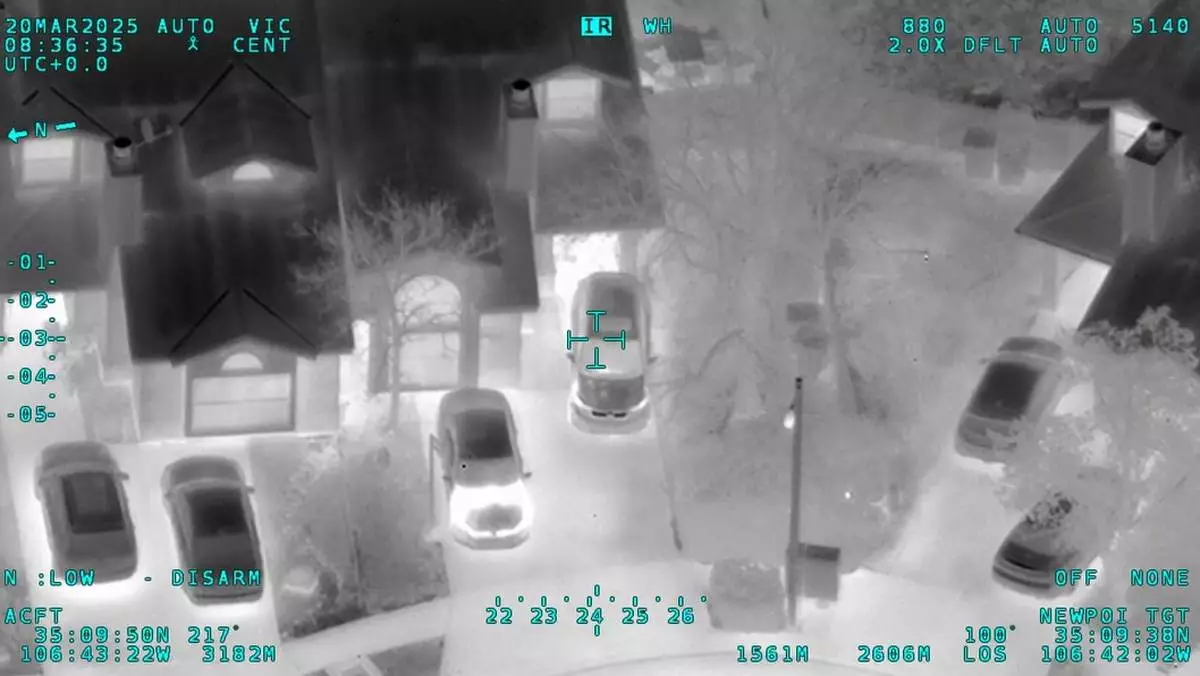
This screen shot from a U.S. Drug Enforcement Administration surveillance video shows an Airbnb where alleged drug couriers for a major fentanyl ring stayed in Albuquerque, New Mexico, on March 20, 2025. (U.S. Department of Justice via AP)
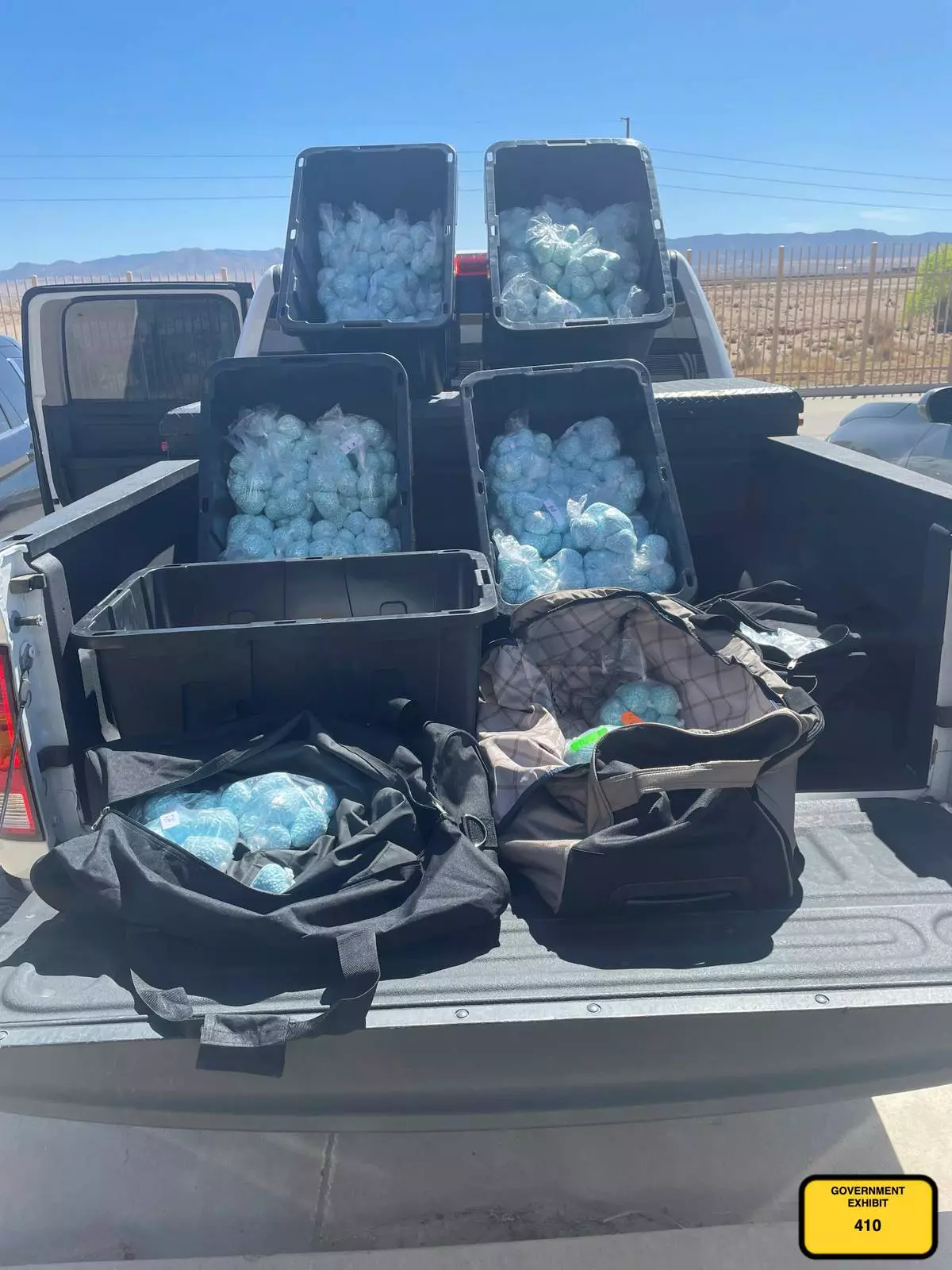
This photo provided by the U.S. Drug Enforcement Administration shows pills containing fentanyl which were seized by the DEA in New Mexico, April 28, 2025. (U.S. Drug Enforcement Administration via AP)
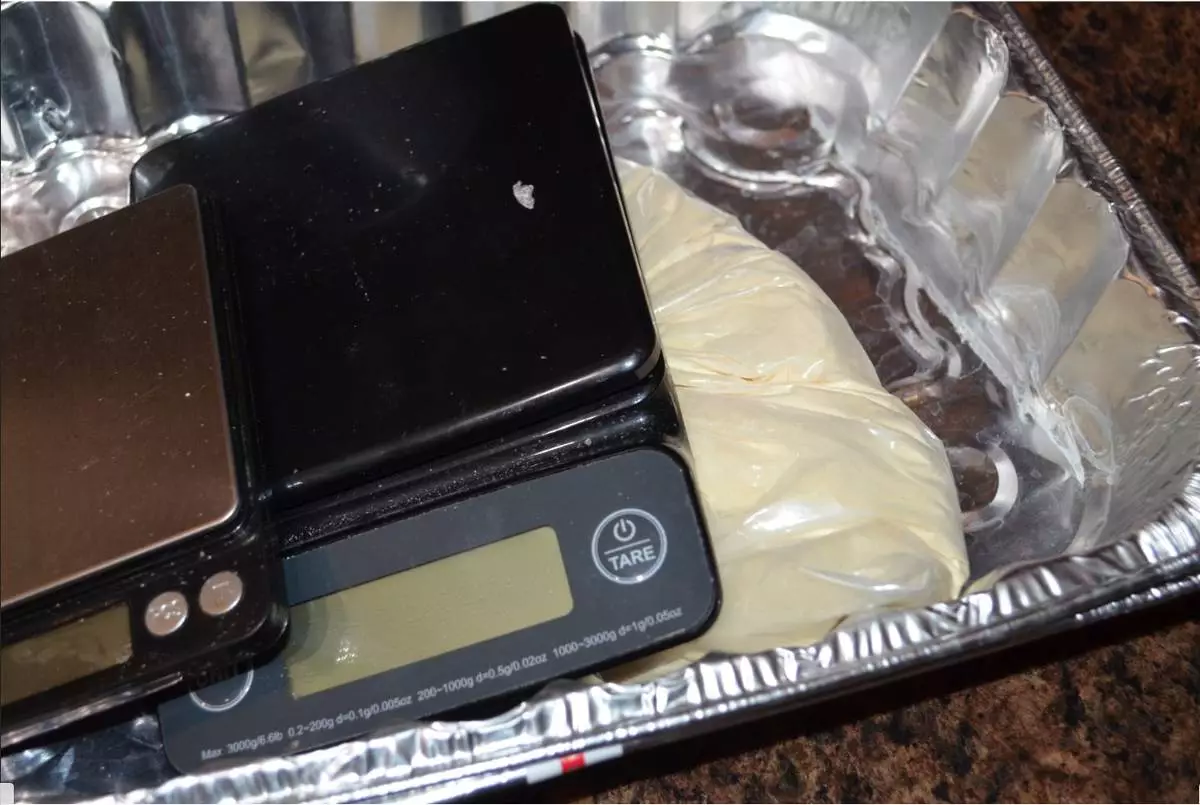
This photo shows a digital scale and unknown powder collected as evidence by the U.S. Drug Enforcement Administration from an April 28, 2025, raid on an Airbnb in Albuquerque, New Mexico, used by fentanyl traffickers. (U.S. Department of Justice via AP)
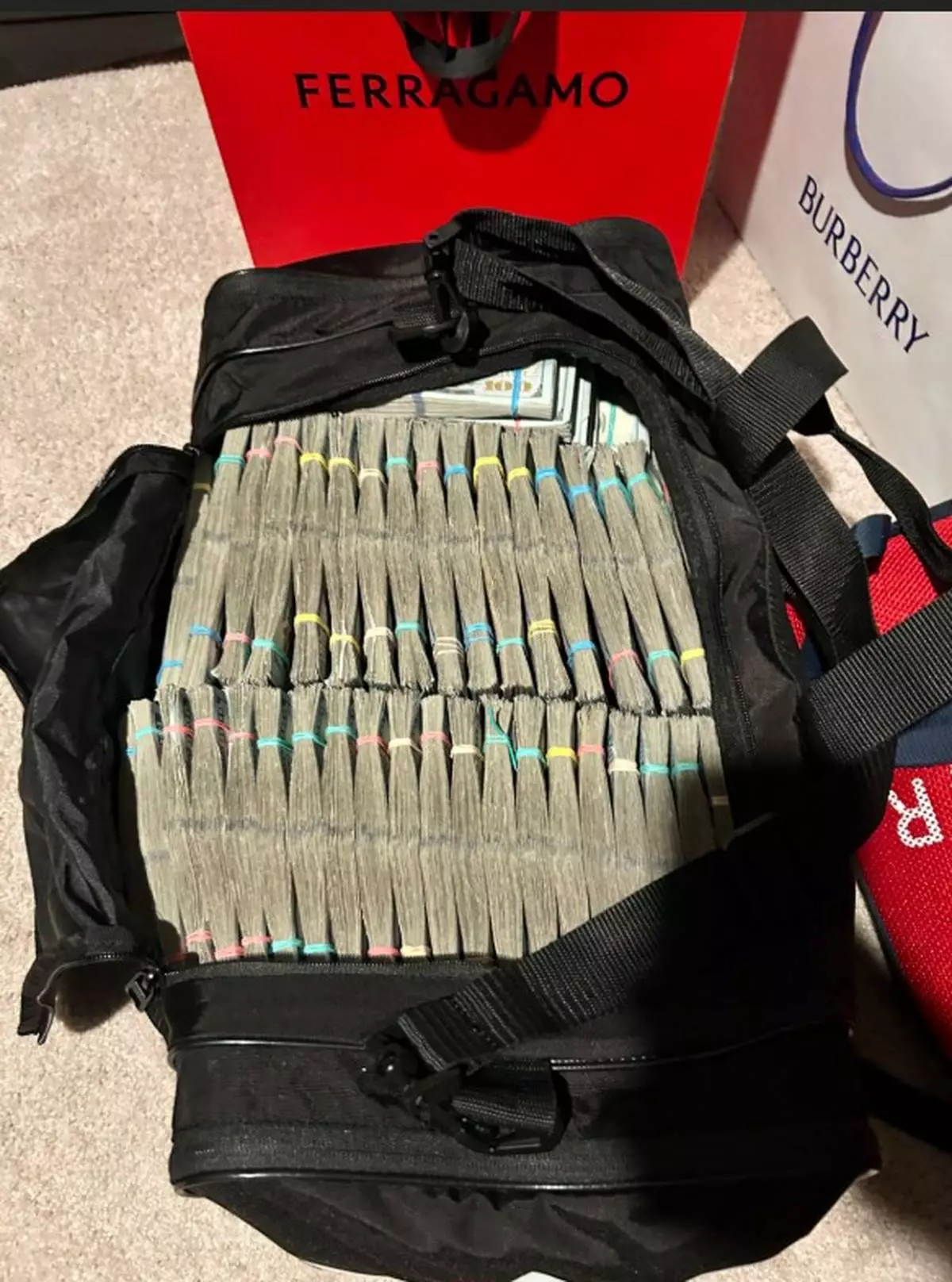
This photo shows a bag of cash seized at a home in Salem, Oregon, where the U.S. Drug Enforcement Administration arrested alleged fentanyl trafficker Heriberto Salazar Amaya, April 28, 2025. (U.S. Department of Justice via AP)
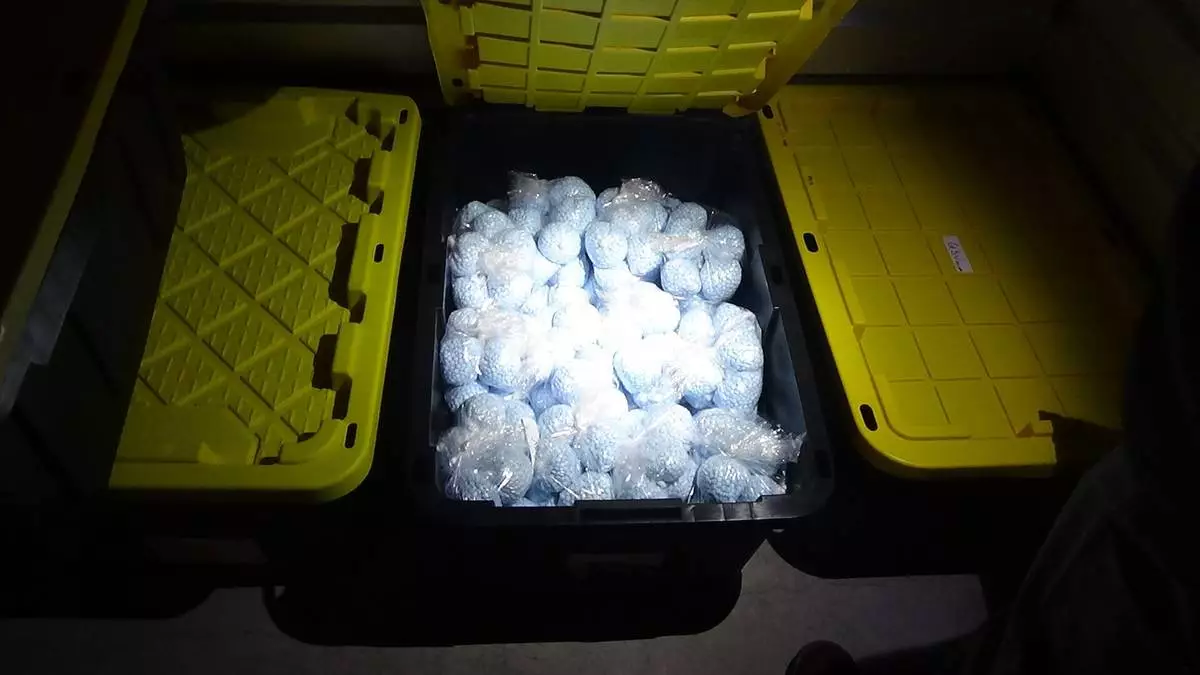
This photo shows fentanyl seized by the U.S. Drug Enforcement Administration at an Extra Space self-storage facility in Albuquerque, New Mexico, April 28, 2025. (U.S. Department of Justice via AP)

FILE - Attorney General Pam Bondi attends a press conference at the Justice Department, May 6, 2025, in Washington. (AP Photo/Julia Demaree Nikhinson, File)
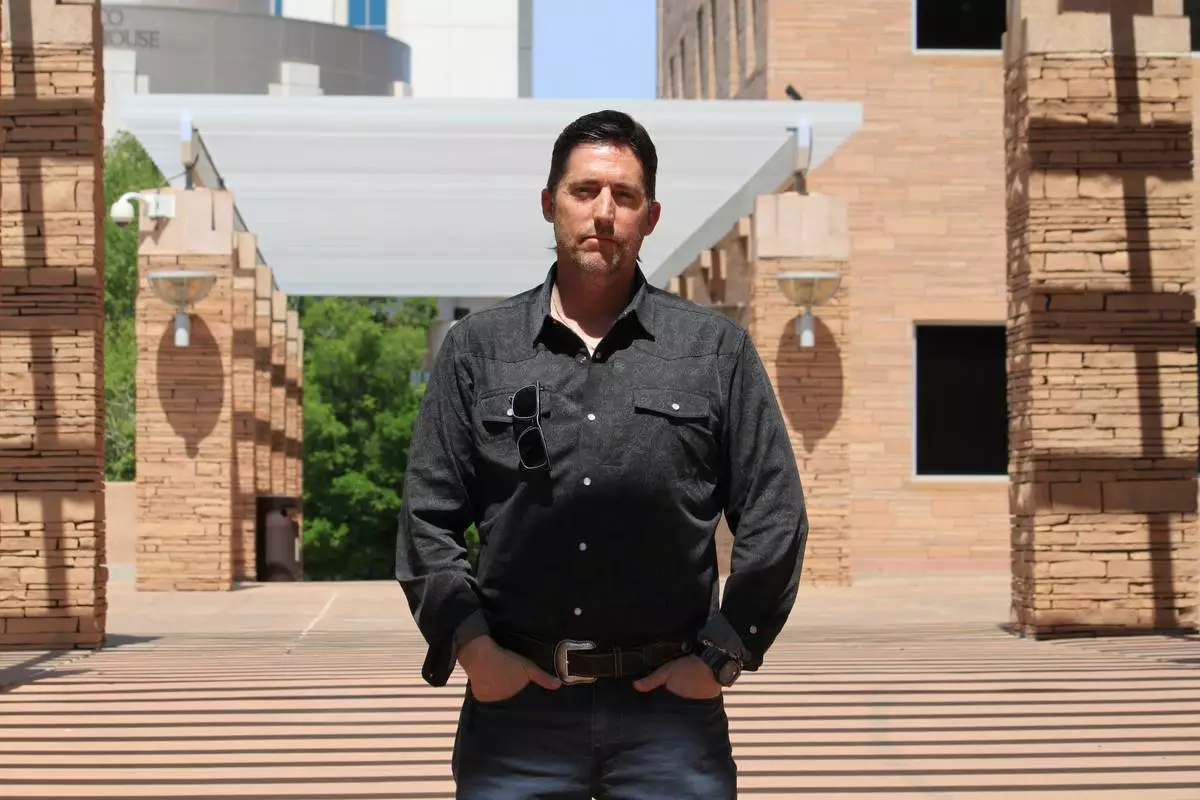
FILE - DEA Special Agent David Howell, who filed a whistleblower complaint, poses for a portrait outside the U.S. district courthouse in Albuquerque, N.M., June 12, 2026. (AP Photo/Susan Montoya Bryan, File)