SALT LAKE CITY--(BUSINESS WIRE)--Nov 24, 2026--
ReposiTrak, Inc. (NYSE: TRAK) today announced that a frozen foods distributor has selected Touchless Retail™ to replace driver-performed merchandising with professional pack-out and light-touch services delivered by SPAR’s APEX merchandising team immediately following product deliveries.
This press release features multimedia. View the full release here: https://www.businesswire.com/news/home/20261124942561/en/
Under this approach, delivery drivers can drop off products and move directly to their next stop, while APEX merchandisers follow behind to stock freezer cases, replenish displays and ensure products are ready for shoppers. This coordinated execution reduces driver time in stores, improves route efficiency and maintains product availability without delaying merchandising.
Touchless Retail delivers these services at approximately 50% less than traditional hourly merchandising costs, using only the top 10% of merchandisers, with a 99%+ on-time and show-up rate and less than 0.5% rework.
"Every minute a frozen foods driver spends merchandising inside a store is time that could be spent making another delivery," said Randy Fields, chairman and CEO of ReposiTrak. "With Touchless Retail, our APEX merchandisers work directly behind the delivery vehicle, getting products into freezer cases while drivers move on to their next stop. It's better route efficiency, professional merchandising and roughly half the traditional cost."
The distributor will utilize two core Touchless Retail services:
For frozen foods distributors, separating delivery and merchandising responsibilities addresses a longstanding operational challenge. Drivers often spend significant time inside stores stocking products, extending routes and limiting the number of deliveries they can complete.
By scheduling APEX merchandising immediately behind deliveries, distributors can increase driver productivity while maintaining consistent, high-quality in-store execution. The fixed-cost model also provides predictable merchandising expenses without the higher costs of traditional hourly services.
Touchless Retail supports a wide range of direct store delivery (DSD) categories and can be deployed independently of ReposiTrak's Scan-based Trading (SBT 2.0) solution.
About ReposiTrak
ReposiTrak, Inc. (NYSE: TRAK) is an AI-powered, integrated platform that connects retailers, wholesalers, suppliers, and food manufacturers through a suite of applications designed to reduce risk, support regulatory compliance, strengthen operational controls, and protect brand integrity. The ReposiTrak platform serves as a shared system of record across its solution areas, maintaining and synchronizing complex supplier and customer data to enable secure, accurate, and scalable information exchange.
ReposiTrak’s solutions are organized into three core product families: traceability, compliance and risk management, and supply chain solutions. Through its scalable, cloud-based platform and U.S.-based team of experts, the Company helps organizations streamline operations, improve data transparency, and meet evolving regulatory requirements across the food supply chain.
For more information, visit repositrak.com.
About SPAR Group
SPAR Group is a merchandising and retail services company providing in-store merchandising, product resets, remodels, and other retail execution services. Its field teams support retailers and consumer brands in improving product presentation, implementing merchandising programs, and maintaining consistent execution across retail locations.
For more information, visit sparinc.com.
Forward-Looking Statements
Any statements contained in this press release that are not historical facts are forward-looking statements as defined in the U.S. Private Securities Litigation Reform Act of 1995. Words such as “anticipate,” “believe,” “estimate,” “expect,” “forecast,” “intend,” “may,” “plan,” “project,” “predict,” “if,” “should” and “will” and similar expressions as they relate to ReposiTrak Inc. are intended to identify such forward-looking statements. ReposiTrak may from time-to-time update these publicly announced projections, but it is not obligated to do so. Any projections of future results of operations should not be construed in any manner as a guarantee that such results will in fact occur. These statements are subject to known and unknown risks, uncertainties and other factors that may cause actual results to differ materially from those projected.

Using Touchless Retail™ to stock frozen foods, keeping the delivery driver moving.
Democrats who ran on abortion rights platforms won big in elections for Congress and state government offices. But it's not likely that they'll be able to impose quick and vast abortion policy changes.
That’s because Democrats did not take full control of the legislatures and governor's offices in states with the strictest laws — those that ban abortion at six weeks or all stages of pregnancy.
And in Congress, Democrats who will control both the House and Senate could attempt to bar states from adopting some kinds of abortion bans, but any move would likely meet a veto from President Donald Trump, which couldn't be overridden without GOP help.
Abortion has been primarily a state government issue since the U.S. Supreme Court’s 2022 ruling that struck down Roe v. Wade allowed states to enforce bans. Now, 13 states ban abortion at all stages of pregnancy — with some exceptions — and four more do so after about the first six weeks.
In 2027, Democrats will have control of both legislative chambers and the governor’s office in six states where they currently share power with Republicans. Those states — Arizona, Michigan, Minnesota, Nevada, Pennsylvania and Wisconsin — already allow abortion through until at least fetal viability, which is generally considered to be sometime after 21 weeks of pregnancy.
Abortion is currently allowed through the first 20 weeks from fertilization, or about 22 weeks' gestation in Wisconsin and 23 in Pennsylvania. Democrats kept the governorships and gained full power in the legislatures in the elections in both states.
Wisconsin Gov.-elect David Crowley and Pennsylvania Gov. Josh Shapiro are both calling for leveraging that power to amend their states’ constitutions to create a right to abortion.
Voters in a dozen states already have passed similar amendments, including two — Nevada and Virginia — this year. Voters in November also kept such protections in Missouri but defeated an initiative to add them to state law in Idaho.
In Georgia, where Democrats gained the House and the governor's office, abortion is banned in most cases after fetal cardiac activity can be detected — around six weeks into pregnancy and before many women realize they’re pregnant.
Josh McLaurin, the incoming Democratic lieutenant governor, is optimistic that one Republican state senator would be willing to join Democrats to repeal that law.
The measure could get at least a vote in the Senate, he said, because Republicans will have a 29-27 majority and may not take a “hyper-partisan approach” to block it.
McLaurin said that voters see the ban as a healthcare issue, especially after a state review board in 2024 found that two women died in Georgia after doctors were hesitant to perform abortions that could have saved their lives.
Still, Democratic Gov.-elect Keisha Lance Bottoms acknowledged that a GOP-held state Senate could be an obstacle.
“If we see a pathway to do something about it this session, then we’re going to take that opportunity," Bottoms said at a news conference. “And it may not be this session.”
After winning the attorney general election in Texas, Democrat Nathan Johnson said he would not sue out-of-state medical providers who prescribe abortion pills via telehealth and ship them to patients in the state as the outgoing attorney general, Republican Ken Paxton, has done. Paxton dropped his suits in November.
Those pills often come from states that seek to protect medical professionals who prescribe them through telehealth and ship them to patients in places with bans. That practice is why the number of abortions has been higher since the fall of Roe. It's also the heart of the current abortion legal battles.
Johnson could also withdraw Texas from a lawsuit challenging federal policy on the abortion pill mifepristone and decide not to defend the state's abortion restrictions against lawsuits.
“It is deeply gutting that now we don’t have Texas to be fighting with the pro-life side on this,” said Kelsey Pritchard, spokesperson for SBA Pro-Life America.
Pritchard and other anti-abortion activists are pushing the Trump administration to make mifepristone harder to get by persuading the U.S. Food and Drug Administration, which is studying the drug, to bar filling prescriptions through the mail or at pharmacies. The FDA has said it'll have more information by March.
They're also counting on remaining Republican state attorneys general to keep up the fight.
Ohio lawmakers this month passed legislation to bar telehealth prescriptions for mifepristone sent into the state and to reimpose a 24-hour waiting period before obtaining an abortion. It’s not clear whether outgoing Republican Gov. Mike DeWine will sign them into law — or how courts would rule on legal challenges. Voters passed a constitutional amendment protecting abortion access in 2023.
Ingrid Duran, state legislative director at the National Right to Life Committee, said her group will keep pushing measures that Democrats sometimes support — such as supporting ways for women to anonymously and safely give up newborns for adoption. And, she said, it will encourage anti-abortion bills that may not have much of a chance of passing now as a way to build for the future.
“We're not going to give up just because it's going to be more challenging,” she said.
Some congressional Democrats are planning to push forward a measure that would bar states from banning abortion before viability and rescind restrictions that some states have — such as requiring multiple doctor’s visits or ultrasounds.
With a Trump veto expected if it reaches him, the effort would be aimed largely at forcing him to reject a policy that has public opinion on its side.
About 6 in 10 U.S. voters said abortion should be legal in all or most cases, according to The AP Voter Poll, a survey of more than 100,000 midterm voters in all 50 states.
Associated Press journalists Scott Bauer, Kate Brumback, Marc Levy, Amelia Thomson-DeVeaux and Anna Wilder contributed to this article.
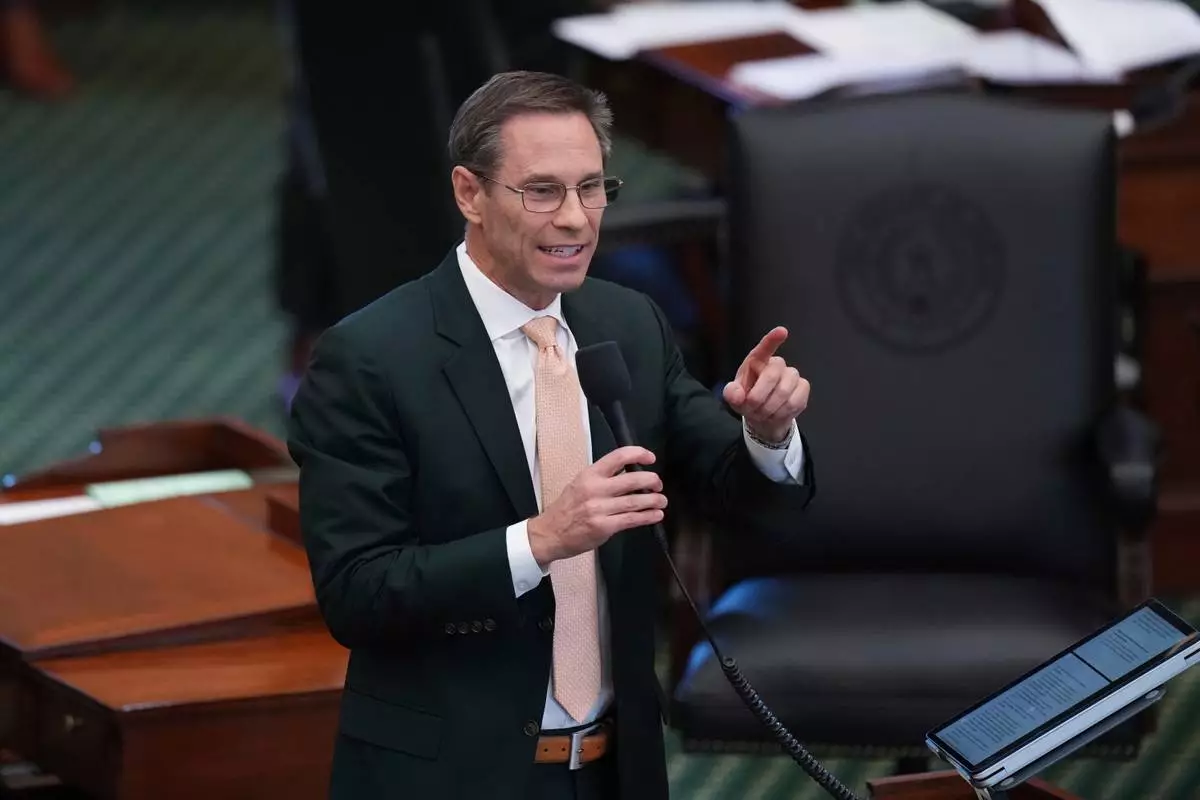
FILE - Texas state Sen. Nathan Johnson, D-Dallas, speaks against a bill that would add new abortion restrictions Sept. 3, 2025, in Austin, Texas. (AP Photo/Eric Gay, File)
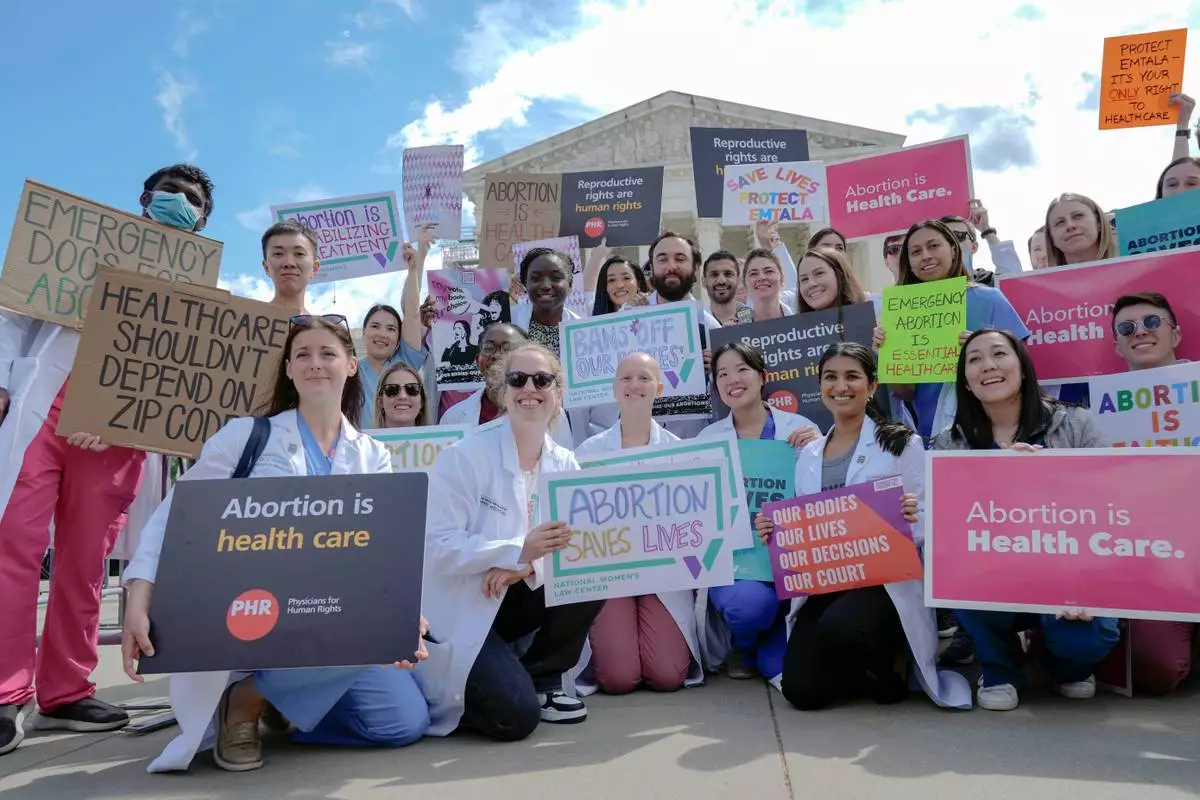
FILE - Abortion-rights activists rally outside the Supreme Court, April 24, 2024, in Washington. (AP Photo/Mariam Zuhaib, File)