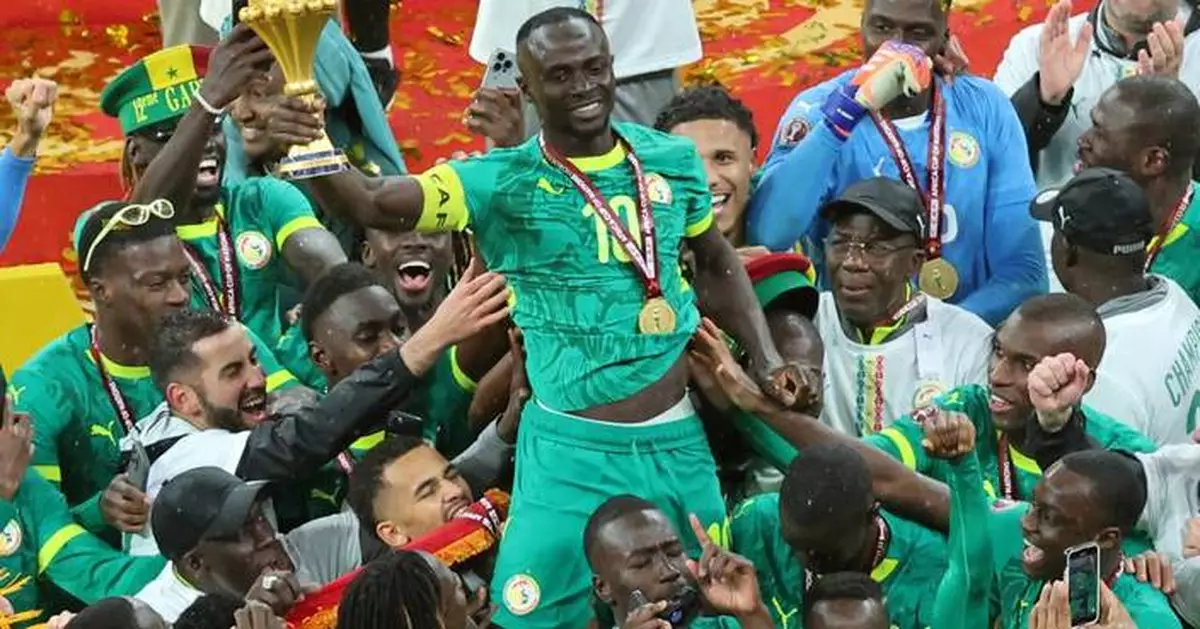
Senegal won back the Africa Cup of Nations title in a legal fight on Tuesday after the Court of Arbitration for Sport overturned an earlier ruling which handed the trophy to Morocco.
Senegal won the Africa Cup on the field in a chaotic final in Morocco in January and then lost it in a legal case in March because its players walked off the field in protest in second-half stoppage time.
CAS has now rejected that earlier ruling, based on referee Jean-Jacques Ndala’s decision to let the game resume after the protest.
“Once again and forever, champions of Africa,” the Senegalese soccer federation posted on social media.
Tournament regulations said a team which refuses to play should be considered to have lost the game, but CAS said those rules were meant only for cases “when a team’s conduct leads the referee to call off the game permanently.”
Ndala “did not err in law” when he resumed the game and had “sole authority” to make that call, CAS said, adding its three judges were unanimous.
“The panel acknowledged that the referee had to make a decision in an atmosphere of extreme tension,” CAS said. “However, these circumstances do not justify describing the decision as ‘arbitrary.’ On the contrary, the referee’s judgment did not appear to have been affected by factors external to the game.”
Senegal won the final 1-0 after extra time with chaos on the field and violent clashes in the stands. Even the ball boys were involved in scuffles as they tried to snatch towels that Senegal goalkeeper Edouard Mendy was using to keep his gloves dry.
The result was overturned two months later as a 3-0 default win for Morocco by an appeals panel appointed by the Confederation of African Football (CAF).
Senegal beat AFCON host nation Morocco after a 15-minute delay in play. At 0-0, Senegal’s team walked off the field to protest Morocco being awarded a penalty kick in the last minute of regulation time.
Match referee Ndala of Congo eventually allowed the game to restart, Morocco’s penalty by Brahim Diaz was saved, and Senegal won in extra time.
The drama continued through the months of legal tussles. Senegal's players paraded with the trophy ahead of a game in March against Peru, even though Morocco was recognized as the champion at that point. Both teams played at the World Cup believing themselves to be the rightful champion of Africa.
Senegal had the laws of the game on its side, and Morocco had the tournament regulations.
The laws of soccer state that referee decisions are final. CAS backed that position with its own “field of play” doctrine, that on-field calls by a referee generally can't be taken to the sports court.
“By blowing his whistle to restart play, the referee considered that the conditions for resuming the match had been met — both teams were on the pitch again, and both expressed their willingness to resume,” CAS said.
In the first legal case in March, CAF appeal judges cited AFCON tournament regulations that if a team “refuses to play or leaves the ground before the regular end of the match without the authorization of the referee, it shall be considered loser and shall be eliminated for good from the current competition.”
The CAS judges heard evidence at a one-day hearing last month and the court promised a verdict by the end of November with a full written ruling of its judges setting out reasons for their decision.
CAS verdicts can be challenged at Switzerland’s supreme court though only on limited procedural grounds.
The next men’s AFCON starts in June co-hosted by Kenya, Uganda, and Tanzania.
"Senegal won on the pitch, and the court simply confirmed what we all already knew: We are the real champions of Africa,” said Mariama Sidibé, 35, an accountant in the capital, Dakar.
Sidibé said the dispute between Morocco and Senegal should now be left in the past.
“With all of this behind us, we should focus on what unites us now, and who knows, maybe Morocco can have its revenge on the field during the next AFCON this summer,” she said.
“At the end of the day Morocco and Senegal are brothers,” Sidibé added, referring to the countries' long shared close ties built on religion, trade and culture.
Sidi Sylla, a philosophy student at Dakar’s main university, said the court’s ruling was “not just a win for Senegal but for football in general.”
Mark Banchereau in Dakar, Senegal, contributed to this report.
See AP’s full soccer coverage here

Matthieu Reeb, Director general of the Court of Arbitration for Sport (CAS) announces to the journalists the decision of the Court of Arbitration for Sport regarding the appeal filed by Senegalese Football Federation following the 2025 Africa Cup of Nations (AFCON) final, at the CAS headquarters in Lausanne, Switzerland, Tuesday, Nov. 24, 2026. (Jean-Christophe Bott/Keystone via AP)
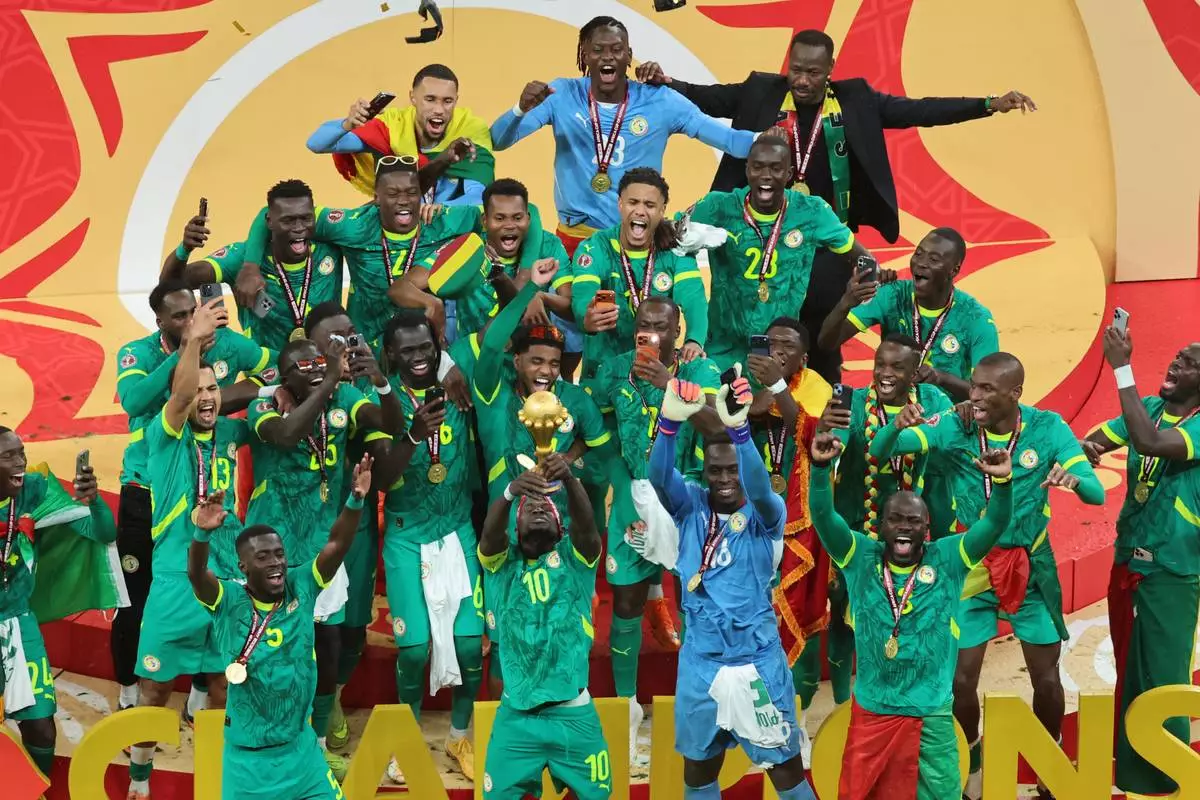
FILE - Senegal's Sadio Mane holds the trophy aloft as he celebrates with teammates after winning the Africa Cup of Nations final soccer match between Senegal and Morocco in Rabat, Morocco, Jan. 18, 2026. (AP Photo/Youssef Loulidi, File)
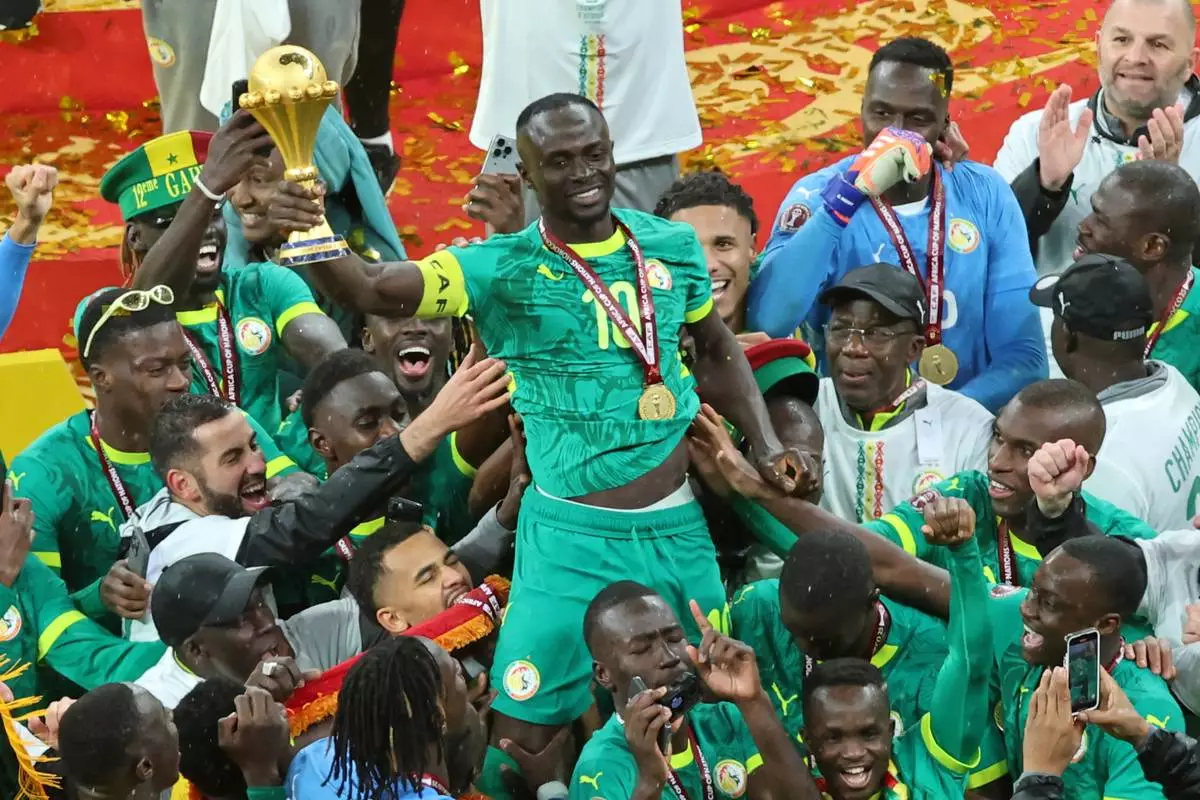
FILE - Senegal's Sadio Mane holds the trophy aloft as he celebrates with teammates after winning the Africa Cup of Nations final soccer match between Senegal and Morocco in Rabat, Morocco, Sunday, Jan. 18, 2026. (AP Photo/Youssef Loulidi, File)