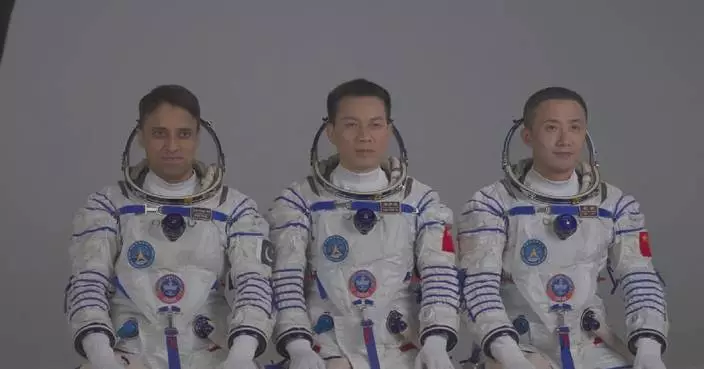
A send-off ceremony for the Shenzhou-24 crew, consisting of two Chinese astronauts and one Pakistani astronaut, was held early Wednesday morning at the Jiuquan Satellite Launch Center in northwest China.
The Shenzhou-24 crewed spaceship is scheduled to lift off at 08:18 (Beijing Time) Wednesday from the launch site.
The crew, consisting of commander Tang Hongbo, flight engineer Wu Yi, and Pakistani payload specialist Muhammad Zeeshan Ali, reported to the commander-in-chief of China's manned space program that they were ready to undertake their mission.
After receiving an order from the commander-in-chief, the astronauts boarded their transport vehicle and departed for the launch site amid cheers from a crowd of well-wishers.
The mission marks the first joint flight involving Chinese and foreign astronauts in the history of the country's manned space program.
After completing a short stay in China's space station during the crew handover process, the Pakistani astronaut will return to Earth aboard the Shenzhou-23 spacecraft.
One of the Shenzhou-23 astronauts, Zhu Yangzhu, will remain in the Tiangong space station to complete a year-long stay in orbit, double the usual duration of previous Shenzhou missions.
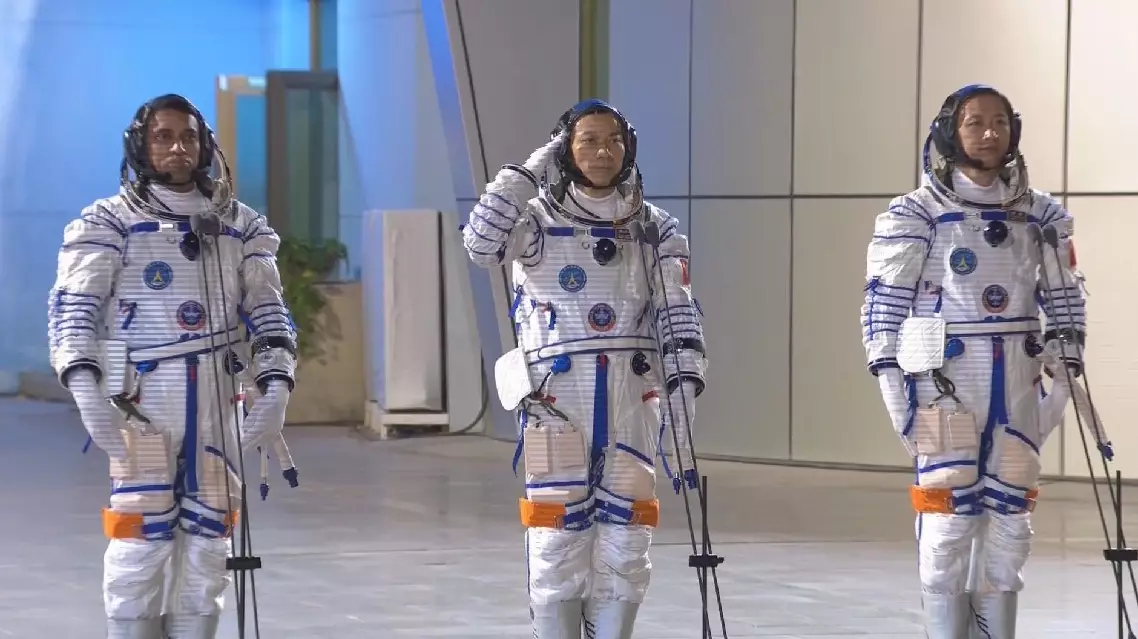
Send-off ceremony held for Shenzhou-24 astronauts
A series of new policies introduced this year are fueling the expansion and upgrading of China's auto consumption, spanning new vehicle purchases, aftermarket services, used-car circulation and streamlined registration processes.
In June, the Ministry of Commerce and seven other government departments selected 40 pilot cities for auto circulation and consumption reform, covering new vehicle sales, used-car circulation, end-of-life vehicle recycling and aftermarket sectors such as auto modification, RV camping and motorsports. Separately, the ministry and eight other departments issued 17 measures to boost auto aftermarket consumption.
In Hefei, east China's Anhui Province, these policies are delivering tangible results.
At a new energy vehicle delivery center, local resident Lu Qinyun completed her vehicle inspection and registration via a mobile app in just half an hour, a process that previously required lengthy visits to multiple departments.
"Previously, after picking up the car, I had to get an invoice, buy insurance, and then take the documents to the tax bureau, the vehicle management office, and queue up for inspection. Even taking half a day off wasn't enough to get it done smoothly, and the license plate took several days to arrive. This time, it took half an hour to finish everything. The experience was excellent," said Lu. Many automakers in Hefei now conduct standardized pre-inspections on the assembly line, uploading vehicle identification numbers and photos before the cars leave the factory.
"Manufacturers complete vehicle inspections during the production process, so there is no need to inspect the car again when registering it. The 12123 App automatically verifies information such as invoices, purchase taxes, and insurance. The service window only reviews the information without manual entry, achieving a fully electronic and paperless process," said Tao Yubao, a staff member at the Hefei Public Security Bureau's Vehicle and Driver Management Office.
Beyond streamlining new vehicle registration, China has also designated 40 pilot cities for auto circulation and consumption reform, backing local initiatives in areas such as used-car circulation and vehicle use.
Experts say the policies rolled out this year continue to drive the expansion and upgrading of auto consumption.
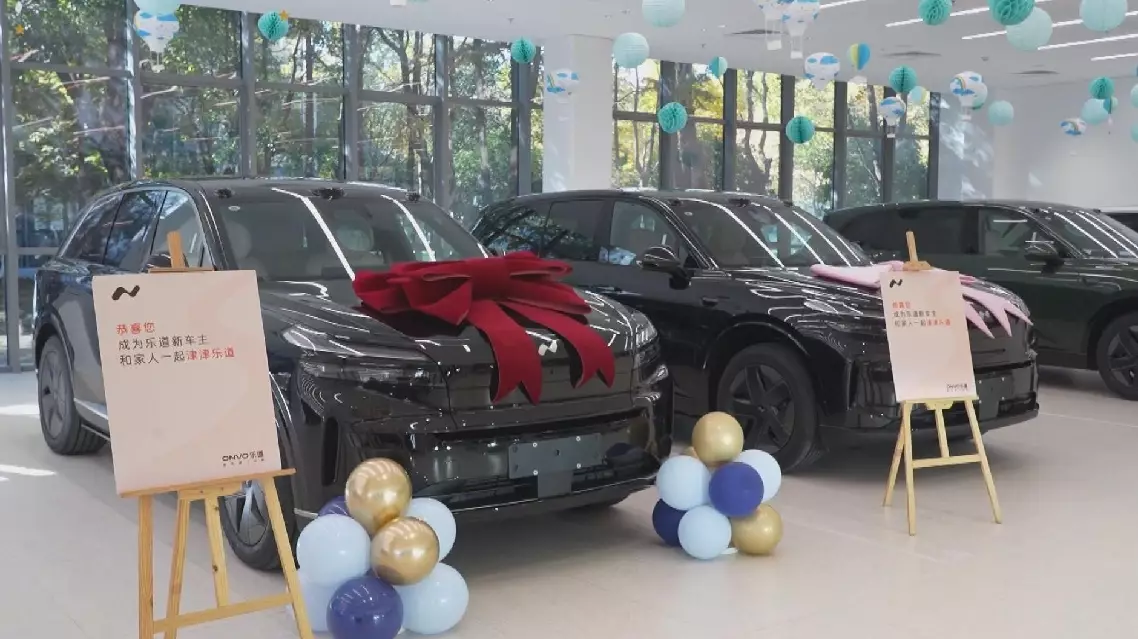
New policies fuel China's auto consumption expansion