Speech by FS at Hong Kong Dinner in London (with video/photos)
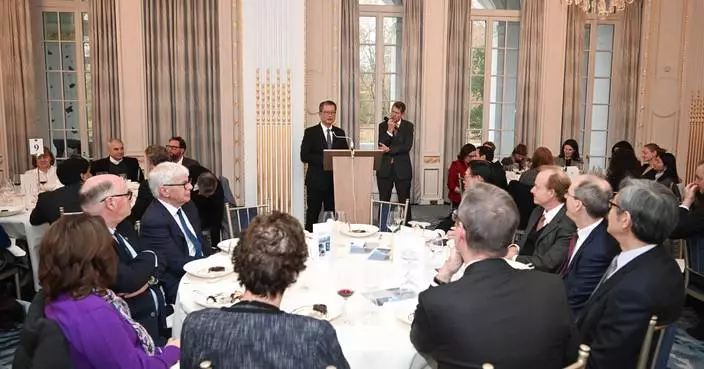
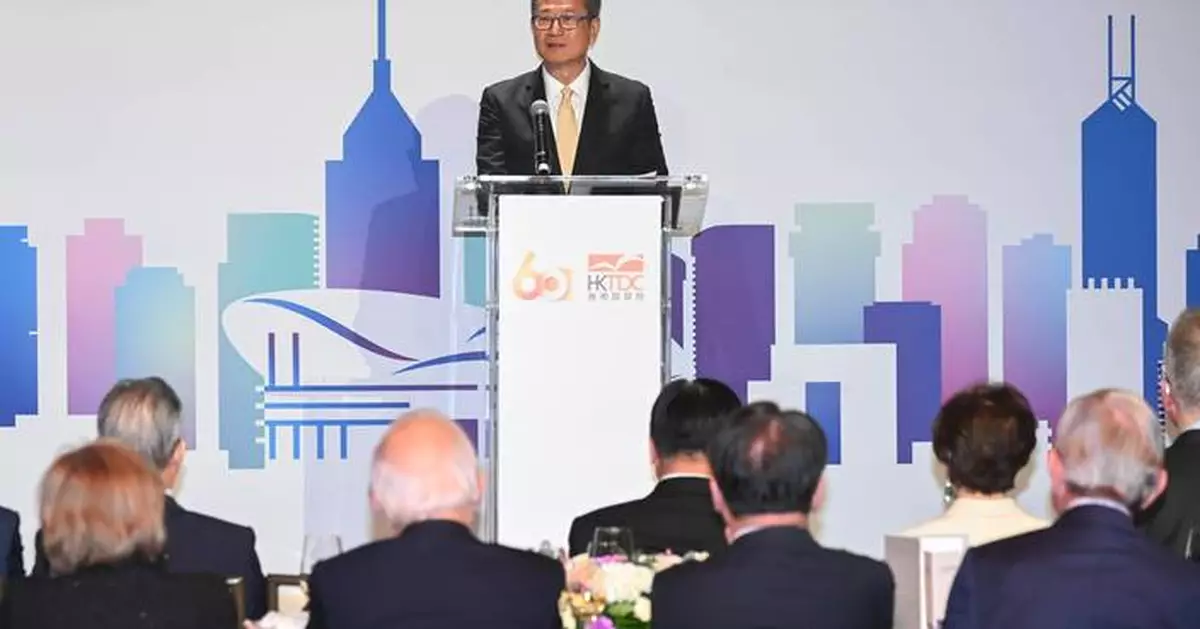
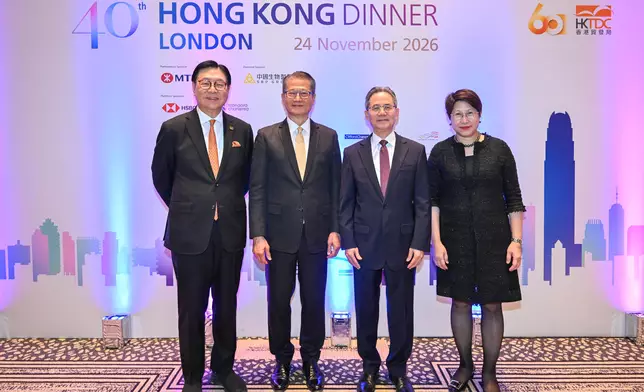
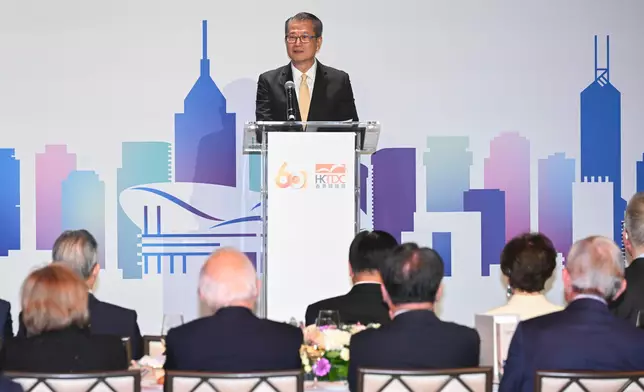
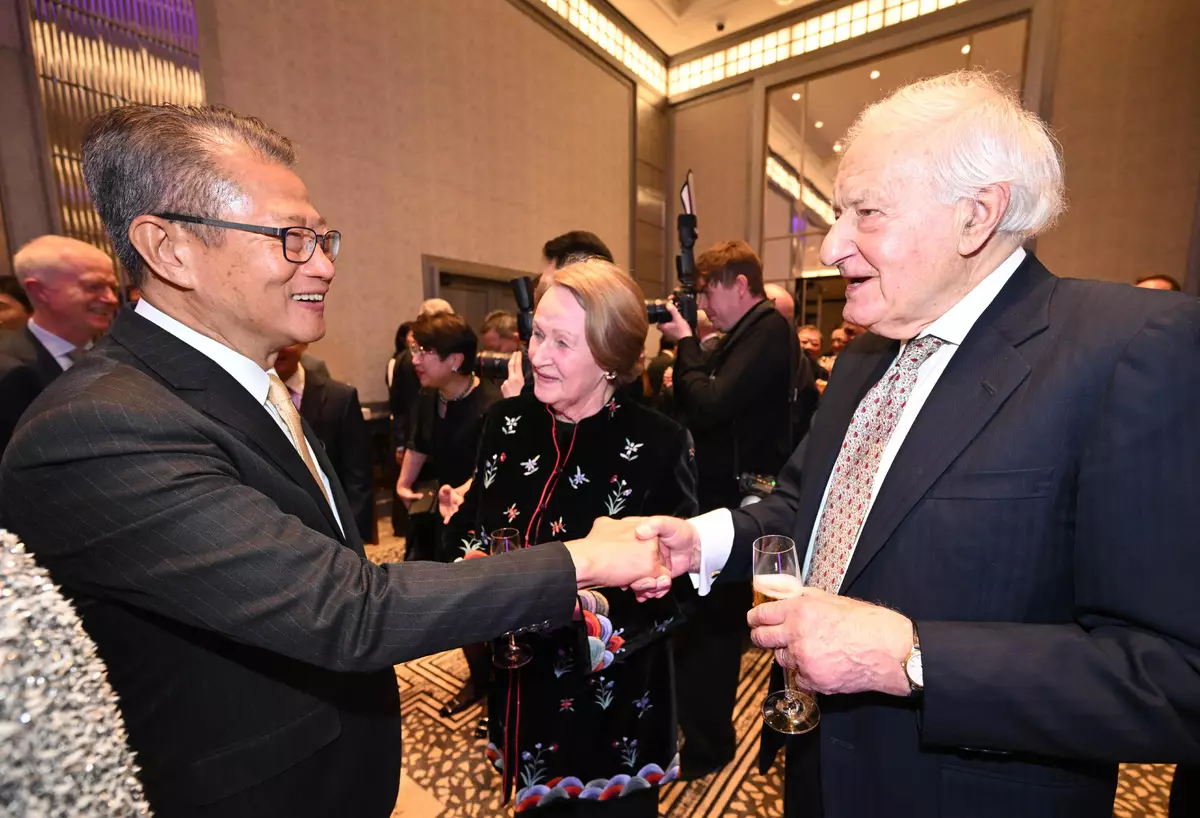
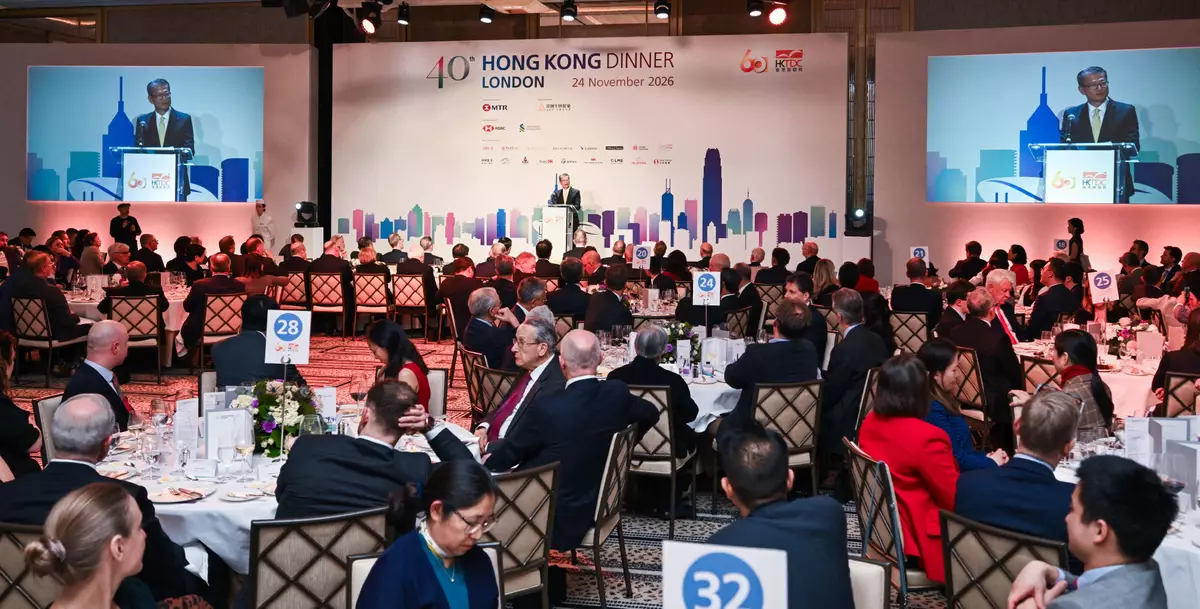
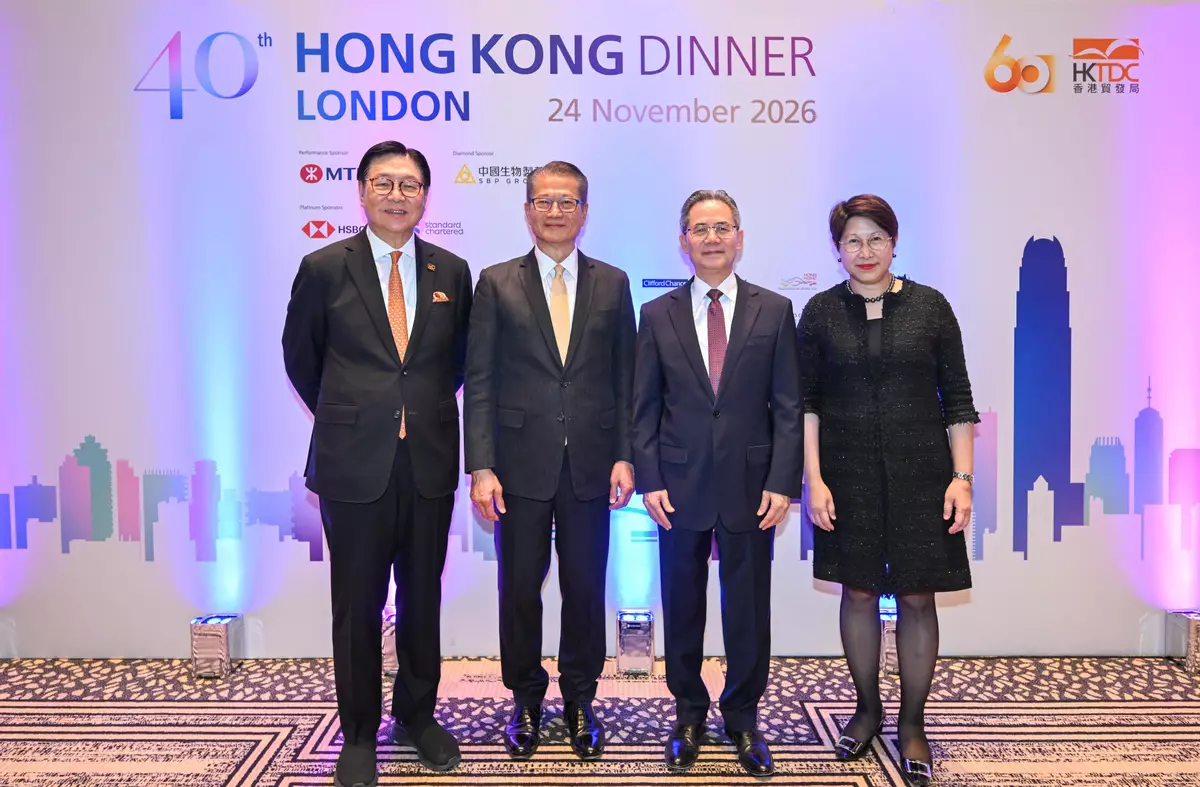
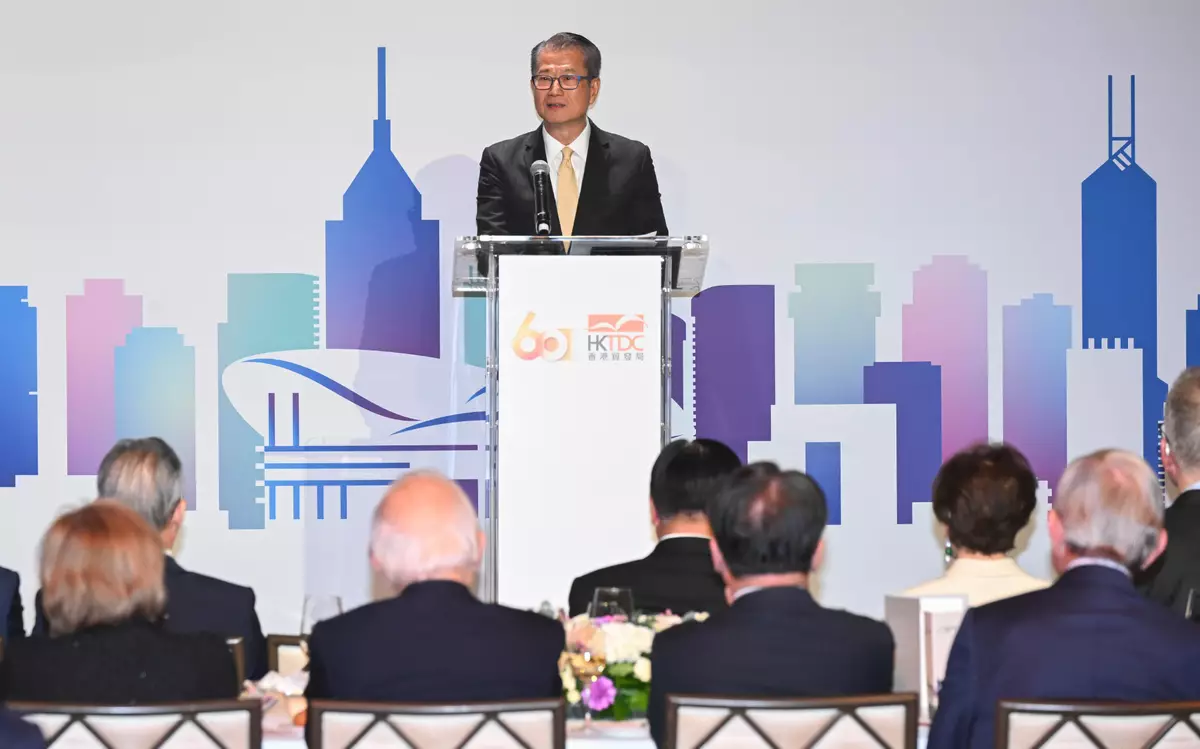
Following is the speech by the Financial Secretary, Mr Paul Chan, at the Hong Kong Dinner in London yesterday (November 24, UK time):
Click to Gallery
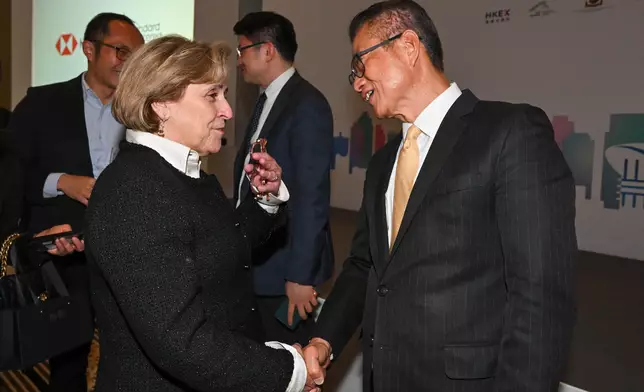
Speech by FS at Hong Kong Dinner in London (with video/photos) Source: HKSAR Government Press Releases
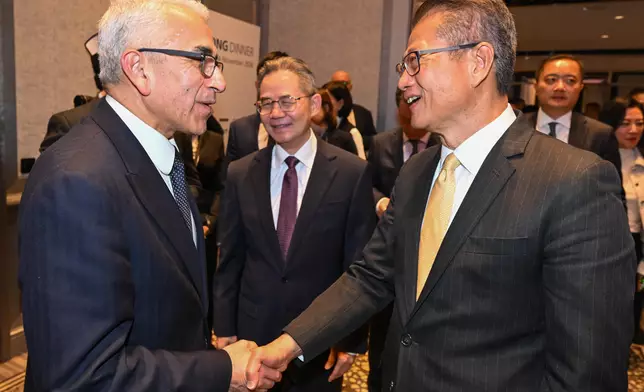
Speech by FS at Hong Kong Dinner in London (with video/photos) Source: HKSAR Government Press Releases
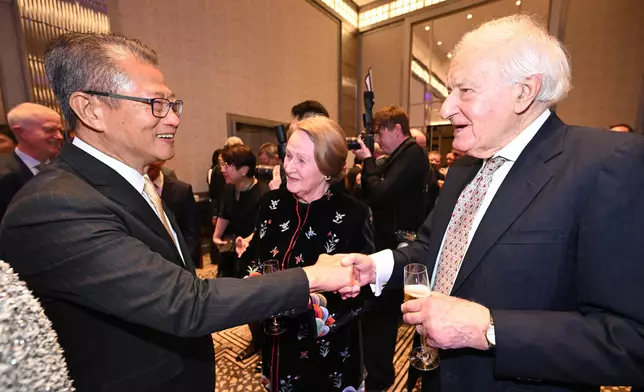
Speech by FS at Hong Kong Dinner in London (with video/photos) Source: HKSAR Government Press Releases
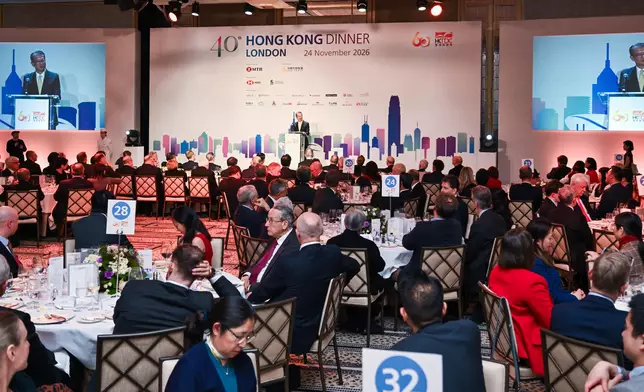
Speech by FS at Hong Kong Dinner in London (with video/photos) Source: HKSAR Government Press Releases
Speech by FS at Hong Kong Dinner in London (with video/photos) Source: HKSAR Government Press Releases
Speech by FS at Hong Kong Dinner in London (with video/photos) Source: HKSAR Government Press Releases
Ambassador Zheng (Chinese Ambassador to the United Kingdom, Mr Zheng Zeguang), Fred (Chairman of the Hong Kong Trade Development Council, Professor Frederick Ma), distinguished guests, ladies and gentlemen,
Good evening.
It is a great pleasure to welcome you to the Hong Kong Dinner in London, the landmark 40th edition. An annual celebration of our eternal ties, this good evening is also an opportunity to update you on what we've been up to these past 12 months.
An accountant by training, I think of this as our annual report. The difference is that tonight the shareholders get to eat while I speak, and nobody has to vote.
Let me begin with our splendid venue, the Peninsula London. The hotel was built by a Hong Kong company founded in 1866. It opened its doors here at Hyde Park Corner just three years ago. That, ladies and gentlemen, is a fair picture of Hong Kong and Britain today: old ties renewed by new investment, enjoyed by us all.
The figures also tell a good story. By your Government's count, trade between us reached 33 billion pounds in the year to June, up 23 per cent. Some 770 British companies have a presence in Hong Kong, 7 per cent more than the previous year.
Economic update
Hong Kong's economy expanded by 5.1 per cent over the first nine months, the fastest pace for that period in five years. Exports are leading the way: goods exports climbed nearly 30 per cent in the first three quarters, lifted by strong global demand for AI-related electronics. At the same time, domestic demand remains solid, with private consumption up 3.5 per cent and investment up close to 10 per cent . Visitor numbers rose by some 12 per cent , year to date.
Underlying inflation is low, at 1.7 per cent over the first nine months, and unemployment has edged down to 3.8 per cent . Home prices have risen by around 7 per cent this year, and the office market is stabilising, with rents edging up.
We forecast a 4.8 per cent growth for the year as a whole. In British terms, I believe that is called "not bad".
Our performance, in finance and much else, has not gone unnoticed. The Fraser Institute again this year rated Hong Kong the world's freest economy. The IMD (International Institute for Management Development) ranked us second, globally, for competitiveness, our best ranking since 2019.
And we stand third in the Global Financial Centres Index, just one fine point behind London.
Just days ago, the Globalization and World Cities Research Network, based in the UK, published its latest ranking of 785 cities by how closely they are connected to the global economy. Hong Kong ranks third in the world and first in Asia.
Our rankings rest on our enduring institutional strengths under the "one country, two systems" framework: common law, a simple and low tax regime, a free port and the free flow of capital, goods, people and information. The Government is pro-business, and maintains a balanced regulatory framework that aligns with the best international standards. Our city is open, stable, safe and prospering. These are the conditions investors and businesses look for, the world over.
In a time of volatility, Hong Kong has become a safe harbour. Bank deposits have risen 8.1 per cent, to more than 2.1 trillion pounds. Assets under management stand at some 4.2 trillion pounds, up 20 per cent, making us the world's leading cross-boundary wealth management centre. And Hong Kong-domiciled funds drew net capital inflows of about 14 billion pounds in the first three quarters.
And we offer opportunities, too. In September, we published Hong Kong's First Five-Year Plan, which sets out our development directions and areas of focus, with KPIs.
In some places, policy can change between breakfast and lunch, and occasionally between two social media posts. We have taken the unfashionable step of writing ours down, for five years.
The Plan aligns with the National 15th Five-Year Plan which supports Hong Kong's development as "four centres and one hub". You know three of the centres well: finance, trade, and maritime together with aviation. The hub is all about talent, while the fourth centre is innovation and technology.
Becoming AI native
And at the heart of innovation and technology is artificial intelligence. We promote AI as a core industry in its own right. Three universities in Hong Kong rank within the global top 30 in data science and AI. And we are advancing on multiple fronts: computing power, data, algorithms, applications, capital and talent. Meanwhile, we also see AI as a powerful lever to empower every other sector.
Britain knows better than most how such a transition unfolds. When electricity reached the factory floor, owners simply replaced the steam engine with a motor. The real gains came later, when the factory itself was redesigned around the new power. It's the same with AI. A business that simply uses AI does things faster. A business that is AI native rebuilds its products and organisation - even the entire business model. That is the AI we want to grow in Hong Kong.
AI will, of course, change jobs. It raises hard questions about governance and safety, challenges common to us all. It was at Bletchley Park, three years ago, that China, the United States and the European Union signed a declaration on AI safety. Hong Kong's response is to prepare our people rather than hold back the technology.
Under "AI for All", we are rolling out more than 200 training courses for students, professionals and the wider workforce, and reviewing our laws to ensure that the rules keep pace.
In fact, Hong Kong is an excellent testing ground for AI application. We have some of the most compact homes on earth. If a robot can cross a Hong Kong flat without knocking over the teapot, it can work anywhere. Londoners will understand.
The broader innovation economy
AI is part of a broader, innovation-driven economy. One of its most promising frontiers is medical technology. Consider Cornerstone Robotics, a Hong Kong surgical robotics company founded by a professor at the Chinese University of Hong Kong. In September, it announced a strategic investment of about 540 million pounds from Medtronic, a global medical technology group. Its robots are now at work in NHS (National Health Service) hospitals in Portsmouth and east London. And the company is testing AI-guided autonomous surgical tasks in preclinical trials.
Another company listed in Hong Kong, Insilico Medicine, used generative AI to identify a new target for treating a serious lung disease, and then to design a drug accordingly. This summer, that drug entered final-stage clinical trials.
Hong Kong's medical care is of the highest international standards. Our two medical schools ranked in the global top 40. And we are building a third one in the Northern Metropolis. Indeed, our collaboration with Britain in medical and health is flourishing. AstraZeneca has a research centre in Hong Kong. About a dozen of our InnoHK laboratories are run withBritish universities, including Imperial, Oxford and University College London.
Yesterday, I was in Cambridge, where discovery is a habit several centuries old. Many of the biotech researchers and companies I met are keen to explore the market in our region. And rightly so, because scale matters. Hong Kong, powered by the Greater Bay Area, can offer that scale, thanks to cutting-edge research, outcome commercialisation, talent, capital and a market of some 88 million people.
Our innovation ambitions centre on the Northern Metropolis. One recent development will resonate with you: university towns. We are building three university towns covering more than 1 000 hectares, 300 for campuses and the rest for laboratories, technology parks, industry and homes. Education, research and industry will grow side by side, drawing strength from one another.
And work is well under way. In Hetao - the Loop, along the Shenzhen River - more than 100 companies and institutions have moved in since the science park opened last December. We are making it easier for capital, talent, goods, data and bio-samples to cross the boundary. We are also building our own system to approve new medicines. Next month, we will establish the Centre for Medical Products Regulation, a single regulator for medicines and medical devices.
British companies are in the Loop already, and British expertise is also on the ground in the Northern Metropolis. Arup, a firm founded in London, is part of the team engineering a new town at Hung Shui Kiu, the site of another Northern Metropolis university town. We would welcome British universities, laboratories and innovative companies to join us there.
Mainland going global
The Northern Metropolis brings the world into the Greater Bay Area. The Greater Bay Area, in turn, is going out to the world. Last week, at the APEC (Asia-Pacific Economic Cooperation) CEO Summit in Shenzhen, President Xi Jinping voiced support for a World Bay Area Economic Cooperation Alliance, to deepen exchanges and collaboration among the world's bay areas. For us, the point is this. What's going global now is not just companies or goods and services from the Mainland. It is the full range of capabilities the Greater Bay Area bring together: technology, capital, talent, advanced manufacturing and the know-how to take research to market.
Last year, I spoke about CATL and its expansion into Hungary. That's only the beginning. Take for example Octopus Energy, Britain's largest household energy supplier. Last year, it teamed up with Chinese carmaker BYD to announce an electric car lease for British drivers, with home charging at no extra cost. And the benefits flow both ways. This year, Octopus announced a joint venture in the Mainland, bringing British expertise to the world's largest clean energy market. That's a model of what is possible when businesses in the UK and China work together.
It is clear that many of tomorrow's multinationals will come from the Chinese Mainland, and they will deepen collaboration with partners in the UK and Europe. Hong Kong is the natural place for them to raise capital and build an international base. As more of them come to Britain and Europe, they'll create more jobs. And they'll need you: this city's bankers, lawyers, accountants and advisers. That is a partnership in which both sides win.
Core strengths as IFC
That brings me back to our core strengths as an international financial centre. Start with the stock market. In July, we reformed our listing rules to make it easier for technology companies to list in Hong Kong, and the Stock Exchange will consult the market on further reforms next year. We are also working more closely with overseas markets to encourage dual listings.
And we are also broadening what our financial centre offers.
In fixed income and currencies, we are working to a ten-point roadmap: more bond issuance, deeper liquidity and next-generation infrastructure. In particular, we are linking our bond and equity systems, so investors can cross-collateralise their holdings and put their capital to work more efficiently.
In asset and wealth management, we overtook Switzerland as the world's No. 1 cross-boundary wealth management centre, and are attracting more high net-worth individuals and family offices to Hong Kong. We are extending tax concessions on carried interests and widening tax exemptions for funds and family offices, too.
In offshore renminbi business, we are adding products, strengthening infrastructure and deepening liquidity. In August, we launched China Government Bond futures to complete the risk management tool box for institutional investors. And a new offshore renminbi bond index was introduced last week, paving the way for ETFs (exchange-traded funds) and index funds to follow. We have also observed more businesses and governments from ASEAN (Association of Southeast Asian Nations) and Central Asia, as well as multilateral agencies, coming to Hong Kong to issue bonds.
In gold and commodities, our goal is to make Hong Kong an international trading hub, with a complete chain from trading and clearing to storage and delivery. Our central clearing system for gold will formally launch early next year. More metal warehouses, approved by the London Metal Exchange, are opening, too.
Our purpose behind these, and other initiatives, is simple. Investors should be able to find what they like - whatever their risk appetite, whatever their time horizon.
Here, Hong Kong and London can do more together. London sets the global standard for bullion, and our new clearing system is built to that standard. And we are now exploring co-operation on delivery standards with the London Bullion Market Association.
Hong Kong is the world's largest offshore RMB centre, and London the leading centre outside Asia. Between us, we span the trading day. I say there's every reason to link our markets more closely together.
Talent and people
Ladies and gentlemen, markets move money, but people make markets, so let me turn finally to talent. More than 320 000 people have come to Hong Kong through our various talent schemes since 2022, most of them under 40. Last month, we brought the search to Britain, with a career showcase here in London and seminars at two universities. One was Cambridge. And in the interests of balance, the other was Oxford.
The good work, let me add, is only half the offer. The Hong Kong Sevens celebrated its 50th anniversary this spring before 113 000 people at Kai Tak Stadium. Those of you who spent an afternoon in the South Stand with four pints of beer may not recall every detail, but I was assured you enjoyed every minute. Bar Leone, the world's best bar the past two years running, is in Hong Kong - and holding your table. And we offer a winter that a Londoner would call spring. I believe the following video makes the case better than I can.
Closing
Ladies and gentlemen, next year the Hong Kong Special Administrative Region turns 30. We will reach that milestone with a growing economy, a Five-Year Plan well in hand and every confidence in all that lies ahead.
Britain has long been part of the Hong Kong story. I hope you will be part of our next chapter - as investors, as partners in business, as collaborators in technology and innovation, and as friends. Come see us. Discover a city open for business, confident in its future and happy to see you.
May I now ask you to raise your glasses: to Hong Kong and the United Kingdom. Old friends, new opportunities, our flourishing future.
Thank you.
Speech by FS at Hong Kong Dinner in London (with video/photos) Source: HKSAR Government Press Releases
Speech by FS at Hong Kong Dinner in London (with video/photos) Source: HKSAR Government Press Releases
Speech by FS at Hong Kong Dinner in London (with video/photos) Source: HKSAR Government Press Releases
Speech by FS at Hong Kong Dinner in London (with video/photos) Source: HKSAR Government Press Releases
Speech by FS at Hong Kong Dinner in London (with video/photos) Source: HKSAR Government Press Releases
Speech by FS at Hong Kong Dinner in London (with video/photos) Source: HKSAR Government Press Releases