Skip to Content Facebook Feature Image

Chula Experts Outline Thailand's Path to Quantum Computing Opportunities

Business

Chula Experts Outline Thailand's Path to Quantum Computing Opportunities
Business

Business

Chula Experts Outline Thailand's Path to Quantum Computing Opportunities

2026-11-25 10:20 Last Updated At:10:35

BANGKOK, Nov. 25, 2026 /PRNewswire/ -- Chulalongkorn University physicists are urging Thailand to build quantum expertise and strengthen research support to prepare for opportunities in computing, industry and data security. With specialists taking years to train, the university's learning programs offer a way to start preparing now.

Assistant Professor Dr. Thiparat Chotibut, Assistant Professor Dr. Salinporn Kittiwatanakul and Dr. Supanut Thanasilp, of Chula's Department of Physics, Faculty of Science, said preparation should begin before quantum computing becomes widely available.  Chula's Siam Quantum Square (SQ²) offers educational activities and free online courses for students and the public.

Thailand began developing a national quantum technology roadmap in 2017–2018, with initial research funding following in 2020. The researchers emphasized that sustained investment in knowledge and people would help the country participate in emerging industries.

Dr. Thiparat said Thailand needs not build an entire quantum computer to compete with major technological powers. Developing specific components or specialized expertise could offer a route into the industry's supply chain. Experience in quantum sensing and communication, which share some of the same underlying principles, could also lay the groundwork for advances in computing.

Quantum computing uses quantum bits, or qubits, to process information differently from conventional computers. Potential applications include molecular simulations for drug and materials development, investment portfolio optimization and energy resource allocation.

However, the technology remains under development. Hardware costs, qubit reliability, computational errors and the need to identify suitable applications continue to limit practical use. Quantum computers are expected to complement conventional processors, with each handling tasks suited to its capabilities. 

Security preparation is another priority. Dr. Salinporn said sufficiently powerful quantum computers could threaten RSA encryption by solving the mathematical problems underpinning its protection. "A quantum computer is like a sword, but we also need to develop a shield to protect ourselves," she said.

That protection is being developed through approaches such as post-quantum cryptography, designed to withstand attacks from quantum computers, and quantum key distribution, which can help detect eavesdropping during the exchange of encryption keys.  Dr. Supanut urged organizations to review their encryption and plan upgrades, especially for data that must remain confidential for years.

Through education and research, Chula can help Thailand develop the expertise to make informed decisions about quantum technology—from protecting sensitive data to identifying applications that could benefit local industries.

Read the article at https://www.chula.ac.th/en/highlight/433581/

Media Contact:   
Chula Communication Center           
Email: Pataraporn.r@chula.ac.th

** This press release is distributed by PR Newswire through automated distribution system, for which the client assumes full responsibility. **

Chula Experts Outline Thailand's Path to Quantum Computing Opportunities

Chula Experts Outline Thailand's Path to Quantum Computing Opportunities

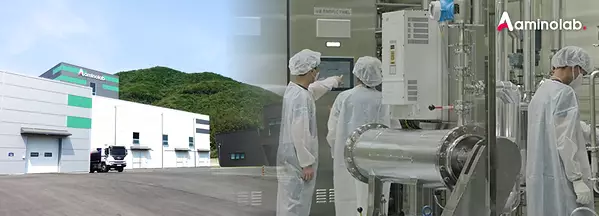
SEJONG, South Korea, Nov. 25, 2026 /PRNewswire/ -- AMINOLAB, a biotechnology company specializing in enzymatic upcycling of slaughterhouse blood, is expanding internationally with amino acid biostimulants, functional feed additives and automated blood resource recovery systems. Its proprietary low-temperature whole-blood enzymatic hydrolysis process produces low-molecular-weight peptides and free amino acids designed to improve nutrient uptake in crops and digestibility in livestock and aquatic species.

For agricultural applications, AMINOLAB combines whole-blood hydrolysates with plant-derived amino acids tailored to specific crops and uses. The resulting 100% water-soluble formulations contain low-molecular-weight peptides and active L-amino acids, supporting crop metabolism from sowing through harvest. They help crops respond to drought, heat, cold and salinity by supporting osmotic regulation and antioxidant enzyme activity. Natural chelation facilitates uptake of calcium, magnesium, iron and zinc. According to AMINOLAB, field applications in Southeast Asian tropical agriculture and arid-region horticulture have demonstrated improvements in root development, flowering, fruit set, sugar content and yields.

For pigs, poultry, fish and shrimp, AMINOLAB's functional feed additives supply pre-digested peptides produced through controlled, low-temperature hydrolysis. Unlike conventional fishmeal and meat-and-bone meal subjected to high-temperature processing, the technology is designed to preserve nutritional value and improve digestibility. The additives support intestinal health and nutrient absorption, particularly in young animals and aquatic species. Naturally occurring glutamic acid and alanine improve palatability, while the formulations aim to improve feed intake, growth, survival and feed conversion ratios (FCR). They also offer a potential alternative protein source to reduce reliance on fishmeal.

AMINOLAB also supplies turnkey blood recovery plants using enclosed, low-temperature enzymatic processing. By converting slaughterhouse blood, a major contributor to organic wastewater loads measured by biochemical oxygen demand (BOD) and chemical oxygen demand (COD), into usable resources, the systems address wastewater management and resource utilization. AMINOLAB reports that the technology prevents odors during processing and reduces wastewater pretreatment loads by more than 80%.

AMINOLAB currently exports finished biostimulants, feed additives and customized recovery systems to Vietnam, Indonesia, Thailand and Malaysia. Building on its Southeast Asian exports and product registration in Morocco, it is pursuing product registration and export discussions with local partners in Egypt and Japan. The company aims to promote sustainable agriculture, animal nutrition and the circular bioeconomy.

** This press release is distributed by PR Newswire through automated distribution system, for which the client assumes full responsibility. **

AMINOLAB Expands Globally with Amino Acid Biostimulants, Feed Additives and Blood Upcycling Technology

AMINOLAB Expands Globally with Amino Acid Biostimulants, Feed Additives and Blood Upcycling Technology

Recommended Articles