Over 100 Leading MICE Agents from 10 Key Markets Gather to Explore "Only in Hong Kong" MICE Experiences First-hand
HONG KONG SAR - Media OutReach Newswire - 25 November 2026 - Hong Kong Tourism Board (HKTB) hosted the 2026 Hong Kong Top MICE Agent Awards Ceremony on 19 November, celebrating the outstanding achievements of travel agents in driving business events to Hong Kong. The event underscored the strong partnership between HKTB and its overseas and local travel trade and MICE partners, reinforcing Hong Kong's position as the World's Meeting Place and in translating collaborative efforts into robust MICE arrivals in 2025.
Click to Gallery
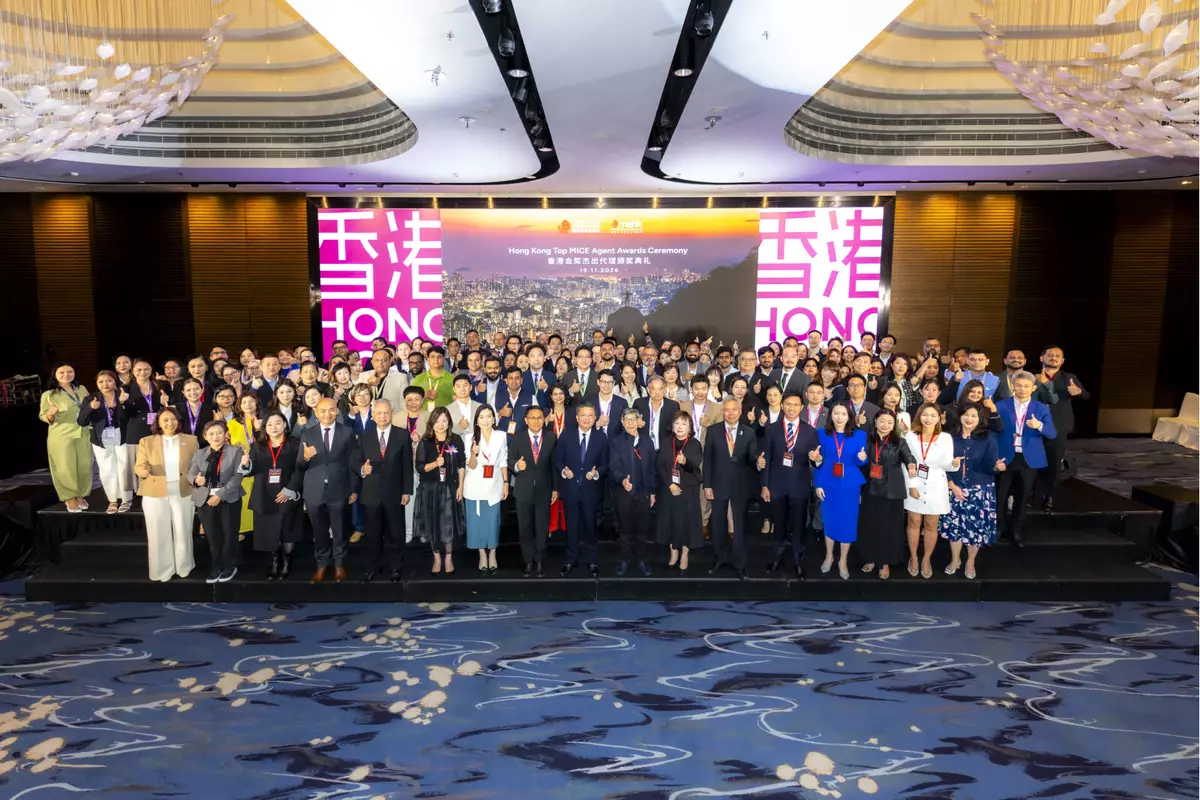
Hong Kong Celebrates Outstanding Achievements of Top-performing Agents at 2026 Hong Kong Top MICE Agent Awards Ceremony
Hong Kong Celebrates Outstanding Achievements of Top-performing Agents at 2026 Hong Kong Top MICE Agent Awards Ceremony
2026 Hong Kong Top MICE Agent Awards Ceremony - 2026 Hong Kong MICE Agent Excellence Awards.
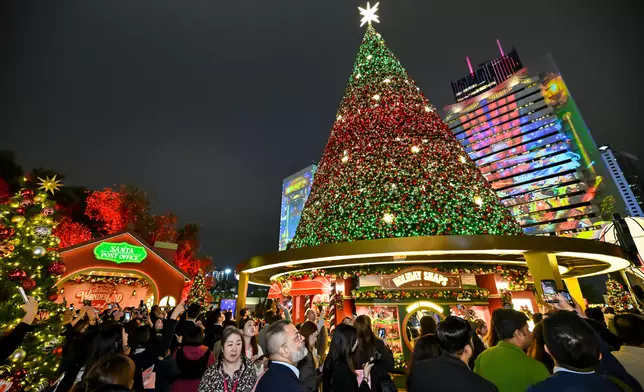
All guests immerse in Hong Kong WinterFest - Hong Kong Winter Wonderland, featuring the spectacular giant Christmas tree and dazzling seasonal light displays.
Hong Kong Celebrates Outstanding Achievements of Top-performing Agents at 2026 Hong Kong Top MICE Agent Awards Ceremony
The ceremony brought together over 100 top-performing MICE agents from the Chinese Mainland, Taiwan, India, Indonesia, Malaysia, the Philippines, Singapore, Thailand, Vietnam and Russia, alongside travel trade and trade media representatives, as well as more than 130 strategic travel trade partners from Hong Kong's tourism and hospitality sectors. As the highlight of the 2026 Hong Kong MICE Familiarisation Programme, the event provided a valuable platform to strengthen industry collaboration, exchange market insights and showcase Hong Kong's latest MICE developments under the "Only in Hong Kong" proposition.

Hong Kong Celebrates Outstanding Achievements of Top-performing Agents at 2026 Hong Kong Top MICE Agent Awards Ceremony
HKTB Executive Director Mr Anthony Lau said, "Meeting and Incentive travel remains one of Hong Kong's most valuable visitor segments. These visitors stay longer, spend more, and often become repeat visitors to our city. More importantly, they bring together business leaders, top performers and decision-makers, creating valuable business and people-to-people connections."
Robust MICE Arrivals Built on Strong Partnerships
In 2025, Hong Kong welcomed more than 2.5 million MICE visitors, up 7 per cent year-on-year, with the meetings and incentive travel (M&I) segment accounting for over 60 per cent of the total. The city welcomed over 1,600 M&I groups during the year, reflecting the sustained growth of Hong Kong's M&I sector and serving as testament to the concerted efforts of HKTB and its travel trade partners in Hong Kong and around the world, including the largest incentive travel events of the year, Asia Pacific Herbalife Extravaganza, which brought 15,000 non-Hong Kong participants.
Recognising Outstanding Contributions to Hong Kong's MICE Development
To recognise the outstanding contributions of MICE agents and industry partners to Hong Kong's MICE development, a series of awards were presented at the ceremony including the 2026 Hong Kong Top MICE Agent Awards and the 2026 Hong Kong MICE Agent Excellence Awards. In addition, the 2026 Strategic MICE Partners award was presented to major attraction partners in recognition of their outstanding support in enhancing Hong Kong's MICE experience, namely Hong Kong Disneyland Resort, The Hong Kong Jockey Club, Ngong Ping 360, Ocean Park Hong Kong, and The Peak Tram and The Peak Tower.
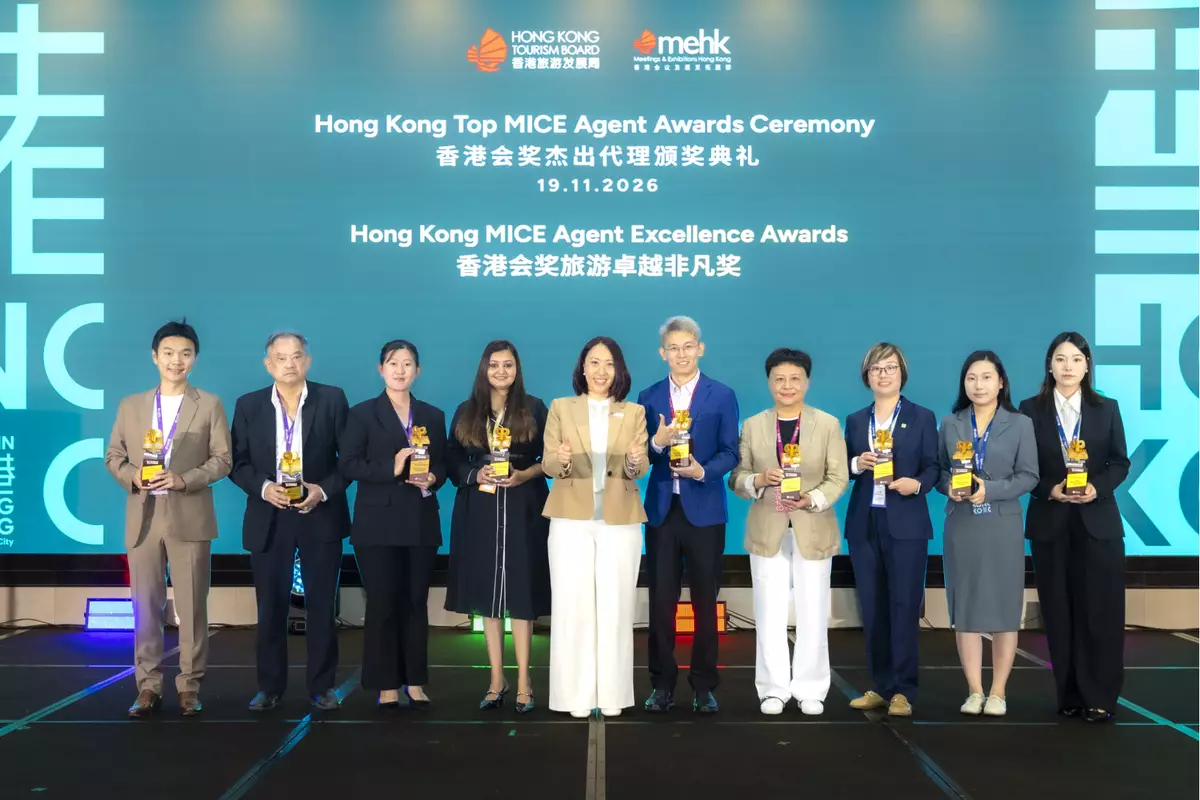
2026 Hong Kong Top MICE Agent Awards Ceremony - 2026 Hong Kong MICE Agent Excellence Awards.
Mr Kampol Kiatbenchaphong, President of Bonus Travel said, "We are delighted to be recognised with both the Top MICE Agent Award and MICE Agent Excellence Award. Hong Kong remains a premier MICE destination thanks to its versatile venues for groups of different scale, seamless connectivity and exceptional hospitality standards. The city's unique mix of variety, vibrancy, contrast and world-class experiences continually creates new opportunities for us to design memorable programmes for our clients. With a steady pipeline of new attractions, mega events and "Only in Hong Kong" experiences, Hong Kong continues to offer compelling reasons for both business event organisers and incentive travellers to visit and return."
Signature "Only in Hong Kong" Experiences to Inspire Innovative Incentive Programmes
Building on this occasion, HKTB introduced the latest MICE and tourism developments and experiences under the "Only in Hong Kong" brand platform. Industry guests were also presented with the "Hong Kong Incentive Playbook" (Click here to learn more), highlighting unique MICE products and offerings. This was followed by the 2026 Hong Kong MICE Industry Networking Exchange, where Hong Kong travel trade partners and the visiting agents met for business-matching sessions.
A specially curated acapella vocal performance paying tribute to Hong Kong's film culture was also featured during the programme, echoing HKTB's "Hong Kong Good Take" film tourism promotion (Click here to learn more) and showcasing another facet of the city's unique cultural appeal. Through unique experiences, HKTB aims to inspire the development of innovative incentive programmes that showcase the very best of Hong Kong to future incentive groups. These include the newly launched "Hong Kong Good Take" film tourism guide, which features more than 100 filming locations from 50 selected films. Corporate and MICE visitors could follow in the footsteps of their favourite characters through distinctive neighbourhoods, experience the movie magic waiting around every corner and discover Hong Kong through the lens of the city's cinematic heritage. Going forward, HKTB will continue to join hands with MICE agents and Hong Kong partners to curate fresh ideas and experiences that are truly "Only in Hong Kong".
As part of the "2026 Hong Kong MICE Familiarisation Programme", HKTB also arranged for the agents to explore the city's latest MICE offerings, including a site inspection at Kai Tak Sports Park, a horseracing "Happy Wednesday" party at Happy Valley racecourse, an outdoor Tai Chi session, and a Chinese medicine wellness experience at Lui Seng Chun, a declared monument in Mong Kok. The agents will also take part in one of HKTB's signature annual events, Hong Kong WinterFest, immersing themselves in Hong Kong Winter Wonderland in Central, which features the tallest-ever 22-metre outdoor Christmas tree and a brand-new immersive light show on the facades of nine iconic buildings around Statue Square Garden, as well as seasonal decorations across the city.
For more details about MICE in Hong Kong, please visit the MEHK website (www.mehongkong.com).
Hashtag: #HKTB #MEHK #MeetingsandExhibitionsHongKong #WorldsMeetingPlace #BusinessEvents #HongKong #MICE #OnlyinHongKong
The issuer is solely responsible for the content of this announcement.
** This press release is distributed by Media OutReach Newswire through automated distribution system, for which the client assumes full responsibility. **
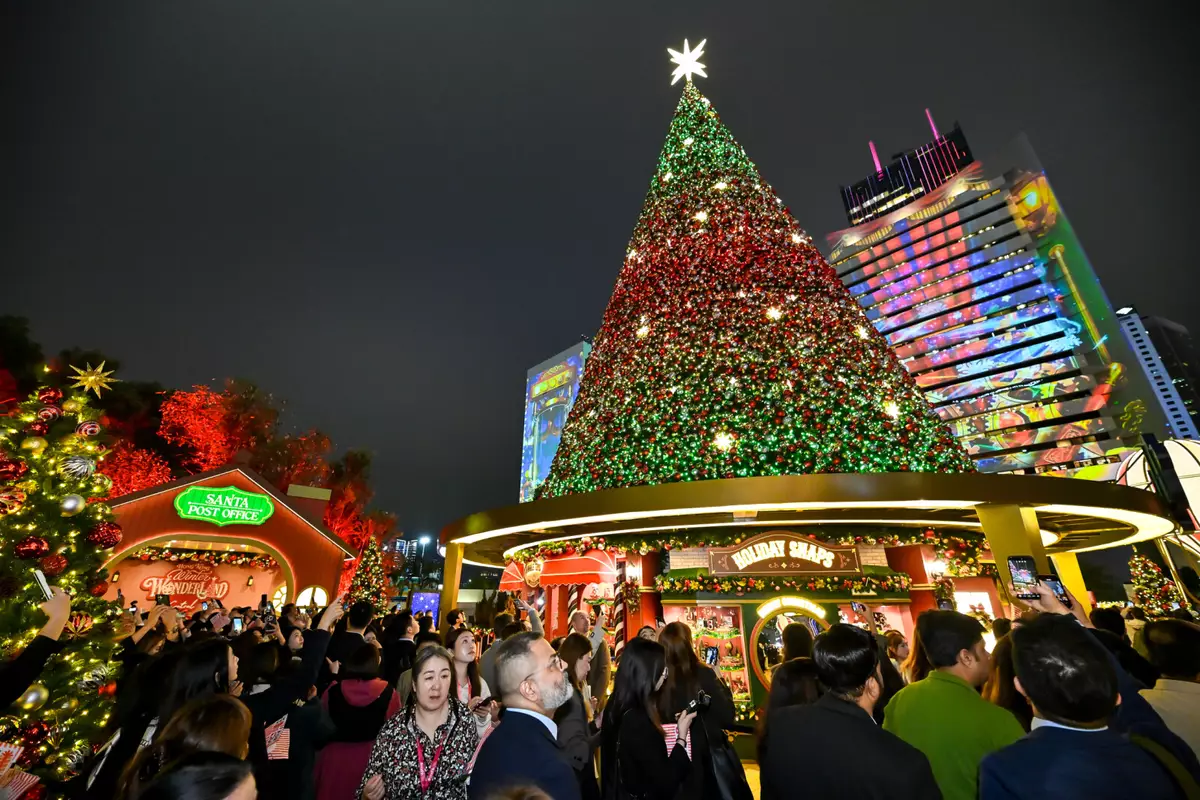
All guests immerse in Hong Kong WinterFest - Hong Kong Winter Wonderland, featuring the spectacular giant Christmas tree and dazzling seasonal light displays.
HONG KONG SAR – Media OutReach Newswire – 25 November 2026 – Kaspersky Principal Security Researcher Vladimir Dashchenko recently published findings indicating that when we think about cyberattacks, we usually imagine stolen information, ransomware or financial losses. Few people immediately think of supermarket refrigerators, or other cooling equipment. Yet recent cyberattacks against refrigeration systems across Europe have demonstrated that even ordinary cooling equipment can become a target for cybercriminals, with consequences extending far beyond spoiled food.
These incidents highlight a broader problem: the expanding attack surface of the Internet of Things (IoT) and industrial control systems (ICS).
Modern refrigeration systems are typical cyber-physical systems, and many belong to the Industrial Internet of Things (IIoT). Commercial refrigerators and cold-storage installations often contain connected sensors, programmable controllers, and centralized management platforms. These allow operators to monitor temperatures, initiate defrost cycles, receive alarms and modify settings remotely.
While convenient, such functionality also creates opportunities for attackers. Unauthorized access to a refrigeration management platform could allow someone to manipulate temperatures, disable alarms or disrupt multiple connected units simultaneously.
Kaspersky's latest IoT threat statistics demonstrate why these risks deserve attention. To monitor attacker activity, Kaspersky uses specially designed systems that imitate vulnerable internet-connected devices and record attempts to attack them. In Q3 2026, the proportion of unique devices attempting to gain unauthorized access through SSH, a communication protocol commonly used to remotely manage connected equipment, increased from 14.42% in Q2 to 18.42%. More notably, the share of attack sessions using this method more than doubled, rising from 1.95% to 4.21%. Although another remote communication protocol, Telnet, remained the most frequently targeted, these figures indicate that attackers are increasingly using different methods to target connected devices.
The geographical distribution is diverse, with the Netherlands accounting for 27.7% of outgoing SSH attack sessions in Q3, compared with 21.2% in Q2. Bulgaria's share almost quadrupled, increasing from 5.5% to 20.1%, while Germany's fell from 16.7% to 8.4%. Our figures demonstrate persistent, geographically diverse malicious activity targeting IoT.
Industrial infrastructure faces similar challenges. According to Kaspersky ICS CERT, malicious objects were blocked on 19.2% of protected industrial control system computers globally in Q2 2026. Many industrial networks remain exposed to malware, malicious internet resources and other threats that could disrupt operational processes.
The potential for physical damage is not theoretical. In an attack against an Israeli food-processing facility involving the manipulation of industrial CO2 refrigeration controllers, attackers reportedly modified operating parameters and safety thresholds, meaning the incident caused mechanical damage and refrigerant release.
Security researchers have also uncovered vulnerabilities in refrigeration equipment itself. In August 2026, Claroty Team82 published findings concerning Danfoss AK-SM 800A refrigeration controllers, identifying weaknesses including authentication bypass and command injection enabling remote code execution.
Exposure to the public internet compounds these risks. Search engines such as Shodan and Censys can identify connected industrial equipment, including refrigeration controllers. While exposure does not necessarily mean compromise, it substantially increases opportunities for attackers, and the consequences could extend far beyond supermarkets.
Hospitals, pharmaceutical manufacturers, research laboratories and fertility clinics rely on precise temperature control to preserve medicines and biological samples. Fertility clinics, for example, typically store eggs, sperm and embryos in specialized liquid-nitrogen cryogenic systems at as low as -196°C.
These systems differ from commercial refrigeration equipment, but may also incorporate connected monitoring, remote alarms and automated liquid-nitrogen management. Compromising such infrastructure could potentially interfere with monitoring or delay responses to dangerous conditions.
The human consequences of storage failures can be devastating. In 2018, a cryogenic storage failure at University Hospitals in Cleveland affected more than 4,000 eggs and embryos belonging to approximately 950 patients. Although this was not a cyberattack, failures involving monitoring and alarms demonstrated how technical problems can destroy irreplaceable reproductive material and undermine years of fertility treatment and family planning.
This is why cybersecurity and physical safety must increasingly be considered together.
Preventing similar incidents requires responsibility from manufacturers and operators alike. Manufacturers should incorporate cybersecurity throughout the software life cycle, enforce strong authentication, eliminate insecure default configurations and provide timely security updates. Equipment controlling sensitive processes should remain safe even if its management software is compromised.
The most effective way to minimize internet-based attacks against operational technology is to keep OT systems fully offline and physically isolated from external networks wherever possible. Refrigeration controllers and other critical industrial equipment rarely need direct internet connectivity for their core functions. Organizations should avoid connecting them to the public internet merely for administrative convenience.
Where remote access is genuinely unavoidable, it should be provided through properly secured gateways, with multi-factor authentication, restricted privileges, network segmentation and continuous monitoring. Remote connections should be enabled only when necessary, including for authorized maintenance, and disconnected afterward.
Organizations should also maintain complete inventories of connected equipment, regularly assess vulnerabilities, apply critical security updates and replace unsupported devices. For particularly sensitive environments, independent temperature monitoring, separate alarm mechanisms, backup power and tested emergency procedures are essential.
"From France to Belgium, the targets under attack are not sophisticated ones, but the most ordinary freezers and cold storage rooms in supermarkets," said Alvin Cheng, General Manager of Kaspersky Greater China. "In October this year, the refrigeration systems of supermarkets in France were remotely controlled. At multiple Carrefour stores, freezers heated up to 50°C and 60°C overnight, resulting in mass spoilage of fresh and frozen food with losses running into millions of euros. Weeks later, supermarkets in Belgium and several other European countries were hit using the same method. What makes such incidents most alarming is that attackers do not need to steal any data or encrypt any files. Simply altering a temperature setting or turning off an alarm is enough to disrupt the entire food supply chain. For industries reliant on precise temperature control such as retail, pharmaceuticals and healthcare, bringing internet-connected refrigeration equipment under the same stringent security management as IT systems is no longer optional."
Ultimately, the recent incidents illustrate a fundamental change in the consequences of cybercrime. Attackers do not necessarily need to steal information or encrypt files to inflict serious damage. Sometimes, changing a temperature setting or disabling an alarm is enough.
As more physical infrastructure becomes connected, the role of cybersecurity expands. Today it is increasingly about protecting food supplies, medical treatments, and industrial operations.
Hashtag: #Kaspersky
https://www.linkedin.com/company/kaspersky/
The issuer is solely responsible for the content of this announcement.
** This press release is distributed by Media OutReach Newswire through automated distribution system, for which the client assumes full responsibility. **