DUBAI, United Arab Emirates--(BUSINESS WIRE)--Nov 25, 2026--
The Mohammed bin Rashid Al Maktoum Knowledge Foundation (MBRF) honored two outstanding individuals as part of the ninth edition of the Mohammed bin Rashid Al Maktoum Knowledge Award (MBRKA). The recognition highlights their exemplary contributions to scientific research and environmental economics, which help address some of the world’s most pressing challenges.
This press release features multimedia. View the full release here: https://www.businesswire.com/news/home/20261124339196/en/
In the Individuals category, awards were presented to Professor Henry Snaith, Binks Professor of Renewable Energy at the University of Oxford, and Professor Sir Partha Dasgupta, Frank Ramsey Professor Emeritus of Economics at the University of Cambridge.
The winners were honored during the special edition of Knowledge Summit, organized by MBRF in partnership with the United Nations Development Programme (UNDP) at Grand Hyatt Dubai, under the theme ‘Knowledge: Navigating Crises in a Changing World.’ Their achievements highlight the transformative power of knowledge in advancing sustainability through groundbreaking scientific discoveries and innovative economic frameworks that contribute to shaping a better future.
Professor Henry Snaith: Advancing the Future of Solar Energy
Professor Henry Snaith was recognized for his pioneering contributions to advancing photovoltaic technology and developing high-efficiency perovskite solar cells. He also played an important role in establishing metal halide perovskites as promising materials for solar power generation.
Moreover, he has contributed to advancing solar cell efficiency, especially through the development of perovskite-silicon tandem technologies. In addition, as a co-founder and Chief Scientific Officer of Oxford PV, he supports the commercial deployment of next-generation solar technology.
Professor Sir Partha Dasgupta: Redefining the Economic Value of Nature
Professor Sir Partha Dasgupta has made groundbreaking contributions to environmental economics through his research on biodiversity, natural capital, and sustainable economic development. For more than five decades, Professor Dasgupta has developed various economic frameworks demonstrating that human prosperity is fundamentally dependent on the natural environment.
His landmark report, The Economics of Biodiversity: The Dasgupta Review, commissioned by the UK Treasury, established a comprehensive framework for integrating nature into economic decision-making. The review called for moving beyond gross domestic product (GDP) as the primary measure of economic success and adopting broader measures of wealth that account for natural capital and environmental sustainability. In addition, his book, On Natural Capital: The Value of the World Around Us, further highlights the importance of recognizing nature as an essential economic asset.
Knowledge as a Driver of Global Sustainability
The recognition of the winners reinforces MBRKA’s commitment to celebrating exceptional contributions that transform knowledge into meaningful solutions for humanity. It further reflects the UAE’s long-standing commitment to advancing international knowledge exchange and fostering innovation.
Established in 2015 and administered by MBRF, MBRKA continues to highlight pioneering contributions that inspire innovation, strengthen international collaboration, and promote knowledge-driven progress worldwide.
Source:AETOSWire
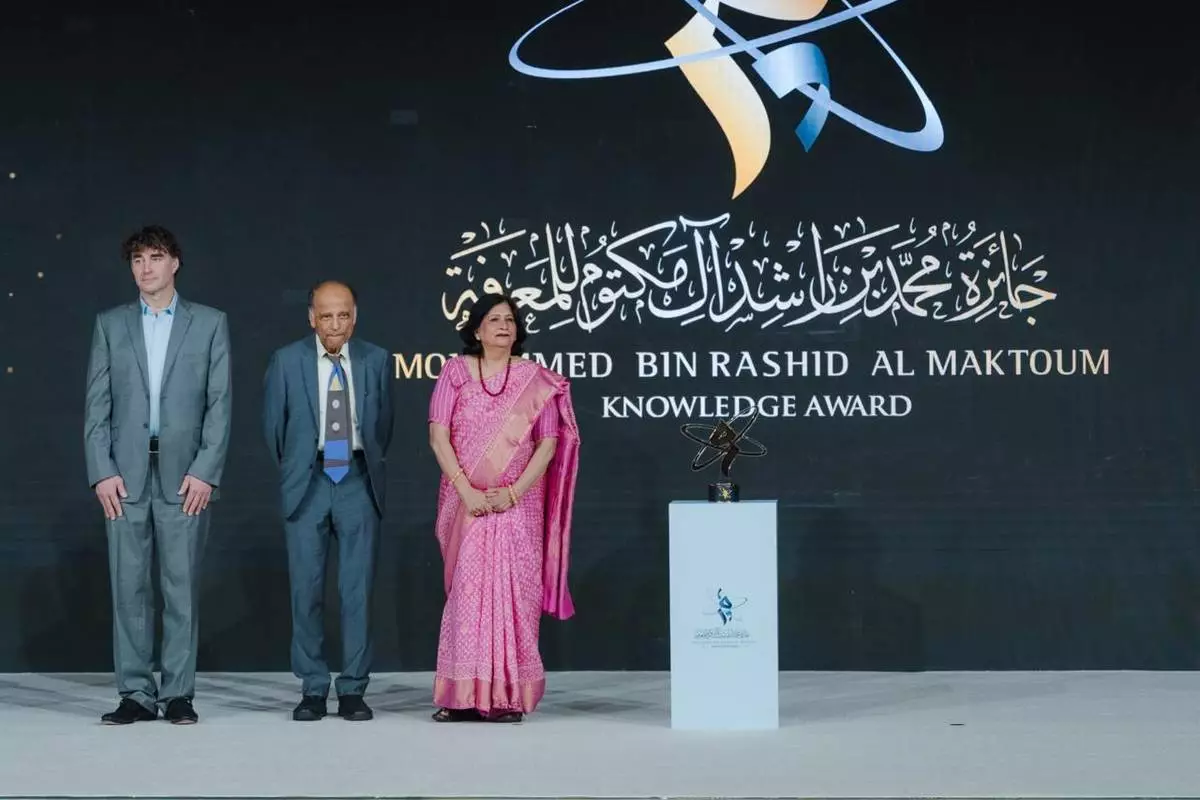
India's GREEN Olympiad Wins MBRKA 2026 for Advancing Environmental Education (Photo: AETOSWire).