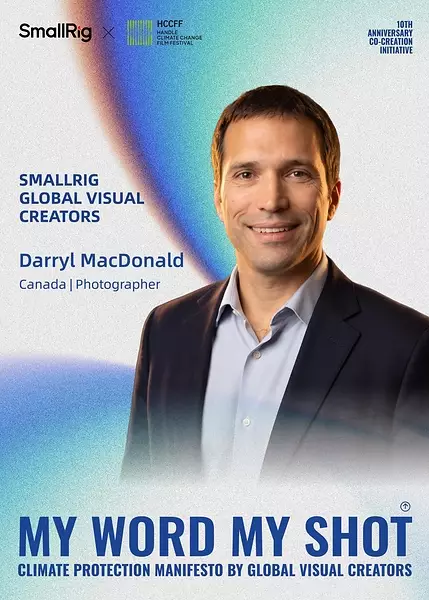
SmallRig-invited creator Darryl MacDonald on what wildlife's return to South Georgia shows about the power of climate storytelling, at COP31 in Antalya
ANTALYA, Türkiye, Nov. 25, 2026 /PRNewswire/ -- Imaging-gear brand SmallRig hosted the Global Climate Film and Television Creators Exchange in Antalya, Türkiye on November 12, bringing together filmmakers, photographers, and visual storytellers under the theme "THE WORLD WE SHOOT: CLIMATE STORIES."
Featured speaker Darryl MacDonald, a Canadian wildlife videographer, shared lessons from over a decade of documenting remote ecosystems worldwide. Drawing examples from South Georgia and Oman, he argued that nature can recover when given time and space, but only if people care enough to protect it.
One example came from South Georgia, once a major whaling hub where more than 175,000 whales were processed during the twentieth century. Returning years later, MacDonald witnessed penguins, seals, and whales reclaiming habitats once shaped by human exploitation, reinforcing his belief in nature's resilience and the value of documenting both environmental loss and recovery.
MacDonald also discussed Wild Oman, a documentary project produced with a modest budget and small crew. Rather than relying on expensive equipment, the team combined local knowledge, scientific research, and patient observation to document one of the world's largest previously unrecorded whale shark aggregations, rare green turtle behaviors, and the critically endangered Arabian humpback whale.
Through these experiences, MacDonald emphasized that meaningful storytelling is not defined by budget or technology. Powerful stories can emerge from local environments when creators approach them with curiosity, humility, and a commitment to understanding the science behind what they observe.
He also stressed that ethical filmmaking must remain a top priority. Whether documenting wildlife or fragile ecosystems, creators have a responsibility to ensure their work does not disturb the environments they seek to protect.
Reflecting on today's digital landscape, MacDonald noted that storytelling is no longer a zero-sum game. Collaborative ecosystems and online platforms increasingly allow creators, researchers, and conservation advocates to amplify one another's voices and expand public engagement with environmental issues.
MacDonald encouraged creators to seek out unseen stories and use their skills to bridge the gap between people and the natural world. Echoing SmallRig's belief in the power of visual storytelling, he said that when creators view their work as a catalyst for conservation, its impact can extend far beyond the frame.
** This press release is distributed by PR Newswire through automated distribution system, for which the client assumes full responsibility. **
Climate Storytelling Shows That Nature Can Heal, but the World Must Care
- SmallRig-invited documentary filmmaker Mohamod Noviur Rahman on sustainable filmmaking at COP31
ANTALYA, Türkiye, Nov. 25, 2026 /PRNewswire/ -- Following the release of the "SmallRig Climate Protection Manifesto by Visual Creators Worldwide" and the launch of the "SmallRig Global Climate Film Support Program" on November 11, imaging-gear brand SmallRig hosted the Global Climate Film and Television Creators Exchange in Antalya, Türkiye, on November 12. Under the theme "THE WORLD WE SHOOT: CLIMATE STORIES," creators explored how visual storytelling can help drive environmental action.
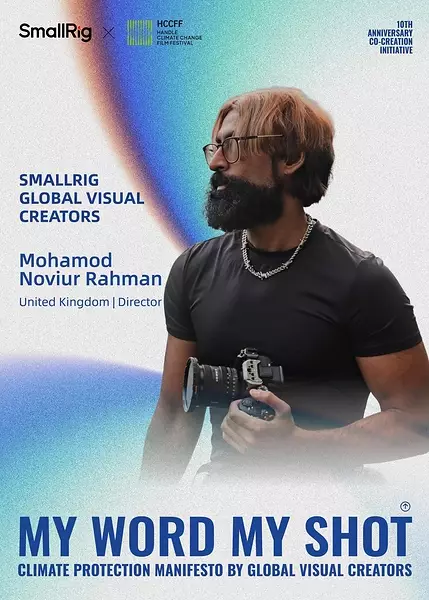
British documentary filmmaker and expedition photographer Mohamod Noviur Rahman shared his sustainable filmmaking practices and argued that meaningful climate storytelling should move people through emotion rather than instruction.
According to Rahman, visual work can only create lasting change when it begins with awareness, learning, and giving back. By helping audiences connect emotionally with the natural world, filmmakers can inspire action in ways facts and statistics alone often cannot.
To illustrate this approach, Rahman presented Vanishing Giants, a documentary project exploring Iceland's disappearing glaciers and braided rivers. The film highlights the long-term consequences of climate change on landscapes and ecosystems while encouraging viewers to appreciate places that may not remain unchanged for future generations. Designed as a low-impact production, the project was completed by a two-person team using a minimal equipment setup to reduce its environmental footprint.
Rahman also reflected on his personal journey from simply understanding climate change to actively integrating sustainability into his professional decisions. Witnessing environmental change firsthand prompted him to rethink the stories he tells and how those stories are produced.
During the exchange, Rahman outlined practical ways to reduce production-related emissions, including using lightweight, multi-purpose equipment, minimizing travel, choosing trains over flights where possible, working with local crews, sharing resources, and reducing hotel servicing.
He also encouraged filmmakers and brands to adopt technology more consciously, balancing innovation with environmental responsibility. In Rahman's view, the power of climate storytelling lies in aligning message with method. As cameras document the impacts of climate change, production itself should follow low-carbon principles. By embedding sustainability throughout the creative process, creators can move beyond simply telling climate stories. SmallRig supports this vision by helping turn visual storytelling into meaningful, lasting climate action.
** This press release is distributed by PR Newswire through automated distribution system, for which the client assumes full responsibility. **
Climate Visual Storytelling Is Most Powerful When Message Meets Method