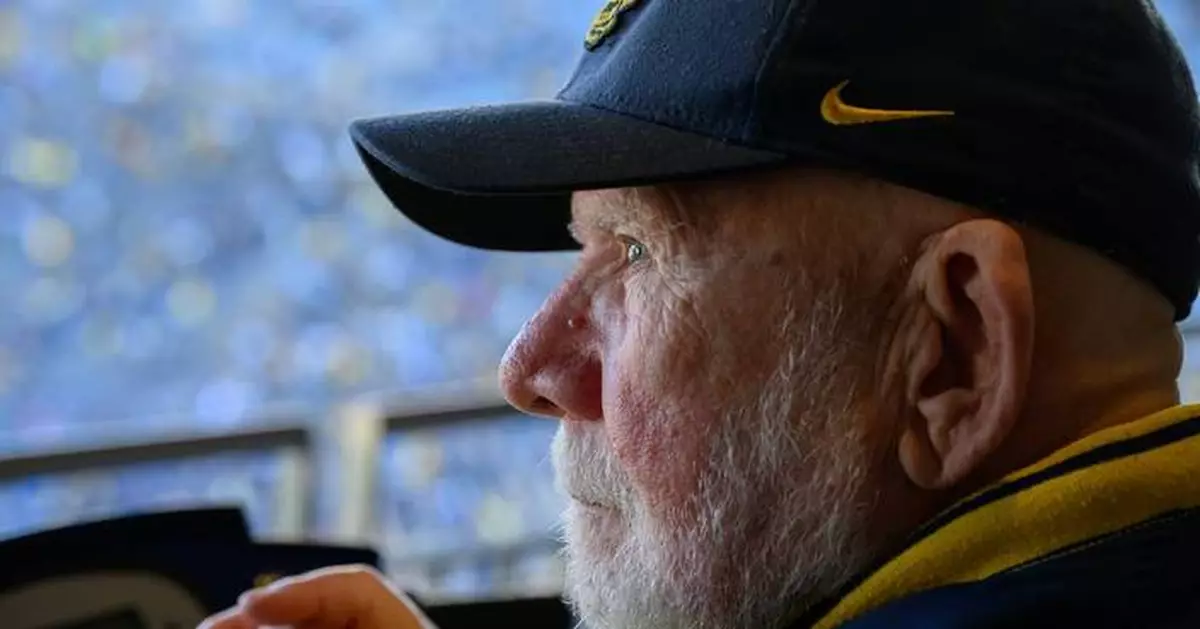
ANN ARBOR, Mich. (AP) — The end of an era has come for Larry Leonard Lage.
He hasn’t missed a Michigan football home game in 70 seasons, dating back to when a ticket cost $1.
Click to Gallery
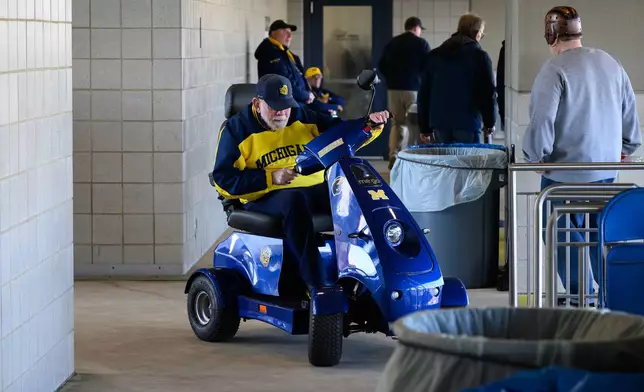
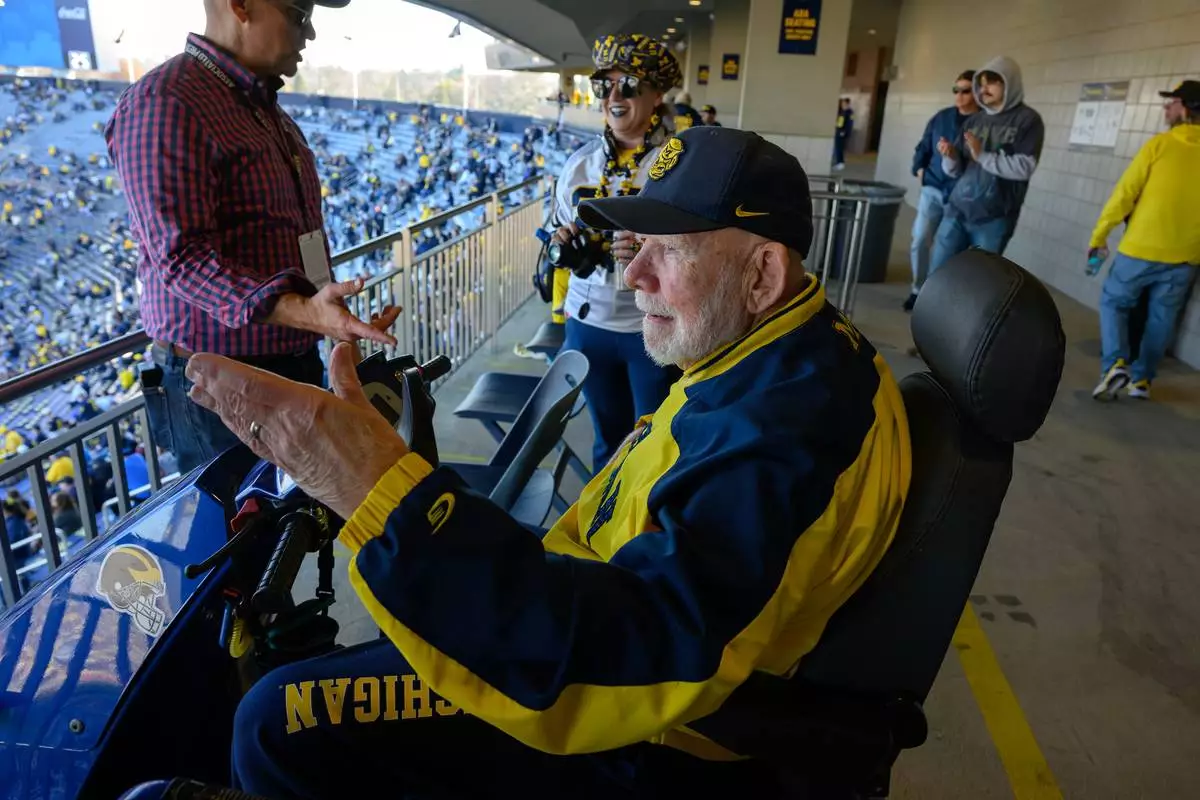
Larry Lage, father of Associated Press sports writer Larry Lage, wheels his way to his viewing spot to watch Michigan play UCLA in an NCAA college football game, his final game at Michigan Stadium after 70 seasons, in Ann Arbor, Mich., Saturday, Nov. 21, 2026. (AP Photo/Lon Horwedel)
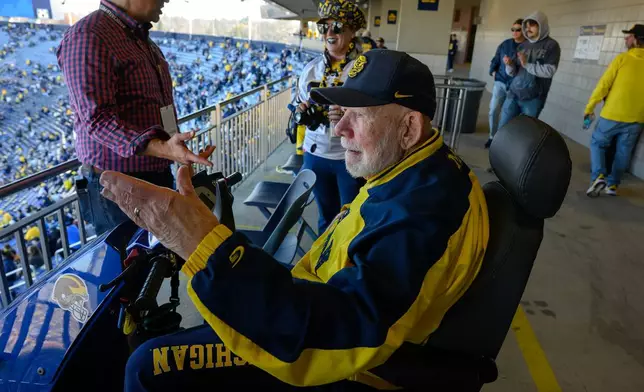
Larry Lage, father of Associated Press sports writer Larry Lage, gets set to watch Michigan play UCLA in an NCAA college football game, his final game at Michigan Stadium after 70 seasons, in Ann Arbor, Mich., Saturday, Nov. 21, 2026. (AP Photo/Lon Horwedel)
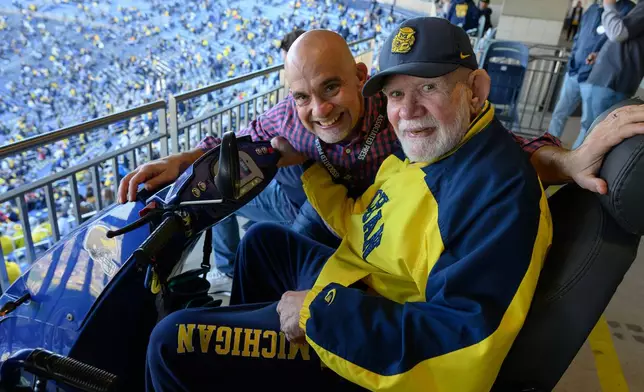
Larry Lage, father of Associated Press sports writer Larry Lage, back, poses for a photo as he gets set to watch Michigan play UCLA in an NCAA college football game, his final game at Michigan Stadium after 70 seasons, in Ann Arbor, Mich., Saturday, Nov. 21, 2026, in Ann Arbor, Mich. (AP Photo/Lon Horwedel)
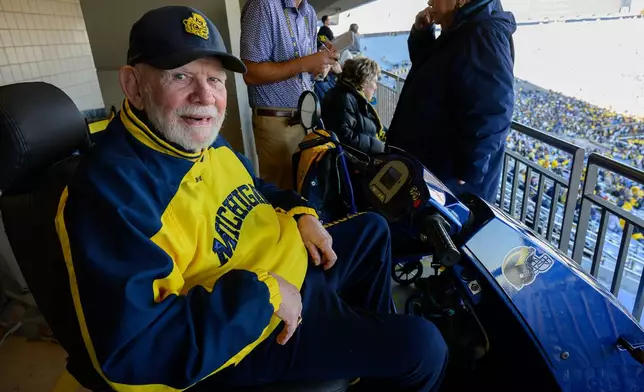
Larry Lage, father of Associated Press sports writer Larry Lage, poses for a photo as he gets set to watch Michigan play UCLA in an NCAA college football game, his final game at Michigan Stadium after 70 seasons, in Ann Arbor, Mich., Saturday, Nov. 21, 2026. (AP Photo/Lon Horwedel)
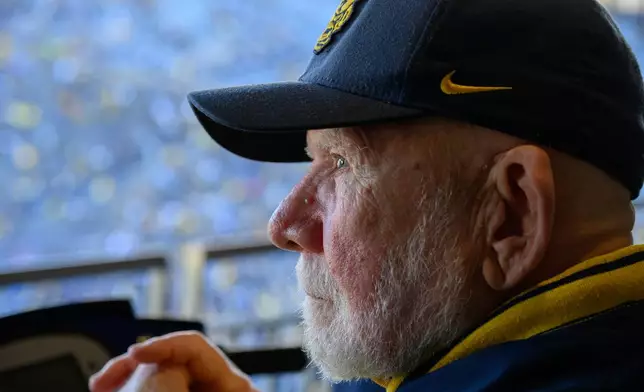
Larry Lage, father of Associated Press sports writer Larry Lage, gets set to watch Michigan play UCLA in an NCAA college football game, his final game at Michigan Stadium after 70 seasons, in Ann Arbor, Mich., Saturday, Nov. 21, 2026. (AP Photo/Lon Horwedel)
He has seen more than 450 games in all: Michigan greats like coach Bo Schembechler, Tom Brady, Desmond Howard, Charles Woodson, Jim Harbaugh as a player and a championship-winning coach, and Lloyd Carr's championship season.
And he’s never heard “The Victors,” the famous Michigan fight song. He is deaf.
Larry, my dad, was born 82 years ago in Ann Arbor and grew up two blocks from the Big House. Next season, he has decided to stay home when the Wolverines play due to his deteriorating health.
As journalists, we generally avoid making the coverage about ourselves, but my editors urged me to write this tribute to one of the most devoted fans for one of the most passionate fan bases in the world.
It’s also a tribute to a man who was more intent on what he could do than what he couldn’t do.
Dad started going to games in 1956 when he was 12. My grandmother worried about her boy going to games alone, surrounded by tens of thousands of people who couldn't communicate very well with him.
She threw her worry beads away, as he would say, and let him go. And, it started a remarkable run.
He married my mom, Rita Presta, who came to the United States from Italy on a boat when she was 2 with her twin brother. She is also deaf. They eventually bought a place 13 houses from one of the world’s most iconic stadiums, on a street that is aligned with the 50-yard line.
Nothing stopped him from attending games, not even a broken toe from a work accident at Ann Arbor Machine Co., where he was a tool-and-die worker for 37 years. He hobbled to the stadium on crutches and in a cast.
It was never too hot, or too cold, windy or wet for my dad.
I started going to Michigan games with my dad when I was 5 and didn’t miss a game until I was a freshman at Michigan State in 1991, two years before I was the school’s mascot, Sparty.
Yes, dad got a kick out of that.
My dad’s favorite memories include Ohio State coach Woody Hayes melting down in 1971 during what was known as “The Ten Year War” with Schembechler and when the Wolverines ended an eight-game losing streak to the Buckeyes in 2021.
We watched Art Schlichter lead Ohio State to back-to-back wins in Ann Arbor in 1979 and 1981. He scored a touchdown right in front of us in the south end zone and I can still see it like it happened yesterday.
We experienced Howard's magical Heisman Trophy-winning season, and then saw Brady share time with freshman Drew Henson before becoming an all-time NFL great. While Howard and fellow Heisman winner Woodson are among his favorite players, quarterback Rick Leach is No. 1 on my dad’s list because he signs (his grandparents were deaf). Schembechler is his favorite coach and Harbaugh, whom he has met, is a close second.
Since 2000, when I was hired by The Associated Press to cover Michigan sports, I have visited him before the game — usually bringing him a water bottle and hot chocolate — and checked in at halftime. After last week’s win over previously unbeaten UCLA, I went to see him after filing my story for the first time in my career.
I asked him what he thought of the game and he patted his heart with his right hand with a big smile on his face.
When the Wolverines kick off the 2027 season, dad plans to be at home in his reclining chair, and I don't think that's negotiable.
He has decided to call it a career as a fan in the stands because of his neuropathy, nerve damage that makes his legs feel numb from his knees to his feet. The cruel condition has hobbled a man who has bowled a 300 game, regularly shot in the low 80s in golf and excelled at hockey, football, baseball and racquetball.
My dad doesn't usually partake in tailgates because it's too difficult for him to get around, but he surprised me and the rest of my family last Saturday when he said he wanted to go outside ahead of the showdown with UCLA.
When he got outside, there was an impromptu celebration as the dozens of people gathered started to cheer for him as Michigan's fight song, “The Victors,” was blasting. He took a seat on his walker to soak up the atmosphere and took a shot of Charles Woodson’s Kentucky bourbon with a splash of ginger ale, his first taste of booze in years.
Big Larry, as he's known in our family, then took a four-wheeler, which is blue, of course, with Michigan stickers, to the north side of the stadium, where security opens the gate for him. One of the stadium's elevators lifted him and his scooter to the third floor for a short ride to a platform designated for accessible seating. His seat happens to be directly under my seat in the press box.
In the bowl and on the platform, everyone who sits around my dad knows and adores him. Even though they don't know American Sign Language, it doesn't stop him from connecting with people as he has done his entire life.
Michigan football games, and sports in general, have given my dad access to people in a world that often overlooks and underserves the Deaf community.
Since 2016, the national anthem has been accessible for my dad because someone has signed the song in ASL on the video boards. At the end of that first season, my dad was surprised to look up and see his grandson, Jacob, on the big screen before a game against rival Ohio State.
Before Michigan played the Bruins, I visited my dad and chatted with those who sit near him as well as some of the ushers who assist him each Saturday. They all said they're going to miss seeing him, exchanging fist-bumps, smiles and sorrow.
While I told the woman who sits next to him that he's not sad, so I'm not sad, I started to cry. When I read this story, which has been one of the most challenging to write of my career, I wept twice more.
My dad is functionally illiterate, a result of attending schools without an interpreter, but he has a way with words.
“Good enough,” he said of a streak that has come to an end.
Indeed.
I love you, dad.
Follow Larry Lage on X
Sign up for Top 25 poll alerts here, visit the Top 25 here and see AP’s full college football coverage here
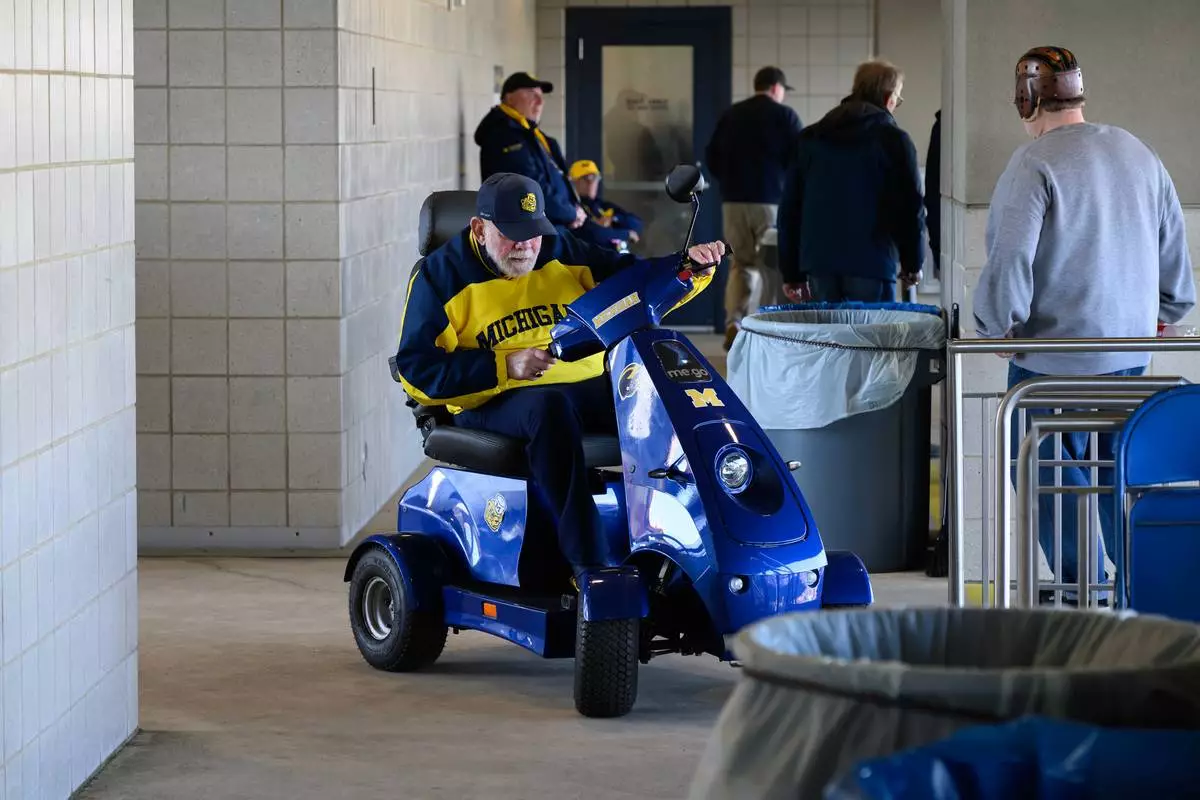
Larry Lage, father of Associated Press sports writer Larry Lage, wheels his way to his viewing spot to watch Michigan play UCLA in an NCAA college football game, his final game at Michigan Stadium after 70 seasons, in Ann Arbor, Mich., Saturday, Nov. 21, 2026. (AP Photo/Lon Horwedel)
Larry Lage, father of Associated Press sports writer Larry Lage, gets set to watch Michigan play UCLA in an NCAA college football game, his final game at Michigan Stadium after 70 seasons, in Ann Arbor, Mich., Saturday, Nov. 21, 2026. (AP Photo/Lon Horwedel)
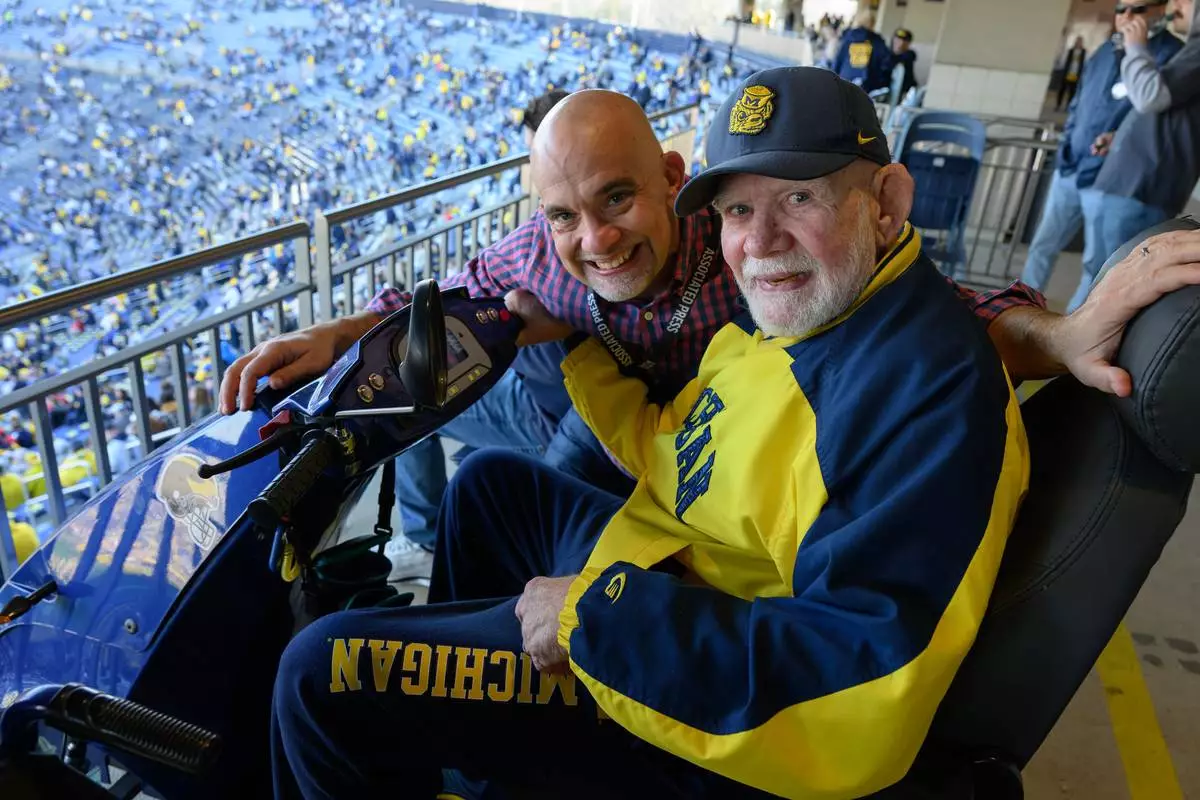
Larry Lage, father of Associated Press sports writer Larry Lage, back, poses for a photo as he gets set to watch Michigan play UCLA in an NCAA college football game, his final game at Michigan Stadium after 70 seasons, in Ann Arbor, Mich., Saturday, Nov. 21, 2026, in Ann Arbor, Mich. (AP Photo/Lon Horwedel)
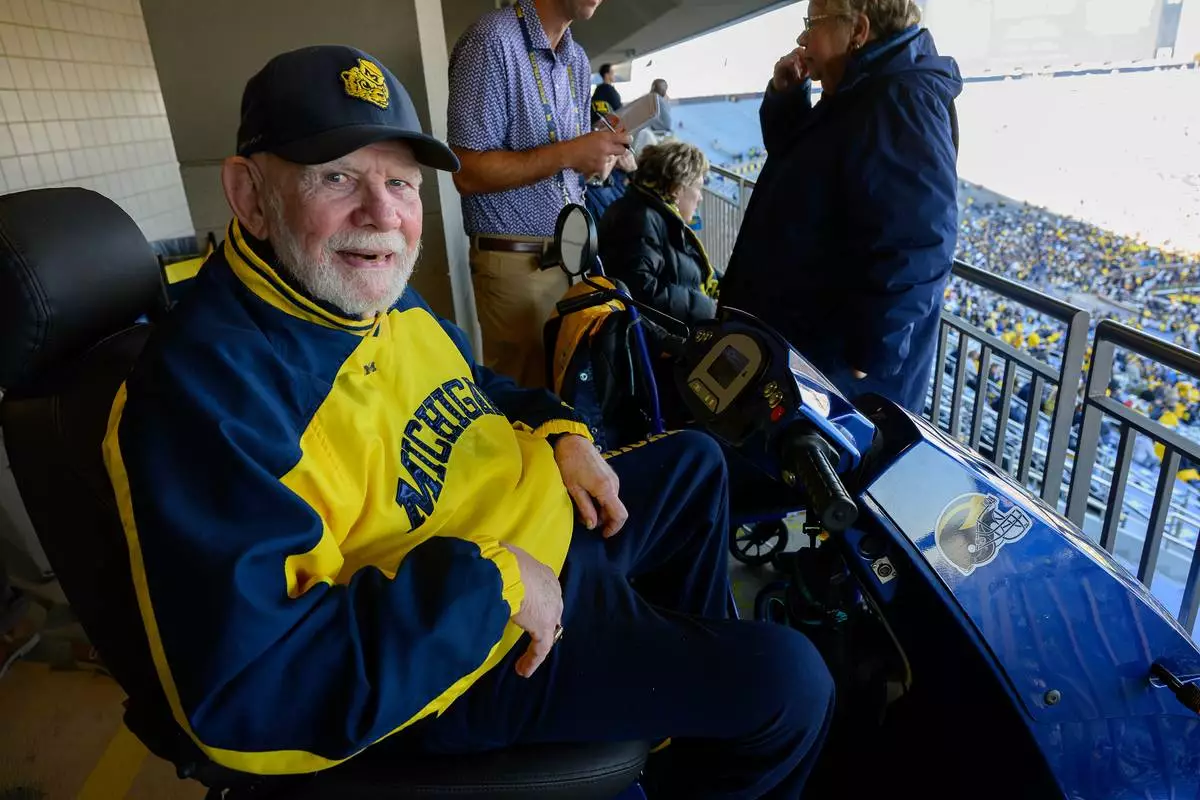
Larry Lage, father of Associated Press sports writer Larry Lage, poses for a photo as he gets set to watch Michigan play UCLA in an NCAA college football game, his final game at Michigan Stadium after 70 seasons, in Ann Arbor, Mich., Saturday, Nov. 21, 2026. (AP Photo/Lon Horwedel)
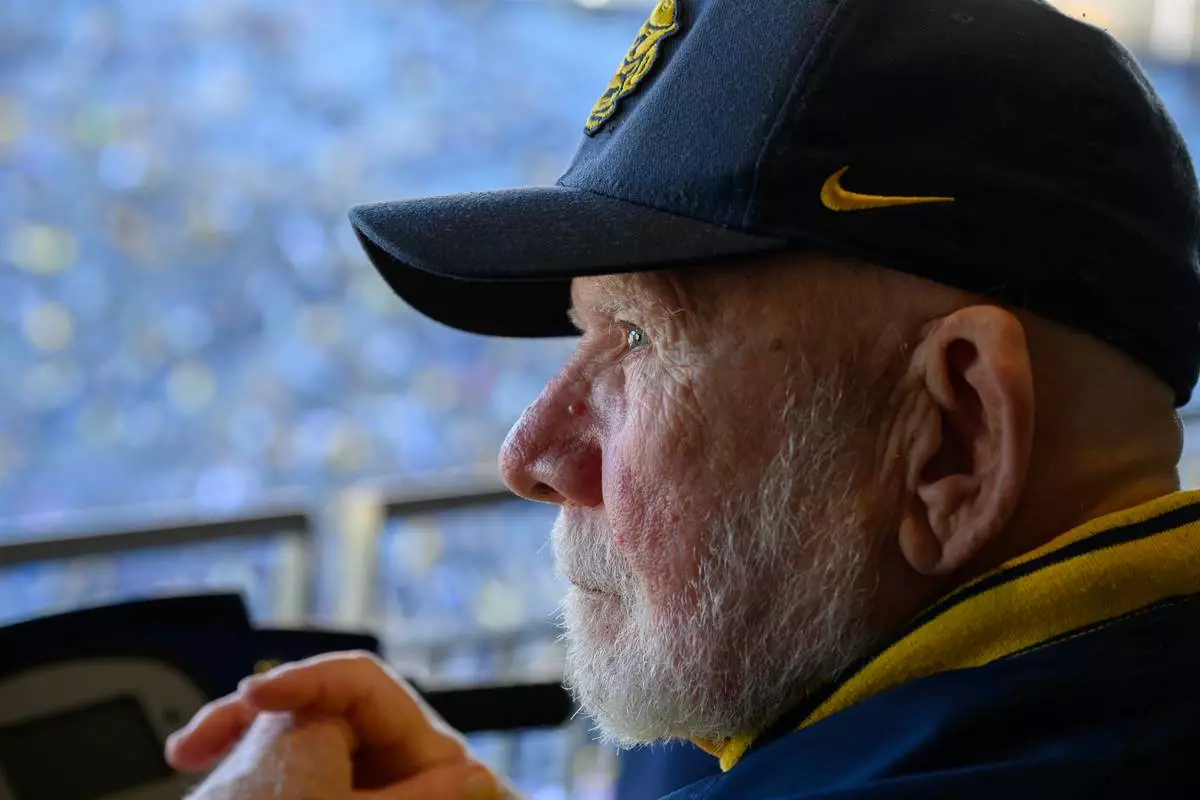
Larry Lage, father of Associated Press sports writer Larry Lage, gets set to watch Michigan play UCLA in an NCAA college football game, his final game at Michigan Stadium after 70 seasons, in Ann Arbor, Mich., Saturday, Nov. 21, 2026. (AP Photo/Lon Horwedel)