BOCA RATON, Fla.--(BUSINESS WIRE)--Nov 25, 2026--
SurGenTec®, a medical technology company specializing in innovative spine and orthopedic solutions, today announced that the Vantage™ Spinal Decompression System received an award in the 2026 Pain Management Technology Awards presented by Orthopedics This Week.
This press release features multimedia. View the full release here: https://www.businesswire.com/news/home/20261125359917/en/
The awards recognize emerging technologies evaluated by physician judges based on six criteria: innovation, long-term significance, effectiveness in addressing clinical problems, improvement over the standard of care, cost-effectiveness and the judges' willingness to use the technology themselves.
Vantage™ represents a differentiated approach to minimally invasive lumbar decompression, designed to facilitate controlled removal of hypertrophic bone and soft tissue contributing to spinal stenosis and neural compression.
Innovative Technology Designed for Controlled Decompression
Vantage incorporates several distinctive features designed to provide physicians with greater procedural control, neural protection and direct visualization:
By combining these capabilities into a single procedural system, Vantage™ is designed to simplify lumbar decompression while providing physicians with a controlled, reproducible approach to targeted bone and soft tissue removal.
Expanding SurGenTec's Minimally Invasive Spine Portfolio
In October 2026, SurGenTec® entered into an exclusive license agreement with Allevion Medical, securing exclusive rights to the Vantage technology and expanding its growing portfolio of minimally invasive spine solutions.
Vantage™ received FDA 510(k) clearance in March 2026 and is designed for use in both hospital operating rooms and ambulatory surgery centers (ASCs).
Its completely disposable configuration offers potential operational and economic advantages for healthcare facilities by eliminating instrument sterilization, reprocessing and reusable tray turnover while reducing instrument preparation and setup requirements.
As healthcare continues to shift toward more efficient outpatient surgical environments, SurGenTec® believes Vantage offers an attractive solution for physicians, hospitals and ASCs seeking differentiated lumbar decompression technologies.
Travis Greenhalgh, CEO of SurGenTec, commented:
"We are extremely proud to see Vantage™ recognized by Orthopedics This Week. This award is particularly meaningful because the technology was evaluated by physicians based on innovation, clinical relevance, cost-effectiveness and its potential to improve surgical practice.
"Through our exclusive license agreement with Allevion Medical, we are excited to bring this differentiated technology to our growing network of physicians and healthcare providers. We believe Vantage™ has the potential to become an important addition to the minimally invasive lumbar decompression market and to further strengthen SurGenTec's position as an innovative leader in spine technology."
About SurGenTec®
SurGenTec® is a privately held medical technology company headquartered in Boca Raton, Florida, focused on developing and commercializing innovative technologies for spine and orthopedic surgery. Its expanding portfolio includes proprietary spinal fixation systems, synthetic bone graft biologics, bone graft delivery technologies, sacroiliac joint fusion systems and advanced surgical instrumentation.
Through a commitment to innovation, engineering and physician collaboration, SurGenTec® develops differentiated technologies designed to advance surgical techniques, improve procedural efficiency and address unmet clinical needs. SurGenTec® continues to focus on global growth, providing cutting-edge treatment outside the USA.
For more information, visit www.surgentec.com.
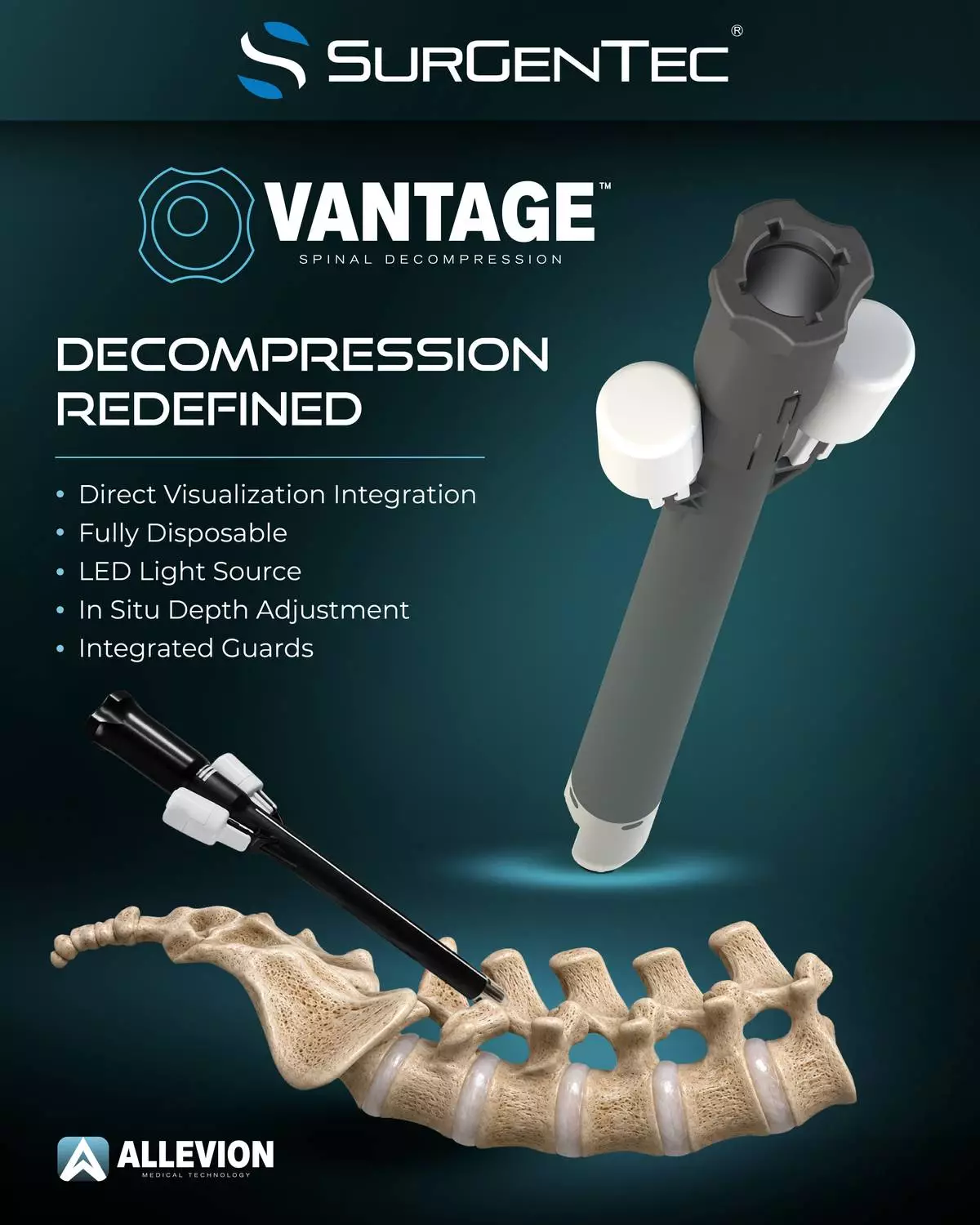
SurGenTec® Announces Vantage™ Spinal Decompression System Receives 2026 Pain Management Technology Award

SurGenTec® Announces Vantage™ Spinal Decompression System Receives 2026 Pain Management Technology Award
NEW YORK (AP) — Wall Street lost ground Wednesday under the weight of falling AI stocks as the enthusiasm over the return of Jensen Huang to Nvidia fades further.
Adding to the AI sell-off are more worries about high inflation dragging on the economy and U.S. markets. The latest update shows that inflation remains stubbornly hot just as President Donald Trump plans to escalate the U.S. trade war with major trading partners.
The S&P 500 index slumped 2.2%. The Dow Jones Industrial Average fell 472 points, or 0.9%, as of 12:03 p.m. Eastern. The Nasdaq composite dove 3.2%.
The retreat from AI stocks has regained momentum following Monday’s relief rally over the surprise reinstatement of Huang as Nvidia's CEO. Stocks have been generally falling since setting an all-time high last month as worries grow that AI stock prices have grown unjustifiably high.
Nvidia shed 8.1%, Broadcom dropped 5.4% and Microsoft fell 2.8%.
Anthropic slipped 1.4%. Since soaring to $115 per share on the day that the first major frontier lab went public, Anthropic shares have tumbled by about 30%.
Technology companies, particularly those focused on AI, have large market values that give them a dominant influence over whether major indexes rise or fall. Nvidia is among the most valuable companies on Wall Street and its surge on Monday led a tech sector rally. It is now the biggest weight pushing the market lower.
The S&P 500 index is down roughly 7% for November, after losing some ground in October and September.
“At this point, between the AI angst and the newly announced tariffs, it doesn’t look like the Santa Claus Rally is in store for us this year,” said Chris Zaccarelli, chief investment officer for Northlight Asset Management, in a research note.
Questions about Nvidia’s corporate governance, as well as the influence of a U.S. president who owns millions of dollars’ worth of shares in the company, have added to concerns surrounding the artificial intelligence sector. Relief over Huang’s return as CEO is fading because of worries that AI might not produce enough profit to justify the large investments and stock values.
That dynamic is running up against stubbornly high inflation. The latest update on inflation showed that prices rose at a more aggressive 3.8% rate in October from the same period last year, and followed a 3.6% rate in September. The data is from the Federal Reserve’s preferred measure of inflation, the personal consumption expenditures price index.
Aside from potentially stifling economic growth, high inflation could mean higher interest rates with the Fed likely to raise its benchmark interest rate to try to tame inflation. The rate of inflation is well above the central bank’s target of 2%.
The economy has been resilient, though, even as inflation squeezes households and businesses and consumers grow increasingly anxious about spending and finances. The government said that the economy grew even faster in the July-September quarter than previously estimated, with growth revised upward to a 4.3% annual rate, the fastest in three years.
Much of the spending that is driving the economy, though, has been from large tech firms building out AI infrastructure and from upper-income households. There are signs poorer Americans are relying more on credit to sustain their spending.
Wall Street expects the Fed to raise its benchmark interest rate at its upcoming meeting in December. High interest rates can slow economic growth, and inflation, by making borrowing more expensive. But that also makes it more difficult for tech companies to keep borrowing money to pay for the industry’s growth.
Higher oil prices, fueled by the U.S. war with Iran and its impact on the world’s oil supply, have also contributed to inflation. Oil prices rose 1.1% to $89.80 a barrel on Wednesday. The price has swung between $72 and $114 since the United States and Israel attacked Iran in February. Energy companies mostly gained ground Wednesday, including a 1% rise for Chevron.
The wide-ranging and often uncertain U.S. trade conflict with much of the world also added to rising costs. The U.S. plans to hike tariffs on China, the European Union and other trading partners after the U.S. Supreme Court struck down broader tariffs that were set last year.
Businesses tend to pass along some or all of the cost of tariffs to consumers. Anger over stubbornly high prices was a factor in pushing voters to punish Republicans by handing majorities in the House and the Senate to Democrats.
Treasury yields fell in the bond market. The yield on the 10-year Treasury fell to 4.82% from 4.91% late Tuesday.
Markets fell throughout Europe and Asia. South Korea’s Kospi lost 6.2% as Samsung Electronics fell 9.9% and SK Hynix plummeted 11.1%. Japan’s Nikkei 225 dropped 2.8%. OpenAI investor SoftBank Group slumped 14.8%.
U.S. financial markets will be closed Thursday for Thanksgiving. On Friday, the stock market will close at 1:00 p.m. Eastern, and the bond market will close at 2:00 p.m. Eastern.
Business reporter Elaine Lai and economics writer Christopher Rugaber contributed to this report.
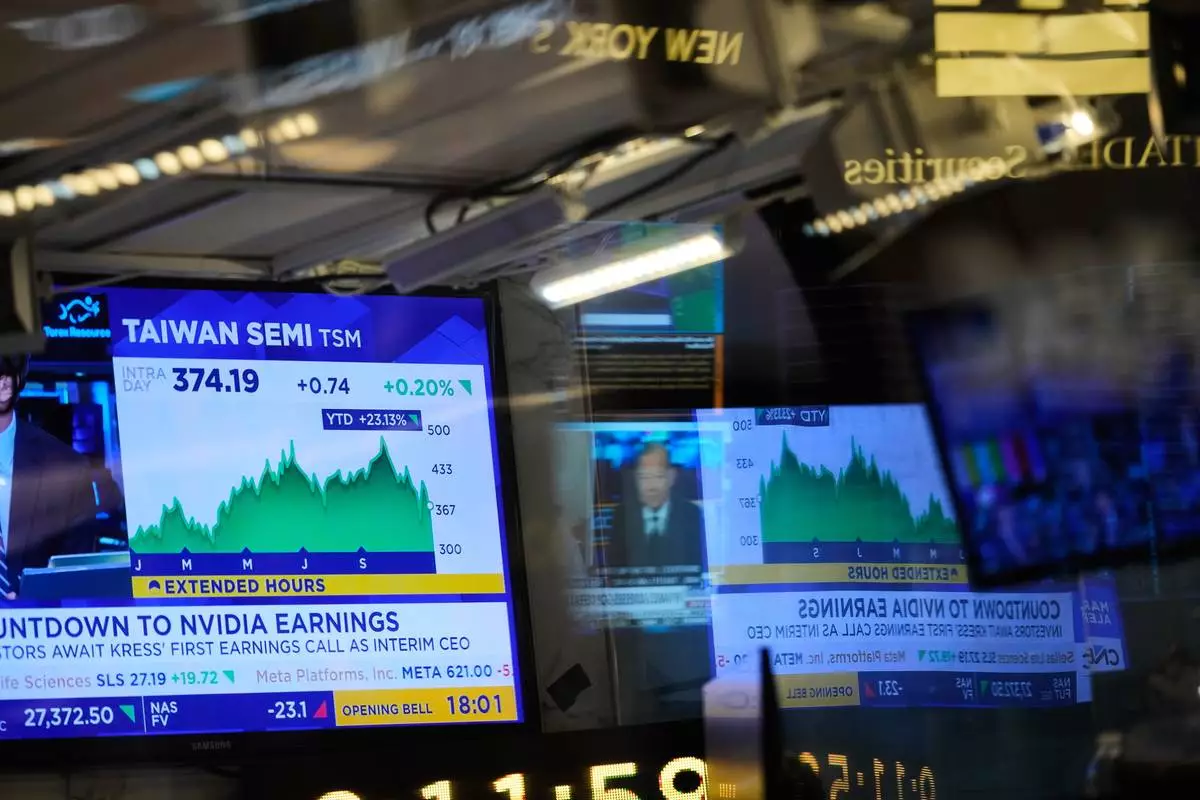
Screens display financial news on the floor at the New York Stock Exchange in New York, Tuesday, Nov. 17, 2026. (AP Photo/Seth Wenig)

Drew Cohen and others work on the floor at the New York Stock Exchange in New York, Tuesday, Nov. 17, 2026. (AP Photo/Seth Wenig)
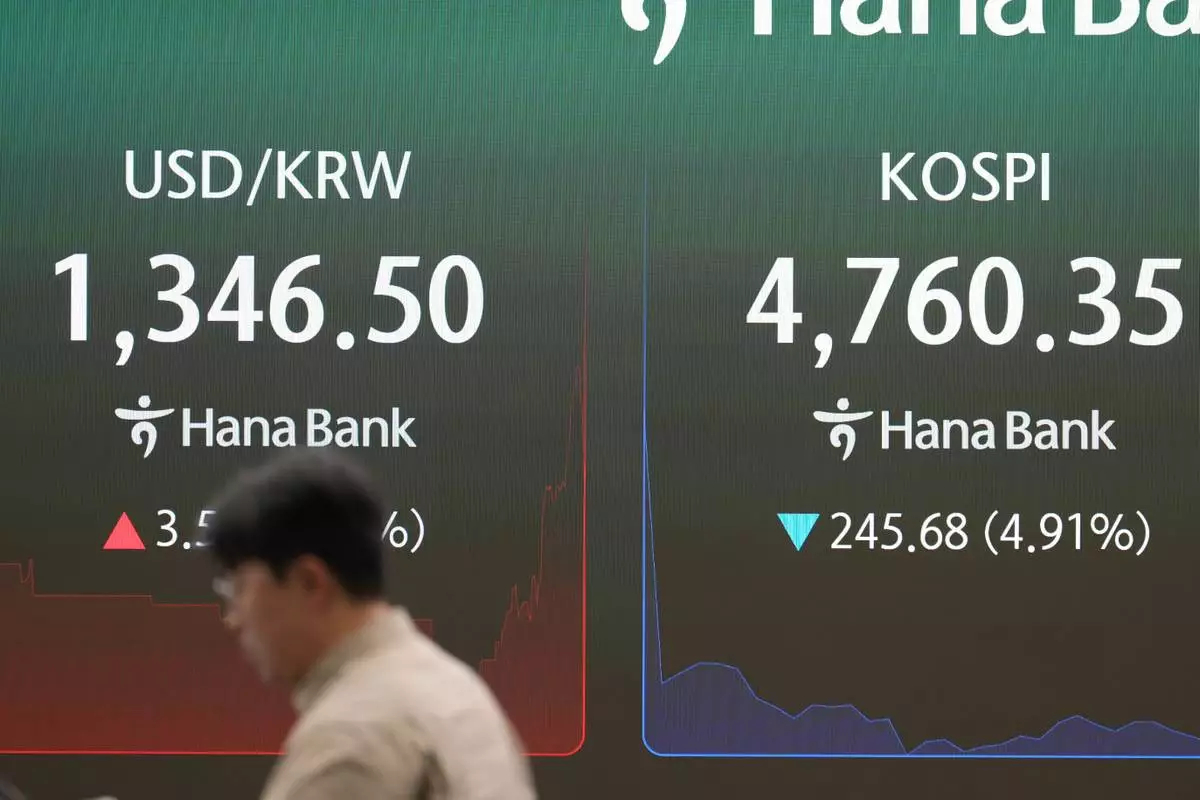
A dealer watches computer monitors near the screens showing the Korea Composite Stock Price Index (KOSPI) and the foreign exchange rate between U.S. dollar and South Korean won at a dealing room of Hana Bank in Seoul, South Korea, Wednesday, Nov. 25, 2026. (AP Photo/Lee Jin-man)
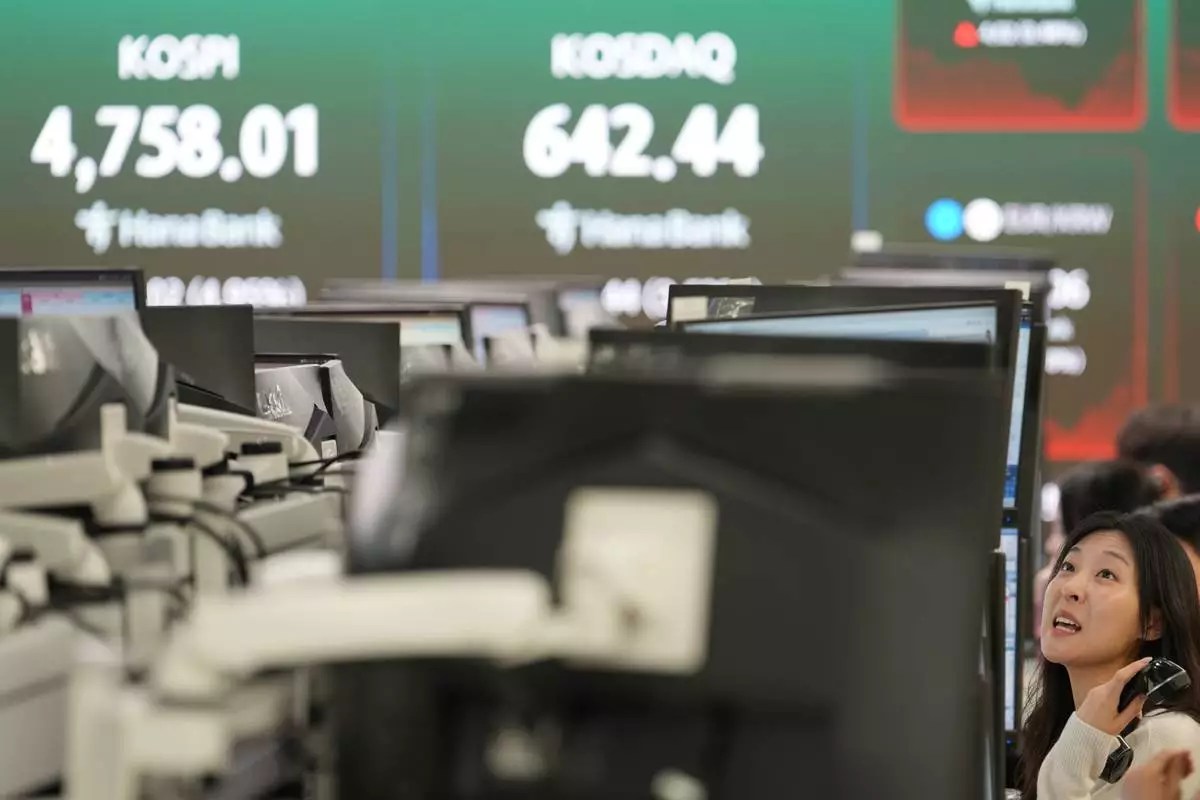
A dealer watches computer monitors near the screens showing the Korea Composite Stock Price Index (KOSPI) and the Korea Securities Dealers Automated Quotations (KOSDAQ) at a dealing room of Hana Bank in Seoul, South Korea, Wednesday, Nov. 25, 2026. (AP Photo/Lee Jin-man)
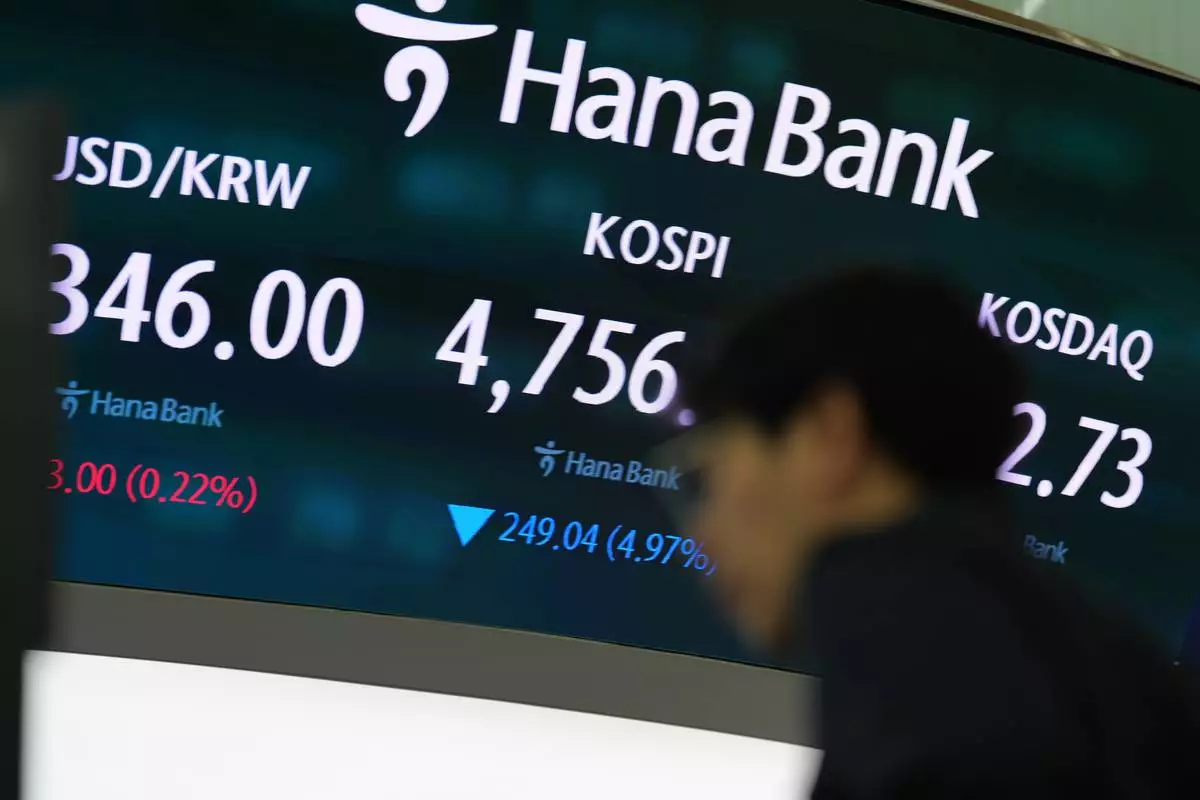
A dealer stands near the screens showing the Korea Composite Stock Price Index (KOSPI), the foreign exchange rate between U.S. dollar and South Korean won and the Korea Securities Dealers Automated Quotations (KOSDAQ) at a dealing room of Hana Bank in Seoul, South Korea, Wednesday, Nov. 25, 2026. (AP Photo/Lee Jin-man)

A person is silhouetted against an electronic stock board showing Japan's TOPIX index in Tokyo, Japan, Tuesday, Nov. 24, 2026. (AP Photo/Eugene Hoshiko)