SAN JUAN, Puerto Rico (AP) — Puerto Rico’s Supreme Court has narrowly ruled in favor of canceling the government’s contract with Luma Energy following a contentious legal fight with the private power company.
The 5-4 ruling of more than 200 pages, made public on Wednesday, plunges the island into further uncertainty as many wonder who will take over from Luma while power outages persist across the U.S. territory and crews continue to repair the grid razed by Hurricane Maria in 2017.
Puerto Rico’s government had sued Luma nearly a year ago, following up on a campaign promise made by Gov. Jenniffer González to cancel the contract.
The court awarded one year for officials to figure out their next steps. González said her administration would seek a new company and that transmission and distribution operations would not revert to Puerto Rico’s Electric Power Authority.
She blamed Luma for “constant interruptions" and “unnecessary outages,” asserting they have enough money to provide proper service as she accused them of lacking diligence and driving the cost of electricity in the U.S. territory to a record high.
“You have seen the substations on fire,” she said. “They have not yet been able to explain why.”
As the governor spoke, a federal control board that oversees the island's finances issued a statement saying its immediate concern is the continuity of service.
“The Puerto Rican government's decision to terminate the contract creates enormous uncertainty at a time when the people and businesses of Puerto Rico look for stability,” the board said, noting that there's no “clear plan or successor company in place.”
González rejected those concerns: “There will be no chaos."
Puerto Rico's Association of Industries said it was worried that the ruling could erode the confidence of private investors, while dissenting judges voiced their concerns in sharply worded decisions.
Judge Rafael L. Martínez Torres warned that “collateral consequences” of ending the contract “had to be considered, given their potential monumental impact.”
Judge Ángel Colón Pérez asserted that the ruling in favor of the cancellation stemmed from “an excessive eagerness to satisfy a capricious request from the leader currently in power," an apparent reference to the governor.
One judge referenced and rejected recent allegations that Supreme Court judges were pressured or swayed.
"We do not bow to external pressures, we do not yield to intimidation, nor do we allow smear campaigns to influence the exercise of our judicial function," wrote Judge Roberto Feliberti Cintrón, who was part of the majority vote. “Our obligation is to the Law, Justice, the People, and our conscience.”
Luma also commented on the allegations.
"In light of the serious allegations that have been raised publicly regarding attempts to influence the Court, we reiterate our call for an immediate, rigorous, and transparent investigation,” it said.
Puerto Rico’s government had awarded a multimillion-dollar contract to Luma, which took over the transmission and distribution of power on the island in June 2021. It inherited infrastructure that was crumbling after decades of neglect and mismanagement under Puerto Rico’s Electric Power Authority.
The company said in a statement Wednesday that it disagrees with the court’s decision but will respect the judicial process and is “carefully evaluating all available legal alternatives.”
“We remain concerned about the potential impact of this decision on ongoing efforts to strengthen and modernize Puerto Rico’s electric grid,” Luma said. “This matter goes beyond a contractual dispute. It has significant implications for the provision of an essential electric service, public safety, and Puerto Rico’s energy future.”
Luma is a consortium made up of Calgary, Alberta-based Atco and Quanta Services Inc. of Houston.
When the lawsuit was filed in December 2025, González said Luma had nearly $11 billion in federal funds at its disposal to rebuild the grid, but that it has only been able to recover some $550 million in reimbursements from the U.S. Federal Emergency Management Agency.
When the lawsuit was filed, she said, “Despite the operator’s expectations and representations, the electrical system has not improved with the speed, consistency or effectiveness that Puerto Rico deserves and that LUMA promised and lied to us about.”
Puerto Rico’s government has two main agreements with Luma: one for operation and maintenance, and a supplemental deal that was needed because the state-owned Electric Power Authority had not yet completed a debt restructuring process. The island's power company remains mired in that process.
Both deals were set to expire in November 2022, prompting the government to extend the supplemental agreement via an extension letter.
González has said that the letter granted LUMA indefinite control, and that the extension granted was “in violation of the law and the principles of sound public administration.”
The ongoing outages have also been blamed on Genera PR, a private company that oversees the generation of power on the island.
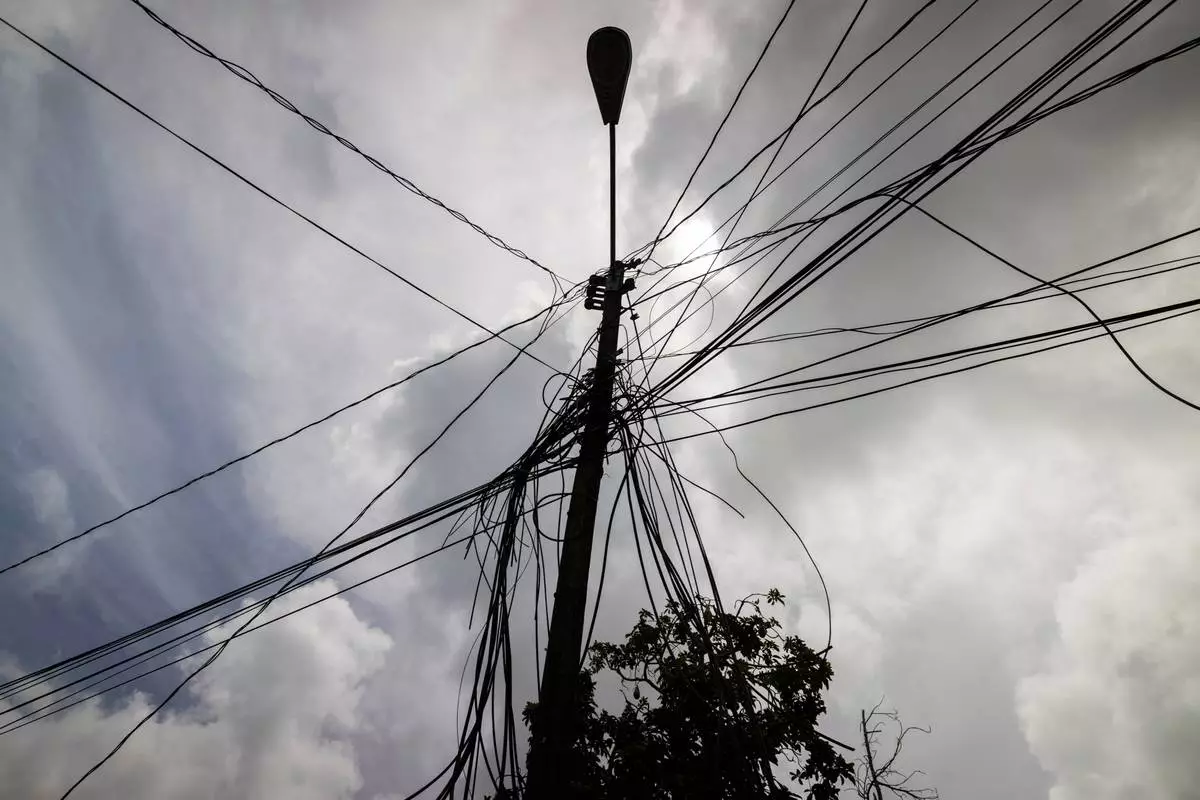
FILE - A utility pole with loose cables towers over a home in Loiza, Puerto Rico, Sept. 15, 2022. (AP Photo/Alejandro Granadillo, File)
Stocks on Wall Street closed moderately lower Wednesday after another punishing pullback in AI stocks lost momentum as the day went on, reversing much of the market’s losses.
The S&P 500 index fell 0.3% after having been down as much as 3.2% earlier in the day. The Nasdaq composite finished 0.6% lower. At one point, it had been down as much as 4.6%. The Dow Jones Industrial Average rose 0.3%.
The market pared its losses even as a report raised more worries about high inflation and as President Donald Trump plans to escalate the U.S. trade war with major trading partners.
AI stocks lost ground for a second day following Monday’s relief rally over the surprise reinstatement of Jensen Huang as Nvidia’s CEO. Stocks have been generally falling since setting an all-time high last month as worries grow that AI stock prices have grown unjustifiably high.
The market turnaround came as some of the biggest tech companies bounced back from steep drops. Nvidia, which was down more than 9% at one point, closed with a 3.9% loss.
Broadcom, which had dropped more than 6%, ended just 0.1% lower, while Microsoft came back from a more than 3% slide to finish down 1.2%.
There were some gainers among tech stocks: Meta climbed 3.4% and Salesforce rose 2%.
Gains in financial services stocks also helped temper the market's losses. Visa rose 1.8%, Mastercard gained 1.9% and American Express rose 1.2%.
Anthropic bounced back from an early drop to close with a 1.1% gain. Still, since soaring to $115 per share on the day it became the first major frontier lab to go public, Anthropic shares have tumbled by about 28%.
Roughly three quarters of the stocks in the S&P 500 rose, although the pullback in technology stocks kept the index in the red.
Technology companies, particularly those focused on AI, have large market values that give them a dominant influence over whether major indexes rise or fall. Nvidia is among the most valuable companies on Wall Street and its surge on Monday led a tech sector rally. It is now one of the biggest weights pushing the market lower.
The S&P 500 index is down 5.2% for November, after losing some ground in October and September.
“At this point, between the AI angst and the newly announced tariffs, it doesn’t look like the Santa Claus Rally is in store for us this year,” said Chris Zaccarelli, chief investment officer for Northlight Asset Management, in a research note.
Questions about Nvidia’s corporate governance, as well as the influence of a U.S. president who owns millions of dollars’ worth of shares in the company, have added to concerns surrounding the artificial intelligence sector. Relief over Huang’s return as CEO is fading because of worries that AI might not produce enough profit to justify the large investments and stock values.
That dynamic is running up against stubbornly high inflation. The latest update on inflation showed that prices rose at a more aggressive 3.8% rate in October from the same period last year, and followed a 3.6% rate in September. The data is from the Federal Reserve’s preferred measure of inflation, the personal consumption expenditures price index.
Aside from potentially stifling economic growth, high inflation could mean higher interest rates, with the Fed likely to raise its benchmark interest rate at its December policy meeting to try to tame inflation. The rate of inflation is well above the central bank’s target of 2%.
The economy has been resilient, though, even as inflation squeezes households and businesses and consumers grow increasingly anxious about spending and finances. The government said that the economy grew even faster in the July-September quarter than previously estimated, with growth revised upward to a 4.3% annual rate, the fastest in three years.
Much of the spending that is driving the economy, though, has been from large tech firms building out AI infrastructure and from upper-income households. There are signs poorer Americans are relying more on credit to sustain their spending.
Higher oil prices, fueled by the U.S. war with Iran and its impact on the world’s oil supply, have also contributed to inflation. The price of a barrel of Brent crude, the international standard, rose 3.5% to settle at $94.61 on Wednesday. The price has swung between $72 and $114 since the United States and Israel attacked Iran in February. Energy companies mostly gained ground Wednesday, including a 1.1% rise for Chevron.
The wide-ranging and often uncertain U.S. trade conflict with much of the world also added to rising costs. The U.S. plans to hike tariffs on China, the European Union and other trading partners after the U.S. Supreme Court struck down broader tariffs that were set last year.
Businesses tend to pass along some or all of the cost of tariffs to consumers. Anger over stubbornly high prices was a factor in pushing voters to punish Republicans by handing majorities in the House and the Senate to Democrats.
Treasury yields fell in the bond market. The yield on the 10-year Treasury fell to 4.87% from 4.91% late Tuesday.
All told, the S&P 500 fell 18.31 points to 7,182.78. The Dow gained 164.25 points to 50,182.95, and the Nasdaq dropped 147.73 points to 23,585.80.
Markets fell throughout Europe and Asia. South Korea’s Kospi lost 6.2% as Samsung Electronics fell 9.9% and SK Hynix plummeted 11.1%. Japan’s Nikkei 225 dropped 2.8%. OpenAI investor SoftBank Group slumped 14.8%.
U.S. financial markets will be closed Thursday for Thanksgiving. On Friday, the stock market will close at 1:00 p.m. Eastern, and the bond market will close at 2:00 p.m. Eastern.
Business reporter Elaine Lai and economics writer Christopher Rugaber contributed to this report.
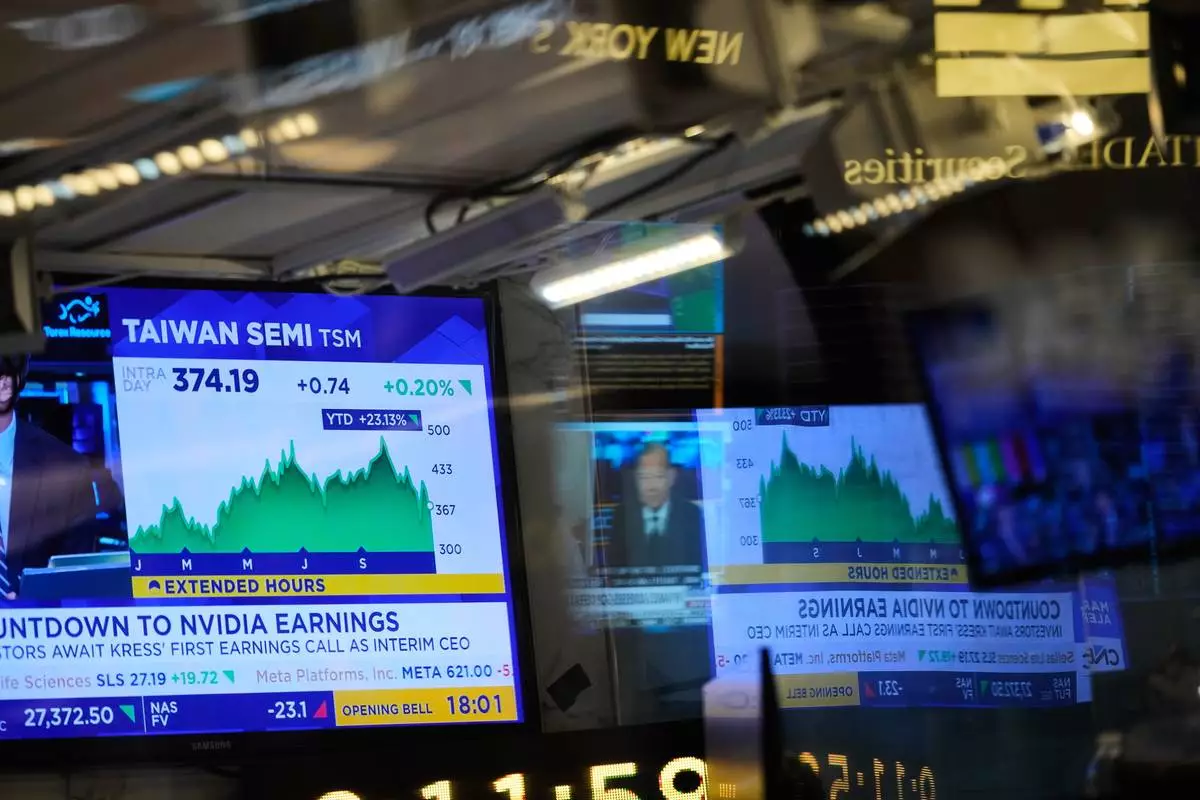
Screens display financial news on the floor at the New York Stock Exchange in New York, Tuesday, Nov. 17, 2026. (AP Photo/Seth Wenig)

Drew Cohen and others work on the floor at the New York Stock Exchange in New York, Tuesday, Nov. 17, 2026. (AP Photo/Seth Wenig)
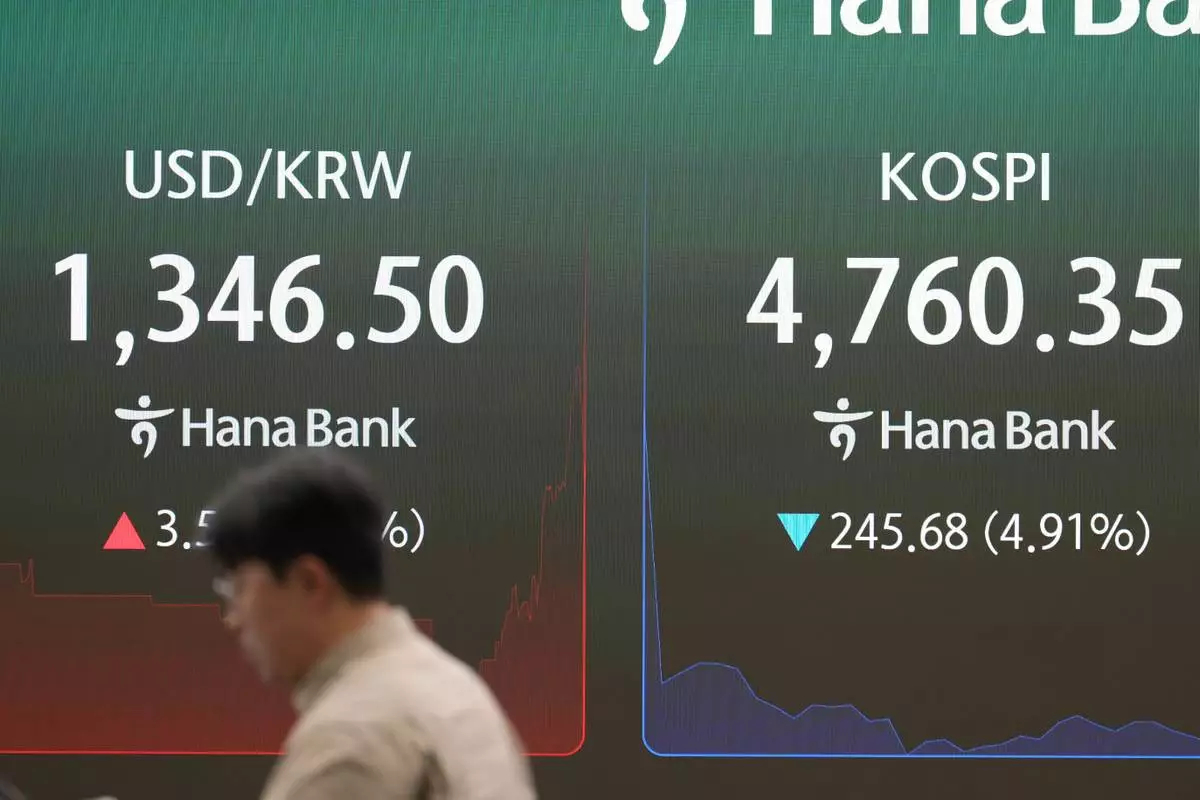
A dealer watches computer monitors near the screens showing the Korea Composite Stock Price Index (KOSPI) and the foreign exchange rate between U.S. dollar and South Korean won at a dealing room of Hana Bank in Seoul, South Korea, Wednesday, Nov. 25, 2026. (AP Photo/Lee Jin-man)
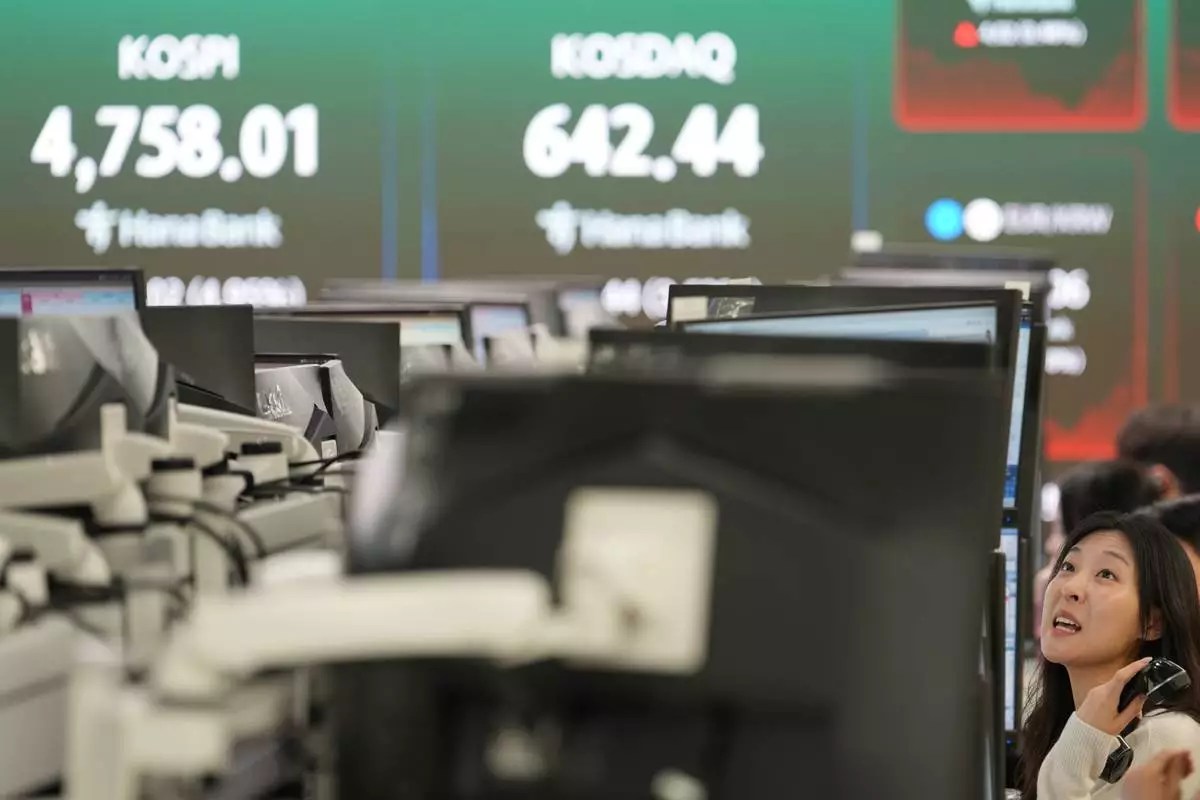
A dealer watches computer monitors near the screens showing the Korea Composite Stock Price Index (KOSPI) and the Korea Securities Dealers Automated Quotations (KOSDAQ) at a dealing room of Hana Bank in Seoul, South Korea, Wednesday, Nov. 25, 2026. (AP Photo/Lee Jin-man)
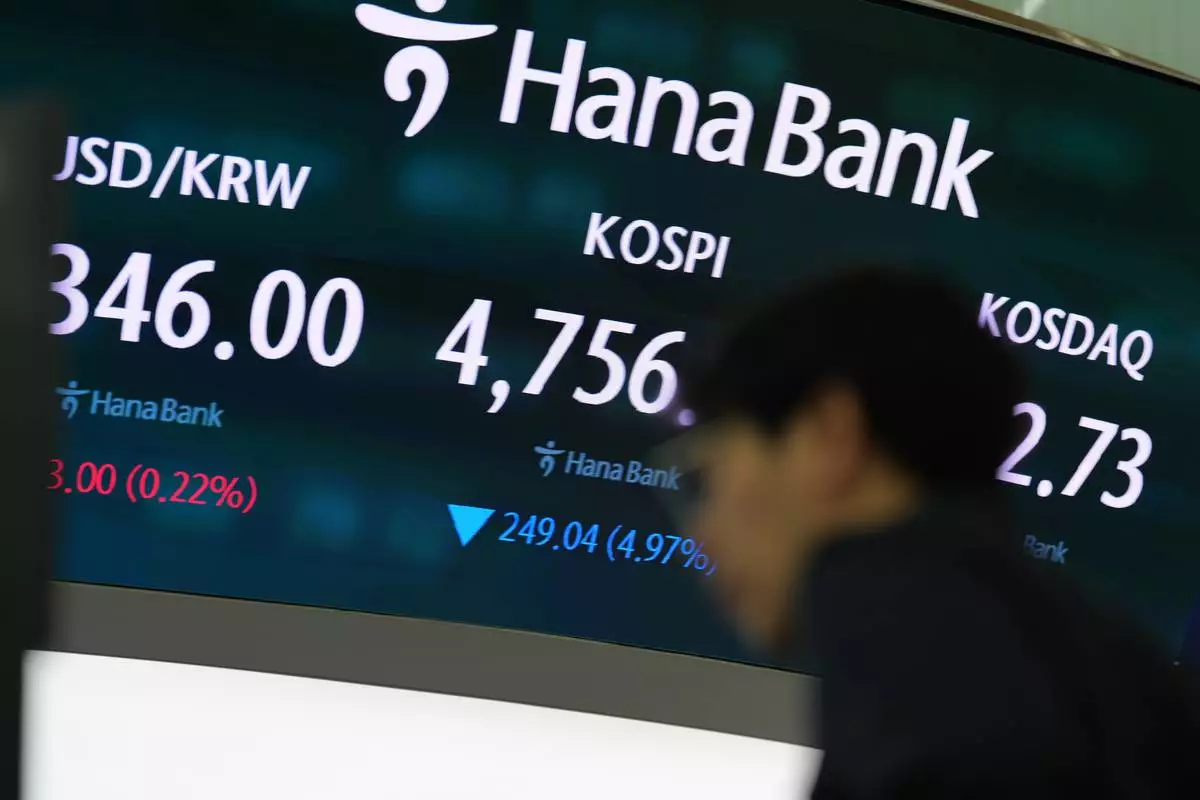
A dealer stands near the screens showing the Korea Composite Stock Price Index (KOSPI), the foreign exchange rate between U.S. dollar and South Korean won and the Korea Securities Dealers Automated Quotations (KOSDAQ) at a dealing room of Hana Bank in Seoul, South Korea, Wednesday, Nov. 25, 2026. (AP Photo/Lee Jin-man)
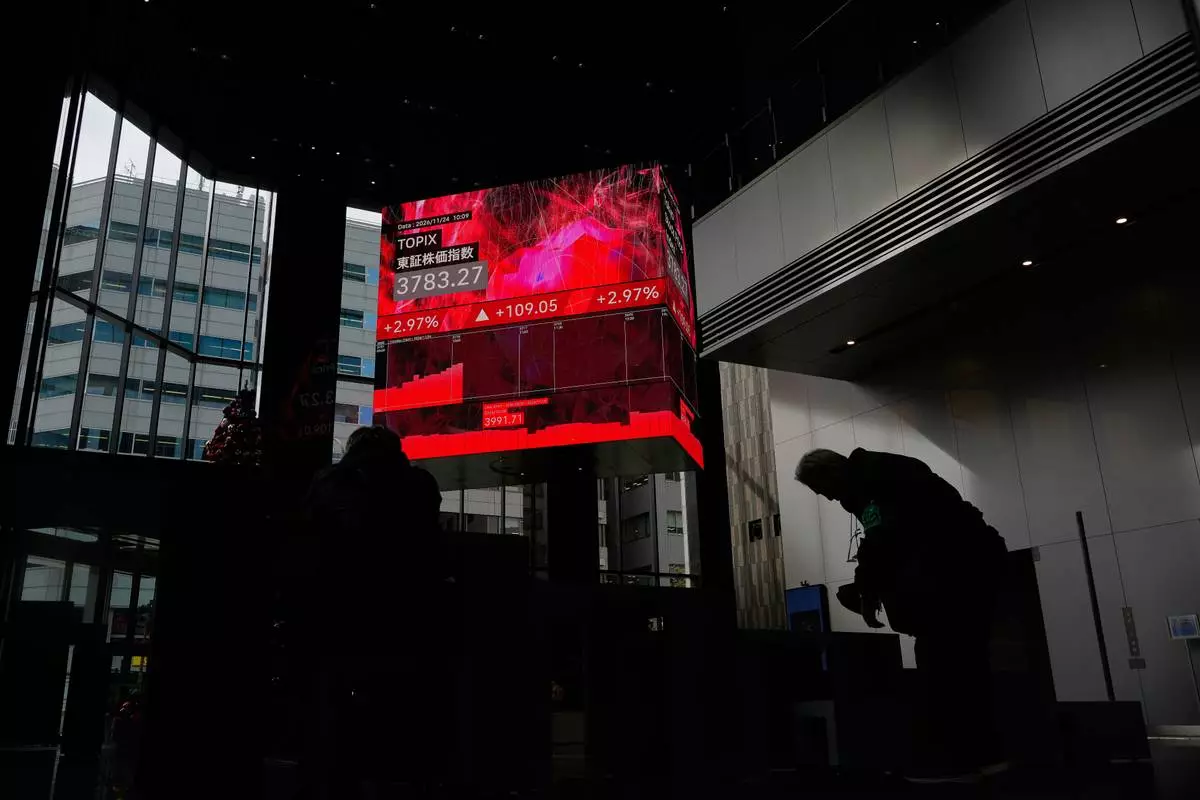
A person is silhouetted against an electronic stock board showing Japan's TOPIX index in Tokyo, Japan, Tuesday, Nov. 24, 2026. (AP Photo/Eugene Hoshiko)