WASHINGTON (AP) — Judge blocks FCC from early license review for ABC, which network says has had a chilling effect.
THIS IS AN APNewsAlert. Check back for updates. AP's earlier story is below.
A federal judge agreed Wednesday to temporarily block the Federal Communications Commission from conducting an early review of ABC’s broadcast licenses, agreeing with the network that the Trump administration was chilling the network's free speech rights.
U.S. District Judge Loren AliKhan in Washington, D.C., granted ABC’s request for a temporary restraining order and a preliminary injunction on First Amendment grounds. The network accuses the FCC of violating its free speech rights in retaliation against programming decisions that the Trump administration dislikes.
AliKhan noted in her ruling that the network was likely to succeed on its First Amendment claim.
“This is not a close case,” she wrote.
AliKhan, who was nominated by former President Joe Biden, said ABC had detailed “a campaign of retaliation against them in response to their exercise of their First Amendment rights,” which on its own is an ‘irreparable injury.’”
The FCC, White House and ABC did not immediately respond to requests for comment.
ABC and its parent company, Disney, sued the FCC and FCC Commissioner Brendan Carr in August, several months after the commission ordered eight ABC-owned stations to submit renewal applications for their broadcast licenses years ahead of schedule.
The case is one of several legal skirmishes between President Donald Trump’s administration and news outlets — including The Associated Press — over their coverage and access to the executive branch since the Republican returned to the White House nearly two years ago.
ABC asked the judge to temporarily prohibit the FCC from taking any further action related to its license renewal proceedings.
The judge rejected ABC’s additional request to block the FCC from “any actions, formal or informal,” to coerce or threaten sanctions in an effort to alter the network’s “exercise of editorial discretion.” AliKhan said the network had not specified what those future threats might be beyond the early license renewal proceedings.
Carr, a Trump ally, ordered the early review of the stations’ licenses in April — shortly after a joke by ABC’s late-night host Jimmy Kimmel infuriated Trump, who called for Kimmel’s firing.
ABC also had been fighting Carr’s efforts to make the morning talk show “The View” subject to equal-time rules. Carr defended his agency’s actions against ABC by saying broadcasters have a duty to “operate in the public interest.”
Government attorneys urged the court to dismiss ABC’s lawsuit, accusing the network of trying to prematurely ward off scrutiny by federal regulators.
“To foreclose the Commission from using all the tools at its disposal to investigate whether Plaintiffs are meeting their statutory and regulatory duties would seriously harm both the government and the public,” Justice Department lawyers wrote.
The plaintiffs in the case are the American Broadcasting Companies, Inc., its indirect parent, the Walt Disney Company, and eight television stations of which ABC is the indirect parent.
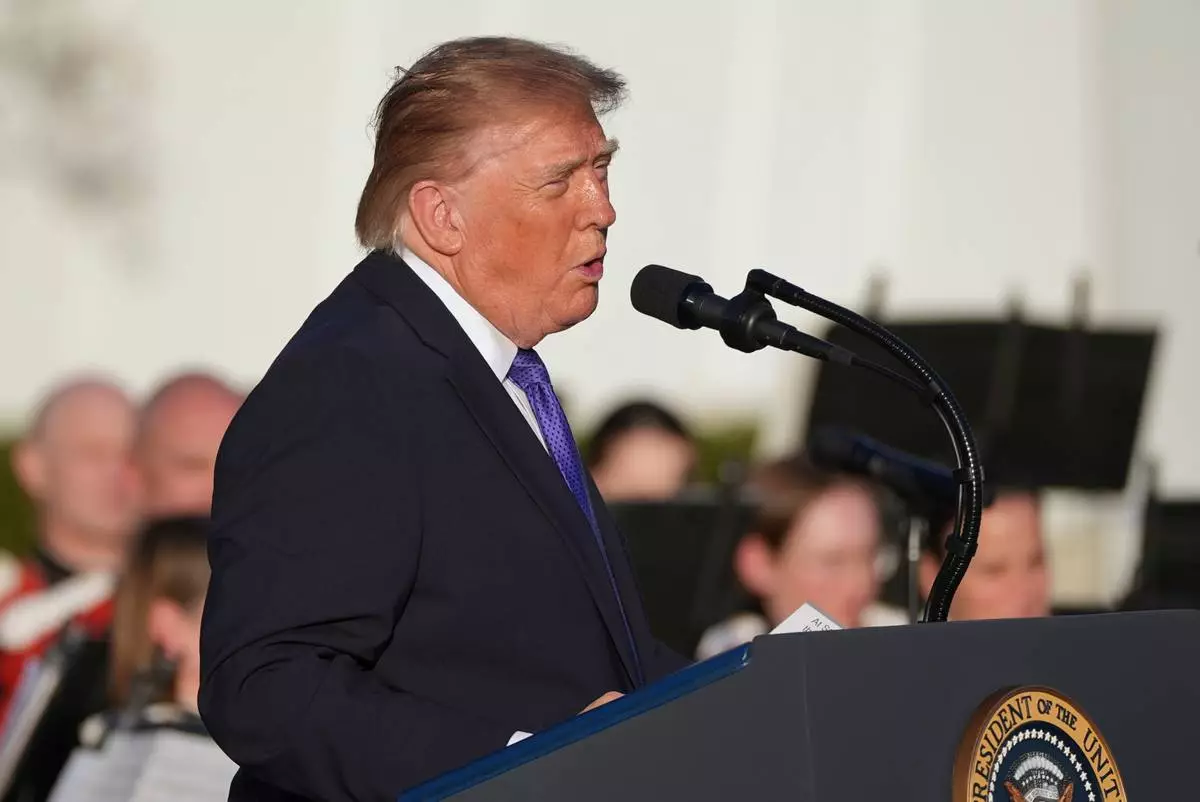
President Donald Trump speaks during an event on the helipad on the South Lawn of the White House, Friday, Nov. 20, 2026, in Washington. (AP Photo/Alex Brandon)
MADRID (AP) — Kilmar Ábrego García, a Salvadoran national who fought his mistaken deportation from the United States, arrived in Spain on Wednesday after what his lawyer described as a temporary departure, with hopes of returning to his family’s home in Maryland after President Donald Trump leaves office.
Ábrego García, who has an American wife and child, was arrested in Baltimore in March 2025 and was deported to a Salvadoran prison in what an official called an “administrative error.” A judge later ordered his return to the U.S., where he fought the Trump administration’s efforts to deport him again, this time to Africa.
After receiving officials' permission to leave the U.S., Ábrego García voluntarily departed on Tuesday from Washington Dulles International Airport, accompanied by his wife.
“The government does not decide where my story continues," the 31-year-old said during a virtual news conference Wednesday after he arrived in Spain. “My family and I will decide our future.”
Simon Sandoval-Moshenberg, a Virginia-based attorney representing Ábrego García, called the move “a temporary departure,” though he declined to say what his client's immediate plans are, including where he will live.
“Mr. Ábrego García has many options to return to the United States as the husband of a U.S. citizen spouse and the father of a U.S. citizen child. We don’t expect that to happen under this administration, which we know will never give him a fair shake, but we expect that the next administration will prioritize reunifying this family and bringing him back to Maryland,” Sandoval-Moshenberg said.
David Leopold, an Ohio immigration attorney and past president of the American Immigration Lawyers Association, said such a return would require government permission and a Department of Homeland Security waiver. He said Ábrego García would need to demonstrate that his continued absence would cause his wife extreme hardship, including financial and psychological harm.
“My guess is he can do it because he has a family he was supporting,” Leopold said.
Maryland Sen. Chris Van Hollen, who met with Ábrego García in El Salvador last year, a visit that put the national spotlight on Ábrego García's predicament, celebrated Ábrego García's decision to leave the U.S. on his own terms.
“They wanted to leave him to rot there, to rot there for the rest of his life,” Van Hollen said of the Trump administration and its decision to send Ábrego García to the notorious CECOT mega-prison. The Democrat said he was grateful Ábrego García would be a free man “living in dignity.”
Ábrego García migrated to the U.S. illegally as a teenager. In 2019, an immigration judge ruled that he could not be deported to El Salvador because he faced danger there from a gang that had threatened his family. The judge allowed him to live and work in the U.S. under Immigration and Customs Enforcement supervision, but he was not given residency status.
Ábrego García would decide where to settle for the next two years to wait out the remainder of the Trump administration, Sandoval-Moshenberg said. Ábrego García's immigration status in Spain wasn’t immediately clear.
U.S. District Judge Paula Xinis, who presided over Ábrego García’s long-running immigration proceedings in Maryland, ordered the case’s dismissal on Wednesday after receiving confirmation that he had left the U.S.
The court also unsealed an order that Xinis signed last Friday to spell out the terms of his “unimpeded” departure. In the order, Xinis said the government informed her that Ábrego García was free to go “to any country that is willing to accept him.”
The judge, in turn, set Tuesday as the deadline for his departure and ordered the removal of his GPS ankle monitor before he boarded the flight.
The order didn’t address why the government had changed its position on him leaving the U.S. to a country of his choice.
Sandoval-Moshenberg, the attorney, declined to elaborate on how the agreement came together for Ábrego García to leave the U.S., citing confidential settlement negotiations with the government.
Spokespeople for the Department of Homeland Security and the Justice Department didn’t immediately respond on Wednesday to messages seeking more information about the resolution of Ábrego García’s immigration proceedings and the agreement leading to his departure from the U.S.
It was unclear how Ábrego García's departure would affect prosecutors’ efforts to revive a criminal case against him in Tennessee. After a judge ordered U.S. officials to arrange Ábrego García’s return from El Salvador, prosecutors charged him with human smuggling in a case stemming from a 2022 traffic stop. Officials alleged he had been paid to transport people who were in the U.S. illegally.
Ábrego García pleaded not guilty, and his attorneys decried the prosecution as politically motivated. A federal judge dismissed the case in May, calling it an abuse of prosecutorial power and noting the time that had elapsed between the traffic stop and the charges. Prosecutors appealed the ruling, and a three-judge panel of the 6th Circuit Court of Appeals is scheduled to hear the case in February.
Sandoval-Moshenberg said a successful appeal would leave the government with a choice: drop the charges that it fought to reinstate or seek Ábrego García’s return to the U.S. to face a trial. “That will be up to them,” he said. “I don’t think it will happen, but if it does, it will be interesting to see which of those two options they choose.”
DHS said Tuesday night that Ábrego García left for Spain as part of a removal order and that he didn’t receive any incentives and won’t be allowed back into the U.S.
U.S. Homeland Security Secretary Markwayne Mullin said in a post on X that he was “delighted” about Ábrego García’s departure, listing a familiar litany of allegations for why he should be deported, including that he was a gang member, an accusation that Ábrego García has repeatedly denied.
Ábrego García's deportation in early 2025 came as Trump, a Republican, was ramping up his immigration crackdown, promising to deport 1 million people annually.
Through an infusion of billions of dollars approved by the U.S. Congress, the Trump administration later supercharged its immigration enforcement capabilities, growing its cadre of immigration officers, expanding detention capabilities and pushing to deport an increasing number of people.
Ábrego García was fighting against a second deportation to a series of African countries proposed by DHS officials.
Kunzelman reported from Washington. Associated Press writers Valerie Gonzalez in McAllen, Texas, and R.J. Rico in Atlanta contributed to this report.

Kilmar Abrego Garcia, a Salvadoran national, arrives at Madrid's airport after leaving the United States, Wednesday, Nov. 25, 2026. (AP Photo/Francisco Seco)
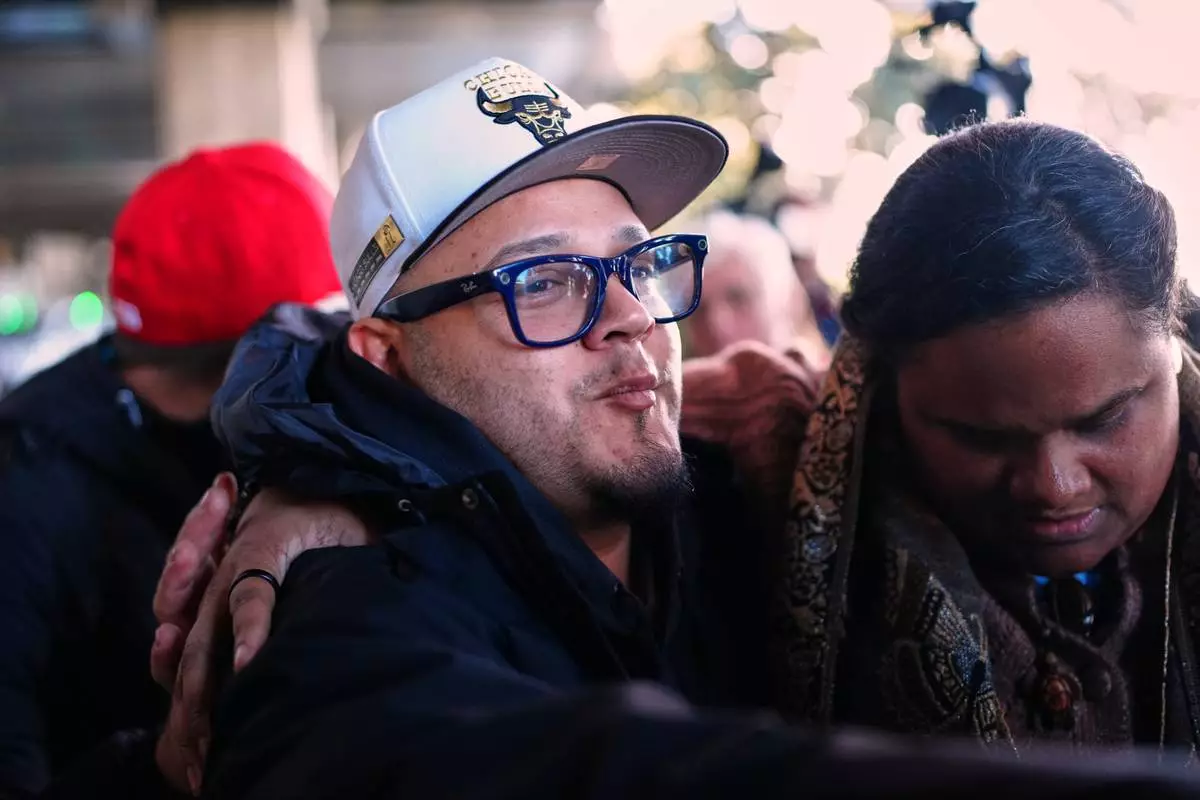
Kilmar Abrego Garcia, a Salvadoran national, arrives at Madrid's airport after leaving the United States, Wednesday, Nov. 25, 2026. (AP Photo/Francisco Seco)

Kilmar Abrego Garcia, a Salvadoran national, arrives at Madrid's airport after leaving the United States, Wednesday, Nov. 25, 2026. (AP Photo/Francisco Seco)
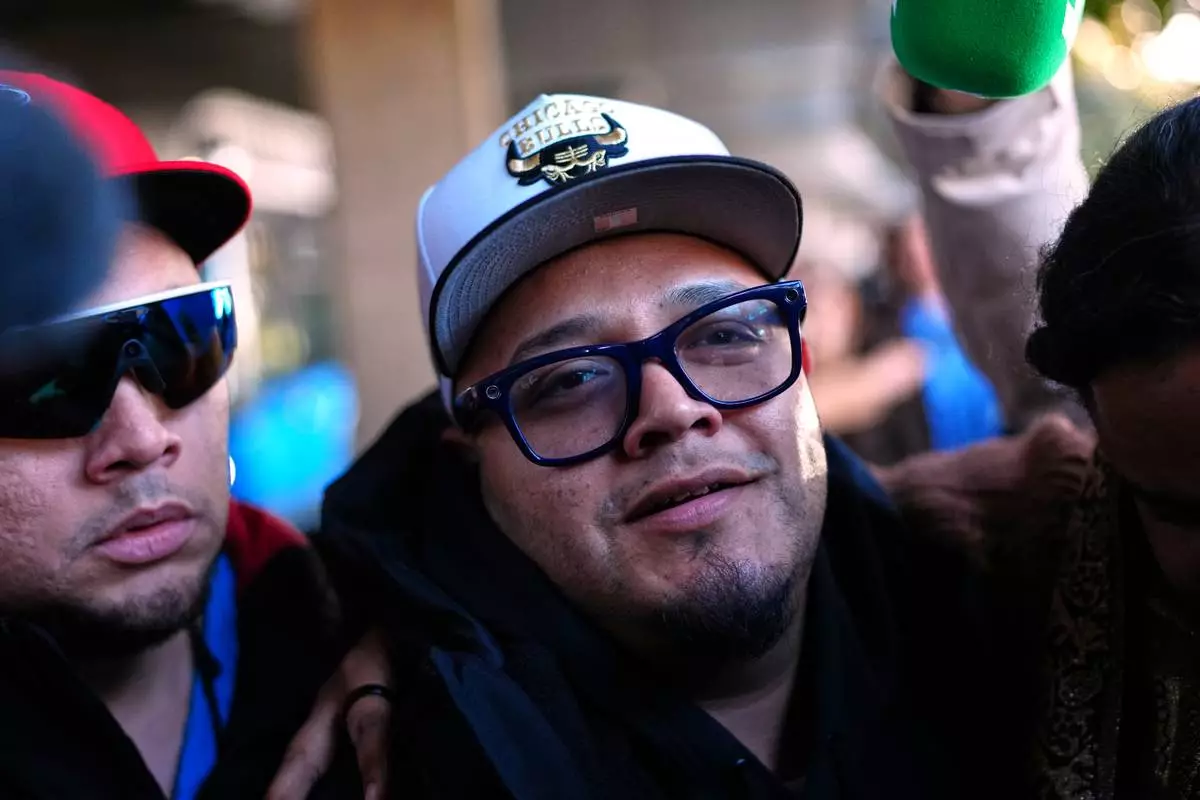
Kilmar Abrego Garcia, a Salvadoran national, arrives at Madrid's airport after leaving the United States, Wednesday, Nov. 25, 2026. (AP Photo/Francisco Seco)
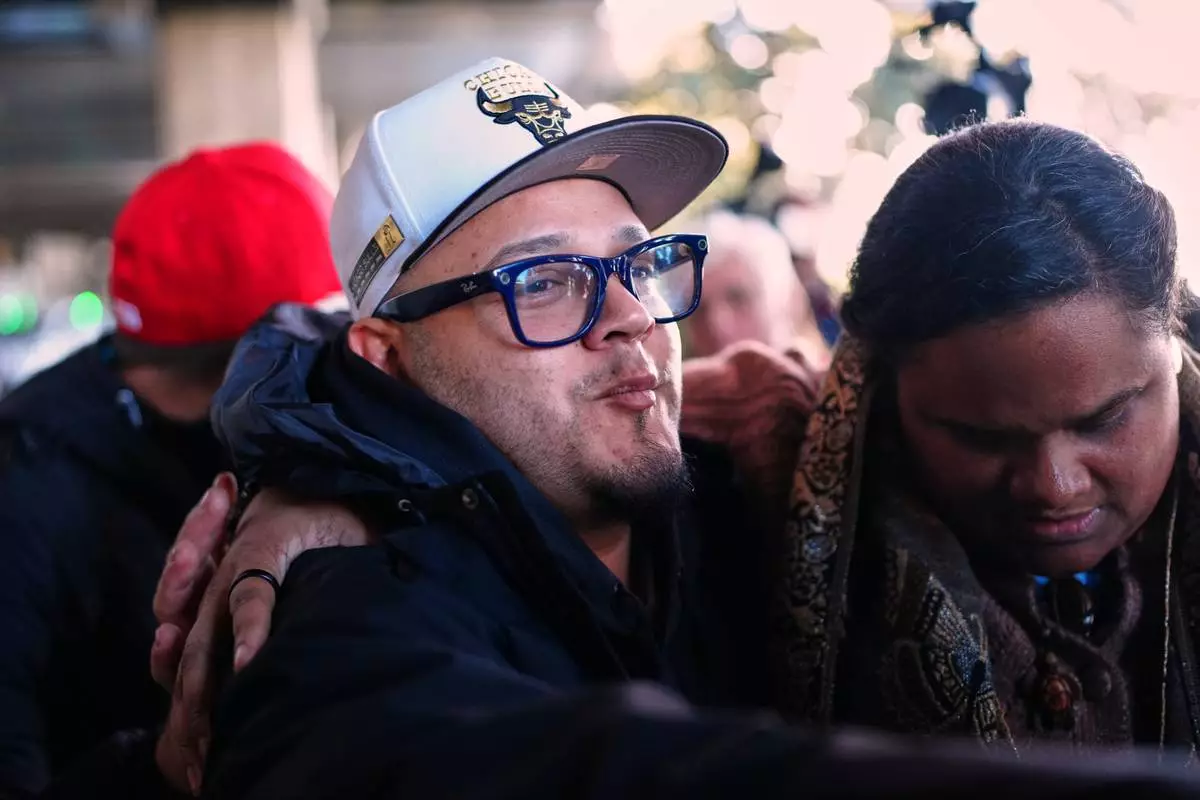
Kilmar Abrego Garcia, a Salvadoran national, arrives at Madrid's airport after leaving the United States, Wednesday, Nov. 25, 2026. (AP Photo/Francisco Seco)

Kilmar Abrego Garcia, a Salvadoran national, arrives at Madrid's airport after leaving the United States, Wednesday, Nov. 25, 2026. (AP Photo/Francisco Seco)

Kilmar Abrego Garcia, a Salvadoran national, arrives at Madrid's airport after leaving the United States, Wednesday, Nov. 25, 2026. (AP Photo/Francisco Seco)
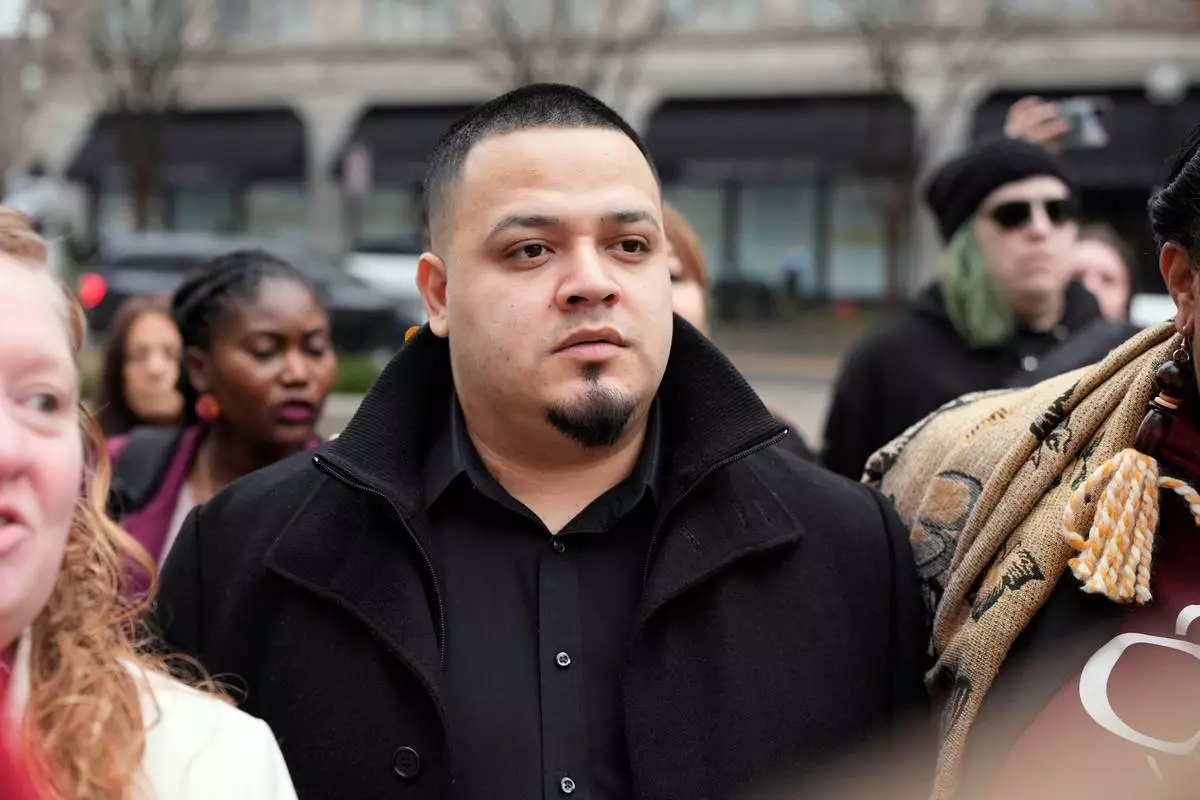
FILE - Kilmar Abrego Garcia arrives at the federal courthouse, Feb. 26, 2026, in Nashville, Tenn. (AP Photo/George Walker IV, File)