China's Ministry of National Defense on Thursday urged Japan to stop stirring up trouble in the South China Sea, criticizing a Japanese defense research report and plans to supply surveillance equipment to the Philippines as part of its efforts to expand its military role in the region.
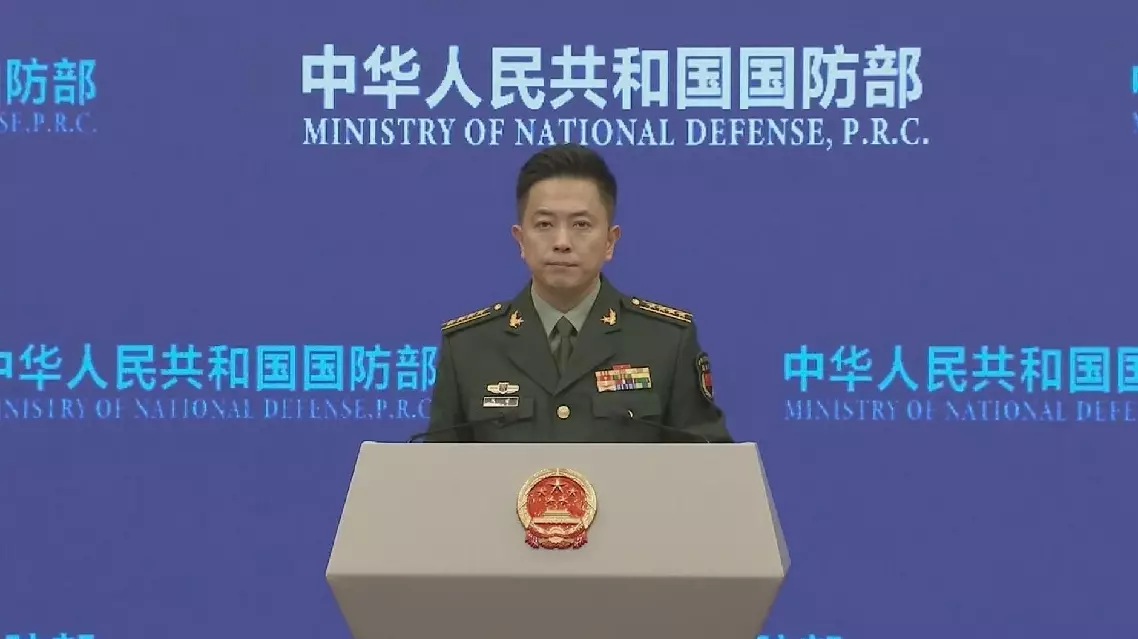
Spokesperson Chen Xi was responding to a question about the "NIDS China Security Report 2027," issued by Japan's National Institute for Defense Studies. The report recommends maintaining Japan's presence in the South China Sea, expanding cooperation with allies and partners, and opposing what it describes as Chinese attempts to change the status quo through force or coercion.
"Under the guise of 'academic research,' this Japanese report openly makes the case for Japan to interfere in the South China Sea and stir up tensions across the Asia-Pacific. It maligns China's legitimate efforts to defend its maritime rights and enforce the law. It is another stark illustration of the Japanese authorities' military buildup and their efforts to move beyond the country's exclusively defense-oriented policy. The international community should remain highly vigilant," Chen said.
Chen also challenged Japan's standing to comment on the South China Sea, citing China's territorial position and Japan's wartime conduct in the region.
"Let me stress that the islands in the South China Sea are China's inherent territory. Japan is not a party to the South China Sea issue and has no standing to pass judgment on it. During World War II, Japan committed grave crimes in China, including the illegal occupation of Chinese islands and reefs in the South China Sea, inflicting immense suffering on China and its people," he said.
Japan's security assistance to the Philippines was another focus of the question. Under an agreement signed on Nov 9, Japan plans to provide a coastal radar system to the Philippine Navy and surveillance drones to the Philippine Air Force through its Official Security Assistance program.
"In recent years, Japan has used claims of 'external threats' to stoke security anxieties in neighboring countries, supplied weapons and equipment to countries in the region, including the Philippines, and formed exclusive military groupings. It seeks to expand its military presence in the South China Sea by provoking confrontation, harming the shared interests of regional countries. It is Japan that is undermining peace and stability in the Asia-Pacific. We urge Japan to stop stirring up trouble over the South China Sea. Any attempt to challenge China's sovereignty and maritime rights and interests, or to undermine regional peace and stability, is bound to fail," Chen said.
China's defense ministry urges Japan to stop 'stirring up' South China Sea disputes