Chinese ground crews have conducted a comprehensive drill of the recovery process they will undertake as part of the Shenzhou-23 spacecraft's expected pre-dawn landing in the coming days, with the teams practicing how to locate the return capsule and reach the astronauts during the night-time conditions.
The drill took place at the Dongfeng landing site in north China's Inner Mongolia Autonomous Region, bringing together command, search, communications and medical vehicles, along with five helicopters.
The aircraft rehearsed searching a 1,300-square-kilometer area before converging on the capsule's projected touchdown point as updated coordinates came in. Ground crews then practiced securing the site, handling the capsule and setting up lights around the craft, with a scale model of the return capsule used during the test.
Ground personnel say they are fully prepared for the operation and the extra challenges associated with carrying it out amid the darkness of the desert at night.
"The recovery will take place at night in the Gobi Desert. We have conducted 26 training flights, including night flights in darkened cockpits and takeoffs and landings on sandy terrain. Our personnel and equipment are ready," said Liu Liang of the mission's aerial search-and-recovery team.
The Shenzhou-23 spacecraft arrived at the Tiangong space station in May with commander Zhu Yangzhu, and astronauts Zhang Zhiyuan and Li Jiaying, also known as Lai Ka-ying in Cantonese, who is the first astronaut from China's Hong Kong Special Administrative Region.
Zhang and Li are due to return to Earth alongside Pakistani astronaut Muhammad Zeeshan Ali, the first foreigner to enter China's space station. Zhu will remain on the station for a year-long mission, while Zhang will command the return flight involving the Shenzhou-23 spacecraft.
For the landing, medical crews have prepared blankets and sleeping bags to provide some protection against the overnight cold. They have also refined plans to assess each astronaut's health and provide immediate care after touchdown.
"We are combining lighting from the air and the ground. A tethered drone will illuminate a wide area from above, while ground lights will focus on the area where crews will work around the return capsule. This layered lighting will help everyone see clearly and carry out their tasks accurately," said Chu Wei, a staff member from the Jiuquan Satellite Launch Center.
Landing site officials said the recovery teams and their equipment are all in position, and weather conditions appear suitable for the return mission to go ahead.
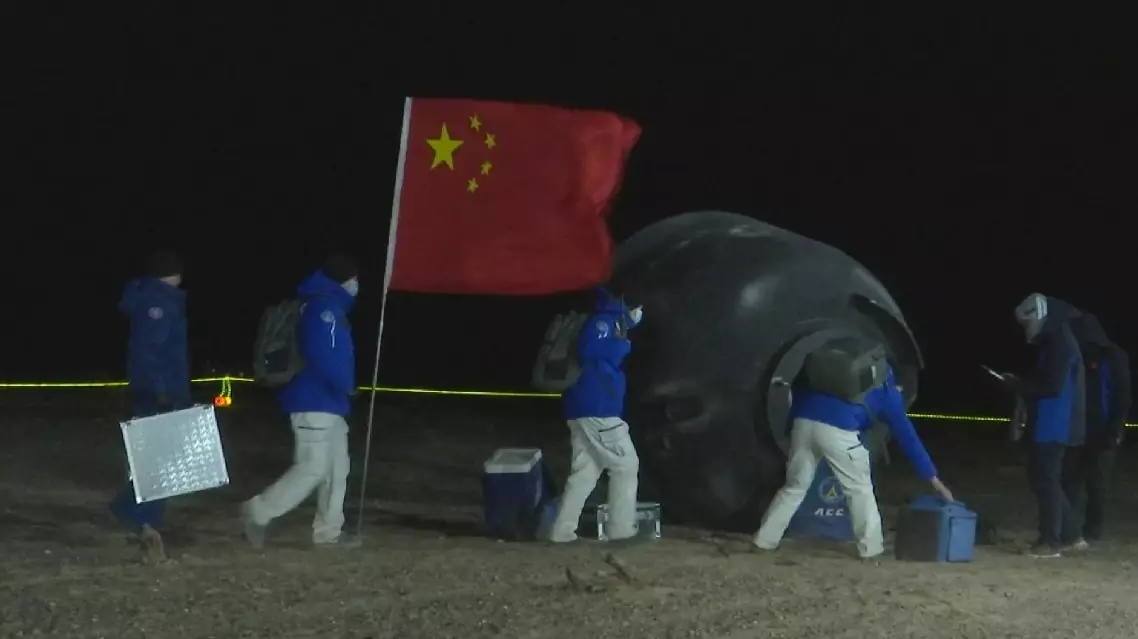
Ground crews conduct full rehearsal of Shenzhou-23 recovery ahead of upcoming return