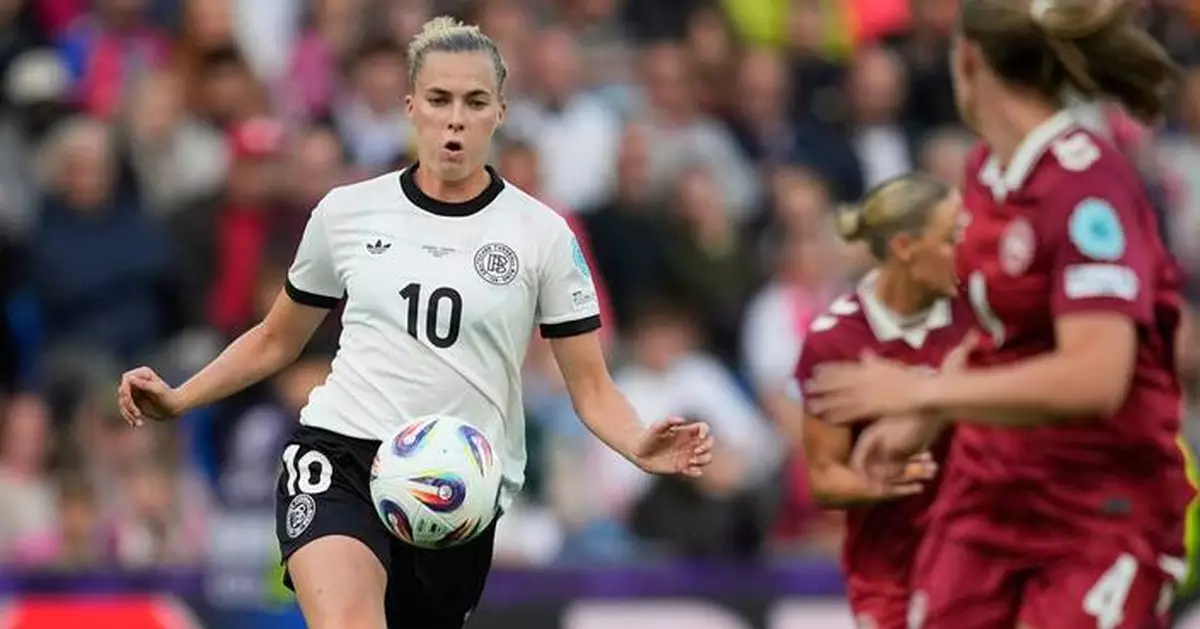
FRANKFURT, Germany (AP) — Germany international Laura Freigang has been banned for 16 months over a charge of failing to make herself available for doping tests, ruling her out of the Women's World Cup, in a rare suspension in top-level women's soccer.
Germany's National Anti-Doping Agency and the German soccer federation said Thursday that Freigang had agreed to a 16-month ban under anti-doping rules as part of a settlement to resolve the case.
Freigang had been accused of being unavailable for testing on three occasions by either missing a test or not providing accurate information about her whereabouts to allow for no-notice testing.
She emphasized Tuesday she had not been accused of doping and said agreeing to settle did not mean she agreed with all aspects of the case against her.
“The last few months have been extremely hard for me,” she posted on Instagram. “Further proceedings would have meant high financial, mental and emotional burdens for me. That's why I chose this way, in the hope of finding some calm, clarity and perspective for myself.”
She added: “It breaks my heart not to be able to be on the field, helping my team and being able to live the everyday life that I love so much.”
The ban is backdated from June 2026, which NADA said was when Freigang was formally notified of the case against her, meaning she will be eligible to return in Oct. 2027. It covers the World Cup in Brazil in June and July 2007.
The decision doesn't overturn any team results from games Freigang played.
A forward for Eintracht Frankfurt at club level, Freigang has played more than 40 times for Germany and was part of the squads which reached the Euro 2022 final and won the Olympic bronze medal in 2024.
See AP’s full soccer coverage here
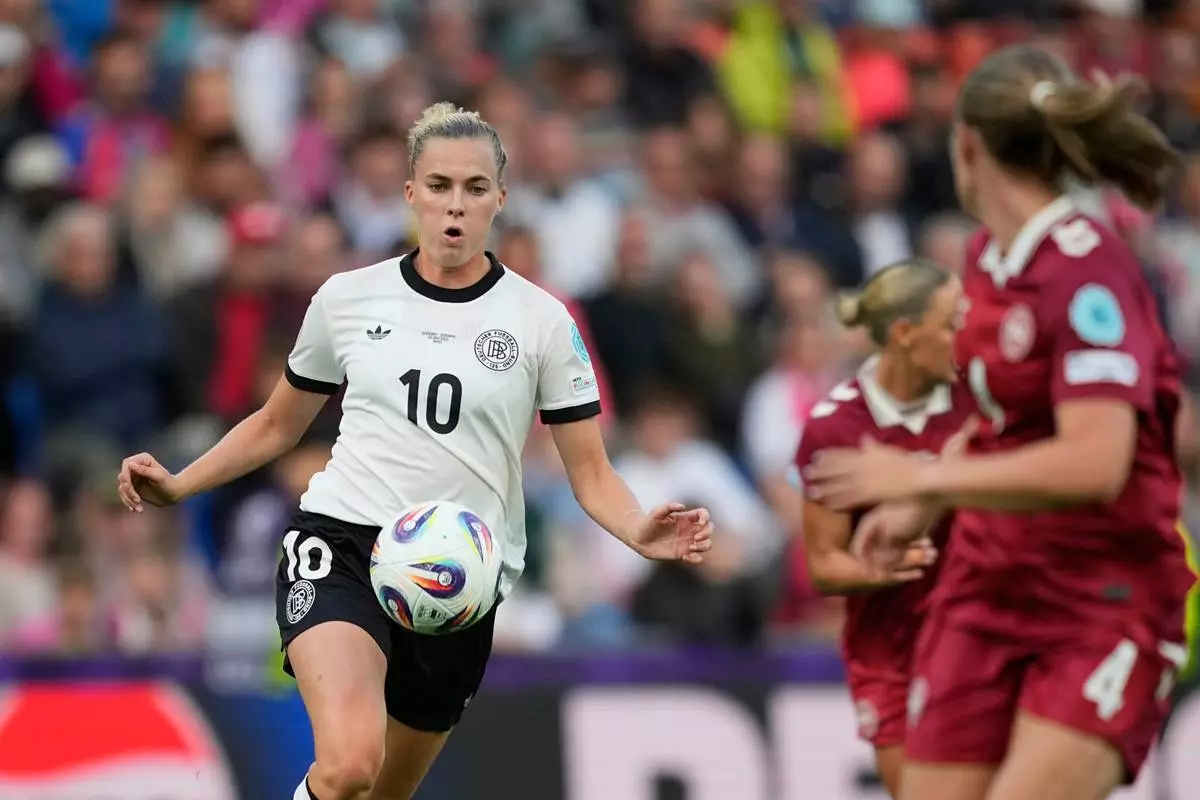
FILE - Germany's Laura Freigang in action during the Euro 2025, group C, soccer match between Germany and Denmark at St. Jakob-Park in Basel, Switzerland, July 8, 2025. (AP Photo/Martin Meissner, File)
PARIS (AP) — Gérard Depardieu, for decades one of France’s most celebrated actors, has been ordered to stand trial on charges of raping and sexually assaulting a young actress, authorities said Thursday, less than two weeks after the cinema star abandoned his appeal of a sexual assault conviction in a separate case.
Actress Charlotte Arnould was 22 when she accused Depardieu in 2018 of raping her at his Paris home.
Eight years later, the Paris Court of Appeal ruled that the actor should face trial over allegations of rape and sexual assault on Aug. 7, 2018, while dismissing allegations relating to a second incident six days later.
Depardieu, 77, has denied the rape allegations. His lawyer, Delphine Meillet, told The Associated Press that he disputes Thursday’s ruling, without specifying whether he would challenge it before France’s highest court for civil and criminal cases.
The ruling upholds part of an investigating judge’s August 2025 decision to send Depardieu to trial.
The case has become one of the most prominent in France’s reckoning with sexual violence, as the #MeToo movement has faced resistance in the country, particularly in the arts.
With his hulking frame, crooked nose and commanding screen presence, Depardieu dominated French cinema for half a century.
He became one of the country’s most recognizable cultural exports, earning an Oscar nomination for “Cyrano de Bergerac” and a Golden Globe for “Green Card.”
But accusations of sexual misconduct and his subsequent conviction have increasingly overshadowed his cinematic legacy.
On Nov. 16, Depardieu abandoned his appeal against a conviction for sexually assaulting two women on a film set in 2021, accepting an 18-month suspended prison sentence and issuing a public apology that marked a departure from his earlier denials in that case.
“I therefore offer my deep and sincere apologies to those who may have suffered,” he said in a written statement.
Depardieu was convicted in May 2025 of groping a set decorator and an assistant during the filming of “Les Volets Verts” (“The Green Shutters”).
The court also ordered his name to be listed in France’s national sex offender database.
“On film sets, I have long hidden behind provocation and crude humor. I believed my words and some of my actions had no consequences. But they did, particularly coming from someone who held as much power as I once did,” Depardieu said.
The controversy surrounding Depardieu intensified in December 2023 after a television documentary showed him repeatedly making obscene remarks and gestures during a 2018 trip to North Korea.
Even French President Emmanuel Macron weighed in, drawing criticism from women’s rights activists when he said the actor “makes France proud.” Macron invoked the presumption of innocence and said he would not participate in a “manhunt.”
The controversy exposed divisions in a country where some prominent cultural figures had pushed back against the #MeToo movement.
In 2018, actress Catherine Deneuve and 99 other women signed an open letter defending men’s freedom to make advances toward women and warning against what they saw as the movement’s excesses.
Born in 1948 into a working-class family in the central French city of Châteauroux, Depardieu overcame a speech impediment to become one of France’s most prolific actors. His career spanned hundreds of films, from “The Last Metro” and “Jean de Florette” to the popular “Asterix” franchise.
His excesses off-screen also made international headlines, notably when he accepted a Russian passport from Russian President Vladimir Putin in 2013 amid a dispute over French taxes.
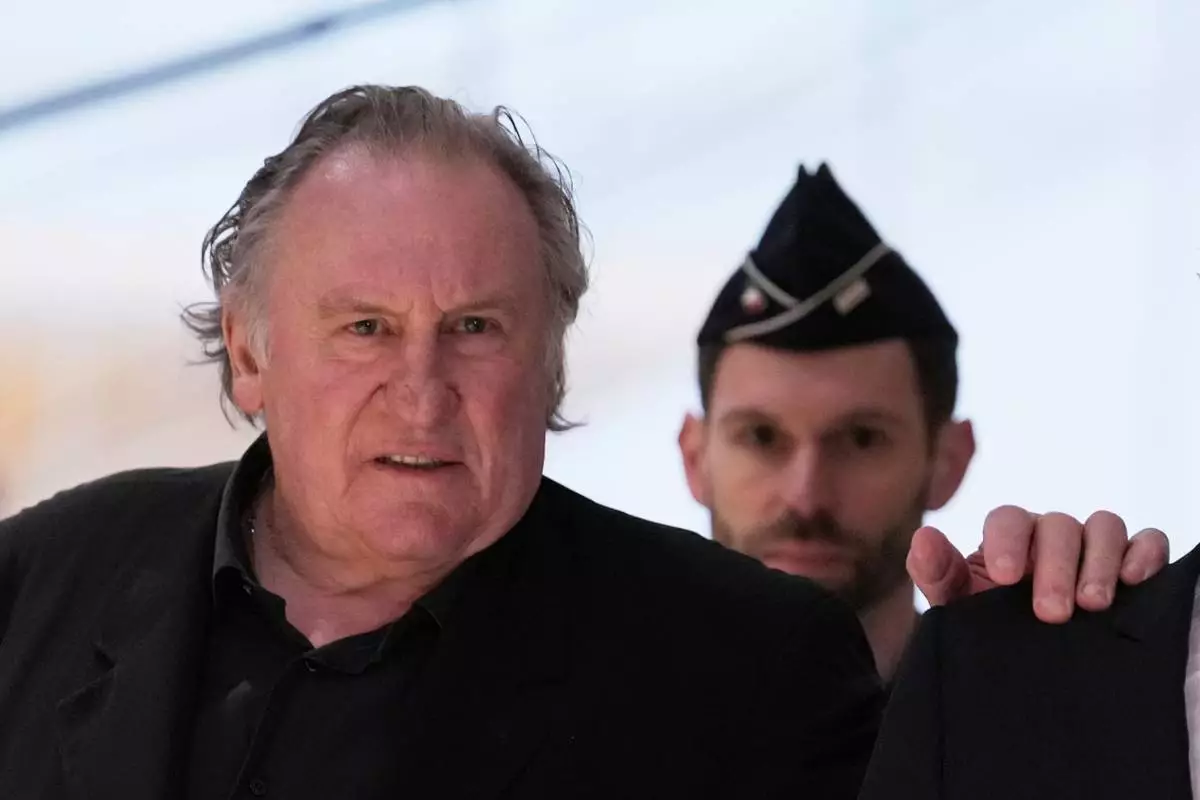
FILE - Actor Gerard Depardieu arrives to face trial for the alleged sexual assaults of two women on a film set in 2021, on March 24, 2025 in Paris. (AP Photo/Aurelien Morissard, File)