Skip to Content Facebook Feature Image

'No future here': Why Senegal’s young people risk their lives to reach Europe

News

'No future here': Why Senegal’s young people risk their lives to reach Europe
News

News

'No future here': Why Senegal’s young people risk their lives to reach Europe

2026-11-27 09:08 Last Updated At:09:20

KAYAR, Senegal (AP) — Baye Coura Diop barely survived his first attempt to reach Europe from Senegal in a wooden fishing boat. The overcrowded pirogue lost its way and he spent 15 days adrift, with only seawater to drink, he said.

On his second and third attempts, he narrowly escaped arrest by Senegalese authorities. Yet he is determined to try again and has already paid the smuggler as he awaits their green light to leave.

More Images
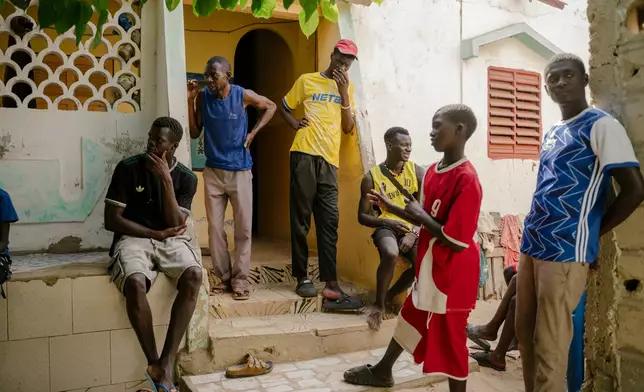
Young people gather outside a house in Kayar, Bayakh region, Senegal, Monday, Nov. 23, 2026. (AP Photo/Carmen Yasmine Abd Ali)
Young people gather outside a house in Kayar, Bayakh region, Senegal, Monday, Nov. 23, 2026. (AP Photo/Carmen Yasmine Abd Ali)

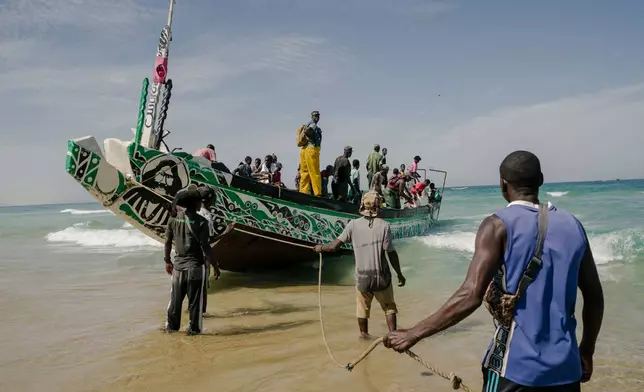
Fishermen head into the Atlantic Ocean in a wooden artisanal fishing boat off the coast of Kayar, Bayakh region, Senegal, Monday, Nov. 23, 2026. (AP Photo/Carmen Yasmine Abd Ali)
Fishermen head into the Atlantic Ocean in a wooden artisanal fishing boat off the coast of Kayar, Bayakh region, Senegal, Monday, Nov. 23, 2026. (AP Photo/Carmen Yasmine Abd Ali)

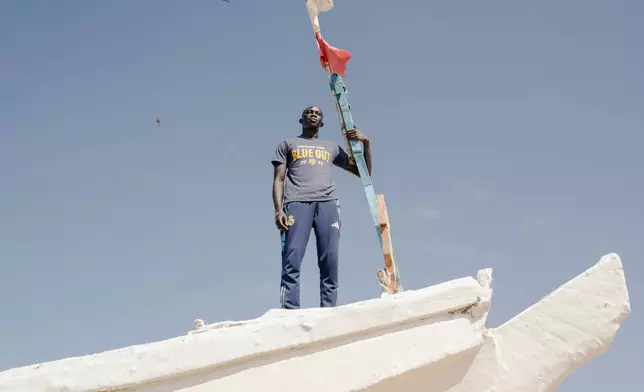
Ngagne Cisse, 42, who crossed to Spain in 2006 and was deported back to Senegal, poses for a photo on a wooden artisanal fishing boat in Kayar, Bayakh region, Senegal, Monday, Nov. 23, 2026. (AP Photo/Carmen Yasmine Abd Ali)
Ngagne Cisse, 42, who crossed to Spain in 2006 and was deported back to Senegal, poses for a photo on a wooden artisanal fishing boat in Kayar, Bayakh region, Senegal, Monday, Nov. 23, 2026. (AP Photo/Carmen Yasmine Abd Ali)

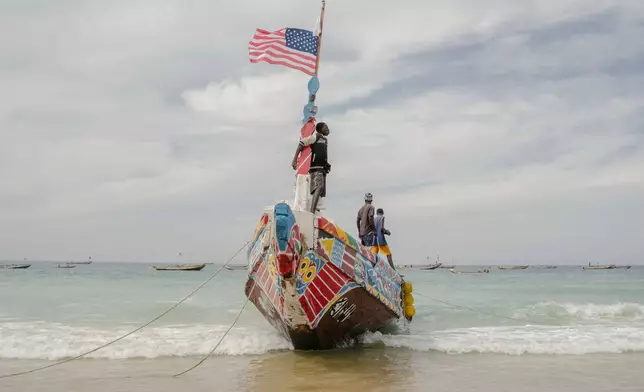
A wooden artisanal fishing boat flying a U.S. flag rests on a beach in Kayar, Bayakh region, Senegal, Monday, Nov. 23, 2026. (AP Photo/Carmen Yasmine Abd Ali)
A wooden artisanal fishing boat flying a U.S. flag rests on a beach in Kayar, Bayakh region, Senegal, Monday, Nov. 23, 2026. (AP Photo/Carmen Yasmine Abd Ali)

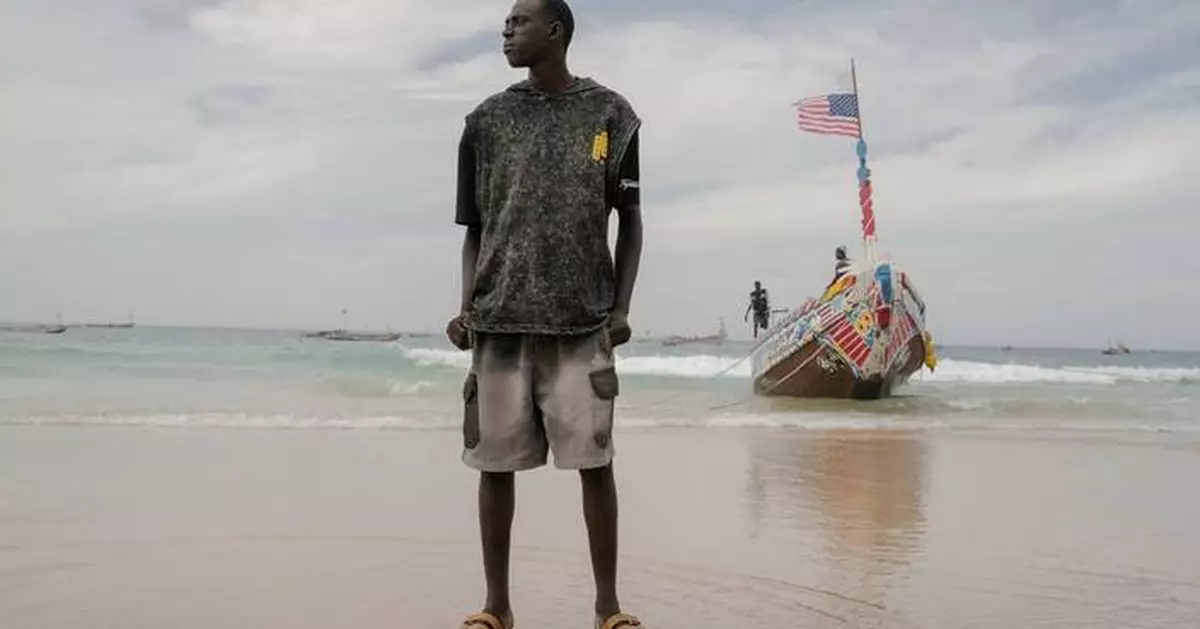
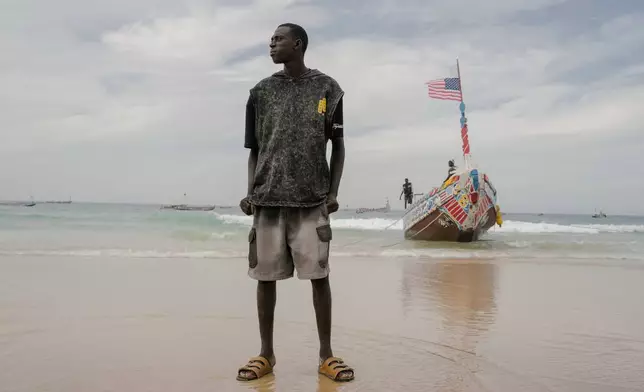
Baye Coura Diop, 23, who has attempted to cross the Atlantic to Spain's Canary Islands by pirogue three times, poses for a photo in front of a wooden artisanal fishing boat flying a U.S. flag on a beach in Kayar, Bayakh region, Senegal, Monday, Nov. 23, 2026. (AP Photo/Carmen Yasmine Abd Ali)

Baye Coura Diop, 23, who has attempted to cross the Atlantic to Spain's Canary Islands by pirogue three times, poses for a photo in front of a wooden artisanal fishing boat flying a U.S. flag on a beach in Kayar, Bayakh region, Senegal, Monday, Nov. 23, 2026. (AP Photo/Carmen Yasmine Abd Ali)

“Half of my friends are in Europe,” said Diop, 23, sitting on a beach surrounded by empty nets and pirogues abandoned by owners who have left for Spain. “Fishing does not work anymore. There is nothing to do here.”

Despite millions of dollars spent by Europe to reduce the number of departures from West Africa, Diop and many others believe that leaving is their only option to find work and build a better life.

Legal routes to Europe are largely out of reach for ordinary West Africans, who face some of the world’s highest visa rejection rates, strict documentation requirements and invasive checks. Thousands attempt the Atlantic crossing each year in rickety fishing boats, taking a route so dangerous it has been dubbed “Barcelona or die.”

More than 29,000 people, mostly from Senegal and the Gambia, have reached Spain’s Canary Islands this year, according to Spanish authorities. A record 16,000 arrived in November alone — three times the number recorded in the first half of the year.

The spike in arrivals has become political fodder on the campaign trail ahead of Spain's general election on Sunday. Conservative Popular Party leader Alberto Núñez Feijóo and far-right Vox candidate Santiago Abascal have regularly pointed to the migrant boats as proof of Prime Minister Pedro Sánchez’s failed immigration policies.

The arrivals mark a sharp increase from last year, when 17,000 people reached the islands as Senegalese authorities intensified European-funded surveillance, reducing departures. Earlier this week, the Senegalese navy said they intercepted five pirogues carrying a total of 974 people in a single day.

But surveillance is not enough to deter desperate young people, fishermen said. Several pirogues have left Kayar under cover of darkness in recent weeks, taking advantage of favorable conditions before winter brings rougher seas.

Around 75% of Senegalese are under 35, and most are either unemployed or working in the informal sector with no financial security. Senegal is grappling with a heavy public debt burden, soaring living costs and widespread poverty. Medical care is expensive and paid for out of pocket.

Diop's fishing town, Kayar, is one of the main departure points for Europe. Fishing is central to Senegal's economy, accounting for 3% of GDP and supporting around 50,000 direct and 500,000 indirect jobs, according to the U.N. Food and Agriculture Organization.

But the fishing industry is being hit by climate change and competition from foreign industrial trawlers, mostly from China, Russia and Turkey, operating in Senegalese waters.

European companies have also contributed to overfishing through demand for fishmeal and fish oil, as well as regulatory loopholes — environmental groups documented the practice of registering vessels under third-country flags to bypass regulations.

“It’s the industrial boats — the government allowed them to fish, but they don't respect the limits and come where the small pirogues are supposed to fish,” said Ngagne Cisse, secretary-general of the association of returned migrants. “It has been going on for a long time, and now we are seeing the consequences.”

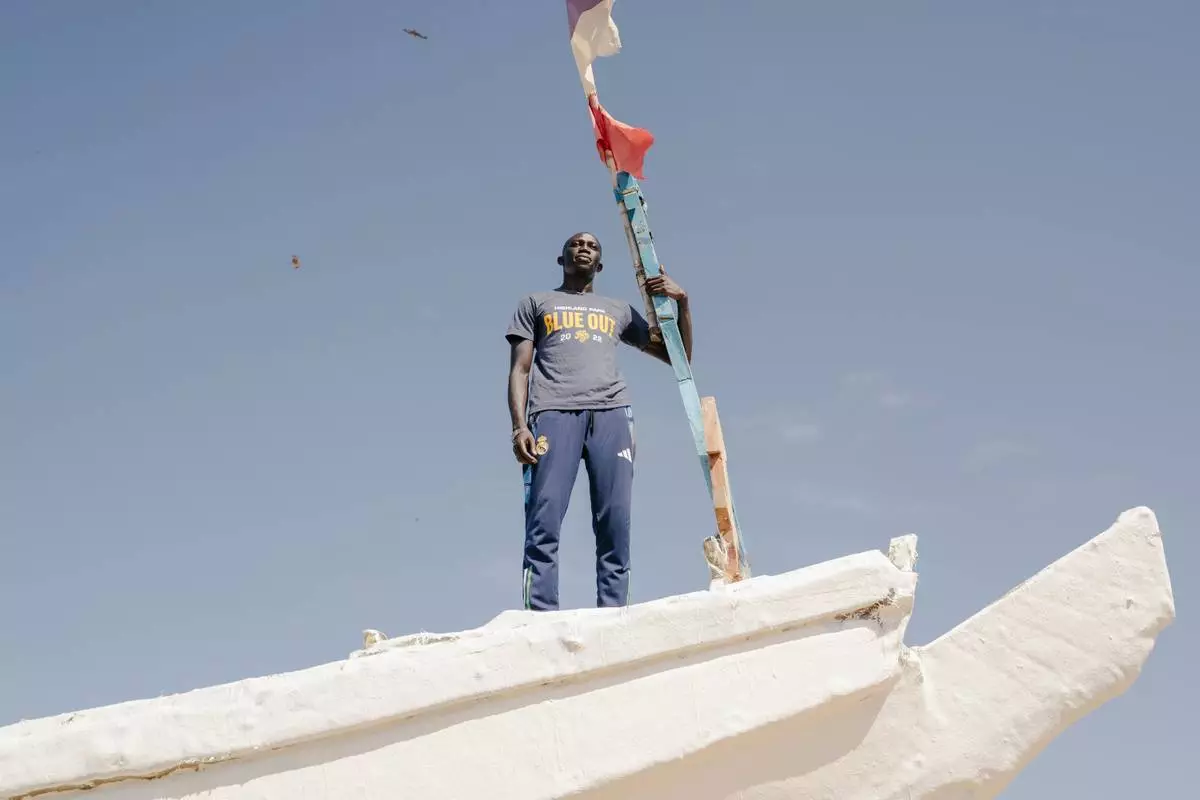
Cisse, 42, said fishermen earned a decent living when he was young. He was among the first to reach Spain on a pirogue in 2006, but was deported back to Senegal. Conditions for fishermen have worsened since then.

“There is no more fish left for us,” he said.

President Bassirou Diomaye Faye was elected in 2024 on a pledge to improve the living standards of ordinary Senegalese, including by reviewing fishing permits for foreign companies. But fishermen say nothing has changed.

“The new authorities said they would put an end to this. That is what we were expecting, but since then, we have seen nothing,” Cisse said. "If you emigrate, it’s because you’ve run out of options.”

The number of people who have died trying to reach Europe across the Atlantic remains unknown. Between 2022 and 2025, deaths and disappearances increased by 95 per cent on this route. The International Organization for Migration has recorded more than 6,500 deaths since 2020, but that figure is widely believed to be only a fraction of the actual toll. Many shipwrecks go undocumented, leaving no trace of those aboard.

Caminando Fronteras, a Spanish migrant rights organization, documented over 26,000 people who have gone missing or died since 2020.

Among the missing is the husband of Falla Dionne, 24. He left home in July 2022, telling her he was going to Mauritania for work. Their son was just three months old. A week later, his parents told her he had boarded a pirogue bound for Spain. She has not heard from him since.

“In the beginning it was very difficult, I missed him a lot,” a tearful Dionne said. “But recently I have started to pull through.”

She said she does not blame her husband for leaving, even though it broke her heart.

Despite his disappearance, she is preparing to make the same dangerous journey. She has saved enough to pay a smuggler and is waiting for the right moment to leave. She plans to leave her son with his grandmother, who has been his main caregiver since Dionne’s husband disappeared and she began working in a hair salon.

While the Atlantic route to Europe can be deadly, the potential financial rewards remain a powerful draw. Families with relatives in Spain can afford to renovate their homes or build new ones, and pay for medical care when someone falls seriously ill.

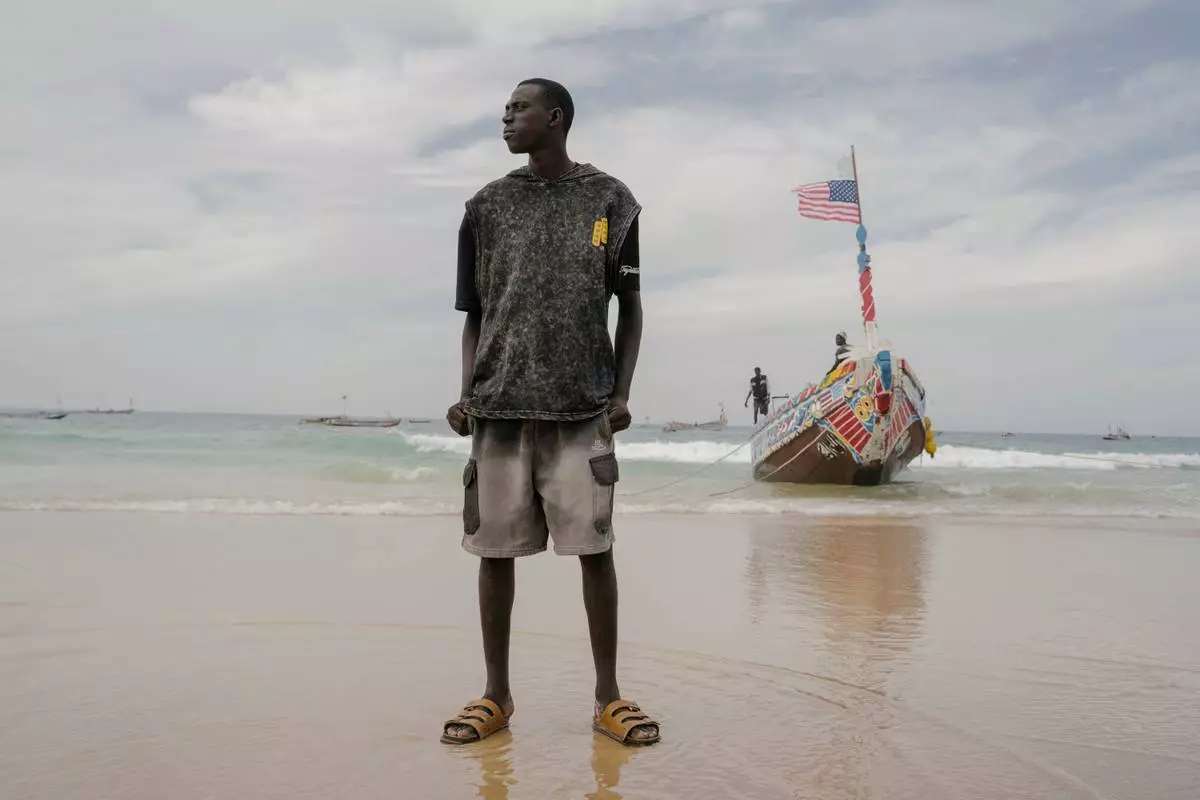
Diop, a 23-year-old fisherman, lives in his mother’s house with 20 family members. He and his older brother have each tried to migrate three times over the years, paying about 400,000 CFA francs ($669) for each attempt.

“My future does not lie in Senegal, because the work is hard. You work a lot to earn very little,” he said. “When you want to help your family, you have to work a great deal to earn a significant amount.”

He added: “Honestly, it’s not easy to even think about marriage because it requires money. So, as for my future? Well, I’m already looking ahead to Spain.”

Diop’s mother, Sally Ndiaye, said she dreads waking each morning, afraid that one of her sons may have left. Yet she financed their previous attempts with community loans. From her window, she can see a new house being built next door, paid for by her brother-in-law, who made it to Spain.

“Life here is just so difficult,” she said. “I no longer try to stop him from leaving. I pray to God to guide him in peace … so that we might help one another. It is poverty that drives this: out of compassion for their parents, they want to help them — and that is why young people risk their lives.”

Associated Press writer Suman Naishadham in Madrid, Spain, contributed to this report.

For more on Africa and development: https://apnews.com/hub/africa-pulse

The Associated Press receives financial support for global health and development coverage in Africa from the Gates Foundation. The AP is solely responsible for all content. Find AP’s standards for working with philanthropies, a list of supporters and funded coverage areas at AP.org.
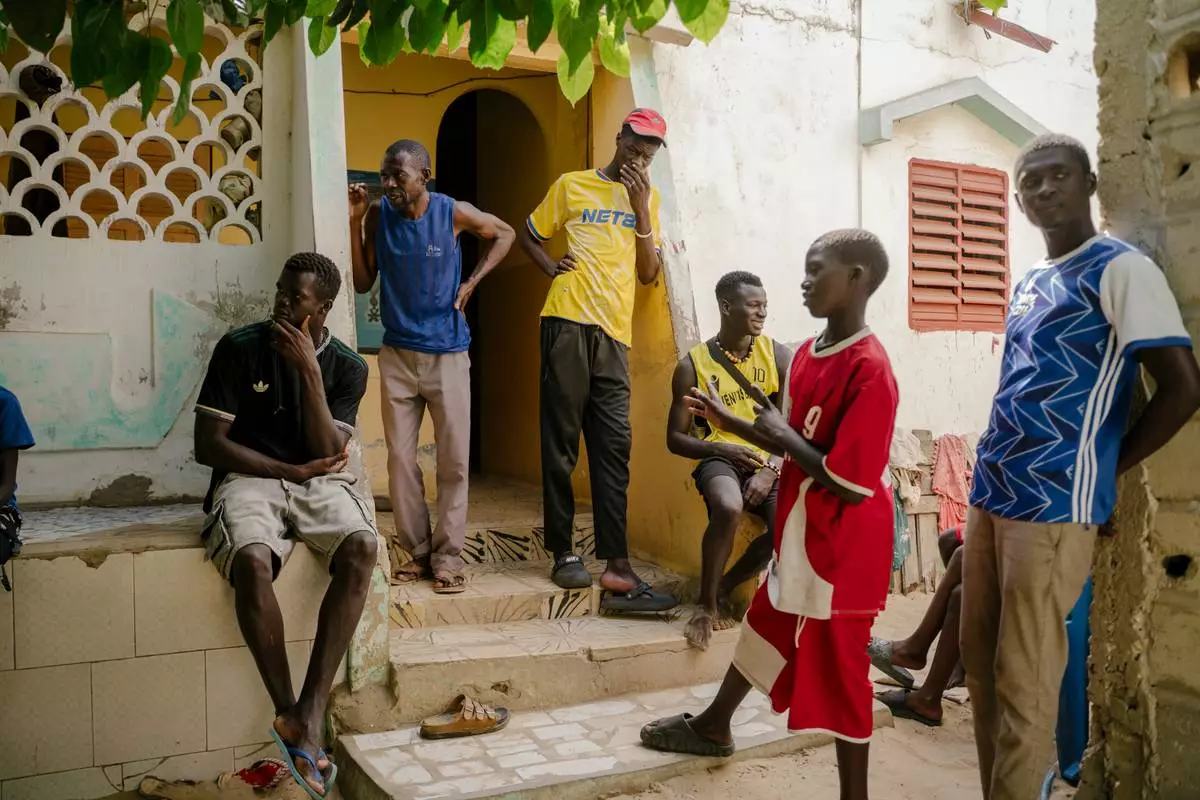
Young people gather outside a house in Kayar, Bayakh region, Senegal, Monday, Nov. 23, 2026. (AP Photo/Carmen Yasmine Abd Ali)
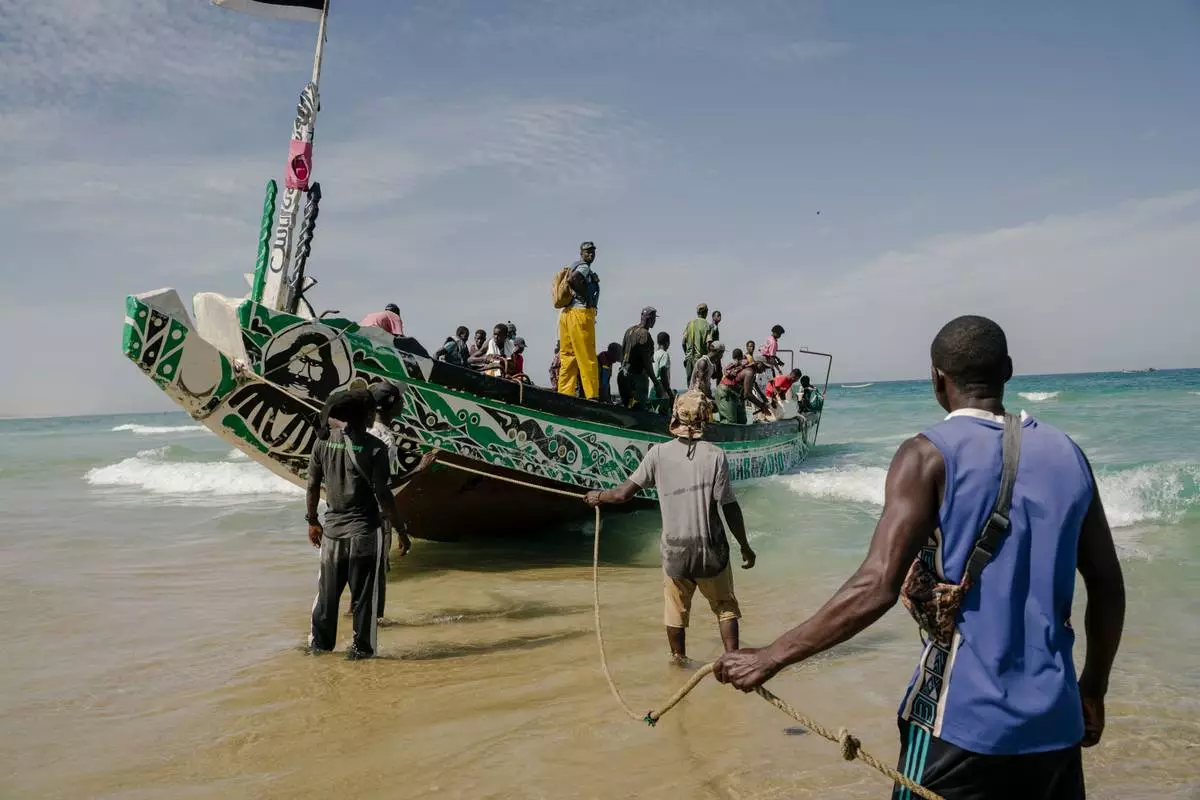
Young people gather outside a house in Kayar, Bayakh region, Senegal, Monday, Nov. 23, 2026. (AP Photo/Carmen Yasmine Abd Ali)

Fishermen head into the Atlantic Ocean in a wooden artisanal fishing boat off the coast of Kayar, Bayakh region, Senegal, Monday, Nov. 23, 2026. (AP Photo/Carmen Yasmine Abd Ali)
Fishermen head into the Atlantic Ocean in a wooden artisanal fishing boat off the coast of Kayar, Bayakh region, Senegal, Monday, Nov. 23, 2026. (AP Photo/Carmen Yasmine Abd Ali)

Ngagne Cisse, 42, who crossed to Spain in 2006 and was deported back to Senegal, poses for a photo on a wooden artisanal fishing boat in Kayar, Bayakh region, Senegal, Monday, Nov. 23, 2026. (AP Photo/Carmen Yasmine Abd Ali)
Ngagne Cisse, 42, who crossed to Spain in 2006 and was deported back to Senegal, poses for a photo on a wooden artisanal fishing boat in Kayar, Bayakh region, Senegal, Monday, Nov. 23, 2026. (AP Photo/Carmen Yasmine Abd Ali)

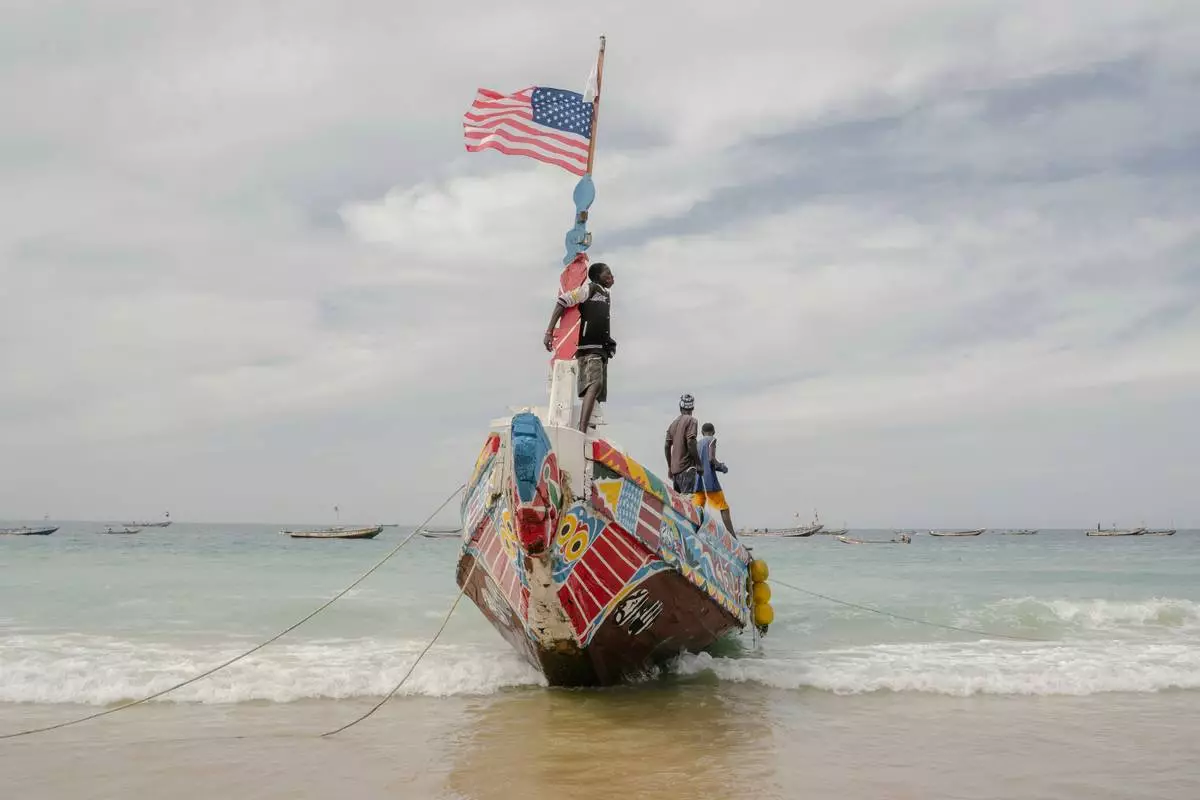
A wooden artisanal fishing boat flying a U.S. flag rests on a beach in Kayar, Bayakh region, Senegal, Monday, Nov. 23, 2026. (AP Photo/Carmen Yasmine Abd Ali)
A wooden artisanal fishing boat flying a U.S. flag rests on a beach in Kayar, Bayakh region, Senegal, Monday, Nov. 23, 2026. (AP Photo/Carmen Yasmine Abd Ali)


Baye Coura Diop, 23, who has attempted to cross the Atlantic to Spain's Canary Islands by pirogue three times, poses for a photo in front of a wooden artisanal fishing boat flying a U.S. flag on a beach in Kayar, Bayakh region, Senegal, Monday, Nov. 23, 2026. (AP Photo/Carmen Yasmine Abd Ali)
Baye Coura Diop, 23, who has attempted to cross the Atlantic to Spain's Canary Islands by pirogue three times, poses for a photo in front of a wooden artisanal fishing boat flying a U.S. flag on a beach in Kayar, Bayakh region, Senegal, Monday, Nov. 23, 2026. (AP Photo/Carmen Yasmine Abd Ali)
SEOUL, South Korea (AP) — In shutting down a month-old Swiss diplomatic office in Pyongyang and expelling its head, North Korea has signaled it will set its own terms as it pursues a more assertive foreign policy. But experts say the move could potentially risk the loss of many European nations as alternative diplomatic partners.

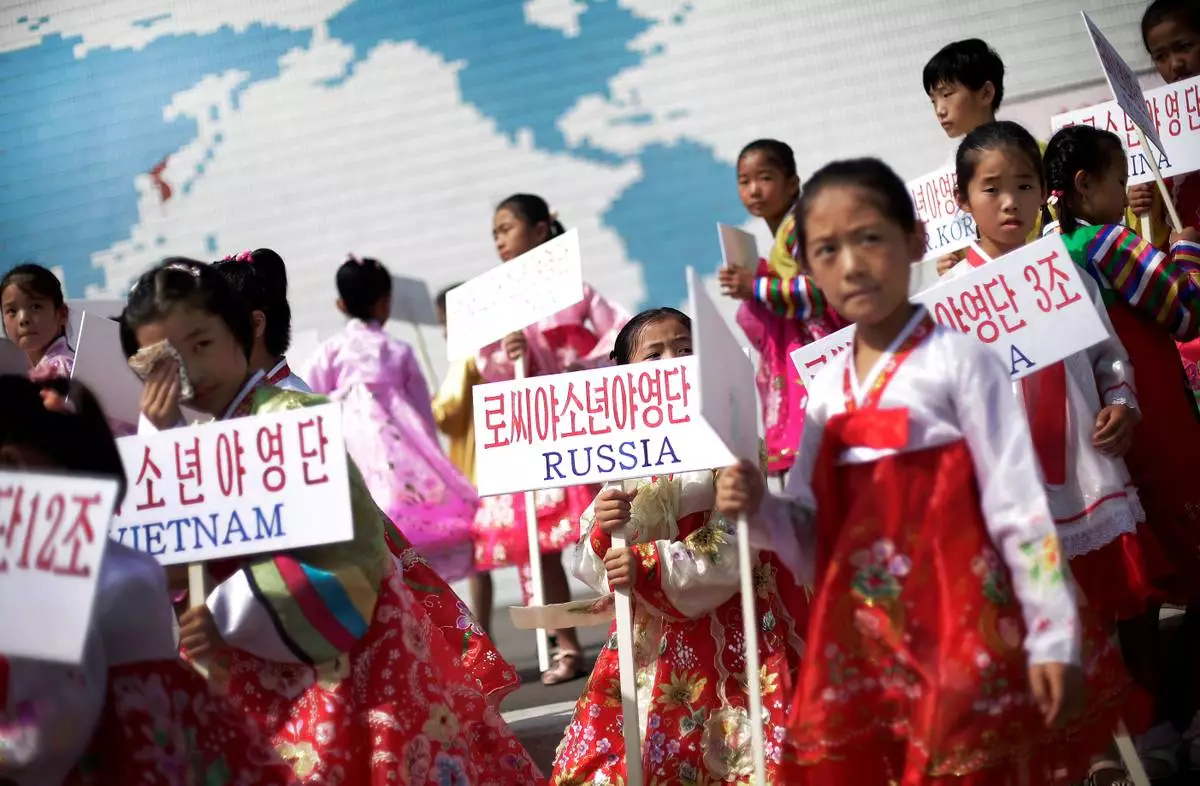
The Swiss drew the anger of North Korean leader Kim Jong Un after they imposed sanctions on a youth camp over its alleged role in the transfer of children from Russian-occupied areas of Ukraine.

Just a few days earlier, in a more upbeat diplomatic moment, Kim received credentials from 10 newly appointed ambassadors, including envoys from ally Russia and longtime diplomatic partner Sweden, in the first such event of his 15-year rule.

Kim used the meeting with ambassadors to defend his nuclear arms buildup and call for the world to respect North Korea’s sovereignty, a standard Pyongyang later accused Switzerland of failing to meet by sanctioning the camp.

Here's a look at the closure of the Swiss office in Pyongyang and what it says about North Korea’s foreign policy.

North Korea’s Foreign Ministry on Wednesday summoned Sylvain Astier, head of the Swiss diplomatic office that opened in Pyongyang last month, declared him persona non grata and handed him a notice demanding the office’s closure and his departure from the country within 48 hours.

In a statement provided to The Associated Press on Thursday, Switzerland’s Federal Department of Foreign Affairs said it regrets the North Korean decision and was arranging for Astier to return to the Swiss embassy in Beijing. It said diplomatic relations will be maintained through the Swiss embassy in Beijing and the North Korean embassy in Bern and that Switzerland will continue to pursue dialogue through these channels.

Kim Jong Un’s powerful sister, Kim Yo Jong, earlier condemned Switzerland for imposing sanctions on the Songdowon International Children’s Camp in the North’s eastern coastal city of Wonsan. She called the Swiss steps an “open hostile act” that violated the North’s sovereignty, but didn’t directly address Western accusations that some Ukrainian children abducted by Russian forces were sent there to be reeducated with pro-Russian propaganda.

North Korea is one of Russia’s allies and has sent thousands of troops to fight in Russian President Vladimir Putin’s invasion of Ukraine.

Switzerland earlier this month added the Songdowon camp to its sanctions over Russia’s invasion of Ukraine. The United Kingdom in May and the European Union in September imposed similar sanctions on the camp, freezing its assets and banning financial transactions with it. The measures were seen as largely symbolic, given North Korea’s limited financial ties with Europe.

North Korea said in August it downgraded the level of diplomatic relations with the U.K. to that of chargé d’affaires in response to its sanctioning of the Songdowon camp.

Switzerland, which established diplomatic relations with North Korea in 1974, has been one of the few Western countries to maintain talks with Pyongyang. Switzerland previously operated a humanitarian-focused cooperation office in Pyongyang, which closed when North Korea sealed its borders during the COVID-19 pandemic. It was among the few countries allowed to open a new diplomatic office after North Korea reopened.

Kim Jong Un and his sister spent several of their teenage years at Swiss schools in the 1990s, and that may have deepened the sense of betrayal when Switzerland sanctioned the Songdowon camp, said Koh Yu-hwan, former president of South Korea’s Institute of National Unification.

But more importantly, North Korea is sending a broader warning that it could cut off diplomatic access to any country that expands sanctions or pursues policies it considers hostile, effectively putting pressure on the North's remaining Western contacts like Sweden, Koh said.

While Russia and China have blocked recent efforts to tighten U.N. sanctions over North Korea’s nuclear and missile programs, the United States and its European and Asian allies have imposed their own sanctions over illicit activities Pyongyang uses to fund its weapons programs, including information-technology worker fraud and cryptocurrency theft.

Kim Jong Un's diplomatic clout on the global stage has been bolstered in recent years as he's aligned with Russia and has taken steps to strengthen cooperation with China, North Korea's economic lifeline.

Leif-Eric Easley, a professor at Seoul’s Ewha University, said North Korea is benefiting enough from its ties with Moscow that it’s willing to make an example of Switzerland.

“By ordering the Swiss office closed just weeks after it opened, the Kim regime wants to show other states it intends to reengage only from a position of strength and on its own terms,” he said.

However, the strategy carries some risk, warned Moon Seong Mook, an analyst at the Seoul-based Korea Research Institute for National Strategy.

“Kim Jong Un may win Russia’s favor, but I think this could further deepen North Korea’s isolation from the international community,” he said.

Park Won Gon, a professor at Ewha University, said the North’s move could have long-term consequences, risking the loss of Europe as an alternative partner while further increasing its dependence on China. About 98% of North Korea’s external trade was with China in 2025.

“For European countries, this move will only reinforce the perception that North Korea cannot be trusted,” Park said.

Kim's advancing nuclear arsenal and deepened cooperation with Russia have bolstered his international standing, and he has steadfastly insisted that he will not engage in talks with the United States unless Washington drops its demand for denuclearization.

As Pyongyang increasingly believes it has the leverage to deal directly with Washington, rather than through intermediaries, European countries such as Switzerland or Asian U.S. allies such as South Korea — which Kim in recent years declared as his most hostile enemy — have likely significantly less value to the North.

“They think they no longer need to make compromises with individual countries ... as they portray their status as a nuclear-armed state on an equal footing with the United States," Koh said.

FILE - North Korean leader Kim Jong Un's younger sister Kim Yo Jong, center, arrives at the Jinbu train station in Pyeongchang, South Korea, Feb. 9, 2018. (AP Photo/Lee Jin-man, File)

FILE - North Korean leader Kim Jong Un's younger sister Kim Yo Jong, center, arrives at the Jinbu train station in Pyeongchang, South Korea, Feb. 9, 2018. (AP Photo/Lee Jin-man, File)

FILE - Young North Korean girls hold up signboards with the names of participating countries during an opening ceremony at the Songdowon International Children's Camp, July 29, 2014, in Wonsan, North Korea. (AP Photo/Wong Maye-E, File)

FILE - Young North Korean girls hold up signboards with the names of participating countries during an opening ceremony at the Songdowon International Children's Camp, July 29, 2014, in Wonsan, North Korea. (AP Photo/Wong Maye-E, File)

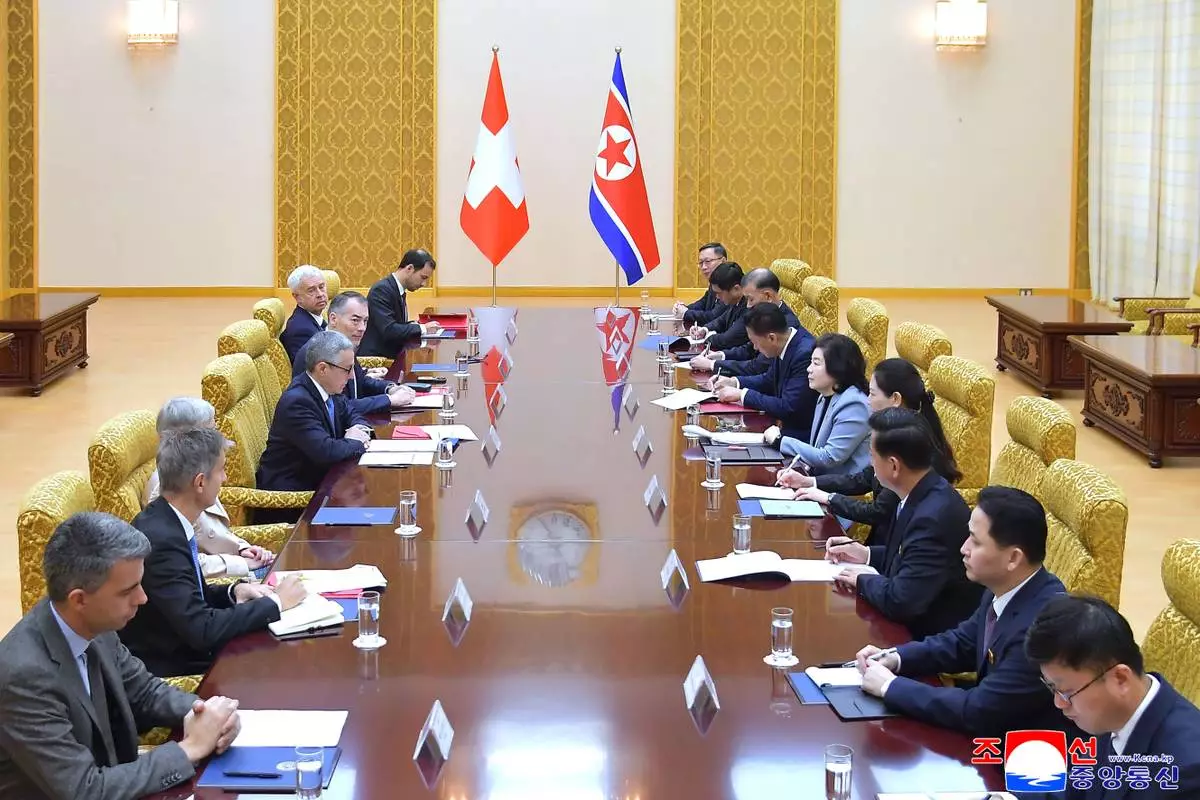
FILE - In this photo provided on Oct. 31, 2026, by the North Korean government, Swiss Foreign Minister Ignazio Cassis holds a talk with North Korean Foreign Minister Choe Son Hui at Pyongyang Assembly Hall in Pyongyang, Friday, Oct. 30, 2026. Independent journalists were not given access to cover the event depicted in this image distributed by the North Korean government. The content of this image is as provided and cannot be independently verified. Korean language watermark on image as provided by source reads: "KCNA" which is the abbreviation for Korean Central News Agency. (Korean Central News Agency/Korea News Service via AP, File)

FILE - In this photo provided on Oct. 31, 2026, by the North Korean government, Swiss Foreign Minister Ignazio Cassis holds a talk with North Korean Foreign Minister Choe Son Hui at Pyongyang Assembly Hall in Pyongyang, Friday, Oct. 30, 2026. Independent journalists were not given access to cover the event depicted in this image distributed by the North Korean government. The content of this image is as provided and cannot be independently verified. Korean language watermark on image as provided by source reads: "KCNA" which is the abbreviation for Korean Central News Agency. (Korean Central News Agency/Korea News Service via AP, File)

Recommended Articles