From overseas touchpoints to market channels: Zhejiangs cultural and tourism sector is deeply engaging in cooperation in inbound tourism in Southeast Asia.
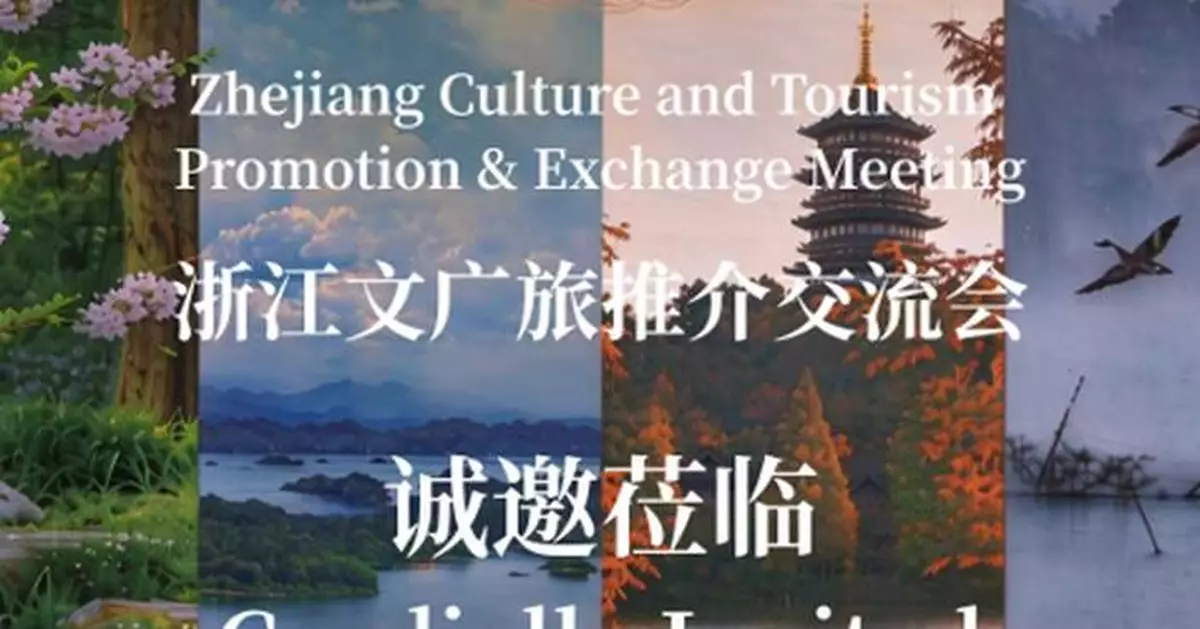
KUALA LUMPUR, MALAYSIA – Media OutReach Newswire – 26 November 2026 – Recently, the Zhejiang Cultural and Tourism Southeast Asia Promotion Center was officially inaugurated at the Ali Center in Kuala Lumpur, Malaysia. From November 9 to 12, the Zhejiang Cultural and Tourism Promotion Delegation traveled to Malaysia and Singapore, visiting eight travel agencies and organizations representing the overseas Chinese community. The delegation held a Zhejiang cultural and tourism promotion event and an industry tea gathering, showcasing Zhejiangs landscapes, cultural heritage, intangible cultural heritage, and themed tour routes. It also engaged in discussions with local organizations on product development, channel distribution, and digital services.
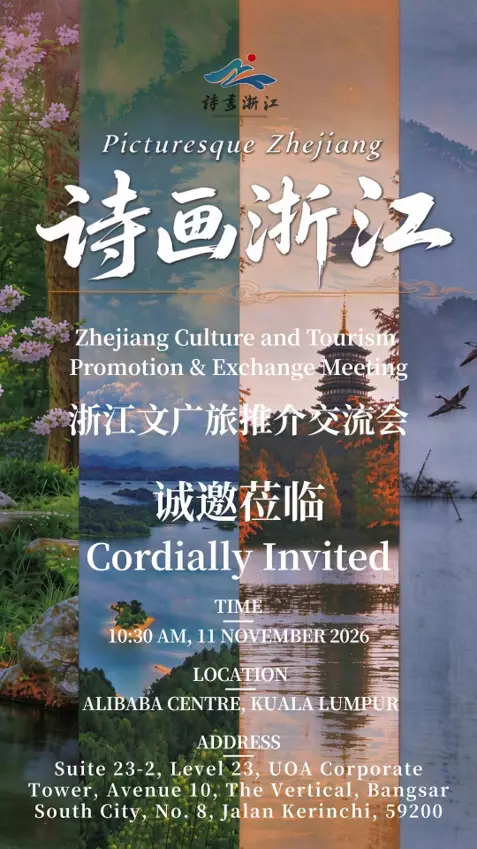
Rooted in the source markets, "Poetic and Picturesque Zhejiang" makes its move into Southeast Asia
Southeast Asia is one of Zhejiangs important source markets for inbound tourists. The establishment of the Promotion Center signifies that Zhejiangs cultural and tourism efforts in the region are evolving from periodic visits to ongoing, regular engagement. The center will continue to monitor the needs of travel agencies and market feedback, providing support for the promotion of resources, the co-development of travel itineraries, and cooperation in distribution channels.
The center was established by the Zhejiang Provincial Department of Culture, Radio, Television and Tourism. A consortium comprising Zhejiang China Travel Service Group Co., Ltd. and Hangzhou Feizhu Smart Cultural Tourism Co., Ltd. will undertake its operation and management. Relying on the Kuala Lumpur Ali Center, the consortium will regularly maintain the local network of travel agencies, facilitate exchanges among industry peers and product negotiations, and promote the transformation of Zhejiangs resources into marketable and accessible inbound tourism products.
To make travel in Zhejiang more convenient for international visitors, the team also promoted the countrys first provincial-level smart service platform for inbound tourism: "Hi Travel" (Zhejiang Travel). Designed for inbound tourists, the platform integrates travel itinerary planning, Q&A services, customs clearance, accommodation, payment, and other tourism services available in Zhejiang, helping visitors navigate each stage of their journey—from entry to sightseeing—more smoothly. Currently, the platform offers responses in nine languages and can generate a personalized itinerary within five seconds. The Easy Go service code for inbound tourism covers scenarios such as customs clearance, park entry, hotel check-in, payments, and tax refunds. The online completion of the inbound registration form has increased customs clearance efficiency by more than 60%.
It is worth noting that the Zhejiang Cultural and Tourism Promotion Event and Industry Tea Gathering, held on November 10, was warmly received by the travel agents in attendance. The event was centered on the theme "A Cup of Longjing Tea: Understanding Zhejiang and the Poetic Beauty of Its Landscapes." It promoted Zhejiangs tea culture, including Longjing tea, white tea, and black tea, and showcased themed itineraries such as "Spring: Tea Harmonizes the World," "Visual: Hidden Hangzhou," and "Tactile: Zhejiangs Artisan Craftsmanship." Specific experiential offerings—including tea tourism in Hangzhou and Anji, Zen tea experiences in Jingshan, Longjing tea roasting, Hangzhou silk fans, and Dongyang wood carvings—enabled travel agents to gain an intuitive understanding of the customizable and actionable elements of Zhejiangs tourism products. They also exchanged ideas on itinerary bundling, product development, and the mutual referral of visitors.
During the presentation, Zhang Yan, head of the Zhejiang Culture and Tourism Southeast Asia Promotion Center, outlined the centers strategic focus and Zhejiangs product offerings in areas such as tea culture, educational travel programs, customized services, and MICE events. Zhang Nan, president of the Malaysian Zhejiang Overseas Chinese Association, noted that local tourists expectations regarding consumption and experiential offerings are rising: the traditional form of sightseeing, focused on checking off tourist attractions, can no longer meet their desire for in-depth experiences and cultural depth. The team will therefore highlight Zhejiangs distinctive resources—such as its tea culture and intangible cultural heritage experiences—and develop itineraries better suited to the local market.
Targeting families and mature customer segments aged 45 and above, the Zhejiang Cultural Tourism team presented Parlo Tours with in-depth tours, high-quality tours, and customized products. The team also intends to invite the relevant personnel from Parlo Tours to Zhejiang to conduct on-site inspections of the resources and reception facilities.
To facilitate the integration of Zhejiangs tour routes into the local distribution network, the team coordinated with Golden Journey, which connects local travel agencies, agents, and other B2B channels, on matters relating to wholesale product distribution, on-the-ground implementation, guest reception and service delivery, content materials, and digital booking interfaces. The person in charge of the company stated that traditional shopping tours are no longer the mainstream in the market: tourists now prefer routes with distinct features and more immersive experiences.
The team also promoted Zhejiangs resources to Xinyi, Apple, and Shenzhou International Tourism (Malaysia) Co., Ltd., and collected product demand information from various channels. The person in charge at Xinyi also serves as the general president of the Malaysian Chinese Tourism Workers Union. The two parties held preliminary discussions regarding organizing union members to visit Zhejiang in March 2027; they also exchanged views with Shenzhou International Tourism (Malaysia) Co., Ltd. on product promotion and the sharing of market information.
In Singapore, the team engaged with travel companies such as Singapore Meicheng Tourism and Singapore Xinhe Tourism, which possess capabilities in promoting Chinas tourism products, organizing travel itineraries, and sourcing tourists. The team sought to understand their reception and product organization capabilities. Singapore Meicheng Tourism has a robust outbound operations team, contracted tour guides, and reception service resources. Its representative stated: "Travel agencies need to proactively adapt to changes in tourists consumption habits, leverage online OTA platforms and artificial intelligence tools, and enhance product promotion, customer service, and operational efficiency." The two parties held preliminary discussions on promoting Zhejiangs tourism resources, product development, and online channels.
As a local enterprise in Zhejiang and a travel service platform within the Alibaba ecosystem, Fliggy provides online promotional and transactional support for the overseas promotion of Zhejiangs cultural and tourism sector. The team discussed brand exposure, splash-screen advertisements, and itinerary content marketing with Parlo Tours, and introduced to Shenzhou International Tourism (Malaysia) Co., Ltd. the collaborative mechanism between Zhejiang China Travel Service Group and Fliggy regarding overseas promotion and resource integration.
In the next phase, the Promotion Center will focus on promoting no fewer than 12 itineraries under the themes "Three Generations of Zhejiang," "Four Seasons of Zhejiang," and "Zhejiang Through the Five Senses." It will collaborate with "Hi Tour," Fliggy, and local travel operators to refine the products based on market feedback.
The issuer is solely responsible for the content of this announcement.
** This press release is distributed by Media OutReach Newswire through automated distribution system, for which the client assumes full responsibility. **
HONG KONG SAR – Media OutReach Newswire – 26 November 2026 – Cushman & Wakefield, a leading global real estate services firm, today released Life Sciences: From Lab to Landscape – How the Evolution of Life Sciences Is Transforming Real Estate Demand on the Chinese Mainland, a new report examining how the rapid growth of the life sciences industry is creating a distinct, specialist real estate sector across the country's leading innovation clusters.
The report finds that biotechnology, pharmaceutical, diagnostics and medical technology companies are moving beyond conventional offices and standard industrial premises into purpose-built laboratories, Good Manufacturing Practice (GMP) facilities and integrated research campuses. While these buildings demand higher specifications and greater capital investment, they also benefit from longer leases, stronger tenant retention and more resilient occupancy.
A Specialist Asset Class Takes Shape
Supported by national innovation policy, an ageing population, rising healthcare expenditure and expanding research and development (R&D), life sciences has become one of the Chinese mainland's most strategically important growth sectors. The 15th Five-Year Plan identifies biotechnology, biomedicine and biomanufacturing as strategic emerging industries.
The scale of this growth is clear. The value of the biotech industry on the Chinese mainland has risen from RMB 1.59 trillion in 2021 to an estimated RMB 2.31 trillion in 2026, an increase of more than 45%.
As companies progress from research to commercial production, their real estate needs follow a relatively predictable lifecycle, driving demand for:
- Shared laboratories and incubators for early-stage companies
- Modular, expandable laboratories for growth-stage businesses
- GMP-compliant manufacturing and clean-room facilities
- Integrated campuses combining research, manufacturing and corporate functions
Ecosystems Matter More Than Buildings
Life sciences is one of the most cluster-dependent industries in commercial real estate. Occupiers prioritize access to universities, hospitals, talent, venture capital and regulatory support over occupancy costs alone. As a result, demand remains concentrated in seven leading markets – Beijing, Shanghai, Shenzhen, Guangzhou, Chengdu, Suzhou and Wuhan – which together form an increasingly integrated national innovation network. Within the Greater Bay Area, Hong Kong is emerging as a complementary gateway connecting international capital, clinical research and regulatory capability with the research and manufacturing strengths of Shenzhen and Guangzhou.
Innovation Is Driving Demand for Specialist Space
Rising research and clinical activity is translating directly into demand for laboratories, pilot facilities and GMP production space. Annual drug clinical trial registrations on the Chinese mainland have more than doubled, from 2,386 in 2019 to 5,215 in 2025, as companies move more products from discovery towards commercialization.
In response, specialist life sciences space is now available at scale. Cushman & Wakefield tracks around 23.8 million sq m of life sciences space across 31 main clusters in the seven leading markets, giving occupiers a wider choice of quality research and production facilities. Pricing remains competitive, with nearly 80% of this space achieving rents of RMB 1.0–2.0 per sq m per day.
Retrofitting and ESG Unlock Value
Developers and investors are increasingly repositioning older offices, research parks and industrial buildings into laboratory and innovation space. Where floor loading, ceiling heights and utility capacity allow, retrofitting can shorten delivery times, lower development costs and reduce embodied carbon. At the same time, the energy intensity of laboratories is placing ESG performance at the center of investment decisions, with key priorities including:
- HVAC upgrades and improved energy management
- Lower water consumption and renewable energy where practical
- Operational resilience for uninterrupted research activity
- Access to green finance for lower-carbon, more efficient assets
Outlook
With a pipeline of new supply in several cities, rents are expected to remain flat or soften in most markets in the near term, giving occupiers access to purpose-built space on favorable terms. Of the 27 near-term cluster assessments in the report, 26 point to stable or lower rents.
Conclusion
Life Sciences: From Lab to Landscape concludes that life sciences real estate on the Chinese mainland is evolving from a specialist niche into an institutional asset class. Over the coming years, success will depend less on adding space and more on specialized operations, clear sector positioning and the ability to support occupiers as they progress from research to commercial production. Landlords and investors offering strong locations, ecosystem depth and specialist operating capability will be best placed to capture growing demand.
Andrew Chan, Managing Director, Head of Valuation & Advisory Services, Greater China, said, "Life sciences assets are increasingly being assessed as a distinct asset class rather than as a variation on office or industrial property. Specialist fit-outs, longer lease commitments and strong tenant retention support income resilience, but value will depend on technical specification, location within an established ecosystem and the quality of operational management. For investors, retrofit opportunities in the right clusters offer an attractive middle ground between stable core assets and higher-risk development."
Tony Su, Managing Director, National Head of Industrial & Logistics Property Services, China, said, "Demand for specialist life sciences space continues to grow, led by innovative drug developers, cell and gene therapy and medical device companies. With a significant pipeline coming through in several cities, landlords that offer flexible unit sizes, move-in-ready space and specialist operating capability will be best positioned to secure occupiers as they scale from the laboratory to commercial production."
Jonathan Wei, President, Project & Occupier Services, China, said, "For occupiers, life sciences facilities are among the most complex projects to deliver. Laboratories and GMP facilities require resilient power, sophisticated HVAC systems, contamination control and strict regulatory compliance, often within tight timeframes. Engaging early on-site selection, design and fit-out is critical, particularly as companies plan for future expansion and look to integrate research, manufacturing and corporate functions within a single campus."
Shaun Brodie, Head of Research Content, Greater China, said, "Life sciences is reshaping commercial real estate demand on the Chinese mainland. Our research shows that occupiers are choosing ecosystems, not just buildings – access to talent, hospitals, universities and capital matters as much as the space itself. While new supply means rents are generally stable or moderating, this creates a window of opportunity for occupiers, and rewards landlords and investors who focus on established clusters, specialist operations and sustainable, flexible design."
Please click here to download the full report.
Hashtag: #Cushman&Wakefield
The issuer is solely responsible for the content of this announcement.
About Cushman & Wakefield
Cushman & Wakefield (NYSE: CWK) is a leading global commercial real estate services firm for property owners and occupiers with approximately 53,000 employees in nearly 350 offices and 60 countries. In Greater China, a network of 23 offices serves local markets across the region. In 2025, the firm reported revenue of $10.3 billion across its core services of Valuation, Consulting, Project & Development Services, Capital Markets, Project & Occupier Services, Industrial & Logistics, Retail, and others. Built around the belief that Better never settles, the firm receives numerous industry and business accolades for its award-winning culture. For additional information, visit www.cushmanwakefield.com.hk or follow us on LinkedIn (https://www.linkedin.com/company/cushman-&-wakefield-greater-china).
** This press release is distributed by Media OutReach Newswire through automated distribution system, for which the client assumes full responsibility. **