Thousands of cuneiform tablets unearthed at Uruk, widely regarded by historians as the world's first true city located in present-day Iraq, form a rich record of early social and political life in Mesopotamia and offer a glimpse into how record-keeping powered the rise of the world's earliest large-scale societies.
Uruk, located in southern Mesopotamia near the present-day city of Samawah in Iraq, was the chief city of Sumer, the earliest known civilization in the region. Founded around 5000 B.C., Uruk reached its peak in the third millennium B.C. with a population estimated at tens of thousands.
Around the same time, the earliest known writing system, cuneiform, emerged. It featured wedge-shaped marks pressed into clay by scribes and priests.
Thousands of these tablets were later unearthed by German archaeologists, whose excavations at Uruk began in 1912.
Mesopotamia, the broader region in which Uruk flourished, is a Greek term meaning "land between the rivers." It refers to the area between the Tigris and Euphrates rivers, corresponding largely to modern-day Iraq and parts of Syria and Turkey. This fertile plain gave rise to some of the earliest complex societies in human history, including the Sumerian, Akkadian, Babylonian and Assyrian civilizations.
During the late Uruk period, grain, beverages, dried fruits and other goods were recorded on thousands of cuneiform clay tablets. These 5,000-year-old records can be likened to a very early prototype of the modern spreadsheet.
For modern historians and anthropologists, these ledgers contain clues to questions about how the ancients managed their affairs.
Wang Xianhua, a professor from the Global Civilization Research Institute at China's Shanghai University of Finance and Economics, has examined the tablets closely and offers a detailed reading of one of them.
"Of all the tablets discovered so far, about 90 percent are what we call administrative documents, some related to the economy. The tablet I'm currently looking at is number 107 in MSVO Volume 1. We can now say with some confidence that it's a type of ledger. It lists dry rations, a beverage, possibly beer, and dried fruit," he said.
"This tablet offers a glimpse into the economic activity and the accumulation of wealth in southern Mesopotamia. They reflect a very real need: economic activity had to be recorded," Wang added.
The widespread use of a writing system helped reduce the ambiguity and uncertainty of verbal agreements. Transactions no longer relied solely on memory and trust, with written records providing concrete evidence in the event of disputes.
As every account was precisely recorded on clay tablets, business agreements became more traceable and verifiable. This helped drive the growth of commerce in Mesopotamia, while the concentration of trade, in turn, accelerated urban development. The ancient clay tablets are believed to have revolutionized the way the world does business.
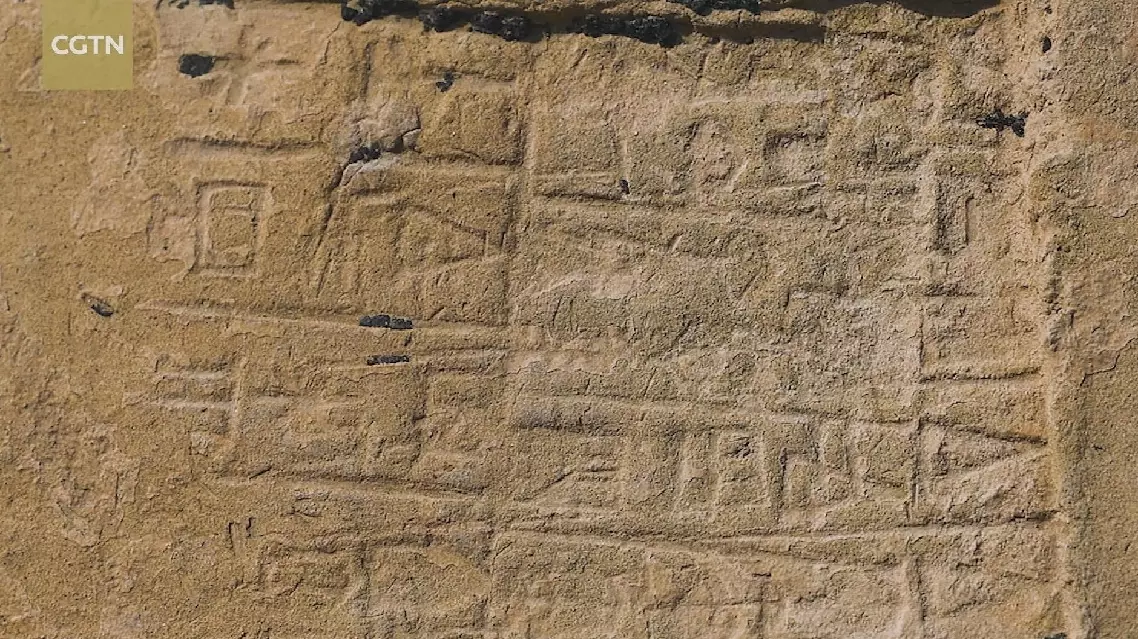
Civilization scholars trace Mesopotamia's commercial rise through clay tablets